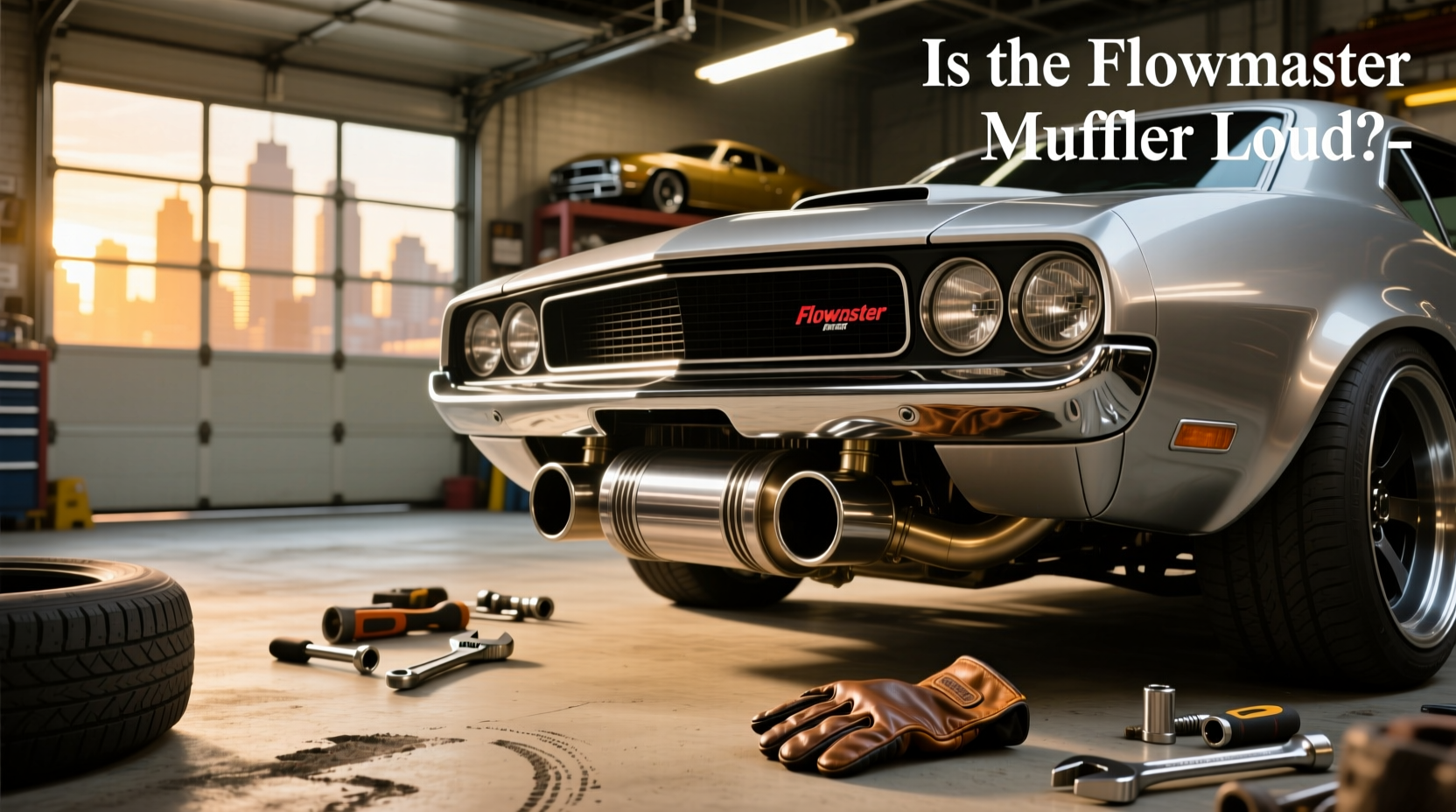
If you're asking how to choose a Flowmaster muffler, Is the Flowmaster muffler loud?, the answer depends entirely on the model. Flowmaster offers mufflers across a wide sound spectrum — from extremely aggressive tones that rival race cars to refined, near-stock options ideal for daily drivers. Understanding the differences between series like the Super 10 (extremely loud) and the 50 Series Delta Flow (very quiet) is critical when selecting based on your vehicle use, noise tolerance, and legal requirements 1. For those seeking performance without excessive cabin drone, mild or moderate models are recommended. Avoid aggressive series if comfort or local noise laws are a concern.
About Flowmaster Muffler: Is It Loud?
Flowmaster is a well-known brand in the performance exhaust industry, recognized for its chambered muffler designs that balance sound, backpressure, and durability. The core question — Is the Flowmaster muffler loud? — doesn't have a one-size-fits-all answer. Instead, Flowmaster categorizes its mufflers into three primary sound levels: Aggressive (Loudest), Moderate (Balanced), and Mild (Quietest) 1. This structured approach allows buyers to align their choice with intended use, whether it's a weekend track car, a daily-driven truck, or a classic restoration project.
Typical applications include muscle cars, trucks, off-road vehicles, and hot rods. Some models are engineered for maximum exhaust flow and deep tone, while others prioritize reduced interior resonance and compliance with noise regulations. The perceived loudness also depends on installation factors such as pipe diameter, length, and engine configuration.
Why Flowmaster Muffler Is Gaining Popularity
Flowmaster has maintained a strong presence in the automotive aftermarket due to its consistent product engineering and broad compatibility. Enthusiasts appreciate the brand’s transparent sound rating system, which simplifies decision-making for users comparing options like the Outlaw versus the dBX series 5. Additionally, the ability to enhance engine performance through improved scavenging — especially in V8 and large-displacement engines — contributes to its appeal.
Another reason for popularity is the distinctiveness of the Flowmaster tone. Even within the same series, variations in chamber design produce recognizable sound signatures that many users associate with American performance culture. However, this characteristic sound can be a double-edged sword — desirable for some, intrusive for others, especially during long commutes or city driving.
Types and Variants
Choosing the right Flowmaster muffler starts with understanding the key series and their sound profiles. Below is an overview of major types grouped by sound level.
🛒 Aggressive (Loudest) Series
- Super 10: Single-chamber design producing near-open-pipe sound. Extremely loud and vibration-heavy. Best suited for racing or show vehicles 5.
- Outlaw: Iconic deep roar with high exterior volume. Known for its bold, attention-grabbing tone. Not recommended for daily use.
- Super 44: High-flow dual-chamber design. Delivers aggressive bass and increased torque. Popular in trucks and muscle cars 5.
- 40 Series Original: Classic chambered muffler with aggressive interior and exterior tone. Offers performance gains but may cause cabin drone on certain setups 6.
Pros: Maximum performance, deep tone, popular for shows/racing
Cons: Excessive noise, cabin vibration, potential legal issues, not suitable for daily commuting
🔧 Moderate (Balanced) Series
- 40 Series (in certain configurations): When used with proper tuning and exhaust routing, this series can offer a balanced tone — noticeable but not overwhelming. Often chosen for V8 trucks and performance sedans.
Pros: Good blend of sound and drivability, enhances exhaust note without extreme volume
Cons: May still produce drone at highway speeds depending on engine setup
✨ Mild (Quietest) Series
- 50 Series (Delta Flow): Designed to reduce interior resonance. Produces a mild rumble close to stock. Ideal for daily drivers 2.
- dBX Series: Acoustically tuned to minimize sound and vibration. Engineered for quiet operation while improving flow over stock.
- 70 Series: Refinement-focused design. Offers subtle performance gains with minimal auditory impact.
Pros: Quiet cabin, reduced drone, compliant with most noise ordinances
Cons: Less distinctive exhaust note, may not satisfy enthusiasts wanting a bold sound
Key Features and Specifications to Evaluate
When evaluating Flowmaster mufflers, consider these measurable and experiential factors:
- Sound Level Rating: Use Flowmaster’s official classification (Aggressive/Moderate/Mild) as a starting point.
- Interior vs. Exterior Noise: Some models are loud outside but tame inside (e.g., 50 Series), while others transmit significant sound into the cabin.
- Backpressure & Flow Efficiency: Lower backpressure improves scavenging and can boost power, especially at higher RPMs.
- Construction Material: Most Flowmaster mufflers use aluminized steel or stainless steel — check specs for corrosion resistance.
- Dimensions & Fitment: Ensure diameter and length match your existing system or planned modifications.
- Vibration & Drone: Aggressive models often increase low-frequency resonance, particularly at cruising speeds.
Pros and Cons
✅ Pros:
• Wide range of sound options for different use cases
• Proven performance benefits in horsepower and torque delivery
• Durable construction with long-term reliability
• Clear sound-level categorization helps informed decisions
❗ Cons:
• Aggressive models can be too loud for residential areas or long drives
• Potential for cabin drone, especially with 40 or Super 44 series
• May not comply with local noise ordinances if improperly selected
• Installation quality significantly affects final sound and performance
How to Choose a Flowmaster Muffler: Step-by-Step Guide
Selecting the best Flowmaster muffler requires matching product features to your real-world needs. Follow this checklist:
- Determine Vehicle Use: Is it a daily driver, weekend cruiser, or track vehicle? Daily use favors mild or moderate models 1.
- Assess Sound Preference: Do you want a subtle upgrade or a commanding presence? Listen to online sound clips of each series before deciding.
- Prioritize Cabin Comfort: If minimizing drone is important, lean toward 50, dBX, or 70 Series.
- Check Local Noise Laws: Many areas cap exhaust noise at 95 dB or lower. Verify what’s allowed in your region 6.
- Consider Engine Modifications: Cam swaps or headers can amplify exhaust pulses and increase drone — factor this into your choice.
Red Flags to Avoid:
• Choosing Super 10 or Outlaw for a daily commuter
• Ignoring fitment dimensions leading to poor installation
• Assuming all 40 Series models sound the same — configuration matters
• Overlooking the impact of resonators or X-pipes on final tone
Price & Market Insights
Flowmaster mufflers typically range from $100 to $250 USD, depending on series, material (stainless vs. aluminized), and size. The 50 and dBX series often fall in the $120–$160 range, while aggressive models like the Super 44 or Outlaw may cost $180–$220. Prices vary by retailer and geographic region.
Value-wise, the 50 Series offers strong性价比 (cost-performance balance) for users wanting mild sound improvement. For performance builds, the Super 44 provides noticeable gains but at a premium. Always compare warranties and return policies — some sellers allow returns only if the muffler is unused and in original packaging.
Top-Seller & Competitive Analysis
Based on user demand and retail availability, the following models stand out:
| Model | Sound Level | Best For | Price Range (USD) |
|---|---|---|---|
| 50 Series Delta Flow | Mild | Daily drivers, family vehicles | $120–$160 |
| 40 Series Original | Moderate to Aggressive | Trucks, muscle cars | $140–$180 |
| Super 44 | Aggressive | Performance builds, drag racing | $180–$220 |
| dBX Series | Mild | Quiet cruising, long commutes | $130–$170 |
| Super 10 | Extremely Loud | Racing, show vehicles | $150–$200 |
No single model is “best” — selection depends on application. The 50 Series leads in customer satisfaction for street use, while the Super 44 dominates in performance forums.
Customer Feedback Synthesis
Analysis of user reviews reveals consistent patterns:
- Positive Feedback:
• 50 Series praised for “low rumble without drone”
• Super 44 lauded for “deep tone and power increase”
• Stainless models appreciated for rust resistance after years of use - Common Complaints:
• 40 Series users report “excessive cabin drone on highway”
• Super 44 described as “too loud for daily driving”
• Some installations result in unexpected volume due to lack of resonators
Many buyers emphasize that sound perception varies by vehicle type and personal sensitivity. Reading model-specific reviews for your make and engine is highly recommended.
Sourcing & Supplier Tips
Flowmaster mufflers are widely available through online retailers (e.g., Jegs, Summit Racing, RealTruck), auto parts stores, and exhaust specialists. When sourcing:
- Verify return policy — some vendors require unused condition for returns.
- Compare shipping costs, especially for heavy items.
- For bulk purchases (e.g., shops or installers), inquire about distributor pricing.
- Inspect packaging upon delivery — dents or weld damage can affect performance.
- Confirm material type (aluminized vs. stainless) matches product description.
Maintenance, Safety & Legal Considerations
Flowmaster mufflers require minimal maintenance but should be inspected periodically for rust, cracks, or mounting bracket integrity. Ensure all hangers and clamps are secure to prevent contact with chassis components.
Safety-wise, extremely loud systems can impair driver awareness and communication. Also, prolonged exposure to high-decibel exhaust noise may contribute to hearing fatigue.
Legally, many jurisdictions regulate aftermarket exhaust noise. While Flowmaster does not certify compliance, users must ensure their installed system meets local standards. To verify:
• Check municipal or state transportation department websites
• Use a calibrated decibel meter at idle and under load
• Consult local inspection requirements before installation
Conclusion
The answer to “Is the Flowmaster muffler loud?” is conditional: it depends on the model. If you need a quiet, comfortable ride for daily use, choose the 50 Series, dBX, or 70 Series. For a bold, performance-oriented tone in a weekend vehicle, consider the 40 Series or Super 44. For race-only applications, the Super 10 or Outlaw delivers maximum presence. Always align your choice with vehicle use, sound preference, and legal environment to avoid dissatisfaction or compliance issues.
FAQs
❓ Is the Flowmaster 50 Series loud?
No, the Flowmaster 50 Series is one of the quietest options, designed to reduce cabin drone while offering a mild exhaust note. It’s significantly quieter than the 40 Series and suitable for daily driving.
❓ Which Flowmaster muffler is best for daily driving?
The 50 Series, dBX, and 70 Series are best for daily driving due to their mild sound output and reduced interior resonance. These models balance performance with cabin comfort.
❓ Does a louder Flowmaster muffler improve performance?
Louder models like the Super 44 or Super 10 often have lower backpressure and better flow, which can improve horsepower and torque. However, gains vary by engine and system setup — sound alone isn’t a reliable performance indicator.
❓ Can I reduce drone with an aggressive Flowmaster muffler?
Yes, adding resonators, adjusting pipe length, or using sound-deadening materials in the cabin can help reduce drone. However, aggressive models will always produce more interior noise than mild ones.
❓ Are Flowmaster mufflers legal?
Legality depends on local noise regulations and installation. Mild and moderate models are more likely to comply than aggressive ones. Always verify your local laws before installing any aftermarket exhaust.




 浙公网安备
33010002000092号
 浙B2-20120091-4