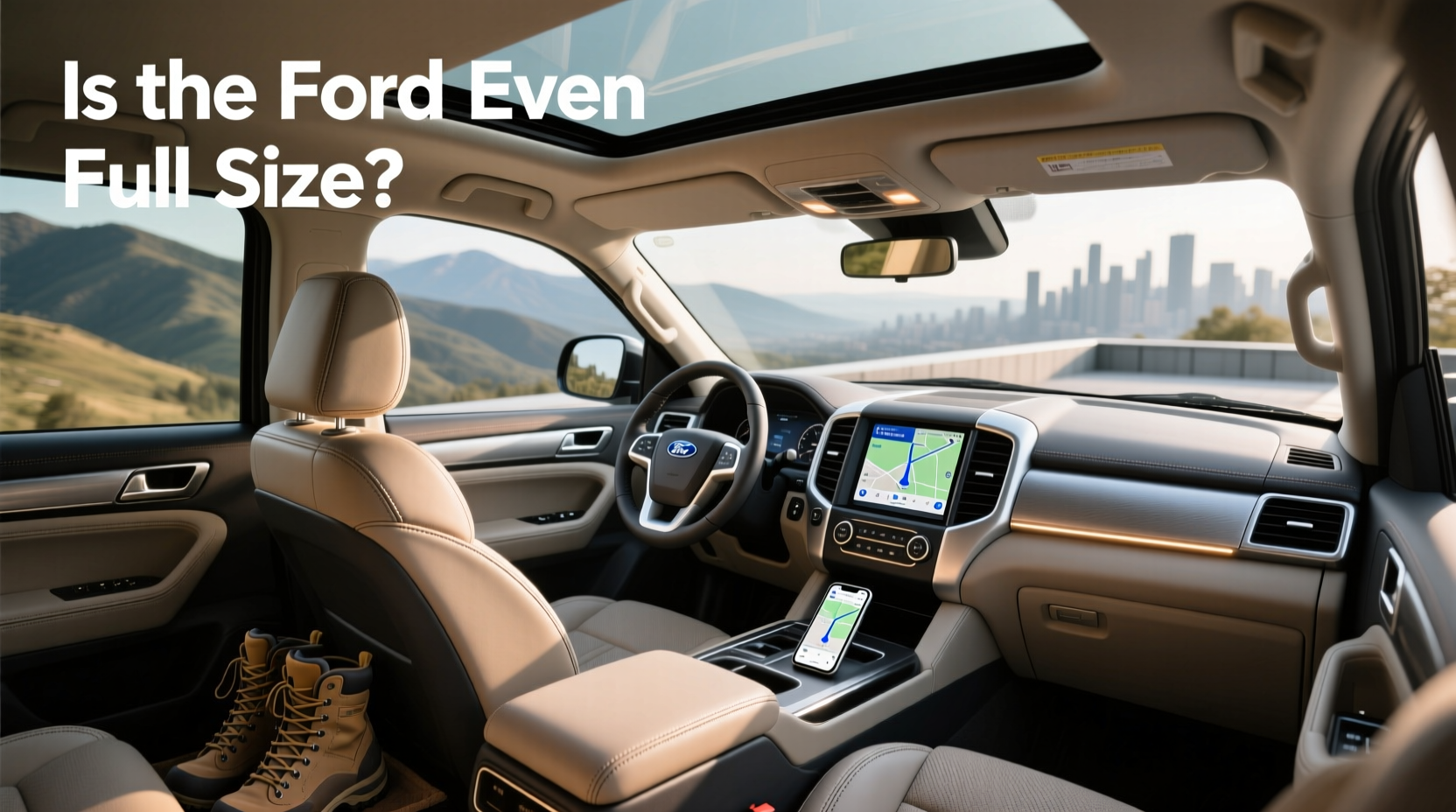
If you're asking how to choose Ford Everest interior, is the Ford Everest full size?, start here: The Everest offers a well-designed, tech-equipped cabin across trims, with higher models (Trend, Sport, Platinum) delivering near-luxury comfort. While often labeled large, it's technically a midsize SUV—slightly smaller than full-size rivals like the LandCruiser 300 but more refined on-road. For families needing third-row space and modern infotainment, the Platinum trim excels. Avoid base Ambiente if rear USB ports or leather seating matter. Always verify dimensions locally, as availability and specs may vary by market.
Short introduction
When evaluating the Ford Everest for personal or family use, two central questions arise: what defines its interior quality, and how does its size compare to traditional full-size SUVs? Understanding these aspects helps narrow down trim selection and ensures the vehicle aligns with your daily driving, passenger capacity, and adventure goals. The Everest strikes a balance between rugged capability and everyday usability, making it a strong contender in the midsize to large SUV segment. However, calling it a 'full-size' SUV can be misleading without context. This guide breaks down everything you need to know—from material choices across trims to dimensional comparisons—so you can confidently answer what to look for in Ford Everest interior, is the Ford Everest full size? based on real-world usability.
About Ford Everest Interior, Is the Ford Everest Full Size?
The Ford Everest’s interior is engineered for practicality and comfort, blending durable materials with modern technology. Available in up to seven seats, it caters to families, outdoor enthusiasts, and fleet operators who value space and connectivity. Its cabin layout prioritizes ease of use, with intuitive controls and ample storage—including under-floor compartments and wireless charging—supporting both urban commutes and extended trips 1.
Regarding size classification, “full-size” lacks a universal standard. In North America, vehicles like the Chevrolet Tahoe or Toyota Sequoia define the category. Elsewhere, the Everest competes more directly with models like the Toyota LandCruiser Prado. Though marketed as a large SUV, the Everest sits just below true full-size benchmarks in length and width. It uses a body-on-frame platform shared with the Ranger pickup, reinforcing durability but placing it in the upper midsize bracket rather than competing directly with flagship off-roaders like the LandCruiser 300 Series 2.
Why Ford Everest Interior, Is the Ford Everest Full Size? Is Gaining Popularity
Consumers are increasingly favoring SUVs that blend off-road readiness with on-road refinement. The Everest meets this demand by offering locking differentials, terrain management systems, and high ground clearance—all while maintaining a quiet, comfortable ride. Its popularity stems from versatility: it functions equally well as a school run vehicle, road trip companion, or light-duty adventure rig.
Interior tech also drives interest. With standard Sync4 infotainment, wireless Apple CarPlay/Android Auto, and available B&O audio, the Everest appeals to users who expect seamless smartphone integration. Families appreciate the spacious second row and usable third seat, especially given superior boot volume when rows are folded compared to rivals 3. As buyers shift from minivans to rugged-looking SUVs, the Everest fills a niche between utilitarian trucks and premium crossovers.
Types and Variants
Ford offers several trims globally, though availability varies by region:
- 🛒Ambiente (Base Trim): Offers essential features—cloth seats, 10.1-inch portrait touchscreen, manual climate control. Pros: Affordable entry point. Cons: Lacks rear USB ports and premium finishes; best suited for budget-focused buyers or commercial use.
- ✨Trend (Mid-Tier): Adds leather-accented seats, dual-zone climate control, larger screen, and advanced safety aids. Pros: Balanced feature set. Cons: Missing top-tier tech like digital instrument cluster.
- ⚡Sport: Styling upgrades, unique interior trim, 12.4-inch digital dash, enhanced audio. Pros: Sporty aesthetic with improved tech. Cons: Minimal functional gains over Trend.
- ⭐Platinum (Top Tier): Quilted leather, heated second row, ambient lighting, head-up display, premium sound system. Pros: Near-luxury comfort and tech. Cons: Higher price; some features may be redundant for casual drivers.
Key Features and Specifications to Evaluate
When assessing Ford Everest interior, is the Ford Everest full size?, focus on measurable factors:
- 👥Seating & Space: Second-row legroom is generous even in base models. Third row is compact—best for children. Confirm local measurements, as wheelbase differences affect interior packaging.
- ⚙️Materials & Build Quality: Lower trims use soft-touch plastics and cloth; higher trims add real stitching, metal accents, and padded armrests. Touchpoints matter for long-term satisfaction.
- 🌐Infotainment & Connectivity: Base has 10.1-inch screen; Platinum gets 12.0-inch vertical unit. All support wireless phone mirroring. Check for built-in navigation and OTA update capability.
- 🔋Power Access: Wireless charging and front/rear USB-C ports enhance convenience. Base model lacks rear USB—a notable gap for families.
- 📏Dimensions: At 4914mm long and 1923mm wide, the Everest is shorter and narrower than the LandCruiser Prado but has a longer wheelbase (2900mm), improving ride stability.
Pros and Cons
Pros:
- Spacious, well-organized cabin with flexible seating
- Strong tech offerings even in mid-level trims
- Better cargo volume than many rivals when third row is stowed
- Refined highway manners due to car-like tuning
- Available advanced driver aids (adaptive cruise, lane centering)
Cons:
- Not a true full-size SUV—less imposing than LandCruiser 300 or Nissan Armada
- Base model lacks key family-friendly features (rear USB)
- Off-road prowess lags behind dedicated platforms like Jeep Wrangler Rubicon
- Limited global availability affects resale and parts access
How to Choose Ford Everest Interior, Is the Ford Everest Full Size?
To make an informed decision, follow this checklist:
- Determine Your Use Case: Will it primarily serve city driving, family transport, or off-grid exploration?
- Select Trim Based on Needs: Opt for Trend or above if comfort and tech are priorities. Skip Ambiente unless cost is critical.
- Evaluate Third-Row Usage: If adults will sit there regularly, consider a larger SUV. The Everest’s rearmost seat suits occasional use.
- Test Infotainment Layout: The portrait screen works well for maps but may feel awkward for media. Try before buying.
- Compare Cargo Volume: With all seats up, it offers 259L—competitive for class. Fold third row for 898L, ideal for gear-heavy lifestyles.
Red Flags to Avoid:
- Assuming all trims include rear USB ports—only higher grades do.
- Mistaking wheelbase advantage for overall size superiority—it’s still smaller than full-size benchmarks.
- Neglecting to test drive with all seats occupied; noise levels and HVAC performance vary under load.
Price & Market Insights
Pricing varies significantly by market. In Australia, the Ambiente starts around AUD $50,000, while Platinum exceeds AUD $80,000. In Southeast Asia, prices are lower due to tax structures and engine options. Generally, the Everest delivers better value than Japanese equivalents in terms of standard equipment per dollar. However, depreciation rates and service costs should be researched locally. Consider certified pre-owned models from 2023–2024 for optimal balance of new features and lower cost.
Top-Seller & Competitive Analysis
The Platinum trim leads sales in markets where luxury touches influence decisions. Below is a comparison with a key rival:
| Dimension | 2025 Toyota LandCruiser Prado Kakadu | 2025 Ford Everest Platinum |
|---|---|---|
| Length | 4990mm | 4914mm |
| Width | 1980mm | 1923mm |
| Height | 1935mm | 1837mm |
| Wheelbase | 2850mm | 2900mm |
| Boot Volume (to first row) | 1829L | 1818L |
| Boot Volume (to second row) | 906L | 898L |
| Boot Volume (to third row) | 182L | 259L |
Data source: 3. The Everest trades exterior bulk for interior efficiency, offering more usable cargo space despite being slightly shorter.
Customer Feedback Synthesis
Buyer sentiment highlights consistent themes:
- Positive: Praise for comfortable front seats, responsive infotainment, and smooth ride quality. Many note the cabin feels more upscale than competitors in its segment.
- Criticisms: Complaints focus on base model limitations—especially lack of rear USB—and some find the engine noise intrusive during hard acceleration. A few owners report software glitches in early 2024 units, now reportedly resolved via updates.
Sourcing & Supplier Tips
Due to regional variations, always confirm trim specifications with local dealers. In markets where the Everest isn’t officially sold, gray-market imports exist—but check compatibility with local emissions standards and warranty coverage. For fleet purchases, negotiate bundled service plans. When inspecting used models, verify service history and test all electronic functions, particularly the 360-degree camera and parking sensors.
Maintenance, Safety & Legal Considerations
Follow manufacturer-recommended maintenance intervals, especially for differential oils and suspension components if used off-road frequently. Standard safety includes multiple airbags, ISOFIX anchors, and electronic stability control. Advanced systems like blind-spot monitoring and automatic emergency braking are standard on higher trims. Always confirm that imported vehicles meet local crash-test requirements (e.g., ANCAP, Euro NCAP). Retrofitting modifications (lift kits, winches) may void warranties or violate roadworthiness laws—consult authorities before installing.
Conclusion
The Ford Everest delivers a compelling package for those seeking a capable, tech-forward SUV without the bulk of a full-size model. If you prioritize interior comfort and modern features over extreme off-road specialization, the Trend or Platinum trim offers excellent value. While not classified as a full-size SUV, its intelligent design maximizes space and usability. For families needing reliable transportation with adventure-ready credentials, the Everest stands out—just ensure your expectations align with its actual size and capabilities.
Frequently Asked Questions
- Is the Ford Everest considered a full-size SUV? No, it's best classified as a midsize to large SUV. It’s slightly smaller than full-size models like the LandCruiser 300 but offers competitive interior space.
- Which Ford Everest trim has the best interior? The Platinum trim offers the highest-quality materials, including quilted leather, ambient lighting, and a digital instrument cluster.
- Does the Ford Everest have rear USB ports? Only in higher trims (Trend, Sport, Platinum); the base Ambiente model lacks them.
- How much cargo space does the Ford Everest have? Up to 1818L behind the first row and 259L with all seats in use—above average for its class.
- Can the Ford Everest tow heavy loads? Yes, it can tow up to 3500kg when properly equipped, suitable for boats or trailers.




 浙公网安备
33010002000092号
 浙B2-20120091-4