Short introduction
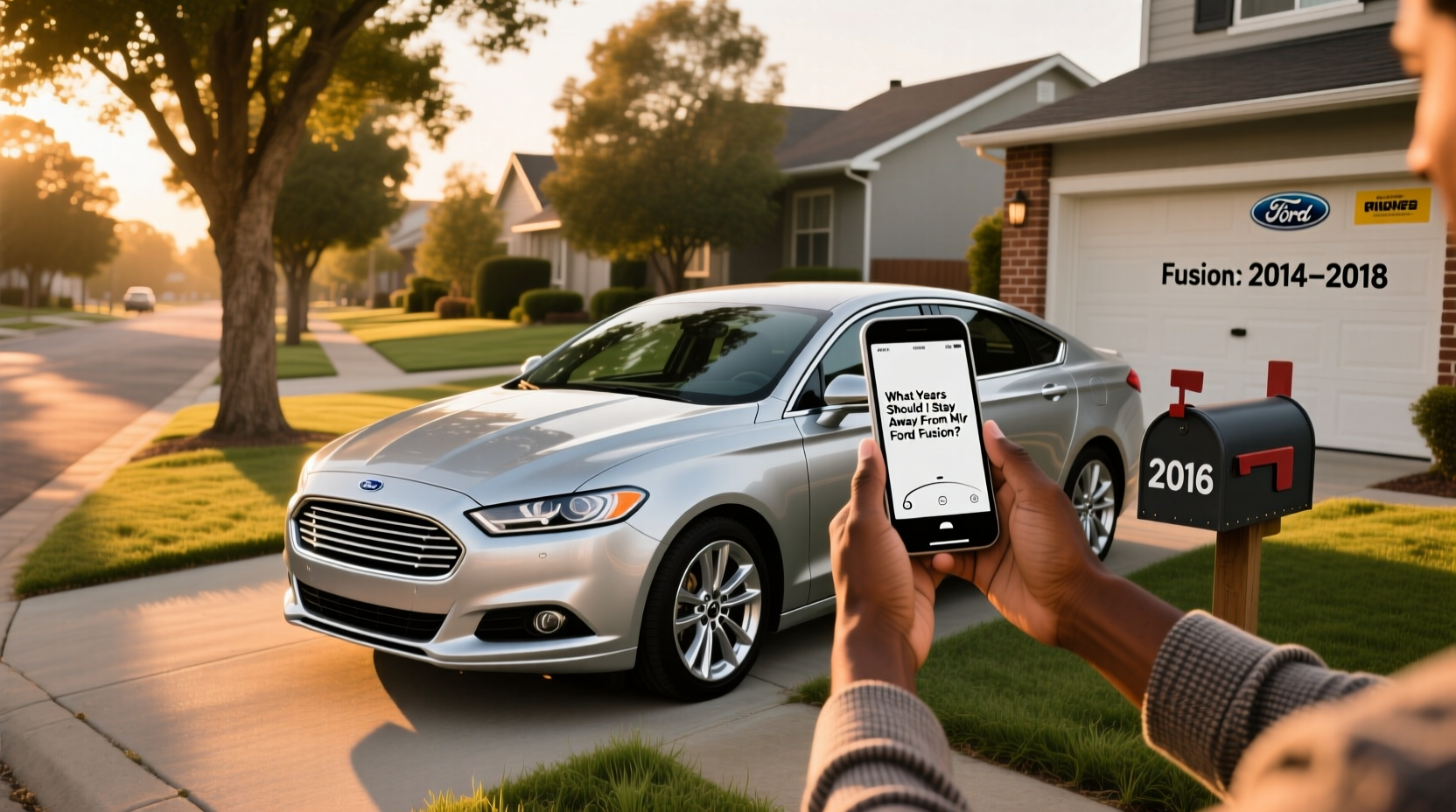
If you’re looking at a used Ford Fusion—especially a 2016 hatchback or sedan—here’s how to choose wisely: avoid the 1.5L EcoBoost engine entirely, be cautious with 2.0L EcoBoost models from 2017–2019, and opt for the 2.5L non-turbo or hybrid variant for better long-term reliability. Over the past year, more owners have reported unexpected engine failures in turbocharged Fusions, especially those without documented service histories. If you’re a typical user, you don’t need to overthink this: the 2.5L engine is proven, widely available, and less prone to catastrophic issues than its turbo siblings.
❗ Two common but ineffective debates: Whether the car has leather seats or dual-zone climate control. These don’t impact longevity. The real constraint? Engine build origin—some 2.0L engines made in Spain are more durable than U.S.-built blocks with known coolant intrusion risks.
This piece isn’t for keyword collectors. It’s for people who will actually use the product.
About Ford Fusion
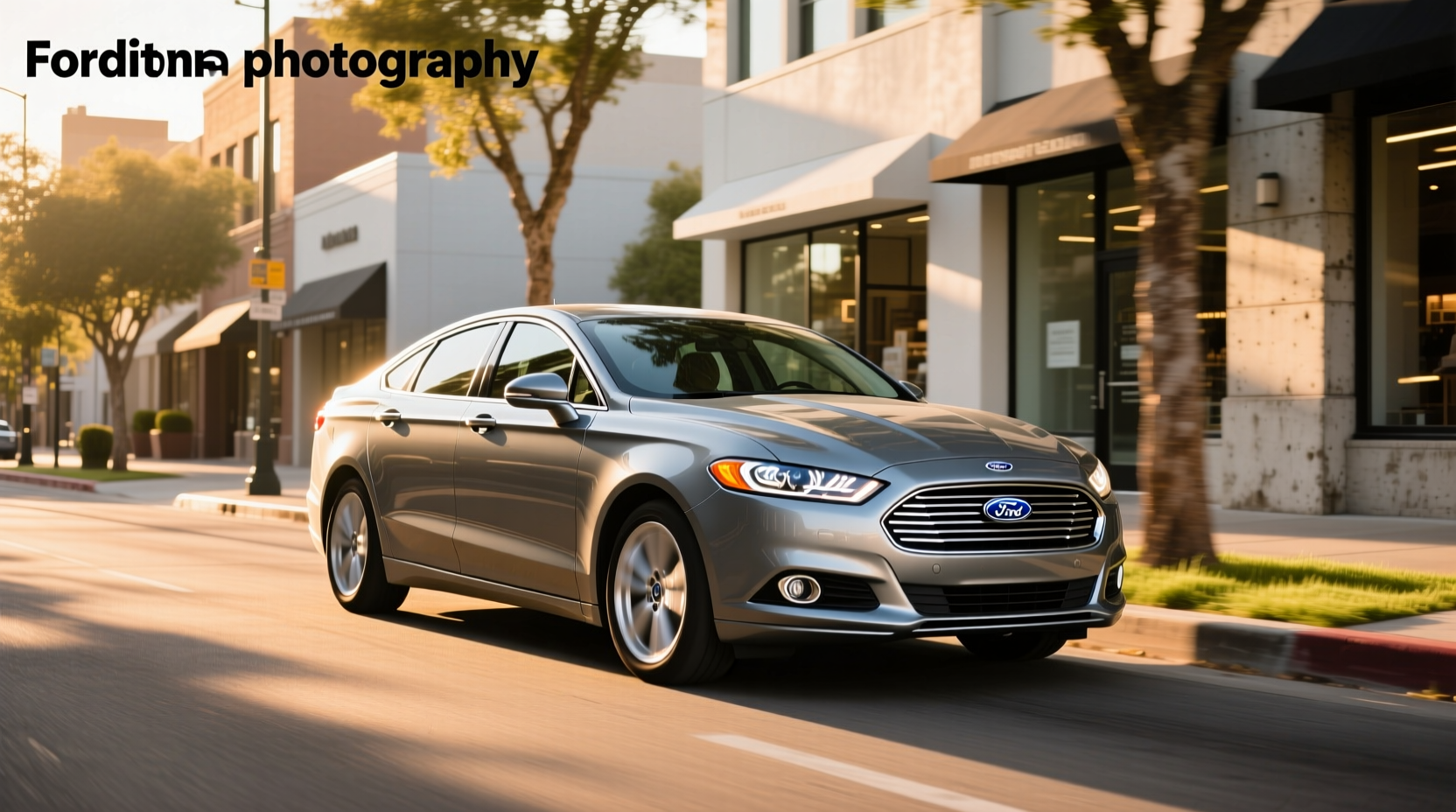
The Ford Fusion was a midsize sedan sold from 2006 to 2020, combining fuel efficiency, comfort, and tech features appealing to urban drivers and commuters. While it never dominated the segment like the Honda Accord or Toyota Camry, it offered competitive styling and value, particularly in SEL and Titanium trims. The 2013 redesign introduced EcoBoost turbo engines and improved interior materials, making later models more attractive—but also introducing new mechanical vulnerabilities.
Ford discontinued the Fusion after 2020, shifting focus to SUVs and trucks. As a result, used Fusions—especially from 2013 to 2019—are now common in the under-$12,000 market. The 2016 model sits in the middle of this range, offering updated infotainment and safety features compared to earlier versions, but sharing powertrain flaws that emerged across multiple years.
Why Ford Fusion is gaining popularity
Lately, interest in the Ford Fusion has grown—not because of rising demand, but due to increased availability and low entry pricing. With many fleets retiring corporate-owned Fusions after three to five years, well-maintained examples are appearing in the $8,000–$11,000 range. This makes them tempting for budget-conscious buyers seeking more space than a compact sedan.
Additionally, the Fusion Hybrid and Energi plug-in variants offer strong fuel economy (up to 43 mpg combined), which resonates amid fluctuating gas prices. However, recent owner reports suggest that while purchase price is low, long-term ownership cost can spike if the wrong engine type is selected. That contrast—low upfront cost vs. potential repair bills—is why choosing the right model year and powertrain matters more now than ever.
Types and variants
The 2016 Ford Fusion came with four main powertrains. Each has distinct strengths and risks.
1. 2.5L I-4 (Non-Turbo)
- Pros: Most reliable engine in the lineup; minimal reports of major failure; simpler design means lower repair costs.
- Cons: Less power (175 hp); less refined acceleration; not available in higher trims with all-wheel drive.
If you’re a typical user, you don’t need to overthink this: the 2.5L is sufficient for daily driving and far less likely to strand you.
2. 1.5L EcoBoost (Turbo)
- Pros: Better fuel economy than 2.5L; compact size allows for lighter front end.
- Cons: High risk of coolant leaking into cylinders due to head gasket or block defects; known to cause hydrolock and complete engine failure; expensive replacement ($4,000+).
When it’s worth caring about: Always. This engine has earned a poor reputation across forums and mechanic networks. When you don’t need to overthink it: Never. Just avoid it.
3. 2.0L EcoBoost (Turbo)
- Pros: Strong performance (245 hp); available with AWD; standard in higher trims.
- Cons: Some blocks—particularly U.S.-assembled units—prone to coolant intrusion; timing chain wear reported after 80,000 miles.
When it’s worth caring about: If the vehicle has high mileage or unclear maintenance history. When you don’t need to overthink it: If you can confirm the engine was replaced post-2019 or built in Spain (check VIN decoder or service records).
4. Hybrid & Energi Plug-in Hybrid
- Pros: Excellent fuel economy; smooth drivetrain; lower emissions.
- Cons: Battery pack degradation after 10 years or 120,000 miles; specialized diagnostics required; limited charging infrastructure for Energi.
If you’re a typical user, you don’t need to overthink this: hybrids are reliable if driven gently and kept within climate-controlled environments. Battery issues are predictable and often avoidable with monitoring.
Key features and specifications to evaluate
Don’t get distracted by touchscreen size or parking sensors. Focus on what affects ownership cost:
- Engine Type: Confirm whether it’s 2.5L, 1.5L EcoBoost, or 2.0L EcoBoost. Check under the hood or via VIN lookup.
- Build Origin: Spanish-built 2.0L engines (Valencia plant) show fewer failures than U.S.-built ones (Cleveland). Ask for service records or contact dealer with VIN.
- Transmission: 6-speed automatic. Known for shuddering and delayed shifts in 2013–2016 models. Look for fluid change records every 60,000 miles.
- Maintenance History: Full documentation reduces risk. Missing records should raise red flags, especially for turbos.
- Hybrid Battery Health: For hybrids, request a battery state-of-health reading from a certified technician.
If you’re a typical user, you don’t need to overthink this: a clean Carfax and consistent oil changes matter more than sunroof or navigation.
Pros and cons
| Aspect | Pros | Cons |
|---|---|---|
| Ride Comfort | Smooth suspension; quiet cabin | Softer handling than sport sedans |
| Fuel Economy | Hybrid: up to 43 mpg; 2.5L: ~26 mpg city | 1.5L/2.0L EcoBoost lose efficiency with age |
| Interior Space | Adequate rear legroom; large trunk | Upright seating limits recline |
| Reliability | 2.5L and hybrid models last 150k+ miles | Turbo engines may fail before 100k |
| Ownership Cost | Low purchase price; affordable parts | Major engine repair exceeds vehicle value |
How to choose a Ford Fusion
Follow this checklist to make a smart decision.
Step-by-step checklist
- Confirm engine type: Avoid 1.5L EcoBoost. Prefer 2.5L or hybrid.
- Run VIN through Ford dealer system: Verify production plant and any factory recalls.
- Get a pre-purchase inspection: Have a mechanic test for compression loss or coolant in oil (milky residue).
- Check transmission behavior: Drive at 35–45 mph; note hesitation or rough shifts.
- Review maintenance logs: Look for regular fluid changes and timing belt work.
- Scan hybrid battery health (if applicable): State of charge should be above 80%.
Decision flow
- You want a low-cost commuter → Choose 2.5L, 2016–2018
- You prioritize fuel economy → Choose Hybrid, 2014–2016 (earlier hybrids had better battery retention)
- You need power and AWD → Consider 2.0L EcoBoost only if engine origin is confirmed safe
- You see a 1.5L EcoBoost listed under $7,000 → Walk away
Recommendations by scenario
- First-time buyer on a budget: 2.5L SEL trim, 2016–2017, with verified service history.
- High-mileage commuter: Fusion Hybrid with under 90,000 miles and battery diagnostic report.
- All-weather driver: 2.0L EcoBoost with AWD—only if built in Spain or has documented engine replacement.
Red flags / what to avoid
- 1.5L EcoBoost engine: High probability of future engine replacement.
- No maintenance records: Especially risky for turbos.
- Oily residue in coolant reservoir: Sign of internal leak.
- Transmission shudder at highway speeds: Indicates worn clutches or valve body issues.
- Unexplained overheating: May signal head gasket compromise in EcoBoost models.
If you’re a typical user, you don’t need to overthink this: walk into any negotiation knowing the average engine repair cost exceeds $4,000. That knowledge gives you leverage.
Price & market insights
Prices vary by region, trim, and condition. As of 2024:
- 2.5L models: $7,500–$10,500
- Hybrid models: $8,000–$11,000
- 1.5L EcoBoost: Often priced below $7,000—but avoid despite low cost
- 2.0L EcoBoost (AWD): $9,000–$12,000, depending on history
Pricing may vary by region/model/seller. Always compare listings on local platforms like Facebook Marketplace or Cargurus 1. Remember: a $1,000 difference rarely reflects actual condition—get an independent inspection.
Top-seller & competitive analysis
The most commonly listed Fusion is the 2016 SEL with 2.5L engine. It competes directly with:
| Model | Starting Price | Strengths | Weaknesses |
|---|---|---|---|
| Ford Fusion 2.5L (2016) | $8,500 | Spacious, quiet, simple powertrain | Outdated tech, soft steering |
| Honda Accord LX (2014) | $9,500 | Legendary reliability, better resale | Sparser base features |
| Toyota Camry LE (2015) | $10,000 | Durable, efficient, strong resale | Bland styling, firm ride |
| Nissan Altima 2.5 (2016) | $8,800 | Comfortable seats, good MPG | CVT hesitancy, plastic interior |
The Fusion holds its own on comfort and initial cost but falls behind in long-term dependability unless the right engine is chosen. If you’re a typical user, you don’t need to overthink this: among midsize sedans, the Fusion offers the best value—if you skip the turbo traps.
Customer feedback synthesis
Based on owner discussions from Facebook groups, Reddit threads 2, and Quora posts 3:
- Most praised: Smooth ride quality, comfortable front seats, SYNC system responsiveness (in updated versions).
- Most criticized: Unexpected engine failure in 1.5L models, transmission issues in 2013–2016, high repair costs after warranty.
- Common regret: Buying a low-priced EcoBoost without verifying engine health.
- Surprising satisfaction: Hybrid owners with regular servicing report 140,000+ mile trouble-free operation.
This piece isn’t for keyword collectors. It’s for people who will actually use the product.
Sourcing & supplier tips
Private sellers often lack full maintenance records, but dealerships may mark up prices by 15–20%. Consider:
- Certified pre-owned (CPO): Rare for Fusions, but if available, includes extended warranty.
- Trade-in evaluations: Use CarGurus or Kelley Blue Book to estimate fair value before negotiating.
- Online auctions: Risky without inspection, but can yield deals if you partner with a local mechanic.
Always verify return policy if buying online. Some platforms allow 3-day returns for mechanical issues.
Maintenance, safety & legal considerations
Regular oil changes (every 5,000–7,500 miles) are critical, especially for turbo engines. Transmission fluid should be changed every 60,000 miles to reduce shudder risk. For hybrids, follow manufacturer-recommended battery checks.
Safety-wise, the 2016 Fusion earned a Top Safety Pick rating from the IIHS when equipped with optional forward collision warning. Standard airbags and stability control meet federal requirements.
To verify compliance or recall status:
• Visit NHTSA.gov and enter the VIN.
• Check with a Ford dealership for open service campaigns.
• Confirm local emissions regulations if registering in California or similar states.
Conclusion
If you need a dependable daily driver under $11,000, choose a 2016 Ford Fusion with the 2.5L engine or hybrid powertrain. If you’re prioritizing fuel economy and have access to charging, the Energi model is viable. Avoid the 1.5L EcoBoost regardless of price. For AWD needs, only consider a 2.0L EcoBoost with documented proof of a revised engine block or Spanish manufacturing origin. If you’re a typical user, you don’t need to overthink this: reliability comes down to one choice—engine type.




 浙公网安备
33010002000092号
 浙B2-20120091-4