
Lately, the 2019–2020 Ford Fusion Energi has re-entered public attention—not because of strong resale demand, but due to a critical safety recall and ongoing legal action. If you’re considering buying one, here’s how to choose wisely: First, check the VIN for recall 23S33 1. If unresolved, avoid charging and expect limited functionality. The permanent fix requires replacing the high-voltage battery and BECM—parts that may still be backordered. If you’re a typical user, you don’t need to overthink this: either confirm full repair or walk away.
Used PHEVs like the Fusion Energi can offer real fuel savings, but only if they’re functional. This guide breaks down what to look for in a used plug-in hybrid with known liabilities, including red flags, ownership trade-offs, and alternatives worth considering.
About the Ford Fusion Energi
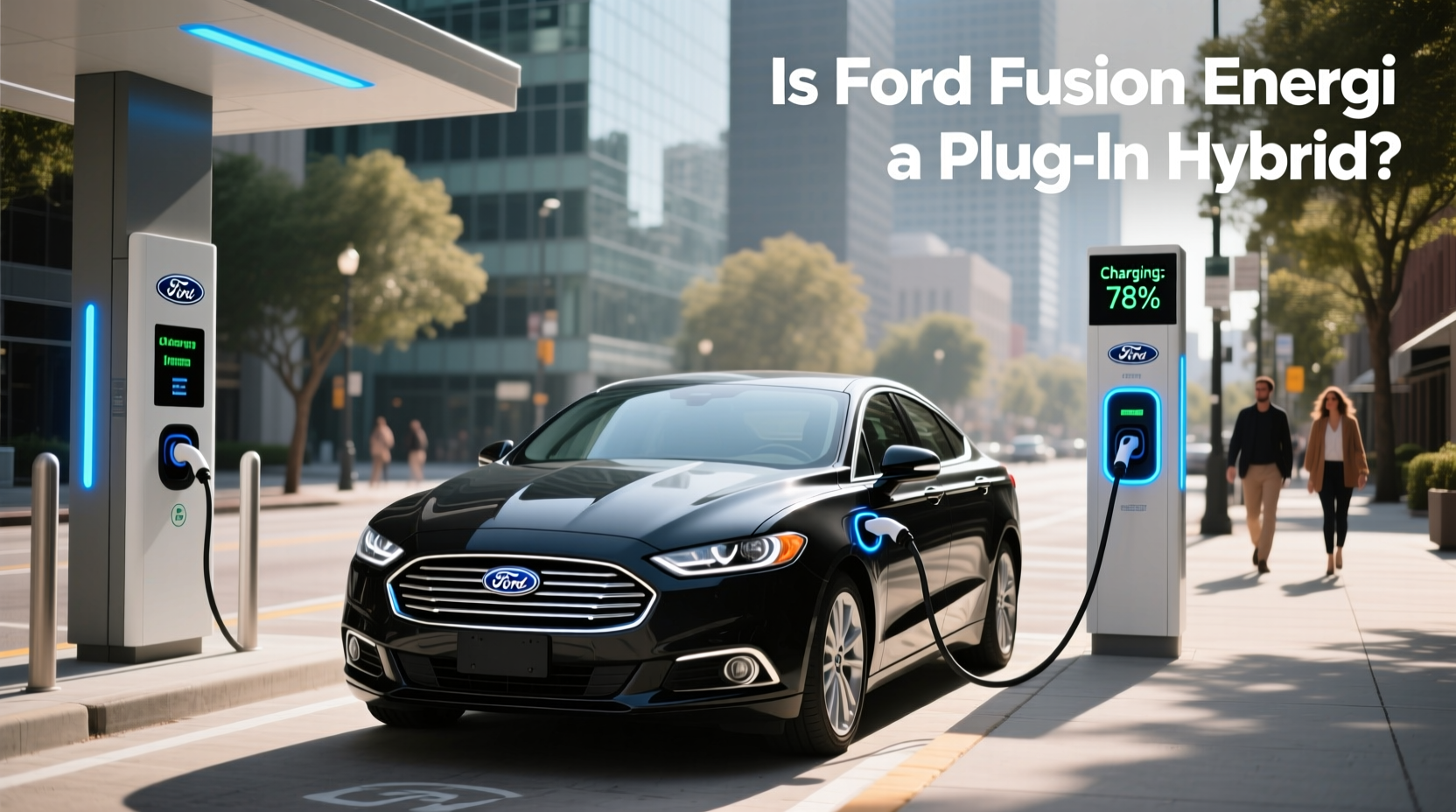
The Ford Fusion Energi is a plug-in hybrid electric vehicle (PHEV) produced from 2013 to 2020. It combines a 2.0L Atkinson-cycle gasoline engine with an electric motor and lithium-ion battery pack, offering an EPA-estimated 21 miles of all-electric range on newer models. Designed for urban commuters seeking lower fuel costs, it was marketed as a practical midsize sedan with green credentials.
Production ended in 2020, making every current model used. While earlier years saw moderate reliability, the 2019 and 2020 versions are now defined by a single issue: a defect in the Battery Energy Control Module (BECM). This component regulates voltage flow between the battery and drivetrain. When faulty, it can allow excessive voltage during charging, leading to overheating, sudden power loss, or fire—even when the car is parked and unattended.
If you’re a typical user, you don’t need to overthink this: the presence of this defect overrides most other considerations when evaluating a used Fusion Energi.
Why This Topic Is Gaining Popularity
Over the past year, interest in the Fusion Energi hasn’t come from environmental trends or rising gas prices—it’s been driven by crisis response. In June 2023, Ford issued recall 23S33 affecting over 60,000 vehicles in the U.S. and Canada 2. Owners were told to stop charging their cars immediately. That same month, Consumer Reports advised against charging any affected model until repairs were complete 3.
The change signal is clear: what was once a niche reliability concern has become a mainstream liability. Class-action lawsuits have been filed in both countries, citing diminished vehicle value, forced depreciation, and loss of utility. A Toronto-based law firm launched a suit representing owners who say they overpaid for a defective product 4. Meanwhile, Ford introduced a buyback program in mid-2024, valid until July 1, 2025, offering refunds above fair market value for those unwilling to wait indefinitely for parts 5.
This isn’t just about maintenance anymore. It’s about whether the vehicle retains basic functionality and safety.
Types and Variants
The Fusion Energi came in three main trim levels: SE, SEL, and Titanium. All shared the same powertrain and battery system. Differences were largely cosmetic or comfort-based—leather seats, adaptive cruise control, or upgraded infotainment.
- SE: Base model, cloth seats, manual climate control. Most affordable on the used market.
- SEL: Mid-tier, added features like SYNC 3, remote start, and available sunroof.
- Titanium: Top trim, included leather, heated steering wheel, and premium audio.
From a technical standpoint, none of these variants matter when assessing risk. The BECM defect affects all 2019–2020 Fusion Energis regardless of trim. Earlier models (2017–2018) do not have this specific recall, though they may face other aging-related issues like battery degradation.
When it’s worth caring about: Only if you’re looking at pre-2019 models. Then, trim level might influence price and comfort. For 2019–2020 models, the recall status is the only meaningful differentiator.
When you don’t need to overthink it: If the car is a 2019 or 2020 model, skip trim comparisons. Focus solely on repair history and BECM replacement.
Key Features and Specifications to Evaluate
For any used PHEV, key specs include electric range, fuel economy, battery health, and software updates. But for the Fusion Energi, two factors dominate:
- BECM and High-Voltage Battery Status: Has the recall repair been completed? The final remedy involves replacing both the BECM and the entire high-voltage battery pack. An interim fix—installing a fuse block and disabling charging—is insufficient and renders the car a conventional hybrid.
- VIN Verification: Enter the 17-digit VIN on Ford’s support page or the NHTSA website to confirm recall status 6. This is non-negotiable.
Other specs—like 0–60 mph time (8.8 seconds), cargo space (14.1 cu ft), or MPGe (93)—are irrelevant if the car can’t charge safely.
When it’s worth caring about: If the repair is complete and verified, then assess battery calibration, regenerative braking performance, and cabin electronics. These reflect long-term usability.
When you don’t need to overthink it: If the car still has the interim fix (no charging), assume it will remain unusable as a PHEV. If you’re a typical user, you don’t need to overthink this: no charge capability means no electric savings.
Pros and Cons
| Pros | Cons |
|---|---|
| ✅ Smooth ride quality | ❌ Critical BECM defect in 2019–2020 models |
| ✅ Quiet EV mode for short trips | ❌ Fire risk if uncharged improperly |
| ✅ Lower fuel costs when fully functional | ❌ Interim repair disables plug-in function |
| ✅ Familiar Ford sedan footprint | ❌ Long wait times for replacement parts |
| ✅ Available buyback option through 2025 | ❌ Diminished resale value post-recall |
The pros only apply if the vehicle is fully repaired. Otherwise, the cons define the ownership experience.
How to Buy a Ford Fusion Energi (Safely)
Buying a used Fusion Energi isn’t impossible—but it requires strict due diligence. Follow this checklist:
Step-by-Step Checklist
- Verify VIN against recall 23S33 using Ford’s portal or NHTSA site.
- Request proof of repair: dealership invoice showing BECM and battery replacement.
- Avoid cars with only a fuse block installed—this is not a full fix.
- Test drive with emphasis on EV mode engagement.
- Ask if the owner participated in the buyback program—if yes, the car may have been repurchased and resold.
Decision Flow
- Is it a 2019–2020 model? → Yes → Check VIN.
- Is the recall open? → Yes → Do not charge. Walk away unless repair is scheduled.
- Is the repair complete? → Yes → Inspect service records.
- Can it charge and run in EV mode? → No → Treat as conventional hybrid; price accordingly.
Recommendations by Scenario
- Urban commuter needing daily EV range: Avoid 2019–2020 models unless repaired. Consider Toyota Prius Prime instead.
- Budget buyer okay with hybrid-only use: May accept a post-interim-fix Energi at steep discount, but know the plug-in feature is dead.
- Collector or tinkerer: Only if you can source and install a new BECM independently (rare).
Red Flags / What to Avoid
- “It charges fine—I ignore the warning.” ❗
- Seller refuses to provide repair documentation.
- Dashboard shows “Check Charging System” or similar alerts.
- Vehicle listed as rebuilt or salvage post-recall.
- Price significantly below market—could indicate hidden defect.
This piece isn’t for keyword collectors. It’s for people who will actually use the product.
Price & Market Insights
Prices for the Fusion Energi have dropped sharply since the recall. Unrepaired 2019–2020 models sell for 30–50% less than pre-recall values. However, this discount reflects real risk. Repaired models command slightly higher prices but remain scarce due to part shortages.
Values may vary by region/model/seller. Always compare against Kelley Blue Book or Edmunds listings for similar mileage and condition. Confirm local incentives—some areas still offer PHEV rebates, but only if the vehicle can charge.
Top-Seller & Competitive Analysis
The Fusion Energi never dominated its segment. Competitors like the Toyota Prius Prime and Honda Clarity Plug-In offered longer electric ranges and stronger reliability reputations.
| Model | EV Range (miles) | Recall Risk | Reliability Score (Consumer Reports) |
|---|---|---|---|
| Ford Fusion Energi (2019–2020) | 21 | High (BECM fire risk) | Below Average |
| Toyota Prius Prime (2020) | 25 | Low | Above Average |
| Honda Clarity Plug-In (2020) | 47 | Medium (battery degradation) | Average |
| Kia Niro PHEV (2020) | 26 | Low | Above Average |
If you’re a typical user, you don’t need to overthink this: the Fusion Energi’s competitive position has collapsed due to trust, not specs.
Customer Feedback Synthesis
Recent owner sentiment, pulled from Reddit threads and legal filings, shows a sharp divide:
- Positive: Smooth ride, quiet cabin, good handling for a sedan.
- Negative: Sudden power loss while driving, inability to charge, fear of fire, lack of communication from dealerships.
Many report being stranded after the interim fix disabled charging. Others describe months-long waits for parts. A common frustration: paying a premium for a plug-in hybrid that now functions as a regular hybrid.
One Reddit user wrote: “I bought this for the electric range. Now I’m driving a $25K hybrid with a dead battery.”
Sourcing & Supplier Tips
Private sellers rarely disclose recall status upfront. Dealerships are required to note open recalls, but not all do. When sourcing:
- Use certified pre-owned (CPO) programs cautiously—some include unrepaired Energis.
- Ask for a Carfax or AutoCheck report, but verify directly with Ford.
- Contact a Ford dealer with the VIN to request repair history.
Never rely solely on listing descriptions. Verify independently.
Maintenance, Safety & Legal Considerations
Safety first: Do not charge a 2019–2020 Fusion Energi unless the BECM and battery have been replaced. Ford explicitly warns against it 1.
Maintenance complexity increases if the BECM fails. Replacement parts are expensive and backordered. Independent mechanics often lack the tools or software access to handle high-voltage systems.
Legally, class-action lawsuits are ongoing. Participation does not replace the recall repair. Owners may be eligible for compensation, but that process is separate from vehicle safety.
To verify status: check your VIN at Ford Support or NHTSA Recalls.
Conclusion
If you need a functional plug-in hybrid with daily EV range, choose a different model. If you’re looking for a low-cost sedan and accept that the electric system may never work, a discounted Fusion Energi could suffice—but only after confirming it won’t catch fire. The recall defines this vehicle now. Everything else is secondary.
Everything You Need to Know
The lawsuit stems from recall 23S33, which identified a defect in the Battery Energy Control Module (BECM) that can cause sudden power loss or fire. Owners in the U.S. and Canada have filed class-action suits seeking compensation for diminished value, overpayment, and loss of utility. The core claim is that Ford sold vehicles with a known safety risk.
The permanent fix—replacing the high-voltage battery and BECM—has been developed, but parts are limited. Some owners received an interim repair (fuse block + software lockout) that stops charging but doesn’t restore plug-in function. Full repair availability may vary by region. Check your VIN to see current status.
Only if the BECM and battery have been fully replaced. Otherwise, avoid it. Without the repair, the car cannot charge safely, negating its primary benefit. Even repaired models carry stigma and resale challenges. If you’re a typical user, you don’t need to overthink this: better alternatives exist.
Yes. Ford launched a buyback program in 2024 for 2019–2020 Fusion Energi owners affected by the recall. It offers a refund of the purchase price minus a reasonable depreciation allowance, plus a premium above fair market value. The program runs until July 1, 2025. Eligibility depends on ownership duration and repair delays.
Yes, but do not charge it. The vehicle can operate in hybrid mode using the gasoline engine. However, Ford advises against plugging it in until the BECM is replaced due to fire risk. Driving is allowed, but charging is not safe.




 浙公网安备
33010002000092号
 浙B2-20120091-4