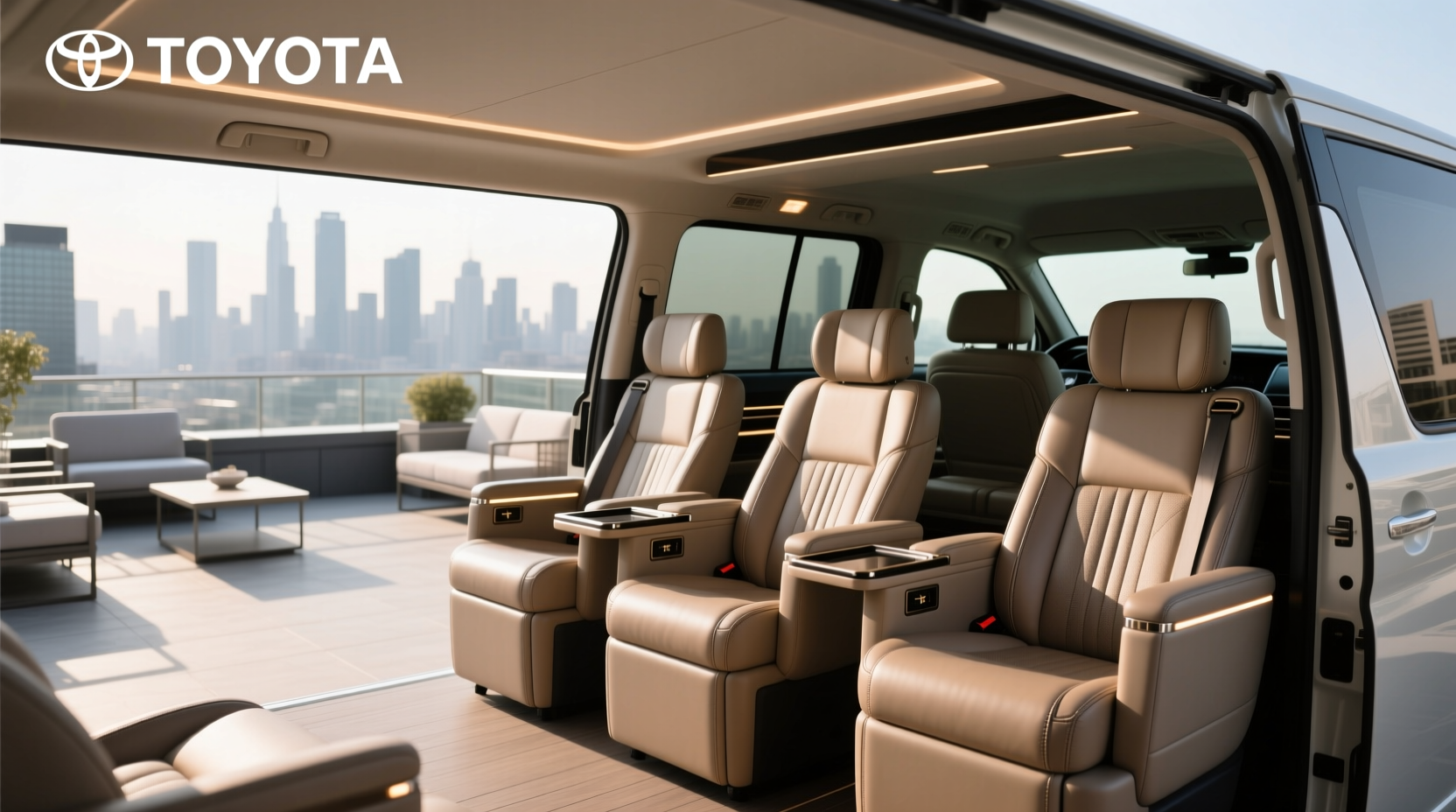
If you're asking how to choose Toyota Hiace VIP seats or wondering how many seats are in the Toyota Hiace panel van?, the answer depends on your use case and vehicle configuration. The standard Hiace panel van typically seats 2–3 people, focused on cargo space with front-row seating only 1. In contrast, Toyota Hiace VIP seat conversions usually accommodate 7–10 passengers, prioritizing comfort with captain’s chairs, luxury finishes, and reduced density 2. When evaluating options, consider whether you need maximum cargo room, high passenger capacity, or executive comfort. Avoid models mislabeled as 'VIP' with bench seating—true VIP setups feature individual reclining seats, sound insulation, and premium materials.
About Toyota Hiace VIP Seats & Panel Van Seating
🛒 The Toyota Hiace is a globally recognized light commercial vehicle known for its durability, versatility, and adaptability across markets. It comes in several configurations, each serving distinct purposes:
- Panel Van: Designed primarily for cargo transport, this variant usually has 2 or 3 seats (driver + 1–2 passengers) and sealed rear windows 3.
- VIP / Luxury Conversion: These are aftermarket or factory-upgraded models featuring plush captain's chairs, wood trim, ambient lighting, and entertainment systems, typically configured for 7–10 occupants.
Understanding the difference between stock configurations and custom builds is essential when answering “how many seats are in the Toyota Hiace panel van?” versus “what defines a true VIP setup?”
Why Toyota Hiace VIP Seats & Panel Van Configurations Are Gaining Popularity
🌍 The Hiace’s global presence—from Asia to Africa, the Middle East, and Oceania—has made it a go-to choice for fleet operators, shuttle services, and private buyers. Its reliability, ease of maintenance, and strong resale value contribute to sustained demand. Recent trends show increased interest in luxury Hiace conversions, especially in regions like Southeast Asia and the UAE, where executive transport needs are rising 4.
Meanwhile, businesses continue to rely on the panel van version for last-mile delivery, mobile workshops, and service fleets due to its robust build and large cargo volume.
Types and Variants
📍 Here’s a breakdown of common Hiace variants relevant to seating and usage:
✅ Panel Van (Cargo)
Ideal for freight-focused operations.
- Pros: Maximized cargo area, lower insurance, minimal wear from passengers.
- Cons: Limited seating (typically 3), no rear access doors in some models, basic interior.
✅ Crew Van (Half-Panel)
Balances crew transportation and cargo space.
- Pros: Seats 5–6 people, retains partial cargo zone, practical for small teams.
- Cons: Less cargo than full panel vans, not suited for luxury upgrades.
✅ Commuter / Bus Model
High-capacity people mover.
- Pros: Holds 10–15 passengers, ideal for shuttles or schools.
- Cons: Requires special licensing in many countries for >12 seats 1, limited cargo capability.
✅ VIP / Luxury Van
Customized for comfort and prestige.
- Pros: Premium seating (captain’s chairs), climate zones, upgraded audio, executive tables.
- Cons: Higher cost, reduced passenger count, potential compliance issues if modifications aren’t certified.
Key Features and Specifications to Evaluate
🔍 When deciding how to choose Toyota Hiace VIP seats or determine panel van capacity, assess these factors:
- Seating Layout: Look for individual reclining seats in VIP models; avoid converted benches labeled as 'luxury.'
- Seat Material: Genuine leather or high-grade synthetic leather resists wear better than fabric.
- Cabin Insulation: Acoustic damping and thermal insulation improve ride quality.
- Entertainment & Connectivity: Built-in screens, USB ports, Wi-Fi routers add value for long trips.
- Entry Type: Sliding side doors vs. barn doors affect accessibility and safety.
- Engine & Drivetrain: Diesel engines offer better torque for loaded conditions; 4WD may be needed off-road.
Pros and Cons
📊 A balanced view helps avoid mismatched purchases:
| Use Case | Suitable? | Notes |
|---|---|---|
| Fleet Delivery | ✅ Yes | Choose panel van (3 seats) |
| Family Transport | ✅ Yes | Opt for 7–9 seat family/custom van |
| Executive Shuttling | ✅ Yes | Select certified VIP conversion with 8 seats max |
| Large Group Transit | ✅ Yes | Go for 12–15 seat commuter model |
| Overlanding/Camping | ⚠️ Conditional | Requires campervan conversion; verify structural integrity |
| Urban Ride-Hailing | ❌ No | Too large for city maneuvering; high operating costs |
How to Choose Toyota Hiace VIP Seats and Determine Panel Van Seating
📋 Follow this step-by-step guide to make an informed decision:
- Define Your Primary Use: Cargo? Passenger shuttle? Executive transport? This determines base model selection.
- Check Official Seating Specs: For panel vans, expect 2–3 seats unless modified. Confirm via VIN or manufacturer brochure.
- Evaluate Conversion Quality (for VIP Models): Inspect weld points, electrical wiring, seat mounting, and material finish. Poorly installed seats pose safety risks.
- Verify Compliance: Aftermarket VIP conversions must meet local safety standards. Ask for certification documents.
- Avoid These Red Flags:
- Unlabeled or uncertified seat installations
- Excessive number of seats in a 'VIP' model (e.g., 12-seat claiming to be VIP)
- Vague descriptions like 'luxury interior' without specifics
- Missing crash test data or load-bearing certifications
Price & Market Insights
💰 Pricing varies widely based on region, condition, and modification level:
- New Panel Van: $25,000–$35,000 USD (2–3 seats)
- New Commuter (13-seat): $38,000–$48,000 USD
- Aftermarket VIP Conversion: Adds $10,000–$25,000+ to base price depending on features 2
- Used Models: Range from $12,000 (high-mileage cargo van) to $50,000+ (low-mileage VIP)
Value tip: Buying a base Hiace and commissioning a reputable converter often yields better customization and quality control than pre-built imports.
Top-Seller & Competitive Analysis
📈 While the Hiace dominates in many emerging markets, competitors include the Mercedes-Benz Sprinter, Ford Transit, and Ram ProMaster. Below is a comparison focused on seating flexibility:
| Model | Max Seating | VIP Potential | Base Cargo Van Seats |
|---|---|---|---|
| Toyota Hiace | 16 | ⭐⭐⭐⭐☆ | 3 |
| Mercedes Sprinter | 15 | ⭐⭐⭐⭐⭐ | 3 |
| Ford Transit | 15 | ⭐⭐⭐☆☆ | 3 |
| Ram ProMaster | 3 | ⭐☆☆☆☆ | 3 |
The Hiace stands out for aftermarket support and global parts availability, though European vans offer more factory luxury options.
Customer Feedback Synthesis
📌 Based on user reviews and owner forums, here are recurring themes:
- Positive:
- “Reliable even under heavy daily use.”
- “Easy to modify—plenty of conversion kits available.”
- “Low maintenance costs compared to European rivals.”
- Negative:
- “Some imported VIP models have poor soundproofing.”
- “Ride can be stiff when empty.”
- “Hard to find genuine parts in remote areas.”
Sourcing & Supplier Tips
🌐 Whether buying new, used, or converted:
- New Units: Purchase through authorized dealers for warranty coverage.
- Converted Vans: Work with certified upfitters who provide post-installation support.
- Importing: Verify that the vehicle meets your country’s emissions and safety regulations before shipping.
- Inspection Checklist:
- Confirm all seats are securely anchored
- Test seatbelts and airbags
- Check for rust or frame damage
- Review service history and odometer accuracy
Maintenance, Safety & Legal Considerations
🔧 Regular maintenance ensures longevity:
- Follow Toyota’s recommended service intervals (every 10,000–15,000 km).
- Pay special attention to suspension components in heavily loaded or converted models.
- In many jurisdictions, vehicles with more than 12 seats require a commercial driver’s license (CDL) or equivalent 1.
- Any structural modification (e.g., cutting walls for windows) should be reviewed by a certified engineer to maintain crashworthiness.
Always consult your local transport authority to confirm classification and licensing requirements.
Conclusion
If you need a cargo-focused workhorse, the Toyota Hiace panel van with 3 seats is ideal. For executive comfort and style, invest in a well-documented VIP conversion with 7–10 premium seats. Avoid overcrowded 'VIP' claims and prioritize certified installations. Always verify seating configuration against official specs and local laws before purchase.
Frequently Asked Questions
- How many seats does a Toyota Hiace panel van have?
- A standard Hiace panel van typically seats 2 to 3 people, with only front-row seating designed to maximize cargo space.
- What defines a true Toyota Hiace VIP seat configuration?
- A genuine VIP setup includes individual captain’s chairs, premium materials, enhanced insulation, and often entertainment systems—usually seating 7 to 10 passengers.
- Can I convert a panel van into a VIP model?
- Yes, but ensure the conversion is done by a certified installer with proper structural reinforcement and compliance documentation.
- Do I need a special license to drive a 15-seat Hiace?
- In most countries, yes. Vehicles with more than 12 passenger seats require a commercial or bus license—check your local regulations.
- Are VIP Hiace conversions safe?
- When professionally installed and certified, they are safe. Uncertified conversions may compromise structural integrity and crash protection.




 浙公网安备
33010002000092号
 浙B2-20120091-4