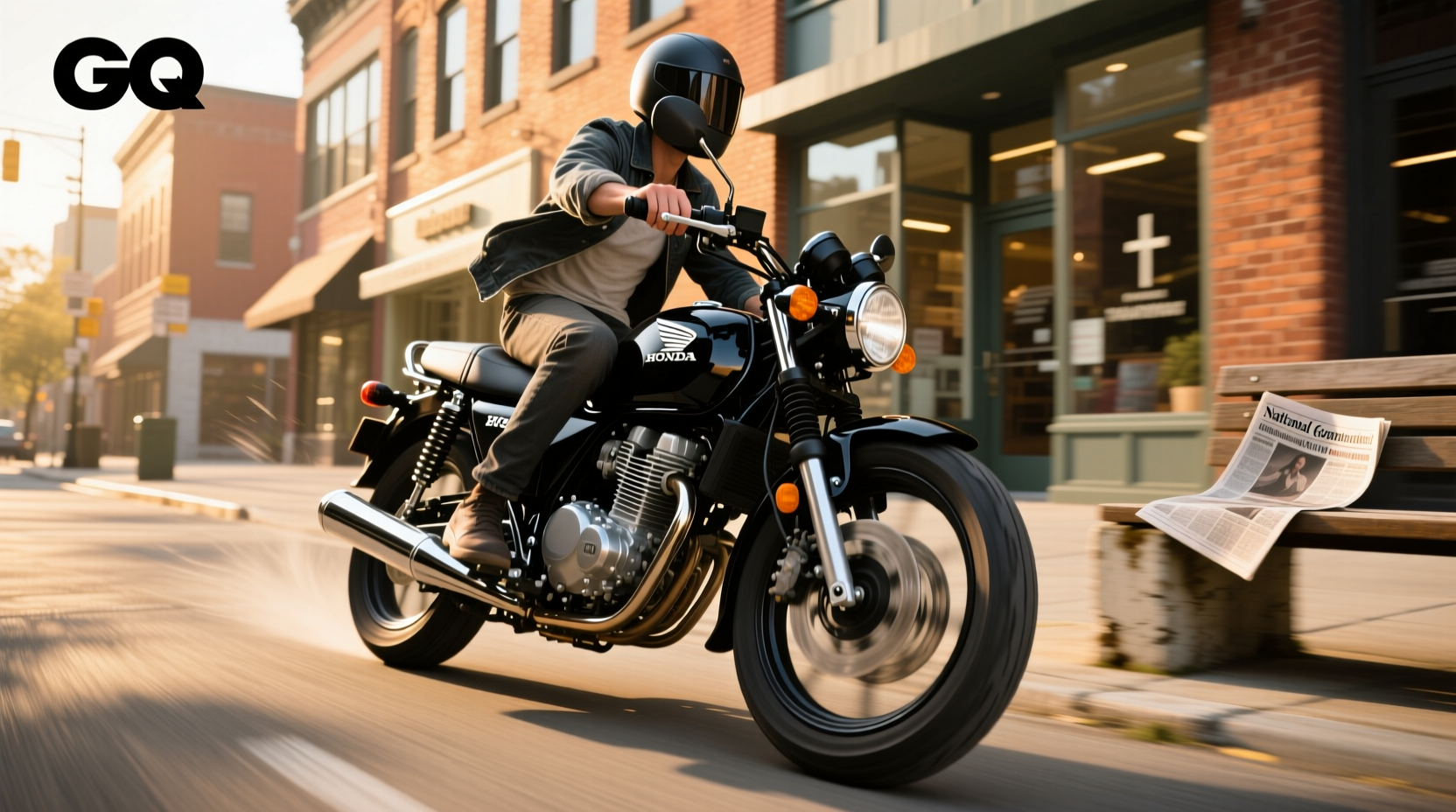
📍 About the Honda Ace 125 Motorcycle: Definition & Typical Use Cases
The Honda Ace 125 is a lightweight, air-cooled commuter motorcycle designed primarily for urban transportation and short-distance travel. Built around simplicity and durability, it features a 124.8cc single-cylinder, four-stroke OHC engine with fuel injection, making it more efficient than carbureted counterparts 2. Its design emphasizes low maintenance, affordability, and consistent fuel economy—key factors for daily riders and delivery service operators.
This model is available in both kick-start and optional electric-start variants, offering flexibility depending on user preference and regional market availability. With a dry weight of 105 kg and a seat height of 774 mm, it remains accessible to a wide range of riders, including those with average stature. Common use cases include:
- Daily city commuting ⚡
- Last-mile delivery services 🚚
- Learner-friendly practice bikes 👥
- Rural transport in areas with limited road infrastructure 🌍
Its modest power output and drum brake setup reflect its positioning as a no-frills utility bike rather than a sport or touring machine.
📈 Why the Honda Ace 125 Is Gaining Popularity
In recent years, demand for affordable, fuel-efficient motorcycles has grown significantly, especially in developing markets where personal vehicle ownership competes with public transit limitations. The Honda Ace 125 fits this niche perfectly due to its proven reliability, simple mechanics, and cost-effective operation.
Urban congestion and rising fuel prices have also driven interest in compact two-wheelers that offer maneuverability and parking convenience. Compared to scooters or larger motorcycles, the Ace 125 provides a balanced ride quality without complex electronics or high upkeep costs. Additionally, Honda’s reputation for long-term durability adds confidence among first-time buyers and fleet operators alike.
Another factor contributing to its popularity is ease of repair. Mechanics familiar with basic two-stroke or four-stroke engines can service the Ace 125 without specialized tools, reducing downtime and labor expenses—a crucial advantage in regions with limited dealership networks.
🔧 Types and Variants Available
The Honda Ace 125 comes in two primary configurations based on starting mechanism and minor equipment differences:
Kick-Start Only Variant ✅
Pros:
- Lower initial purchase price 💰
- Simpler electrical system (fewer components to fail)
- Lighter overall weight
- Ideal for warm climates where cold starts are not an issue
Cons:
- Requires physical effort to start, which may be challenging for some riders
- No battery means no electric lighting when engine is off
- Limited accessory compatibility (e.g., phone chargers)
Electric-Start Option (Optional Battery System) 🔋
Pros:
- Convenient push-button ignition
- Supports headlight operation at idle
- Enables integration of small accessories
- Better usability in cooler weather or after extended stops
Cons:
- Slightly higher cost
- Requires periodic battery maintenance
- Potential for starter motor or charging system issues over time
Note: Availability of these variants depends on the region and local distributor offerings. Always verify specifications with official dealers before purchasing.
⚙️ Key Features and Specifications to Evaluate
When assessing whether the Honda Ace 125 meets your needs, focus on measurable performance and usability metrics:
- Engine Type: 124.8cc, 4-stroke, OHC, air-cooled – ensures durability and lower operating temperatures in stop-and-go traffic.
- Fuel System: Electronic Fuel Injection (EFI) improves cold-start performance and fuel efficiency compared to carburetors.
- Power Output: 6.32 kW @ 6500 rpm – sufficient for city speeds but limited highway capability.
- Maximum Torque: 10.2 Nm @ 6250 rpm – delivers usable mid-range pull ideal for acceleration from intersections.
- Transmission: 4-speed constant mesh – simple and robust, though narrower gear spread than 5- or 6-speed units.
- Braking System: Drum brakes front and rear – adequate for low-speed urban use but less effective under heavy loads or wet conditions.
- Fuel Capacity: 10 liters – supports a range of approximately 400–500 km depending on riding style and conditions.
- Ground Clearance: 150 mm – allows navigation over uneven roads and curbs common in rural or poorly maintained urban areas.
These specs collectively define the Ace 125 as a practical urban runabout rather than a high-performance machine.
✅ Pros and Cons: Who It’s Best For (and Who Should Look Elsewhere)
Advantages ✅
- High fuel efficiency (~60–70 km/L estimated)
- Low maintenance requirements
- Simple mechanical design enhances longevity
- Affordable parts and widespread service network
- Lightweight and easy to handle in traffic
- Reliable Honda engineering pedigree
Limitations ❗
- Top speed capped around 100–110 km/h (62–68 mph), unsuitable for sustained highway use
- Drum brakes offer reduced stopping power vs. disc systems
- Basic suspension setup may feel stiff on rough terrain
- Limited aftermarket support for performance upgrades
- No ABS or advanced safety features
Best suited for: City commuters, food/goods delivery personnel, budget-conscious riders, learners.
Not recommended for: Long-distance touring, highway cruising, aggressive riding, or riders needing quick acceleration.
📋 How to Choose a Honda Ace 125 Motorcycle: Step-by-Step Decision Guide
Selecting the right configuration involves matching your usage scenario with technical capabilities:
- Assess Your Riding Needs: Are you using it mainly in traffic? Do you carry passengers or cargo regularly?
- Evaluate Starting Preference: Prefer convenience? Go for electric start. Prioritize simplicity and lower cost? Choose kick-start.
- Inspect Braking Requirements: If riding in hilly areas or carrying loads, consider upgrading brake pads or adding a front disc kit (aftermarket).
- Check Seat Height Compatibility: At 774 mm, ensure your leg length allows stable ground reach when stopped.
- Verify Local Service Support: Confirm availability of spare parts and trained technicians in your area.
- Test Ride if Possible: Pay attention to vibration levels, clutch engagement, and throttle response.
Red Flags to Avoid:
- Unusually high claimed top speeds (e.g., 140 km/h)—may indicate tampered speedometer or unrealistic expectations.
- Vehicles with inconsistent maintenance records or unclear ownership history.
- Aftermarket modifications that alter engine mapping or exhaust systems, potentially affecting reliability.
- Pricing significantly below market value—could signal theft, flood damage, or odometer rollback.
💰 Price & Market Insights
Pricing for the Honda Ace 125 varies by region, import duties, and dealer markup. In Southeast Asia and parts of Africa, new units typically range from $1,800 to $2,500 USD. Used models in good condition may sell between $1,200 and $1,800 depending on mileage and location.
Value assessment should consider total cost of ownership—not just purchase price. Factor in fuel economy, insurance (where applicable), registration fees, and expected maintenance intervals. Given its durable construction, the Ace 125 often retains value well in secondary markets, particularly in regions where spare parts are readily available.
📊 Top-Seller & Competitive Analysis
The Ace 125 competes closely with other 125cc commuter bikes such as the Honda CB125F and generic-branded clones. Below is a comparison highlighting key distinctions:
| Feature | Honda Ace 125 | Honda CB125F | Generic 125cc Commuter |
|---|---|---|---|
| Starting System | Kick or Electric | Electric (standard) | Mostly Kick |
| Fuel System | Fuel Injection | Fuel Injection | Carburetor (mostly) |
| Brakes | Drum (F/R) | Disc Front / Drum Rear | Drum (F/R) |
| Dry Weight | 105 kg | 117 kg | ~100–110 kg |
| Primary Use | Commuting, Delivery | Learning, Urban Use | Basic Transport |
The Ace 125 stands out for its ruggedness and minimalistic design, while the CB125F offers slightly better handling and braking at the expense of complexity. Generic models may undercut on price but lack consistency in build quality and long-term support.
📢 Customer Feedback Synthesis
Analysis of owner reviews and forum discussions reveals recurring themes:
Common Praises ✨
- “Extremely reliable—I’ve ridden mine for over 3 years with only routine oil changes.”
- “Gets me 50+ km per liter even in mixed city traffic.”
- “Easy to fix myself when minor issues arise.”
- “Perfect size for weaving through traffic.”
Frequent Complaints ❗
- “Top speed plateaus around 105 km/h; hard to keep up on fast roads.”
- “Drum brakes feel weak when going downhill with a passenger.”
- “Seat becomes uncomfortable after 1 hour of continuous riding.”
- “Speedometer reads slightly optimistic—actual speed is ~5–8% lower.”
These insights highlight strengths in reliability and economy, while underscoring limitations in performance and comfort for extended rides.
🛠️ Sourcing & Supplier Tips
For individual buyers, purchasing from authorized Honda dealers ensures authenticity, warranty coverage, and access to genuine parts. For bulk purchases (e.g., delivery fleets), contact regional distributors directly to negotiate pricing and logistics.
When buying used:
- Request service history documentation 📎
- Inspect frame for cracks or welding repairs 🔍
- Check for rust on chain, rims, and exhaust 🧼
- Verify VIN matches registration papers 📝
- Test all lights, horn, and controls ⚙️
Consider third-party inspection services in markets where fraud risk is elevated.
🧼 Maintenance, Safety & Legal Considerations
Regular maintenance extends lifespan and maintains optimal performance. Recommended checks include:
- Oil change every 2,000–3,000 km
- Air filter cleaning/replacement every 6,000 km
- Chain tension and lubrication every 500–1,000 km
- Valve clearance inspection every 12,000 km
Safety-wise, always wear a helmet and protective gear. Due to the lack of ABS or traction control, adopt defensive riding habits—especially in rain or on gravel.
Legally, ensure the motorcycle meets local emissions and noise standards. Registration requirements vary by country; confirm compliance before operation. Modifications affecting engine output or exhaust may void compliance or violate regulations.
📌 Conclusion: Final Recommendation
If you need a dependable, economical motorcycle for city commuting or delivery tasks, the Honda Ace 125 is a solid choice. Its realistic top speed of 100–110 km/h makes it suitable for urban environments but not ideal for highways. Opt for the electric-start version if convenience matters; otherwise, the kick-start model offers maximum simplicity. Avoid expecting sportbike performance—this machine excels in reliability, not speed. For those requiring higher velocities or enhanced braking, stepping up to a 250cc platform may be more appropriate.
❓ Frequently Asked Questions
- What is the top speed of the Honda Ace 125?
Under normal conditions, the Honda Ace 125 reaches a top speed of 100–110 km/h (62–68 mph). Some riders report brief bursts up to 140 km/h, but these are likely influenced by downhill slopes or meter inaccuracies. - Is the Honda Ace 125 fuel-injected?
Yes, it uses electronic fuel injection (EFI), which improves cold starts and fuel efficiency compared to carbureted models. - Can I upgrade the brakes on my Honda Ace 125?
Yes, aftermarket front disc brake kits are available in some markets, though installation requires modification and may affect original geometry. - How often should I service my Honda Ace 125?
Basic servicing (oil, filter, chain) is recommended every 2,000–3,000 km. Major inspections, including valve clearance, should occur around 12,000 km. - Is the Honda Ace 125 suitable for beginners?
Yes, its light weight, predictable power delivery, and manageable seat height make it a good learner bike for urban environments.




 浙公网安备
33010002000092号
 浙B2-20120091-4