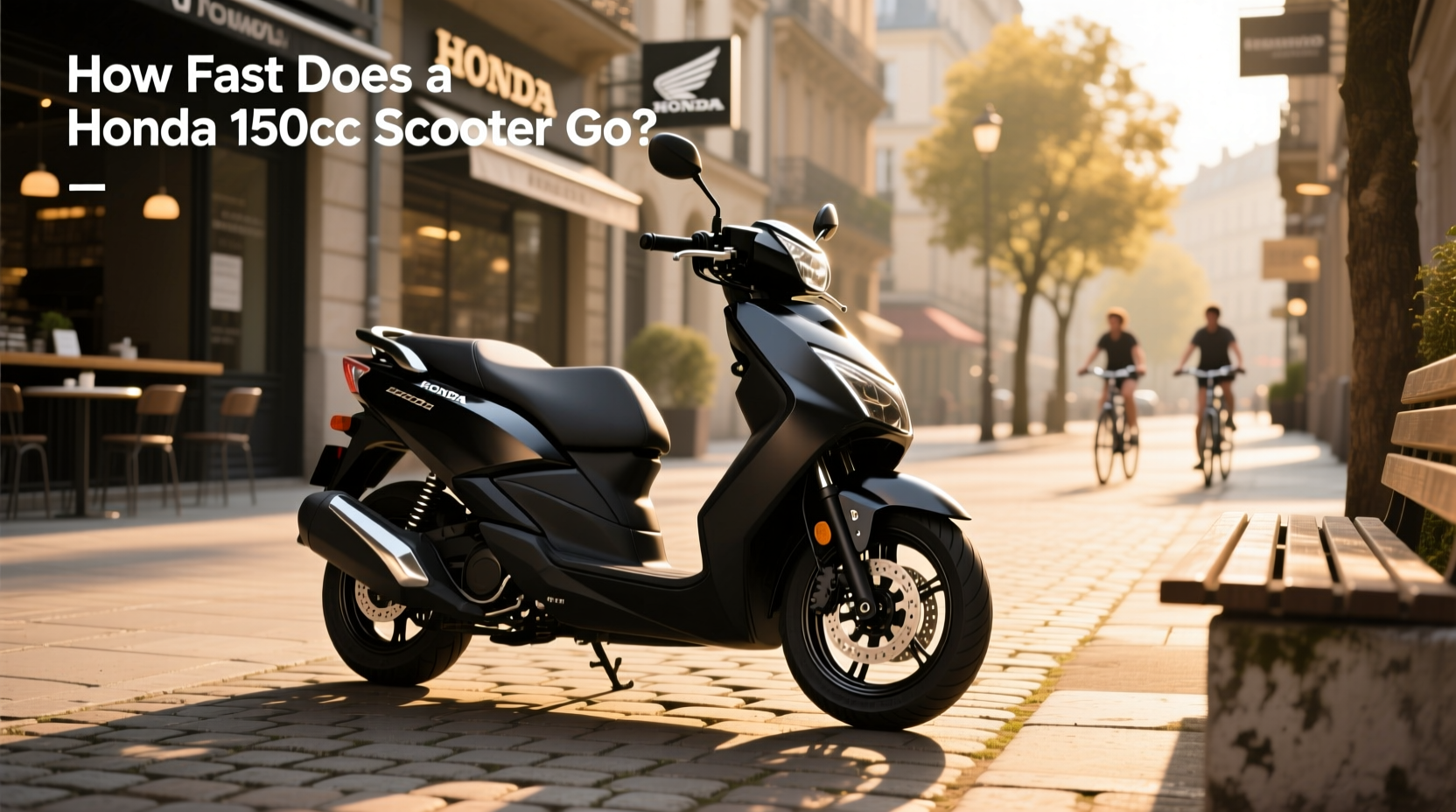
If you're asking how fast does a Honda 150cc scooter go?, the Honda SH150i typically reaches 62–68 mph (100–110 km/h) under ideal conditions. This makes it one of the faster 150cc scooters on the market, suitable for city commuting and light highway use. When choosing a Honda SH150i, key considerations include rider weight, terrain, maintenance condition, and intended use. Stock models rarely exceed 70 mph without modifications, and doing so may compromise stability ⚠️. For riders seeking reliable urban mobility with strong mid-range acceleration and modern features like ABS and liquid cooling, the SH150i is a solid choice—especially if your daily routes include mixed traffic or occasional freeway stretches.
About the Honda SH150i: What It Is and Who It's For
The Honda SH150i is a premium mid-sized scooter designed for practical, efficient urban transportation with an emphasis on comfort, reliability, and modern engineering. Part of Honda’s long-running SH series, this model stands out with its large 16-inch wheels, liquid-cooled 153cc engine, and sleek, minimalist bodywork that offers excellent wind protection and storage capacity beneath the seat ✅.
It's primarily used by commuters in dense urban environments where stop-and-go traffic is common, but it also performs well on suburban roads and short highway trips. Its continuously variable transmission (CVT) ensures smooth power delivery without manual shifting, making it ideal for new riders or those looking for low-stress daily transport 🏙️.
Unlike smaller 50–125cc scooters limited to local errands, the SH150i bridges the gap between lightweight runabouts and larger maxi-scooters. It competes directly with models like the Yamaha NMAX 155 and Vespa Sprint 150, offering better performance than many rivals thanks to its liquid-cooling system and refined fuel injection (PGM-FI).
Why the Honda SH150i Is Gaining Popularity
In recent years, demand for 150cc scooters has surged globally due to rising fuel costs, urban congestion, and evolving licensing regulations that favor lightweight motorcycles 🌍. The SH150i benefits from this trend because it delivers a balanced mix of efficiency, comfort, and performance.
- Fuel Efficiency: Achieves around 80–90 mpg (3–4 L/100km), reducing operating costs significantly compared to cars ⛽.
- Reliability: Honda’s reputation for durability means lower long-term maintenance concerns 🔧.
- Safety Features: Standard ABS braking improves control in wet or emergency situations, appealing to safety-conscious buyers.
- Comfort & Storage: Spacious under-seat compartment fits a full-face helmet, plus USB charging port and adjustable windscreen enhance usability ✨.
Additionally, cities are increasingly promoting two-wheelers through dedicated lanes and reduced parking fees, further boosting interest in practical scooters like the SH150i. Riders appreciate its ability to maintain highway speeds safely while still being nimble enough for tight city streets.
Types and Variants of the Honda SH150i
The SH150i has evolved across model years, with minor updates affecting electronics, suspension, and styling. While there are no radically different variants (like sport vs. touring), regional differences exist:
1. European Market Models (e.g., SH150i ABS)
- Features: Liquid-cooled eSP+ engine, LED lighting, digital instrument cluster, traction control (on newer models), linked brakes.
- Pros: Highest specification level; includes advanced rider aids and improved throttle response.
- Cons: Higher price point; some features may not be available outside Europe.
2. Asian and Oceania Market Models
- Features: Similar core specs but may lack traction control or have analog-digital dashboards.
- Pros: More affordable; widely serviced in regions like Thailand, Australia, and Indonesia.
- Cons: Slightly less refined electronics; fewer standard safety systems.
3. Older Generations (Pre-2020)
- Features: Air-cooled engine (early models), simpler instrumentation, steel wheels.
- Pros: Proven design; easier mechanical access for DIY maintenance.
- Cons: Lower peak power (~13 hp); reduced high-speed stability and heat management.
Note: Always verify specifications based on your region and model year, as engine tuning and feature sets vary 📌.
Key Features and Specifications to Evaluate
When assessing whether the Honda SH150i meets your needs, focus on these measurable criteria:
⚡ Engine Performance
- Displacement: 153–157cc depending on model year
- Power Output: 12.4–14.6 hp (9.2–10.9 kW)
- Cooling System: Liquid-cooled (improves sustained performance and longevity)
- Fuel System: PGM-FI electronic fuel injection (consistent starts, good cold-weather performance)
🛣️ Top Speed and Real-World Capability
- Claimed Top Speed: Not officially stated by Honda, but user reports and testing show 62–68 mph (100–110 km/h) is typical.
- Highway Viability: Can cruise comfortably at 55–60 mph, making it suitable for short freeway segments.
- Acceleration: 0–30 mph in ~5 seconds—excellent for merging and city overtaking.
🛠️ Drivetrain and Maintenance Factors
- Transmission: CVT automatic (maintenance-free under normal use)
- Belt Life: Replace every 15,000–20,000 miles to maintain performance
- Variator Condition: Worn rollers or sliders reduce top speed and throttle response
🧳 Practicality and Comfort
- Seat Height: ~31 inches – accessible for most riders
- Weight: ~297 lbs (135 kg) – manageable at low speeds
- Storage: Under-seat space for one full-face helmet + small items
- Tires: 16-inch front/rear – enhances stability over bumps and grooves
Pros and Cons of the Honda SH150i
✅ Advantages
- Strong real-world top speed for a 150cc class
- Liquid-cooled engine maintains performance in hot weather
- Excellent fuel economy and low running costs
- Large wheels improve ride quality and handling
- Reliable brand with wide service network
- Modern features like ABS and digital dash
❌ Limitations
- Not designed for sustained highway speeds above 70 mph
- Aftermarket support varies by region
- Higher initial cost than basic scooters
- Can feel heavy when maneuvering at very low speeds
- Top speed drops noticeably with heavier riders
How to Choose a Honda SH150i: Step-by-Step Buying Guide
Selecting the right SH150i requires matching its capabilities to your personal needs. Follow this checklist:
🚩 Red Flags to Avoid
- Unstable handling above 65 mph: Could indicate worn steering bearings or misaligned wheels.
- Sluggish acceleration: May signal degraded CVT components (belt, rollers, clutch).
- Overmodified scooters: Aftermarket exhausts or reprogramming may void warranty or cause overheating.
- No service history: Essential for verifying belt changes and fluid replacements.
Price & Market Insights
Pricing for the Honda SH150i varies significantly by country and import status:
- Europe: €5,000–€6,000 (~$5,500–$6,600 USD)
- Australia: AUD 8,000–9,000 (~$5,300–$6,000 USD)
- USA: Not officially sold new; grey-market imports range $6,000–$7,500
- Used Models: Typically sell for 20–40% less than MSRP, depending on mileage and condition.
Despite the premium price, the SH150i often offers better long-term value than cheaper alternatives due to lower depreciation and higher reliability. However, availability outside Asia and Europe remains limited, which can affect resale and parts sourcing 🛒.
Top-Seller & Competitive Analysis
The SH150i competes closely with other 150–155cc premium scooters. Here's how it stacks up against two major rivals:
| Feature | Honda SH150i | Yamaha NMAX 155 | Vespa Sprint 150 |
|---|---|---|---|
| Engine Displacement | 153 cc | 155 cc | 154.8 cc |
| Max Power | 14.6 hp | 15.0 hp | 11.7 hp |
| Cooling System | Liquid-cooled | Liquid-cooled | Air-cooled |
| Top Speed (Real-World) | 65–68 mph | 68–70 mph | 61 mph |
| ABS | Standard | Standard | Standard |
| Wheel Size | 16-inch | 13-inch | 12-inch |
| Fuel Economy | ~85 mpg | ~80 mpg | ~75 mpg |
While the Yamaha NMAX 155 edges out slightly in horsepower and top speed, the SH150i counters with superior wheel size and ride comfort. The Vespa lags in performance but excels in style and brand appeal. For balanced performance and practicality, the SH150i remains a top contender.
Customer Feedback Synthesis
Based on aggregated reviews from owner forums, dealer feedback, and long-term usage reports:
👍 Common Praises
- “Reliable starting in all weather”
- “Smooth ride even on rough pavement thanks to big wheels”
- “Great fuel range—over 200 miles per tank”
- “Feels stable at highway speeds with proper posture”
- “Easy to maintain with clear service intervals”
👎 Frequent Complaints
- “Expensive to repair after accidents—body panels are costly”
- “Limited aftermarket exhaust options in North America”
- “Windshield isn’t adjustable on older models”
- “Heavier than expected when parking”
- “GPS navigation doesn’t integrate well with stock dash”
Sourcing & Supplier Tips
If purchasing outside official markets (e.g., importing to the U.S.), consider these tips:
- Use Reputable Importers: Choose suppliers with experience shipping JDM or Euro-spec bikes compliant with DOT/FMVSS standards.
- Verify Title Status: Ensure the scooter has a clean title and hasn't been flood-damaged or wrecked.
- Check VIN Against Recalls: Use Honda’s global recall portal to confirm no unresolved safety issues.
- Request Full Service Records: Especially important for used imports—look for documented belt changes.
- Consider Warranty Options: Some third-party providers offer extended coverage for imported vehicles.
Maintenance, Safety & Legal Considerations
To keep your SH150i performing optimally:
- Regular CVT Service: Replace drive belt, rollers, and clutch shoes every 15,000–20,000 miles to preserve acceleration and top speed 🔧.
- Tire Pressure: Maintain 29 psi front / 33 psi rear for best handling and fuel economy.
- Brake Checks: Inspect pads and fluid annually, especially if ABS warning light appears.
- Chain/Sprocket (if applicable): Most models are belt-driven, but confirm drivetrain type.
Safety-wise, always wear a DOT/ECE-certified helmet and high-visibility gear. Be cautious exceeding 65 mph, as stability decreases with crosswinds or uneven surfaces.
Legally, ensure your scooter meets local registration requirements. In some regions, 150cc scooters require a motorcycle license rather than a standard driver’s license—verify with your DMV or transport authority 📌.
Final Recommendation
If you need a dependable, comfortable, and reasonably fast commuter scooter capable of handling city traffic and brief highway stretches, the Honda SH150i is an excellent option—particularly if you prioritize reliability and ride quality. If you regularly carry a passenger, ride in extreme heat, or need maximum top speed, consider upgrading to a larger displacement model. For solo urban riders wanting strong 150cc performance, the SH150i strikes a compelling balance.
Frequently Asked Questions
- How fast does a Honda 150cc scooter go?
- The Honda SH150i can reach 62–68 mph (100–110 km/h) under optimal conditions. Actual speed depends on rider weight, wind resistance, and scooter maintenance.
- Does rider weight affect the SH150i’s top speed?
- Yes. Heavier riders (over 200 lbs / 90 kg) may see a reduction of 3–7 mph in top speed due to increased load on the engine and drivetrain.
- Can I increase the SH150i’s speed with modifications?
- Minor gains are possible via CVT tuning (lighter rollers, new belt), but significant increases require engine work and may compromise reliability or legality.
- Is the Honda SH150i good for highway riding?
- It can handle short highway trips at speeds up to 65 mph, but prolonged high-speed cruising may cause fatigue and reduce stability. Not recommended for long interstate commutes.
- What maintenance ensures consistent performance?
- Regular CVT servicing (every 15k–20k miles), proper tire inflation, and timely oil changes help maintain factory-level speed and responsiveness.




 浙公网安备
33010002000092号
 浙B2-20120091-4