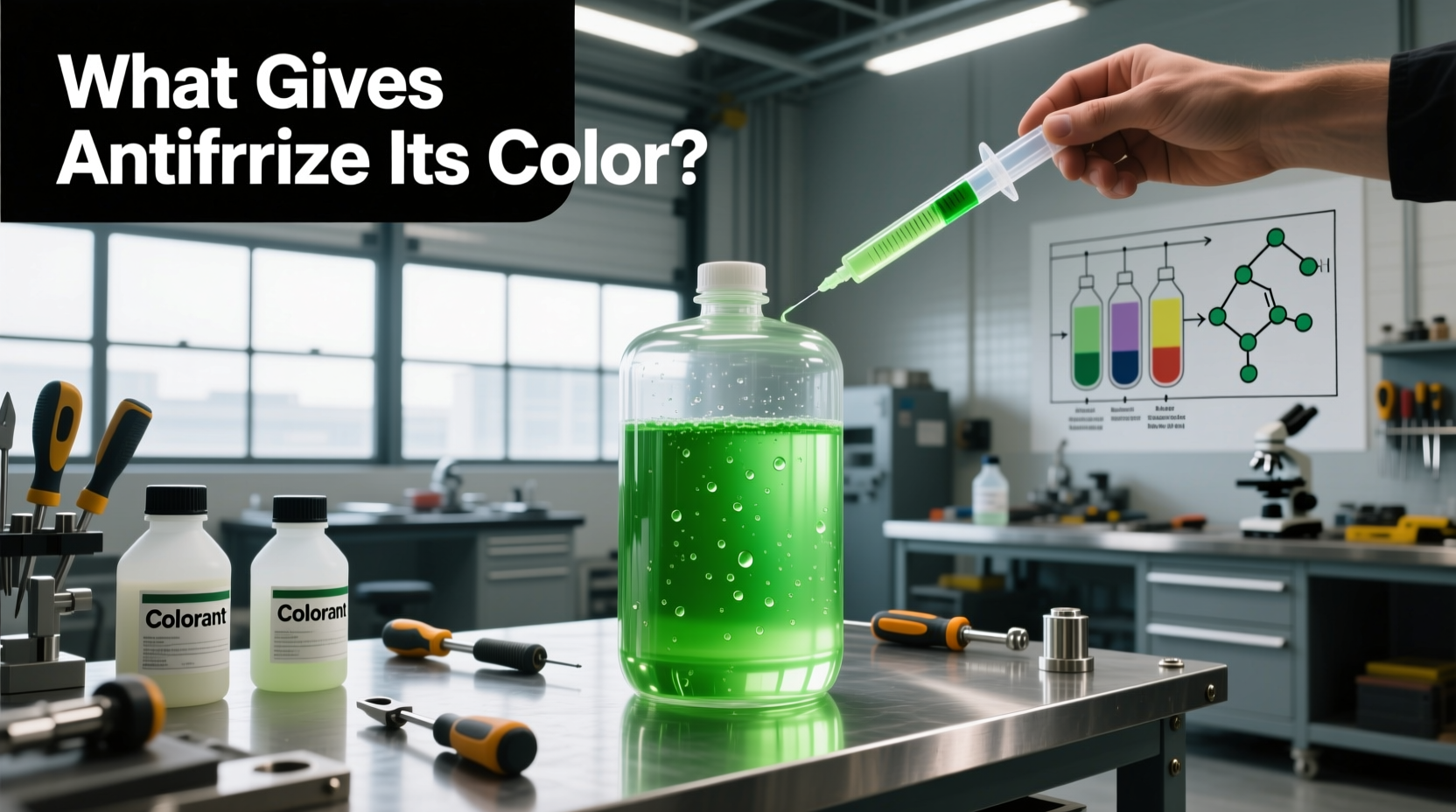
If you're asking what gives antifreeze its color and how to select the right colorant for antifreeze, the answer lies in specialized dyes used for visual identification—not performance enhancement. These dyes help distinguish between coolant types like Inorganic Acid Technology (IAT), Organic Acid Technology (OAT), and Hybrid OAT (HOAT), which are often colored green, red/orange, or yellow/pink respectively 12. However, never rely solely on color when choosing a coolant—chemical formulation matters more than hue. Always consult your vehicle’s manual or OEM specifications before selecting a product.
Dyes must remain stable under high heat, UV exposure, and chemical stress within engine systems 3. When evaluating a colorant for antifreeze, focus on compatibility with your vehicle's cooling system, long-term stability of the dye, and adherence to manufacturer-recommended inhibitor technology. Avoid mixing coolants of different types even if colors appear similar, as this can lead to gel formation and engine damage 4.
About colorant for antifreeze,What gives antifreeze its color?
🔍The primary purpose of a colorant for antifreeze is not aesthetic—it serves as a critical identifier in automotive maintenance. The color comes from specially formulated dyes added during manufacturing. These dyes do not alter the chemical properties of the coolant but allow technicians and owners to quickly recognize the type of fluid they are handling.
Originally, all ethylene glycol-based coolants were dyed green as a standard practice starting in the mid-20th century 5. As new corrosion inhibitor technologies emerged, manufacturers adopted different colors to differentiate formulations. Today, while color remains a useful reference point, it should never be the sole factor in determining coolant compatibility.
For example, a red-colored coolant might indicate an OAT-based formula, commonly used in GM vehicles, while orange may denote a specific long-life variant used by Asian automakers. Yet, two red coolants from different brands could have incompatible chemistries. This inconsistency underscores why understanding what gives antifreeze its color—and what that color actually means—is essential for proper selection.
Why colorant for antifreeze,What gives antifreeze its color? is gaining popularity
📈While the use of dyes in antifreeze isn’t new, consumer awareness around what gives antifreeze its color has increased due to the growing complexity of modern cooling systems. Vehicles now come with proprietary coolants tailored to specific metallurgy and operating conditions. As a result, DIY mechanics and fleet managers alike are paying closer attention to coolant identification to avoid costly mistakes.
The rise in multi-material engines (e.g., aluminum blocks with copper radiators) demands precise inhibitor chemistry. Using the wrong coolant—even one that looks correct—can accelerate corrosion or cause deposits. This has driven demand for clearer identification methods, making the role of colorant for antifreeze more prominent in user education and service workflows.
Additionally, aftermarket suppliers now offer universal and extended-life coolants with distinct coloring schemes, increasing the need for accurate interpretation of what those colors represent. Awareness campaigns by OEMs and repair networks have also emphasized the importance of matching coolant chemistry over appearance.
Types and variants
📋The color of antifreeze is typically linked to its underlying inhibitor technology. Below are the main types, their associated colors, and key characteristics:
- Inorganic Acid Technology (IAT) – Traditionally dyed green, this coolant uses silicates and phosphates to protect metal components. It’s suitable for older vehicles (pre-1990s) but requires replacement every 2–3 years due to faster depletion of inhibitors 6.
- Organic Acid Technology (OAT) – Often colored red, orange, or yellow, OAT coolants provide longer service life (up to 5 years or 150,000 miles). They’re ideal for modern engines with aluminum parts but may not be compatible with older systems using soldered radiators 1.
- Hybrid Organic Acid Technology (HOAT) – A blend of IAT and OAT, usually dyed yellow, turquoise, pink, or blue. HOAT coolants offer broad compatibility and are commonly found in Ford, Chrysler, and European models 5.
- Phosphate-Free Coolants – Typically blue or purple, these are designed for European vehicles with sensitive aluminum components. They prevent scaling and are often required by manufacturers like BMW and Mercedes-Benz.
Keep in mind that same-color coolants may differ chemically, and identical formulations may come in different colors depending on the brand or region 7. Always verify based on specifications, not appearance.
Key features and specifications to evaluate
⚙️When assessing a colorant for antifreeze or any coolant, consider these technical and practical factors:
- Inhibitor Chemistry: Match the coolant type (IAT, OAT, HOAT) to your vehicle’s requirements. Check owner’s manual or OEM service bulletins.
- Dye Stability: Ensure the colorant resists fading under heat and UV exposure. Degraded color can mislead future inspections.
- Mixing Compatibility: Some coolants are labeled “universal” or “compatible,” but independent testing shows variable results. Prefer exact OEM-specified fluids when possible.
- Freeze/Boil Protection Range: Most coolants offer protection down to -34°C (-30°F) and up to 129°C (265°F) at 15 psi. Verify concentration (usually 50/50 mix).
- Environmental & Safety Labels: Look for non-toxic indicators, biodegradability claims, and compliance with local disposal regulations.
Avoid products without clear labeling of inhibitor type or ASTM/DIN standards. Reputable coolants list test certifications such as ASTM D3306 (for passenger cars) or BS 6580.
Pros and cons
| Aspect | Pros | Cons |
|---|---|---|
| Color-Based Identification | Quick visual differentiation during service | Can be misleading; same color ≠ same chemistry |
| OEM-Matched Coolants | Guaranteed compatibility, maintains warranty | Often more expensive; limited availability |
| Universal Formulations | Broad compatibility, easier access | Risk of incompatibility in mixed fleets or older systems |
| Long-Life OAT/HOAT | Extended drain intervals reduce maintenance | May not suit vintage vehicles with brass/copper systems |
Using a correctly matched coolant prevents sludge formation, radiator clogs, and water pump failure. However, relying only on what gives antifreeze its color increases the risk of misidentification.
How to choose colorant for antifreeze,What gives antifreeze its color?
✅Follow this step-by-step guide to make a safe and informed decision:
- Consult Your Vehicle Manual: Find the recommended coolant specification (e.g., G48, G12++, Dex-Cool). This overrides any color assumption.
- Inspect Existing Coolant: Note the current color and clarity. Cloudiness or rust indicates contamination or degradation.
- Verify Inhibitor Type: Determine whether your system needs IAT, OAT, or HOAT. Mixing types can neutralize inhibitors.
- Select Based on Specification, Not Color: Purchase a coolant that meets the OEM standard, regardless of hue.
- Check Concentration: Decide between pre-mixed (ready-to-use) or concentrated formulas requiring dilution with distilled water.
- Avoid Mixing Coolants: Even if colors match, formulations may conflict. Flush the system before switching types.
Red flags to watch for:
- Vague labels like “suitable for most vehicles” without listing standards.
- No mention of inhibitor technology or testing protocols.
- Coolants sold solely by color (e.g., “red antifreeze”) without chemical details.
Price & market insights
💰Pricing varies significantly based on brand, technology, and volume. Typical ranges:
- IAT (Green): $8–$15 per gallon — budget-friendly, frequent replacement needed.
- OAT (Red/Orange): $12–$20 per gallon — higher upfront cost, longer lifespan.
- HOAT (Yellow/Pink): $15–$25 per gallon — premium pricing for OEM-specific blends.
- Phosphate-Free (Blue/Purple): $18–$30 per gallon — specialty use, often imported.
Prices may vary by region and retailer. Buying in bulk (5-gallon jugs) reduces unit cost but only makes sense if storage conditions are dry and temperature-controlled. Pre-mixed coolants cost about 20–30% more than concentrates.
Top-seller & competitive analysis
⭐Popular coolants dominate shelves due to brand trust and OEM partnerships. While no single product fits all, here’s a comparison of widely available options:
| Product | Type | Color | OEM Spec Match | Approx. Price/Gal |
|---|---|---|---|---|
| Prestone All Vehicles | HOAT | Yellow | Limited (not model-specific) | $14 |
| Zerex G-05 | HOAT | Turquoise | Ford, Chrysler | $18 |
| Peak OAT | OAT | Orange | GM Dex-Cool | $16 |
| BMW LL-04 Approved | Phosphate-Free | Purple | BMW, Mini | $26 |
Note: “All Vehicles” does not mean universal compatibility. Always cross-check specifications before purchase.
Customer feedback synthesis
👥Analysis of user reviews reveals consistent patterns:
- Positive Feedback: Longevity of OAT coolants, ease of use with pre-mixed formats, and confidence in OEM-branded products.
- Common Complaints: Misleading color coding leading to incorrect purchases, lack of clarity on mixing guidelines, and premature degradation in extreme climates.
- Frequent Requests: Clearer labeling of inhibitor types, standardized color codes, and refill packs with measuring tools.
Many users report confusion after switching brands despite matching colors, reinforcing the need for chemical verification over visual cues.
Sourcing & supplier tips
🛒Buy from reputable sources: auto parts chains (e.g., AutoZone, Advance Auto Parts), OEM dealerships, or certified online retailers. For bulk buyers (fleet operators, repair shops):
- Negotiate volume discounts with distributors.
- Request technical data sheets (TDS) and safety data sheets (SDS) before ordering.
- Store coolants in original containers away from sunlight and freezing temperatures.
- Verify return policies for unopened products in case of over-ordering.
When sourcing non-OEM alternatives, ensure third-party testing confirms compliance with relevant standards.
Maintenance, safety & legal considerations
🔧Proper handling and disposal are crucial:
- Never pour old coolant down drains or onto soil. Ethylene glycol is toxic to pets and wildlife.
- Dispose of used coolant at designated recycling centers or hazardous waste facilities.
- Wear gloves and eye protection when handling concentrated formulas.
- Flush cooling systems thoroughly before changing coolant types to prevent reactions.
- Check local environmental regulations—some regions restrict certain glycol types or require closed-loop recycling.
Always label stored coolants clearly, especially if decanted. Misidentification poses serious risks during servicing.
Conclusion
Understanding what gives antifreeze its color helps demystify coolant selection, but color alone should never dictate your choice. The colorant for antifreeze serves as a visual aid, not a specification. To choose correctly, prioritize your vehicle manufacturer’s recommendations over hue. If you drive a newer domestic vehicle, look for OAT (often red/orange); for European models, seek phosphate-free purple coolants; for older cars, stick with traditional green IAT. When in doubt, consult a professional mechanic or refer to official service documentation. Matching chemistry—not color—ensures engine longevity and avoids costly repairs.
Frequently Asked Questions
- What gives antifreeze its color?
Antifreeze gets its color from synthetic dyes added during production. These dyes serve as visual identifiers to help distinguish between different coolant types but do not affect performance. - Can I mix different colored coolants?
No, you should not mix coolants even if their colors seem compatible. Different inhibitor chemistries can react and form sludge, potentially damaging the cooling system. - Does the color of antifreeze fade over time?
Yes, prolonged exposure to heat and light can degrade the dye, causing discoloration. However, color change doesn’t always indicate coolant failure—test inhibitor levels instead. - Is there a universal antifreeze color code?
No standardized global color-coding system exists. Same-color coolants may have different formulations, and identical types may come in different colors across brands. - Will using the wrong color coolant void my warranty?
Using a coolant that doesn’t meet OEM specifications can void part of your warranty, especially if engine damage occurs. Always follow manufacturer guidelines regardless of color.




 浙公网安备
33010002000092号
 浙B2-20120091-4