Short Introduction
If you're frustrated with your car's engine shutting off at every red light, understanding how to choose auto stop start eliminator,How does the auto start stop eliminator work? is essential. These devices bypass the factory auto start-stop system by intercepting signals between sensors and the engine control unit, preventing unwanted shutdowns while preserving your vehicle’s warranty 1. They’re ideal for drivers who prioritize comfort, reduced mechanical stress, or consistent cabin climate. However, not all eliminators work the same across brands—compatibility, ease of installation, and reversibility matter most. Avoid universal kits without model-specific testing; always confirm wiring harness alignment with your dashboard assembly.
About auto stop start eliminator,How does the auto start stop eliminator work?
An auto start-stop eliminator ⚙️ is an aftermarket electronic module designed to disable the automatic engine shutoff feature found in many modern vehicles. This technology, originally implemented to meet fuel efficiency standards, turns off the engine when the vehicle comes to a complete stop (e.g., at traffic lights) and restarts it upon brake release or clutch engagement 1.
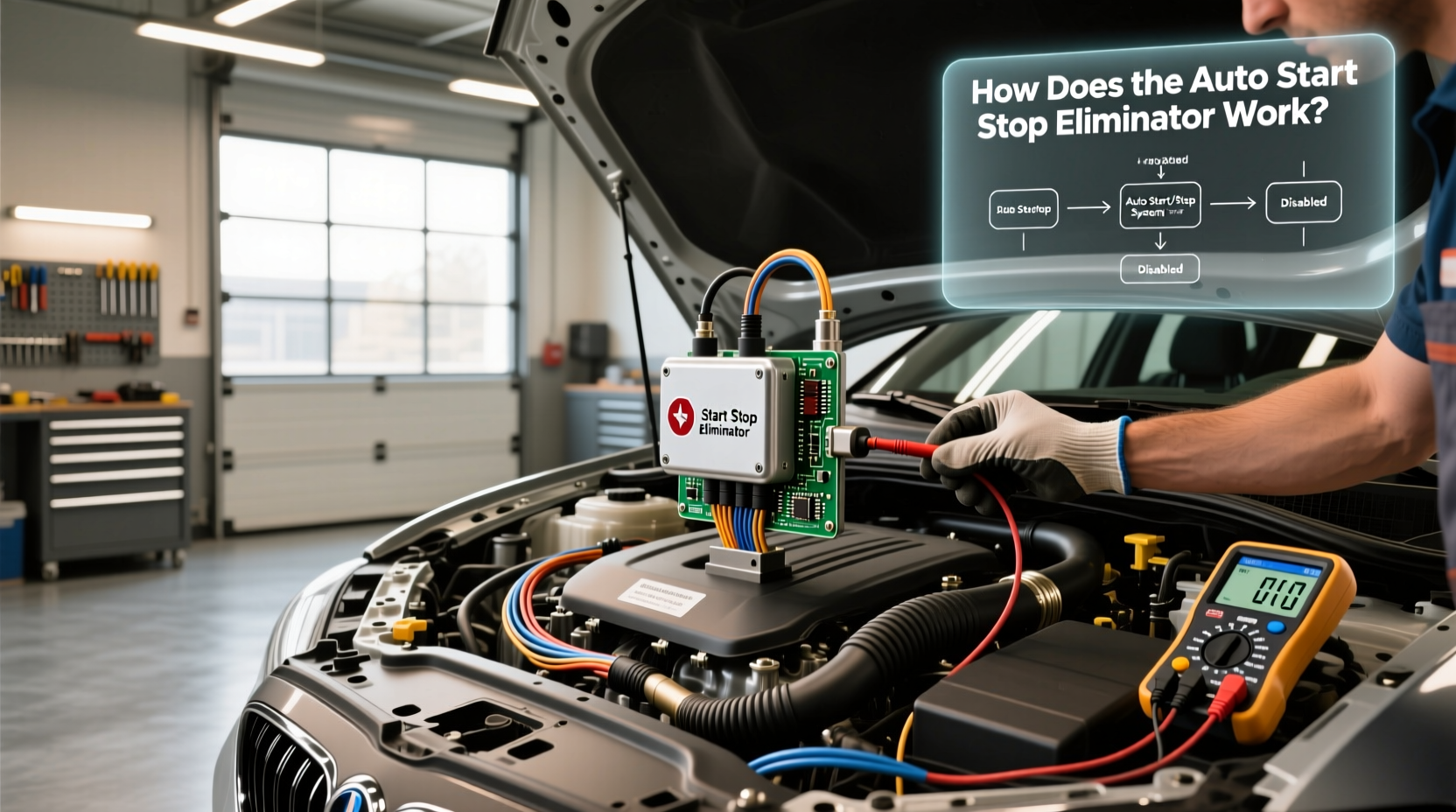
The eliminator works by intercepting sensor signals—typically from the brake pedal, gear position, and start/stop button—and simulating conditions under which the system would remain inactive. Instead of relying on manual deactivation each time you drive, the device remembers your preference, offering a permanent off state without software modification.
Typical use cases include:
- City driving with frequent stops 📍
- Maintaining HVAC performance during idle
- Reducing noise and vibration from repeated restarts
- Preserving starter motor and battery life over time ⚡
Why auto stop start eliminator,How does the auto start stop eliminator work? is gaining popularity
Driver dissatisfaction with forced automation has fueled demand for these devices. While automakers promote start-stop systems as fuel-saving innovations, real-world benefits are often minimal—especially in cold climates or heavy traffic where the engine cycles too frequently 1.
Common complaints include:
- Delayed acceleration response ❗
- Loss of air conditioning effectiveness
- Annoying vibrations during restart
- Need to repress disable button after every ignition cycle
Types and variants
Auto start-stop eliminators come in several forms, primarily differentiated by compatibility and integration method:
1. OEM-Specific Plug-and-Play Modules ✅
Designed for particular makes and models (e.g., GM, Ford, Stellantis), these units replace the factory harness connector behind the start/stop switch.
- Pros: Guaranteed fit, no modifications, retains original aesthetics
- Cons: Higher cost per model, limited availability for older years
2. Universal Relay Bypass Kits 🔧
Use relay logic to simulate continuous brake signal input or inhibit starter signal triggering.
- Pros: Lower price, adaptable to multiple vehicles
- Cons: May require minor wiring, risk of incorrect installation affecting other systems
3. CAN Bus Emulators 🌐
Advanced units that communicate with the vehicle’s Controller Area Network (CAN) to send spoofed messages indicating the start-stop system is disabled via driver input.
- Pros: Seamless integration, memory function, compatible with digital dash feedback
- Cons: Expensive, may require firmware updates, potential conflict with future software patches
Key features and specifications to evaluate
When assessing how to choose auto stop start eliminator,How does the auto start stop eliminator work?, consider these technical and practical criteria:
- Vehicle Compatibility: Confirm exact make, model, year, and trim support. Some modules differ between base and premium trims due to variations in harness layout.
- Installation Method: Prefer plug-and-play over hardwired solutions. Non-invasive designs preserve resale value and allow easy removal.
- Signal Handling: Units that mimic normal operation (e.g., simulating button press) are less likely to trigger error codes.
- Memory Retention: Should remember disable state across ignitions without needing reset.
- Warranty Compliance: Look for devices described as “passive” or “non-programming”—they don’t alter ECU data, reducing warranty concerns 1.
- Build Quality: Check for sealed connectors, automotive-grade insulation, and solder integrity.
Pros and cons
| Pros ✅ | Cons ❌ |
|---|---|
| Eliminates annoyance of engine shutoff | No fuel economy benefit (may slightly decrease mpg) |
| Reduces wear on starter and battery | May void emissions compliance in regulated regions |
| Saves time pressing disable button daily | Limited functionality if vehicle uses additional sensors (e.g., steering angle, A/C load) |
| Reversible with no permanent damage | Potential for check-engine lights if poorly designed |
Best suited for: Urban commuters, drivers in extreme temperatures, those with upgraded audio or auxiliary power needs.
Not recommended for: Eco-conscious buyers seeking maximum fuel savings, fleet operators under green compliance mandates.
How to choose auto stop start eliminator,How does the auto start stop eliminator work?
Follow this step-by-step guide to make an informed decision:
- Identify Your Vehicle’s System 🔍 – Determine whether your car uses brake-based, clutch-based, or multi-sensor logic for start-stop activation. Consult owner’s manual or online forums.
- Verify Model-Year Fitment 📋 – Manufacturers often produce different harnesses for facelifts or mid-cycle updates. Cross-reference product listings with VIN-specific databases.
- Choose Installation Type 🔧 – Opt for plug-and-play unless you have electrical experience. Avoid kits requiring splicing unless they include heat-shrink tubing and crimp connectors.
- Check Memory Function ✨ – Ensure the unit retains settings after power loss. Testimonials often mention this as a key differentiator.
- Review Return Policy 🛒 – Buy from suppliers offering 30-day returns in case of fitment issues or unexpected warnings.
Avoid if:
- The seller cannot provide proof of successful installations on your exact model
- Product claims to "reprogram" the ECU or requires OBD2 connection
- No clear documentation or customer support channel exists
Price & market insights
Pricing varies based on complexity and brand specificity:
- $40–$70: Universal relay kits, often generic with mixed reliability
- $70–$110: OEM-specific plug-and-play modules (most common range)
- $110–$160: CAN bus-enabled or multi-vehicle programmable units
While higher-priced options aren’t always better, well-reviewed branded units tend to offer superior build quality and updated compatibility. Consider the device a long-term investment—if it prevents one premature starter replacement (~$300+), it pays for itself 1.
Top-seller & competitive analysis
Popular models emphasize reliability and ease of use. Below is a comparison of widely purchased eliminators:
| Model | Compatibility | Installation | Memory | Price Range |
|---|---|---|---|---|
| Brand A Eliminator | Ford, Lincoln (2015–2023) | Plug-and-play | Yes | $95 |
| Brand B Module | GM Trucks/SUVs (2014–2022) | Plug-and-play | Yes | $88 |
| Universal Relay Kit X | Multiple (requires setup) | Hardwired | No | $52 |
| Premium CAN Unit Z | Select European & Asian | Plug-in + pairing | Yes | $145 |
Note: Always verify current compatibility lists, as manufacturers update supported models regularly.
Customer feedback synthesis
Analysis of verified buyer reviews reveals consistent themes:
👍 Frequent Praise:
- "No more engine drop at stoplights—smooth driving restored"
- "Installed in under 15 minutes with basic tools"
- "Starter feels quieter; less vibration during restarts"
- "Heater stays strong in winter"
👎 Common Complaints:
- "Didn’t fit my 2020 vs 2021 trim despite listing both"
- "Caused a warning light after firmware update"
- "Instructions were unclear; had to watch YouTube tutorial"
- "Stopped working after six months"
Reliability correlates strongly with manufacturer responsiveness and detailed installation guides.
Sourcing & supplier tips
For individual buyers:
- Purchase from specialized auto-electronic retailers rather than general marketplaces
- Look for sellers with responsive support and downloadable PDF instructions
- Prefer U.S.-based or EU-distributed brands for easier returns
- Contact manufacturers directly for distributor agreements
- Request sample units for fitment testing before committing
- Negotiate MOQs (minimum order quantities) and warranty terms
Maintenance, safety & legal considerations
These devices typically require no maintenance. However:
- Safety: Improperly installed units could interfere with brake signal transmission—ensure secure connections.
- Legal: Disabling emissions-related systems may violate regulations in certain jurisdictions (e.g., California Air Resources Board rules). This is not illegal for private use in most areas, but could affect passing emissions tests.
- Verification: Check local laws before installation. When in doubt, consult a certified mechanic or regulatory authority website.
Conclusion
If you want consistent engine operation and reduced mechanical cycling, choosing the right auto stop start eliminator depends on compatibility, installation simplicity, and long-term reliability. For most users, an OEM-specific plug-and-play model offers the best balance of safety and convenience. Avoid universal or ECU-modifying versions unless you have technical expertise. Remember: while these devices improve comfort and may extend component life, they eliminate a factory-intended fuel-saving feature. Evaluate your driving patterns and regional requirements before deciding.
FAQs
- Can I reinstall the auto start-stop feature after using an eliminator?
- Yes. Since most eliminators are non-invasive and plug into the harness, removing the device restores full functionality.
- Will an eliminator void my car’s warranty?
- Generally no, if the device doesn’t alter software or cause damage. However, dealers may deny starter-related claims if misuse is suspected.
- Do eliminators work on hybrids or electric vehicles?
- Rarely. Hybrid systems integrate start-stop deeply into energy management; dedicated solutions are uncommon and often model-specific.
- Are there any fuel economy impacts?
- Yes—disabling the system may reduce city fuel efficiency by 3–8%, depending on driving conditions and climate control usage.
- How long does installation usually take?
- Most plug-and-play models take 10–25 minutes using basic tools like a screwdriver and panel remover.




 浙公网安备
33010002000092号
 浙B2-20120091-4