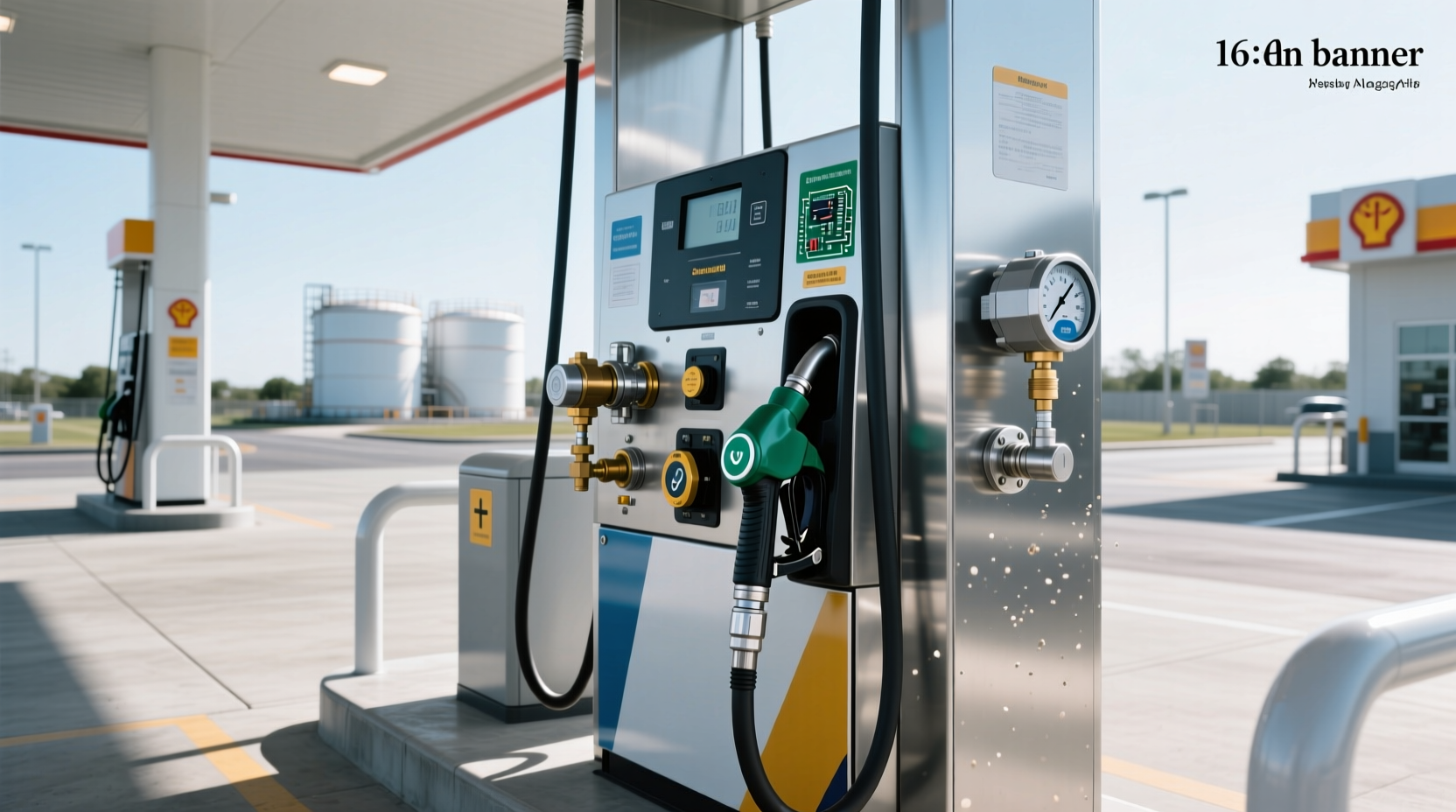
Short Introduction: What to Look for in Automatic Fuel Shut Off Systems
When learning how to choose automatic fuel shut off technology, understanding how does automatic fuel shut off work? is the first critical step. The system relies on the Venturi effect and air pressure changes—not electronics—to detect when a tank is full, making it highly reliable 1. Key components include the sensing tube, flexible diaphragm, and trip mechanism. For buyers, prioritize nozzles with durable seals, resistance to clogging, and compatibility with vapor recovery systems. Avoid models that frequently trigger premature shut-offs due to poor airflow design. This guide covers everything from technical function to sourcing tips so you can make an informed decision based on reliability, safety, and long-term maintenance needs.
About automatic fuel shut off, How does automatic fuel shut off work?
An automatic fuel shut-off system is a mechanical safety feature primarily found in gas station nozzles. Its purpose is to stop fuel flow the moment a vehicle’s tank reaches capacity, preventing overfilling. Unlike electronic sensors, this system operates entirely through physics—specifically the Venturi effect, which creates a vacuum as fuel flows through the nozzle 2.
The core process begins when fuel exits the spout. Air is simultaneously drawn through a small sensing tube located near the nozzle tip. As long as air flows freely into this tube, a stable low-pressure zone forms inside the handle, keeping the main valve open ⚙️. When the rising fuel level blocks the sensing hole, airflow stops, the vacuum collapses, and the resulting pressure change activates a diaphragm. This triggers a mechanical trip that instantly closes the main valve ✅.
This mechanism is used universally at self-service pumps and is especially important for modern vehicles equipped with evaporative emissions (EVAP) systems, which can be damaged by liquid fuel overflow.
Why automatic fuel shut off, How does automatic fuel shut off work? is gaining popularity
The widespread adoption of automatic shut-off nozzles is driven by three major factors: safety, environmental protection, and regulatory compliance 🌍. With the rise of self-service stations, the risk of human error during refueling increased significantly. An automatic system acts as a fail-safe against spills, reducing fire hazards and environmental contamination.
Fuel spills not only waste expensive gasoline but also release harmful vapors and can seep into groundwater. Regulatory bodies worldwide have implemented strict rules to minimize these risks, making automatic shut-off systems a legal requirement in most regions 🔗. Additionally, protecting EVAP systems in modern cars has become a key concern—overfilling can flood charcoal canisters, leading to costly repairs ❗.
Market data shows the global automatic fuel nozzle industry was valued at $1.5 billion in 2023 and is projected to reach $2.5 billion by 2033, reflecting growing demand tied to stricter environmental standards and infrastructure upgrades 📈.
Types and variants
While all automatic shut-off nozzles operate on the same core principle, variations exist based on design, durability, and compatibility:
- Standard Mechanical Nozzles: Most common at gas stations. Use a simple Venturi-based system with no electronics. Pros: Highly reliable, low maintenance. Cons: Susceptible to premature shut-off if sensing tube is blocked.
- Vapor Recovery Compatible Nozzles: Designed for vehicles with onboard vapor capture systems. Feature modified airflow paths to prevent interference. Pros: Reduces splash-back and false triggers. Cons: Slightly more complex, may require specific pump integration.
- Heavy-Duty Industrial Nozzles: Used in commercial fleets, aviation, or marine refueling. Built with reinforced materials. Pros: Resistant to wear, extreme temperatures. Cons: Higher cost, typically over-engineered for consumer use.
No universal “best” type exists—the right choice depends on application, environment, and vehicle compatibility.
Key features and specifications to evaluate
When evaluating how to choose automatic fuel shut off systems, focus on these measurable and observable features:
- Sensing Tube Design: Should be positioned to avoid immediate submersion during fast filling. Look for recessed or angled tips to reduce splash-back.
- Diaphragm Material: Must be flexible yet resistant to fuel degradation. Nitrile rubber is commonly used for its chemical stability.
- Seal Integrity: Worn O-rings or springs in the main valve can cause leaks or incomplete closure.
- Flow Rate Compatibility: High-flow nozzles may increase splashing, triggering early shut-off. Adjustable flow handles help mitigate this.
- Clog Resistance: Debris in the sensing line is a leading cause of malfunction. Some models include fine mesh filters.
Always verify specifications with the manufacturer, as performance can vary even within the same model line.
Pros and cons
- Prevents costly fuel spills ✅
- Protects vehicle EVAP systems from damage ⚠️
- No reliance on external power or sensors ⚙️
- Reduces environmental pollution 🌍
- Complies with safety regulations 🔗
- Premature shut-off can occur due to splashing or vapor interference ❓
- Mechanical parts degrade over time, requiring replacement 🔧
- Not foolproof—user behavior (like topping off) can bypass safety features ❗
- Limited feedback; users don’t know why it triggered
Best suited for: Gas stations, fleet operations, public refueling infrastructure.
Less ideal for: Manual dispensing in uncontrolled environments without regular maintenance.
How to choose automatic fuel shut off, How does automatic fuel shut off work?
To make a smart purchase decision, follow this practical checklist:
- Assess your use case: Are you outfitting a retail station, fleet depot, or industrial site? Match nozzle type to volume and vehicle mix.
- Check compatibility: Ensure the nozzle works with existing hose connectors and vapor recovery standards in your region.
- Evaluate build quality: Inspect diaphragm material, spring tension, and seal condition in product samples or demos.
- Test for reliability: If possible, conduct a flow test to see if shut-off activates consistently without premature clicking.
- Avoid these red flags:
- Models with exposed sensing holes prone to clogging 🧼
- No clear maintenance or replacement part availability 🛠️
- Lack of certification markings (e.g., API, CE, or local equivalents) 🔍
- Unusually low price suggesting substandard materials 💸
Remember: how does automatic fuel shut off work? determines its reliability. Stick to proven mechanical designs unless advanced monitoring is required.
Price & market insights
Prices for automatic shut-off nozzles vary widely based on type and region:
- Standard nozzles: $30–$70 each
- Vapor recovery models: $70–$120
- Industrial-grade: $120–$250+
Higher prices often reflect better materials, longer lifespan, and regulatory compliance. Bulk purchases from suppliers can reduce unit cost by 15–30%. However, the cheapest option may lead to higher downtime and replacement costs. Focus on total cost of ownership rather than upfront price alone.
| Type | Avg. Price | Lifespan | Ideal Use Case |
|---|---|---|---|
| Standard Mechanical | $30–$70 | 1–3 years | Retail gas stations |
| Vapor Recovery Compatible | $70–$120 | 2–4 years | Urban stations, newer vehicles |
| Heavy-Duty Industrial | $120–$250+ | 5+ years | Fleets, aviation, marine |
Note: Prices may vary by region and supplier. Always confirm warranty terms and return policies before bulk ordering.
Top-seller & competitive analysis
Leading manufacturers like Dresser Wayne, Gilbarco, and Tokheim dominate the market with reliable, field-tested designs. While specific models are rarely sold directly to consumers, distributors often carry compatible replacements.
Common traits among top-performing units include:
- Reinforced diaphragms
- Self-cleaning sensing ports
- Smooth lever mechanics
- Clear compliance labeling
When comparing options, prioritize service support and part availability over brand prestige. A lesser-known brand with local technical support may offer better long-term value.
Customer feedback synthesis
Analysis of user experiences reveals consistent patterns:
- Frequent praise:
- “Reliably stops fueling without overfilling” ✅
- “Durable construction lasts years under daily use” 🔧
- “Easy to integrate with existing pumps” 🔄
- Common complaints:
- “Shuts off too early, especially with high flow” ❓
- “Sensing tube gets clogged with dirt or ice” 🧼
- “Hard to find replacement parts for older models” 🔧
These insights highlight the importance of proper handling (e.g., using partial trigger control) and routine inspection.
Sourcing & supplier tips
For individual units, authorized fuel equipment distributors are the safest source. For bulk purchases:
- Request product specifications and compliance documentation 📋
- Ask about minimum order quantities and lead times 🚚
- Inquire about warranty coverage and repair services 🛠️
- Consider stocking spare diaphragms and O-rings for quick maintenance 🧰
If importing, verify that products meet local safety and environmental standards. Conduct sample testing before full deployment. Avoid uncertified clones, which may fail under real-world conditions.
Maintenance, safety & legal considerations
Regular maintenance ensures longevity and safe operation:
- Inspect the sensing tube monthly for blockages 🧼
- Replace worn diaphragms or seals as needed 🔧
- Test shut-off function periodically using controlled flow
Safety-wise, never attempt to disable or modify the shut-off mechanism. Topping off after activation can damage vehicle systems and create spill risks ❗.
Legally, many jurisdictions require functional automatic shut-offs on all public dispensers. While exact regulations vary, compliance is typically verified during station inspections. Always check with local authorities or industry associations to confirm requirements in your area.
Conclusion
Understanding how does automatic fuel shut off work? helps you make smarter purchasing decisions. If you need a reliable, low-maintenance solution for standard refueling, choose a well-built mechanical nozzle with clog-resistant design. For stations serving modern vehicles, invest in vapor recovery-compatible models to reduce false shut-offs. In high-use industrial settings, prioritize heavy-duty construction despite the higher cost. Ultimately, the best choice balances performance, durability, and total cost of ownership—always verify specs and test where possible.
FAQs
- How does automatic fuel shut-off prevent overfilling?
It uses the Venturi effect: when fuel covers the sensing tube, airflow stops, pressure changes, and a diaphragm triggers the valve to close instantly. - Why does my gas pump keep shutting off prematurely?
This is often caused by fuel splashing into the sensing tube or vapor recovery interference. Try slowing the flow rate or adjusting the nozzle angle. - Can I disable the automatic shut-off on a fuel nozzle?
No—doing so is unsafe, violates regulations, and risks fuel spills and environmental harm. - What happens if the sensing tube gets clogged?
A clog can cause false vacuum readings, leading to early shut-off. Clean the tube regularly and inspect for debris. - Is topping off my gas tank harmful?
Yes. It can damage the EVAP system by flooding the charcoal canister with liquid fuel and increase spill risk.




 浙公网安备
33010002000092号
 浙B2-20120091-4