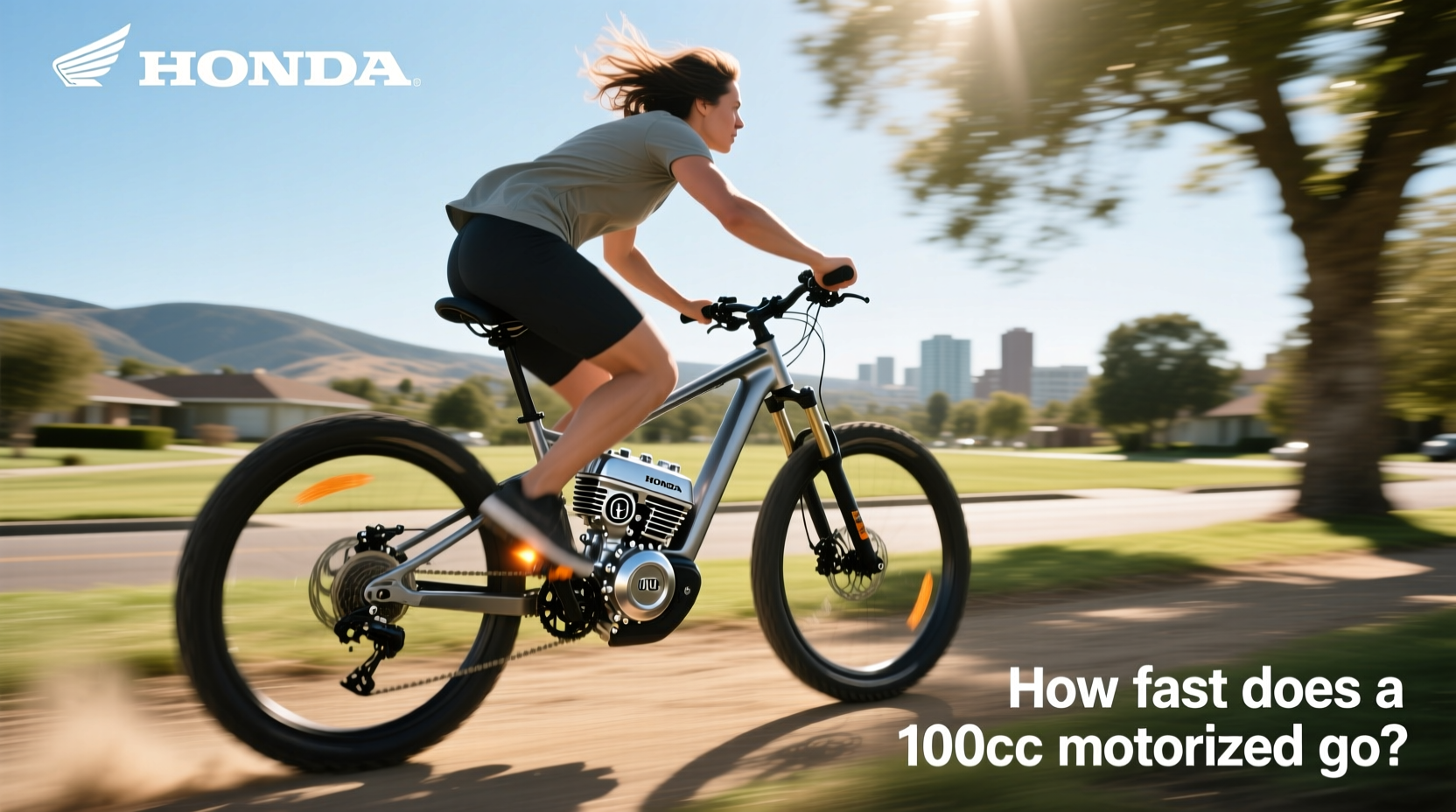
📍 About Honda Bicycle Engine Kit, How Fast Does a 100cc Motorized Go?
The term "honda bicycle engine kit" is often used generically, though Honda does not manufacture bolt-on motorized bike conversion kits. Instead, users typically refer to aftermarket 2-stroke or 4-stroke gasoline engine kits (often labeled as 80cc, 100cc) that resemble older Honda small-engine designs in appearance or reputation. These kits convert standard bicycles into motor-assisted vehicles capable of reaching significant speeds.
When evaluating "how fast does a 100cc motorized go?", it's essential to understand that advertised displacement may not reflect actual engine size. Many so-called "100cc" engines measure closer to 78–80cc under standardized U.S. testing methods 1. True performance depends more on build quality than nominal displacement.
Typical use cases include recreational riding, short-distance commuting on private property, or off-road trail use. They are not designed for highway travel or heavy urban traffic due to braking limitations and regulatory restrictions.
📈 Why Honda Bicycle Engine Kit, How Fast Does a 100cc Motorized Go? Is Gaining Popularity
Motorized bike kits have seen rising interest due to their low cost compared to scooters or motorcycles, ease of installation, and fuel efficiency. Riders looking for an affordable entry into motorized transport often turn to these systems. The allure of achieving 35–50 mph on a converted bicycle contributes significantly to demand.
User communities report varied motivations: some seek novelty and DIY satisfaction, while others need inexpensive last-mile transportation. However, increasing speed capabilities raise concerns about safety, legality, and mechanical integrity, especially when stock bikes are pushed beyond design limits.
🔧 Types and Variants
- ⚙️ 2-Stroke vs. 4-Stroke Kits
- 2-Stroke: Lighter, simpler design, higher power-to-weight ratio. Requires oil-gas mix. Faster acceleration but louder and less fuel-efficient. Common in 66cc–100cc ranges.
- 4-Stroke: Heavier, quieter, cleaner burning. Uses separate oil reservoir. Better torque at low RPMs. Often harder to install due to larger footprint.
- 🛒 Friction Drive vs. Chain Drive
- Friction Drive: Roller presses against tire. Easy to install/remove. Prone to slippage in wet conditions and wears tires quickly. Lower top speed.
- Chain Drive: Connects via sprocket to rear wheel. More efficient, reliable, and faster. Requires precise alignment and regular chain maintenance.
- 🏭 "100cc" Labeled Kits (Actual Displacement Varies)
- Many kits marketed as 100cc have true displacements around 78–80cc. Check manufacturer specifications carefully.
- Higher-end models feature one-piece cylinders, forged pistons, and balanced cranks for improved durability and output.
📊 Key Features and Specifications to Evaluate
To make an informed decision when selecting a honda bicycle engine kit or assessing how fast a 100cc motorized bike can go, consider these technical aspects:
- ✅ Actual Engine Displacement: Verify using bore and stroke measurements. A BBR Tuning “100cc” kit, for example, has a true displacement of 78.6cc 1.
- 👥 Rider Weight Impact: Heavier riders reduce effective speed. At 215 lbs, even a tuned 66cc engine may only cruise at 35 mph 2.
- ⚙️ Gear Ratio (Sprocket Size): Smaller rear sprockets (more teeth) increase top speed but reduce hill-climbing ability. Larger sprockets improve torque but cap maximum velocity.
- ✨ Component Quality: Look for performance carburetors (e.g., NT Carb), tuned exhausts, reinforced chains, and CNC-machined parts.
- 🔌 Ignition System: CDI-based ignition affects starting reliability and throttle response.
- 🔋 Fuel Tank Capacity: Impacts range. Most kits include 1–1.5L tanks.
📋 Pros and Cons
✅ Advantages
- Low upfront cost (typically $150–$300)
- High fuel efficiency (up to 100 mpg)
- DIY-friendly installation for basic models
- Potential for 35–50+ mph speeds with proper setup
- No license required in some jurisdictions (private land use)
❌ Limitations
- Most standard bicycles aren’t built for sustained high-speed operation
- Limited braking power at higher speeds increases accident risk
- Many kits fail emissions regulations and cannot be registered for public road use
- Variability in manufacturing quality leads to inconsistent performance
- Maintenance needs increase with speed modifications
🧭 How to Choose a Honda Bicycle Engine Kit: Your Step-by-Step Guide
- Define Your Speed Goal: Are you aiming for 30 mph casual cruising or 45+ mph performance? This determines engine type and tuning level needed.
- Assess Your Bike Frame: Ensure it can handle added weight (15–25 lbs) and stress. Steel frames are preferred over aluminum for vibration resistance.
- Verify True Engine Specs: Don’t trust “100cc” labels. Request bore/stroke data or check independent reviews.
- Select Drive Type: Choose chain drive for reliability and speed; avoid friction drives if exceeding 30 mph is a priority.
- Check Sprocket Compatibility: Plan for future changes. A 36T sprocket favors torque; 44T+ favors speed.
- Evaluate Component Build: Prioritize kits with metal gears, sealed bearings, and performance intake/exhaust.
- Review Legal Status: Confirm whether motorized bicycles are allowed in your area and what speed/power limits apply.
- Inspect Warranty & Support: Reputable suppliers offer return policies and customer support.
🚩 Red Flags to Avoid
- Kits with no verifiable displacement data
- Plastic gear internals or unbalanced cranks
- Missing safety features (kill switch, throttle limiter)
- Overstated speed claims without user verification
- No instructions or poor English manuals indicating low-quality origin
💰 Price & Market Insights
Prices vary widely based on brand, components, and claimed displacement:
- Budget Tier ($120–$180): Basic 66–80cc kits with minimal tuning potential. Often lack documentation and consistent QC.
- Mid-Tier ($180–$250): Includes brands like BBR Tuning. Better materials, some performance parts, moderate tuning headroom.
- Premium Builds ($250+): Custom or upgraded kits with billet parts, high-flow carbs, and balanced assemblies. May require professional tuning.
Value isn’t always tied to price — research user feedback before assuming higher cost means better speed or reliability.
🏆 Top-Seller & Competitive Analysis
| Model | Claimed CC | Actual CC | Drive Type | Reported Speed Range | Key Strengths | Common Complaints |
|---|---|---|---|---|---|---|
| BBR Tuning 100cc | 100cc | 78.6cc | Chain | 30–50+ mph | One-piece cylinder, balanced crank | Inconsistent QC in batches |
| YD-100 (80cc) | 80cc | ~79cc | Chain | 35–45 mph | Proven design, widely supported | Average stock carb restricts power |
| Generic 100cc Friction | 100cc | Unknown | Friction | 20–28 mph | Cheap, easy install | Slips in rain, wears tire fast |
Note: Performance varies significantly with tuning, rider weight, and gearing.
📝 Customer Feedback Synthesis
👍 Frequent Praise
- "Easy to install and get running within a day"
- "Reached 42 mph with minor tuning — exceeded expectations"
- "Great value for budget motorization project"
- "Strong community support for troubleshooting"
👎 Common Criticisms
- "Speed dropped after first month — likely worn clutch"
- "Instructions were unclear; had to watch YouTube videos"
- "Vibration loosened bolts during rides"
- "Advertised as 100cc but measures much smaller"
🌐 Sourcing & Supplier Tips
Most kits are sourced from online marketplaces (Amazon, eBay, AliExpress) or specialty retailers like BikeBerry. Consider the following:
- Buy from sellers with detailed specs and responsive support.
- Look for return policies — defects are common in lower-tier kits.
- For bulk purchases, contact manufacturers directly via Alibaba, but request sample units first.
- Verify authenticity: Compare packaging, part numbers, and casting marks with known genuine models.
- Pre-installation inspection: Check for casting flaws, thread damage, and proper lubrication.
⚠️ Maintenance, Safety & Legal Considerations
Safety Upgrades: Stock bicycle brakes are inadequate above 30 mph. Upgrade to dual-piston disc brakes or at least linear-pull calipers with heat-resistant pads.
Mechanical Integrity: Regularly inspect chain tension, sprocket wear, frame welds, and wheel trueness. High-speed operation stresses all components.
Legal Compliance: In the U.S., federal law allows up to 1 hp and 30 mph for motorized bicycles without registration. Most 100cc kits exceed both limits and are classified as motor vehicles 1. Always confirm local regulations — rules vary by state and municipality.
Environmental Regulations: Many kits do not meet EPA emissions standards and are labeled “for off-road use only.” Using them on public roads may violate environmental laws.
✅ Conclusion
When answering "how fast does a 100cc motorized go?", remember: real-world speeds depend heavily on build quality, rider weight, and configuration. If you want reliable 35–45 mph performance, choose a well-reviewed chain-drive kit with verified displacement (≥80cc), quality components, and room for tuning. Avoid friction drives and poorly documented products. Most importantly, ensure your bicycle can safely handle the speed and that your usage complies with local laws. For casual use under 30 mph, mid-range kits offer good value. For higher speeds, invest in proven builds and upgrade brakes and wheels accordingly.
❓ Frequently Asked Questions
- How fast does a 100cc motorized bicycle typically go?
- Most 100cc-equivalent kits achieve 30–40 mph out of the box. With tuning, lighter riders can reach 45–50+ mph, though results vary by engine quality, sprocket size, and weight.
- Are Honda-branded bicycle engine kits available?
- No, Honda does not manufacture bolt-on bicycle motor kits. The term refers to generic Chinese-made engines styled after classic Honda small engines.
- Can I legally ride a motorized bike on public roads?
- In many areas, 100cc kits exceed legal limits for motorized bicycles (usually capped at 1 hp and 30 mph). Check your state or local transportation authority before use on public roads.
- What sprocket size gives the best speed?
- Larger rear sprockets (e.g., 44–56 teeth) increase top speed but reduce acceleration. A 36T is common for balance; go higher for flat terrain, lower for hills.
- Do I need to modify my bike for a 100cc engine?
- Yes. You should reinforce the rear dropout, upgrade brakes, check wheel strength, and possibly replace the chain and freewheel to handle increased power and speed.




 浙公网安备
33010002000092号
 浙B2-20120091-4