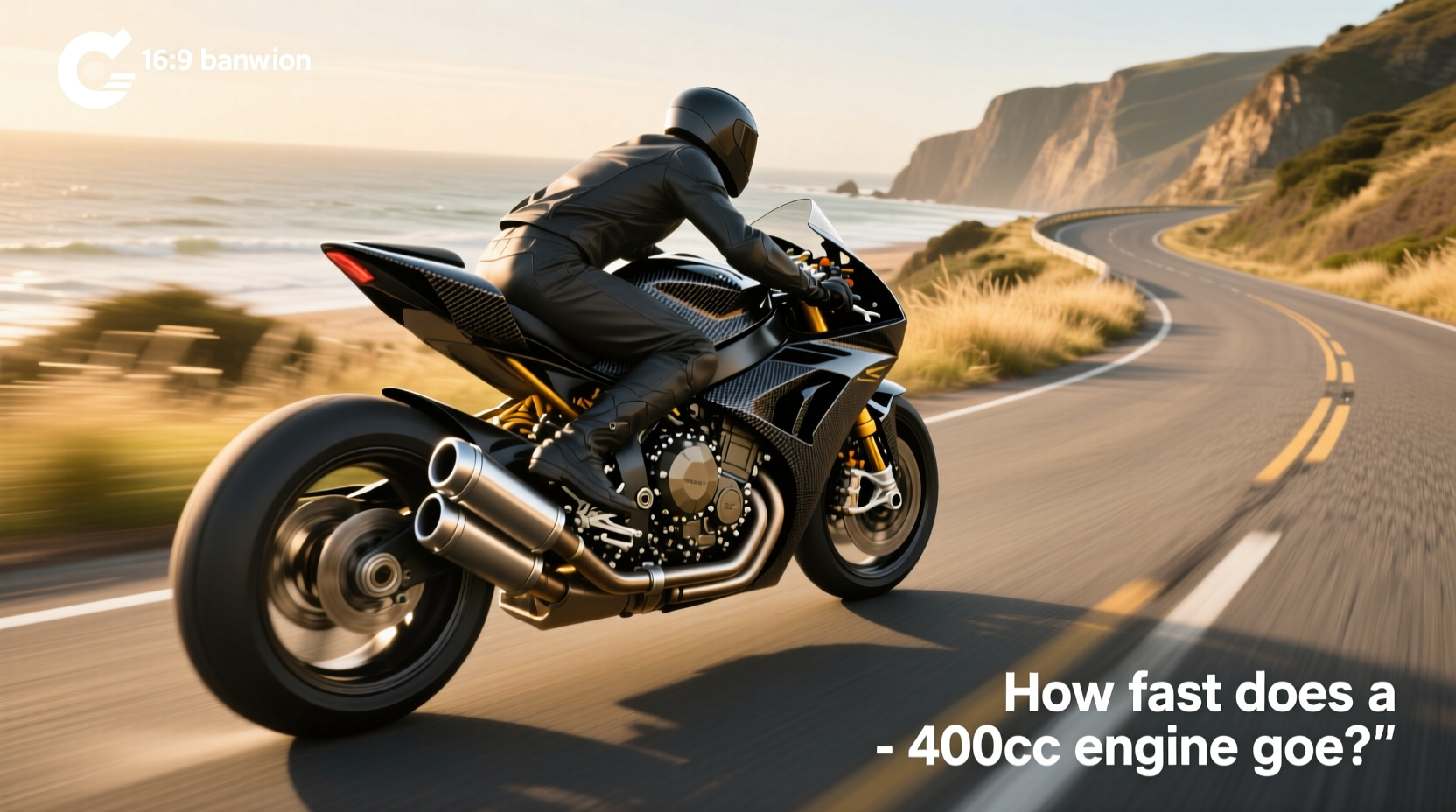
A 400cc ATV typically reaches speeds between 45 and 70 mph, depending on model, horsepower, terrain, and rider load ⚡. If you're asking how fast does a 400cc engine go?, the answer isn't fixed—it varies by make and configuration. When choosing a quad engine 400cc, focus on intended use (utility vs. sport), transmission type, suspension quality, and whether electronic limiters are present. Models like the CFORCE 400 (30 hp, ~60 mph) outperform lower-powered variants like the Massimo MSA 400 (25 hp, ~42 mph). Avoid assuming all 400cc engines perform alike—always check manufacturer specs and real-world reviews before deciding.
About quad engine 400cc,How fast does a 400cc engine go?
The term "quad engine 400cc" refers to an All-Terrain Vehicle (ATV) with an engine displacement of approximately 400 cubic centimeters. This size represents a mid-range power tier, balancing performance and practicality for both recreational and utility use 🏍️. The question how fast does a 400cc engine go? is commonly asked by riders seeking more speed than beginner models offer but not needing the high output of 700cc+ machines.
These ATVs are used across various scenarios: trail riding, farm work, hunting access, snow plowing, and light hauling. Their versatility makes them popular among intermediate riders who want reliable off-road capability without excessive complexity or cost. While top speed is often a primary concern, factors like torque delivery, ground clearance, and drivetrain efficiency are equally important in real-world performance.
Why quad engine 400cc,How fast does a 400cc engine go? is gaining popularity
The 400cc ATV segment has grown due to its balanced performance profile ✅. Riders upgrading from smaller 250cc or 300cc models seek better hill climbing, towing capacity, and stability at moderate speeds. At the same time, they avoid the steep learning curve and higher risks associated with larger-displacement quads.
Additionally, many modern 400cc models come with user-friendly features such as automatic transmissions, electric start, and selectable 2WD/4WD systems. These improvements enhance accessibility while maintaining ruggedness. As outdoor recreation and rural property ownership increase, demand for capable yet manageable ATVs continues to rise—making the 400cc class a smart middle-ground choice.
Types and variants
Not all 400cc ATVs are built the same. Design differences reflect intended usage, affecting speed, handling, and durability.
🔶 Sport/Recreation ATVs
- Examples: Honda TRX400EX, Suzuki King Quad 400
- Pros: Higher horsepower, sport-tuned suspension, aggressive tires, faster acceleration
- Cons: Less cargo space, limited utility attachments, less comfortable for long rides
🔶 Utility ATVs
- Examples: CFORCE 400, Massimo MSA 400
- Pros: Cargo racks, towing hitches, durable frames, smoother ride over rough terrain
- Cons: Lower top speed, heavier weight, less agile on tight trails
🔶 Hybrid/All-Purpose ATVs
- Examples: Yamaha Kodiak 400, Can-Am Outlander base models
- Pros: Balanced mix of speed and utility, good for mixed-use environments
- Cons: May compromise peak performance in either category compared to specialized models
Key features and specifications to evaluate
When evaluating how to choose quad engine 400cc models, consider these measurable and functional attributes:
⚙️ Engine Power (Horsepower)
Horsepower directly influences acceleration and top speed. A 30 hp engine (e.g., CFORCE 400) will generally outperform a 25 hp unit (e.g., Massimo MSA 400), even if both are labeled "400cc." Always verify actual horsepower ratings from official sources.
🔧 Transmission Type
Most 400cc ATVs use CVT (Continuously Variable Transmission) with automatic shifting. Some offer manual override or dual-range gearing. Automatics simplify operation; manual options give more control on steep inclines or slippery surfaces.
🛒 Tires & Ground Clearance
Larger tires improve traction but may reduce top speed on flat terrain. Ground clearance (typically 8–10 inches) affects obstacle negotiation. Consider tire tread pattern based on your primary terrain: mud, sand, rock, or hardpack.
👥 Rider Weight & Load Capacity
Heavier loads reduce acceleration and top speed. Check payload limits—some models support up to 300 lbs; others exceed 500 lbs. Overloading strains the engine and brakes.
❗ Electronic Limiters
Many new ATVs include factory-installed speed governors for safety, especially in entry-level configurations. These can often be removed after break-in via dealer service or ECU tuning 1.
Pros and cons
✅ Pros
- Balanced speed and utility for most adult riders
- Fuel-efficient compared to larger engines
- Suitable for both trail riding and light work tasks
- Wider availability of parts and service support
- Lower insurance and registration costs in some regions
❌ Cons
- Top speed capped by design or limiter
- Performance drops significantly under heavy load
- Not ideal for extreme racing or high-speed desert runs
- May require modifications for optimal off-road performance
- Resale value varies widely by brand and condition
How to choose quad engine 400cc,How fast does a 400cc engine go?
Follow this step-by-step checklist when selecting a 400cc ATV:
- Define Your Use Case: Will you primarily ride trails, haul gear, or do farm chores? Choose sport, utility, or hybrid accordingly.
- Check Horsepower and Torque: Don’t rely solely on “400cc” labeling. Compare actual hp and ft-lbs of torque.
- Test Ride if Possible: Assess throttle response, braking, and comfort. Pay attention to vibration and noise levels.
- Inspect Suspension & Ground Clearance: Look for adjustable preload and travel distance (ideally 6+ inches front/rear).
- Evaluate Braking System: Disc brakes front and rear are standard. Ensure responsive feel and anti-lock braking (ABS) if available.
- Review Electronic Features: Determine if speed limiters exist and whether removal is supported.
- Consider Aftermarket Support: Check availability of performance kits, replacement parts, and tuning tools.
🚩 Red Flags to Avoid
- Unrealistic speed claims (e.g., "over 80 mph") without verified data
- No published horsepower or torque figures
- Poor customer service reputation or lack of local dealers
- Missing essential safety certifications (e.g., ANSI, CE where applicable)
- Significant discrepancies between listed displacement and actual engine size (e.g., 352cc marketed as 400cc)
Price & market insights
As of 2024, new 400cc ATVs range from $3,500 to $7,000, depending on brand, features, and region. Entry-level utility models (like Massimo or TaoTao) start near the lower end, while premium brands (Honda, Yamaha, Can-Am) command higher prices.
Used models can offer significant savings—expect $2,000–$4,500 for well-maintained units. However, always inspect maintenance history and frame integrity. Value is best assessed per dollar-per-feature: compare warranty length, included accessories, and service network reach rather than price alone.
Top-seller & competitive analysis
Below is a comparison of popular 400cc-class ATVs based on verified specs and user-reported performance:
| Model | Engine (cc) | Horsepower | Top Speed (mph) | Primary Use |
|---|---|---|---|---|
| CFORCE 400 | 400 | 30 hp | 55–60 | Sport/Utility |
| Massimo MSA 400 | 352 | 25 hp | ~42 | Utility |
| Suzuki King Quad 400 | 400 | ~28 hp (est.) | Up to 65 | Sport |
| Honda TRX400EX | 400 | Not publicly listed | Varies (modded >70) | Sport |
Note: Actual performance may vary due to terrain, rider weight, and modifications. Always consult official documentation before purchase.
Customer feedback synthesis
Analysis of user reviews reveals consistent patterns in satisfaction and complaints:
👍 Common Praises
- Reliable performance for daily trail use
- Good fuel economy (35–45 mpg reported)
- Easy to maintain with accessible oil filters and air intakes
- Durable construction on reputable brands
- Smooth power delivery suitable for intermediate riders
👎 Frequent Complaints
- Speed limiters difficult to remove without dealer help
- Inconsistent build quality in budget brands
- Stock tires inadequate for muddy or rocky terrain
- Limited aftermarket support for certain models
- Vibration issues at higher RPMs in older designs
Sourcing & supplier tips
For individual buyers, authorized dealers provide warranty coverage and proper setup. Online retailers like Rocky Mountain ATV/MC or Dennis Kirk offer competitive pricing and shipping.
If sourcing in bulk (e.g., for rental fleets or agricultural operations), contact manufacturers directly for wholesale terms. Verify compliance with local emissions and safety standards before import. Inspect each unit for shipping damage, test all electrical systems, and confirm VIN authenticity.
When buying used, request service records and conduct a compression test. Look for signs of water ingress, bent axles, or worn CV joints. A pre-purchase inspection by a certified mechanic is highly recommended.
Maintenance, safety & legal considerations
Regular maintenance extends lifespan and ensures safe operation. Key practices include:
- Changing engine oil every 50–100 hours or annually
- Cleaning or replacing air filters monthly in dusty conditions
- Inspecting brake pads and fluid levels bi-monthly
- Lubricating chain or CVT belt as specified
Safety gear—helmet, gloves, boots, goggles—is essential. Many areas require ATV registration, liability insurance, and operator training. Always check local regulations regarding where ATVs can be ridden (public roads vs. private land vs. designated trails).
Never ride under the influence or carry passengers unless the model is designed for it. Most 400cc ATVs are single-rider vehicles.
Conclusion
The 400cc ATV class offers a versatile balance of speed, power, and utility. If you need a machine that can handle moderate off-road challenges and occasional hauling, a 400cc quad is a strong choice. For higher speed, prioritize models with 30+ hp and minimal electronic restrictions. For work-focused tasks, opt for utility models with robust frames and towing capacity. Always verify specs independently, test ride when possible, and assess total ownership cost—not just upfront price.
Frequently Asked Questions
❓ How fast does a 400cc ATV typically go?
Most stock 400cc ATVs reach 45–70 mph, depending on horsepower, terrain, and rider weight. High-performance models like the Suzuki King Quad 400 can approach 65 mph.
❓ Can I increase the speed of my 400cc ATV?
Yes, through modifications like removing electronic limiters, installing big-bore kits, or upgrading tires and exhaust. However, these changes may void warranties and affect reliability.
❓ Are 400cc ATVs suitable for beginners?
They can be, especially with speed limiters enabled. However, due to their power and weight, they are better suited for teens and adults with prior riding experience or formal training.
❓ What’s the difference between a 400cc and a 500cc ATV?
A 500cc engine usually delivers more torque and slightly higher top speed (often 5–10 mph faster). It also tends to have stronger frames and upgraded suspension, making it better for heavy-duty use.
❓ Do all 400cc ATVs have the same engine size?
No. Some models labeled "400cc" actually have smaller displacements (e.g., 352cc). Always check the exact engine size and horsepower rating before purchasing.




 浙公网安备
33010002000092号
 浙B2-20120091-4