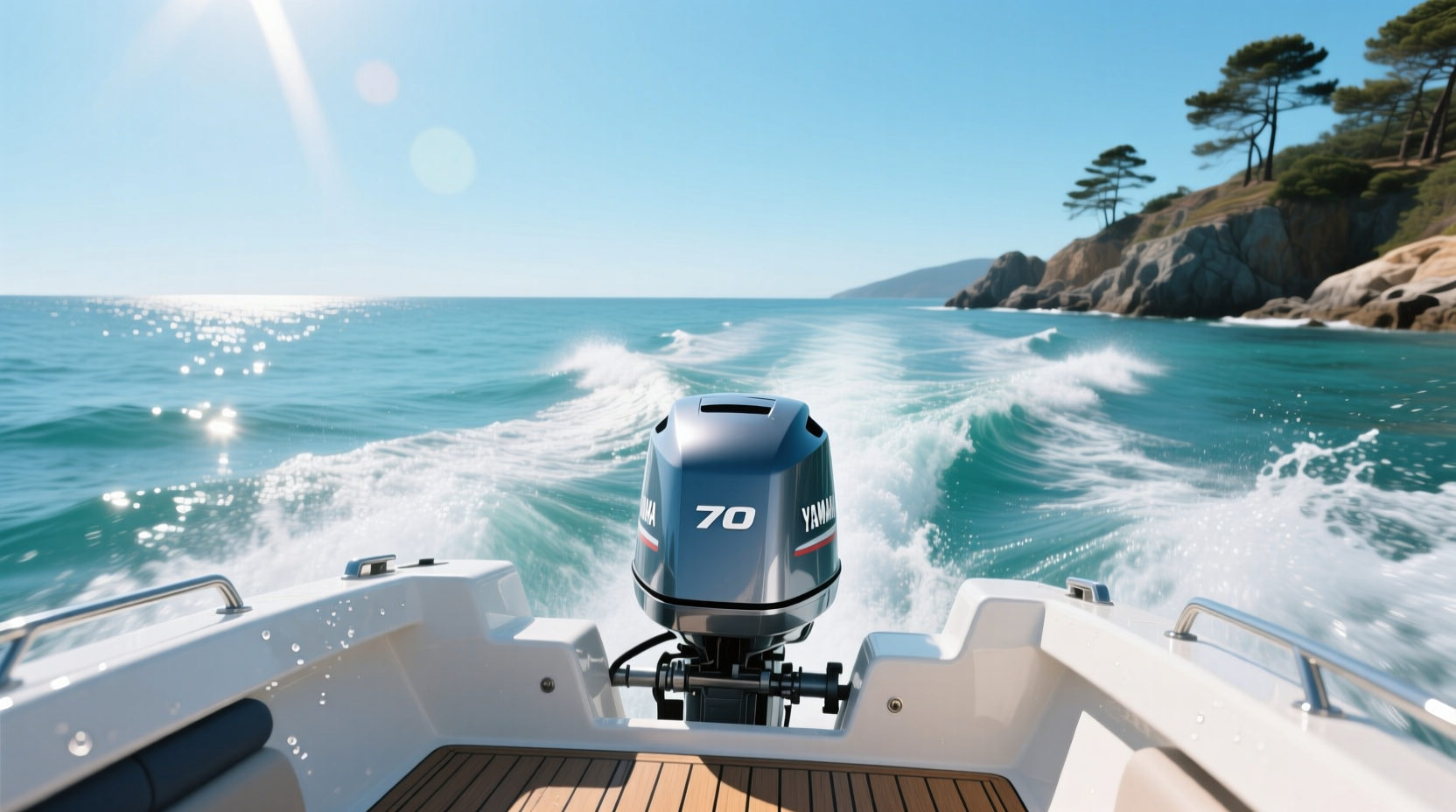
About Yamaha 70HP Outboards and Real-World Speed Performance
The Yamaha 70HP outboard motor is a popular mid-range four-stroke engine designed for small to medium-sized recreational and fishing boats. When users ask how fast does a 70 hp outboard motor go?, the answer isn't a single number—it depends heavily on the vessel it's mounted on. This engine delivers 70 horsepower at 5,800 rpm with a full throttle range of 5,300 to 6,300 rpm and a gear ratio of 2.33:1, contributing to strong acceleration from idle 3. It weighs approximately 253 lbs (114 kg) and features electronic fuel injection (EFI), making it efficient and reliable for day trips, freshwater fishing, and coastal cruising.
Typical applications include 16\u201321 foot center consoles, bass boats, skiffs, and small cuddy cabins. The Yamaha F70 is known for its quiet operation, durability, and smooth power delivery, appealing to owners who prioritize reliability over raw speed. However, understanding its realistic performance requires evaluating not just the engine, but how it interacts with the boat’s design and load.
Why Yamaha 70HP Outboards Are Gaining Popularity
Mid-powered outboards like the Yamaha 70HP are seeing increased demand due to a shift toward versatile, fuel-efficient boating. Anglers, weekend cruisers, and entry-level offshore users appreciate the balance between cost, maintenance, and capability. Unlike larger engines, the 70HP model avoids excessive fuel consumption while still providing enough power to plane most boats under 2,500 lbs. Its four-cylinder, 996cc engine offers smoother operation than three-cylinder alternatives, reducing vibration and improving onboard comfort.
Additionally, EFI technology ensures consistent cold starts and better throttle response in varying conditions. As more boaters downsize or seek second motors for tenders, the Yamaha 70HP fills a niche for dependable propulsion without over-engineering. Environmental regulations favoring cleaner four-stroke engines have also boosted its appeal over older two-stroke models.
Types and Variants of Yamaha 70HP Outboards
While the core Yamaha F70 remains consistent, several variants exist to suit different installation needs:
- \u23E9 F70 (Standard Shaft \u2013 20\u2033): Most common version for smaller boats with standard transom heights. Ideal for planing hulls up to 19 feet.
- \u23E9 F70TLR (Long Shaft \u2013 25\u2033): Designed for jon boats, pontoon transoms, or vessels with deeper drafts. Prevents ventilation in choppy water.
- \u23E9 F70 with Tiller Handle: Offers direct steering control; often used on workboats, duck blinds, or as a kicker motor. Lower cost, no remote controls needed.
- \u23E9 F70 with Remote Control: Full console integration with digital throttle and shift. Preferred for dual-station setups and modern dash configurations.
Pros: Smooth power delivery, reliable EFI, low noise, good resale value.
Cons: Heavier than some competitors, limited top-end speed on large/heavy boats, higher initial cost than carbureted models.
Key Features and Specifications to Evaluate
When determining what to look for in yamaha 70hp,How fast does a 70 hp outboard motor go?, focus on these technical and operational factors:
- \u2699 Horsepower & RPM Range: 70 hp at 5,800 rpm; operates best between 5,300\u20136,300 rpm. Use a tachometer to confirm engine isn’t over-revving or lugging.
- \u2699 Gear Ratio (2.33:1): Provides strong low-end torque for quick hole-shot acceleration—beneficial for fishing launches.
- \u2699 Propeller Compatibility: Accepts 9\u2033\u201314\u2033 diameter props with various pitches. Pitch affects speed and load; consult manufacturer charts.
- \u2699 Weight (253 lbs): Impacts overall boat balance. Ensure transom and hull can support this without squatting.
- \u2699 Shaft Length: Match to transom height—20\u2033 for standard, 25\u2033 for long-tail applications.
- \u2699 Fuel System (EFI): Self-priming fuel system (Prime Start\u2122) simplifies startup; stores well over winter.
Always cross-check specifications with the exact model year, as minor updates occur annually.
Pros and Cons of the Yamaha 70HP Outboard
Advantages:
- \u2714\uFE0F Excellent fuel efficiency compared to larger engines
- \u2714\uFE0F Quiet and smooth operation thanks to four-cylinder design
- \u2714\uFE0F Strong mid-range torque for reliable planing
- \u2714\uFE0F Durable build quality with proven long-term reliability
- \u2714\uFE0F Compatible with digital gauges and NMEA 2000 networks
Limits and Drawbacks:
- \u274C May struggle to plane heavier boats (>2,800 lbs) in rough conditions
- \u274C Propeller selection is critical—wrong pitch reduces speed and efficiency
- \u274C Slightly heavier than comparable Suzuki or Mercury 70HP models
- \u274C Not ideal for high-speed offshore runs or towing watersports at capacity
- \u274C Requires proper break-in and regular maintenance for peak performance
How to Choose a Yamaha 70HP Outboard: Step-by-Step Buying Guide
Selecting the right Yamaha 70HP involves matching the engine to your vessel and usage. Follow this checklist when exploring options for yamaha 70hp,How fast does a 70 hp outboard motor go?:
- \u27A1 Determine Boat Weight and Hull Type: Calculate total dry weight plus fuel, gear, and passengers. Planing hulls perform best; displacement hulls won’t plane regardless of power.
- \u27A1 Verify Transom Compatibility: Check transom height and material strength. Standard transoms use 20\u2033 shaft; deep-V or pontoon boats may need 25\u2033.
- \u27A1 Choose Control Type: Tiller for simplicity and cost; remote control for comfort and advanced features.
- \u27A1 Select Correct Propeller: Start with OEM recommendations. A 13-inch pitch aluminum prop is typical for mixed use. Adjust based on RPM readings.
- \u27A1 Set Mounting Height Properly: Cavitation plate should be 1\u20131.5 inches above hull bottom. Too low causes drag; too high risks ventilation.
- \u27A1 Test Weight Distribution: Keep weight centered and low. Overloading the stern reduces speed and increases porpoising risk.
Avoid These Mistakes:
- \u274C Don’t assume all 70HP engines perform identically across brands.
- \u274C Never run the engine outside its recommended RPM range—damages internals.
- \u274C Avoid using an oversized propeller to increase speed—it strains the engine.
- \u274C Don’t neglect checking local emissions or noise regulations before purchase.
Price & Market Insights
As of 2024, new Yamaha F70 outboards range from $10,500 to $13,500 USD, depending on configuration (tiller vs. remote), shaft length, and included accessories. Prices vary by region and dealer incentives. Used models (2015\u20132020) typically sell for $6,000\u2013$9,000, offering significant savings if thoroughly inspected.
Consider total cost of ownership: include rigging kits ($800\u2013$1,500), propeller ($200\u2013$400), and annual maintenance ($200\u2013$400). While upfront costs are moderate, Yamaha parts and service may be pricier than some competitors. Compare package deals that bundle motor, prop, and controls for better value.
Top-Seller & Competitive Analysis
The Yamaha F70 competes directly with the Mercury 75ELPT, Suzuki DF70A, and Tohatsu 75HP. Each has slight differences in weight, torque delivery, and pricing.
| Model | Horsepower | Weight (lbs) | Gear Ratio | Key Differentiator |
|---|---|---|---|---|
| Yamaha F70 | 70 hp | 253 | 2.33:1 | Smooth 4-cylinder operation, excellent reliability |
| Mercury 75ELPT | 75 hp | 251 | 2.07:1 | Higher max RPM, slightly faster hole shot |
| Suzuki DF70A | 70 hp | 248 | 2.42:1 | Lightest in class, strong midrange |
| Tohatsu 75HP | 75 hp | 252 | 2.07:1 | Budget-friendly, reliable but less refined |
No single model is universally superior. Yamaha excels in longevity and user satisfaction, especially among saltwater operators. Mercury offers a bit more peak power, while Suzuki appeals to weight-conscious buyers.
Customer Feedback Synthesis
Analysis of owner forums and retailer reviews reveals consistent themes:
Frequent Praise:
- Reliable starting in cold weather
- Low vibration and quiet operation
- Good fuel economy (4\u20136 mpg at cruising speeds)
- Durability after 5+ years of regular use
- Strong customer support from dealers
Common Complaints:
- Heavier than expected, affecting boat balance
- Need precise propeller tuning for best results
- Some report difficulty finding compatible third-party props
- Initial cost higher than equivalent Suzuki or Tohatsu units
- Occasional electrical gremlins in early model years
Sourcing & Supplier Tips
Purchase from authorized Yamaha Marine dealers to ensure warranty coverage and proper documentation. Online marketplaces like eBay or Craigslist offer used units at lower prices, but inspect carefully for corrosion, oil leaks, and service history. For bulk purchases (e.g., rental fleets), contact regional distributors for fleet pricing and extended service agreements.
When inspecting a used motor:
- Check for clean oil (milky color indicates water intrusion)
- Inspect lower unit seals and prop shaft for play
- Run the engine and monitor RPM under load
- Verify tilt mechanism and gearshift operation
- Request maintenance logs and prior repair records
Confirm return policies and shipping terms if buying remotely.
Maintenance, Safety & Legal Considerations
Regular maintenance extends engine life and maintains performance. Follow the owner’s manual schedule: change engine oil every 100 hours or annually, inspect spark plugs, and flush after saltwater use. Replace fuel filters and check anodes regularly.
Safety practices include wearing kill switches, ensuring proper ventilation, and securing loose gear. Legally, verify your engine meets EPA and CARB emissions standards for your state. Some regions require noise compliance testing. Always register the motor with the vessel and carry required safety equipment.
Conclusion: Is the Yamaha 70HP Right for You?
If you own a 16\u201321 foot planing-hull boat weighing under 2,500 lbs and want reliable, efficient propulsion for fishing or casual cruising, the Yamaha 70HP is a solid choice. It won’t deliver extreme speed, but it provides consistent, trouble-free performance. For heavier boats or those needing frequent high-speed travel, consider a 90HP or 115HP model instead. Ultimately, answering how fast does a 70 hp outboard motor go? comes down to your specific boat setup—optimize weight, propeller, and trim for best results.
FAQs
- Q: How fast will a Yamaha 70HP go on a 17-foot boat?
A: With a lightweight 17-foot skiff (1,200\u20131,600 lbs), expect 35\u201342 mph. Heavier bass boats may reach 30\u201338 mph depending on load and propeller. - Q: What propeller pitch gives the best speed on a Yamaha 70HP?
A: A 13- to 15-inch pitch aluminum prop is common for top speed. However, optimal pitch keeps engine RPM in the 5,800\u20136,100 range at full throttle. - Q: Can a Yamaha 70HP plane a 2,500 lb boat?
A: Yes, but only with proper weight distribution and a suitable hull design. Expect slower planing times and reduced top speed (~25\u201330 mph). - Q: Is the Yamaha 70HP good for saltwater use?
A: Yes, it features robust anti-corrosion protection and is widely used in coastal environments. Flush thoroughly after each use. - Q: Does the Yamaha 70HP have electric start?
A: Yes, all models include electric start with Prime Start\u2122 for easy ignition without choking.




 浙公网安备
33010002000092号
 浙B2-20120091-4