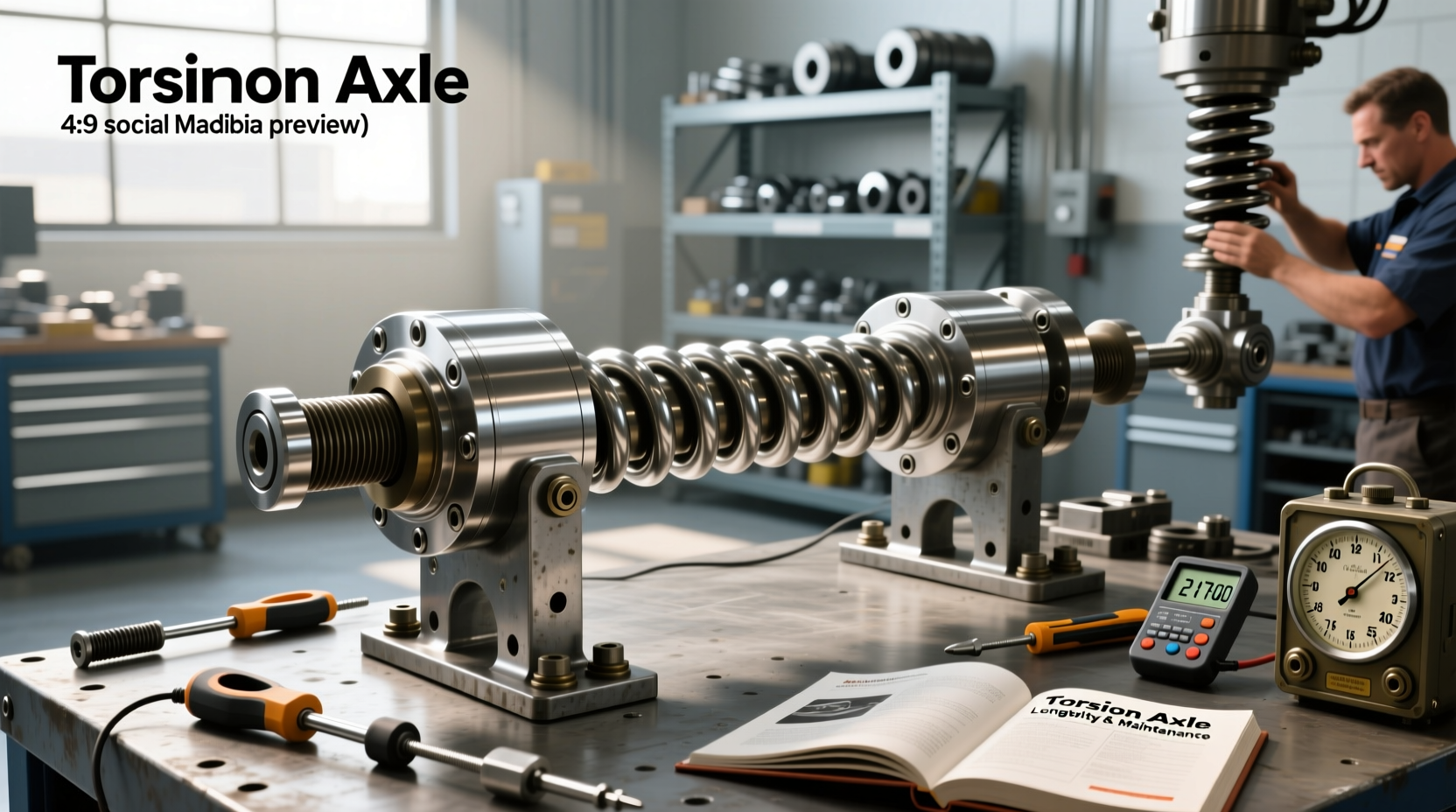
About Torsion Axles and Their Typical Lifespan
A torsion axle is a type of trailer suspension system that uses internal rubber cords to provide shock absorption and wheel articulation. Unlike traditional leaf spring systems, torsion axles offer independent wheel movement, resulting in a smoother ride, especially on uneven surfaces ⚙️. Each wheel rotates around a fixed beam while the rubber core twists to absorb road impacts. This design is commonly found on utility trailers, boat trailers, RVs, and light cargo haulers 🚚.
The central question—how long will a torsion axle last?—does not have a single definitive answer. Instead, lifespan varies widely depending on operational conditions. Under normal recreational use, many torsion axles last between 15 and 25 years 5. However, performance degrades gradually as the rubber loses elasticity over time, even if no visible damage is present. Eventually, this leads to sagging, reduced ride quality, and compromised handling.
Why Torsion Axles Are Gaining Popularity
Torsion axles have become increasingly popular due to their low-maintenance nature and superior ride comfort ✨. Because they are sealed units with no external moving parts like shackles or U-bolts, there’s less need for routine greasing or adjustments compared to leaf spring suspensions 🔧. This makes them ideal for owners seeking reliability without frequent upkeep.
Additionally, the independent suspension allows each wheel to respond separately to bumps, reducing stress on both the trailer frame and its cargo. This feature is particularly valuable when transporting sensitive equipment or delicate items such as ATVs, motorcycles, or high-end camping gear. As more consumers prioritize smooth towing experiences and durability, torsion axles continue to gain traction across personal and light-commercial applications 👥.
Types and Variants of Torsion Axles
Torsion axles come in several configurations tailored to different load capacities and mounting styles. Understanding these variants helps ensure compatibility with your trailer’s specifications.
- ⚙️Standard Round Tube Torsion Axles: Most common in consumer-grade trailers. They feature a cylindrical housing containing twisted rubber elements. Available in various weight ratings (e.g., 1,000 lbs to 3,500 lbs per axle).
Pros: Sealed design, quiet operation, minimal maintenance.
Cons: Non-serviceable core; entire axle must be replaced when worn. - ⚙️Square or Rectangular Profile Axles: Offer improved torsional rigidity and better resistance to twisting forces. Often used in heavier-duty applications.
Pros: Enhanced structural stability, better alignment retention.
Cons: Slightly higher cost, limited availability. - ⚙️Dual or Tandem Axle Systems: Two or more torsion axles mounted together for increased load capacity and redundancy.
Pros: Higher total weight rating, smoother weight distribution.
Cons: More complex installation, requires precise alignment to prevent uneven wear. - ⚙️Adjustable Height Torsion Axles: Allow minor ride height modifications via camber adjustment or shims.
Pros: Customizable ground clearance, useful for varying payloads.
Cons: Adjustment range is limited; improper setup may accelerate wear.
Key Features and Specifications to Evaluate
When evaluating torsion axles, focus on measurable parameters that directly affect longevity and performance:
- 🛒Weight Rating: Match the axle’s Gross Axle Weight Rating (GAWR) to your trailer’s loaded weight. Never exceed the limit, as overloading drastically shortens lifespan 1.
- 📍Hub Pattern & Bolt Configuration: Ensure compatibility with existing wheels or planned replacements (e.g., 5-on-4.5", 6-on-5.5").
- ⏱️Lifespan Expectancy by Use Case: Consider expected usage frequency—commercial vs. recreational—as it directly influences replacement timing.
- 🌍Corrosion Resistance: Look for galvanized steel or powder-coated finishes, especially if operating in coastal or winter-salt environments.
- 🧼Sealing Quality: A well-sealed housing prevents moisture and debris from entering, preserving the internal rubber element.
Pros and Cons of Torsion Axles
- Smooth, independent suspension improves ride quality ✨
- Low maintenance—no greasing or regular adjustments needed 🔧
- Compact design frees up undercarriage space for lower deck height 🚚
- Reduced noise and vibration compared to leaf springs
- Rubber core cannot be serviced; full axle replacement required upon failure
- Higher initial cost than comparable leaf spring setups ⚠️
- Vulnerable to degradation from prolonged static loading or poor storage
- Limited repair options in remote locations
How to Choose a Torsion Axle: A Step-by-Step Guide
Selecting the right torsion axle involves assessing your specific needs and avoiding common pitfalls. Follow this checklist:
- Determine Your Load Requirements: Calculate the maximum total weight your trailer will carry, including cargo and tongue weight. Select an axle with a GAWR exceeding this by at least 10–15% for safety margin.
- Assess Usage Frequency: Daily commercial hauling demands more robust construction and shorter expected service intervals (3–5 years) 1. Occasional campers may enjoy decades of service.
- Evaluate Terrain Type: Rough, unpaved roads increase stress on rubber cords. If you frequently travel off-pavement, consider reinforcing other trailer components to reduce overall strain.
- Plan for Storage: When storing long-term, place the trailer on jack stands to relieve pressure on the axle. This prevents the rubber from “taking a set” and losing flexibility 8.
- Inspect Regularly: Check annually for signs of cracking, stretching, or corrosion. Listen for unusual noises during operation.
Red Flags to Avoid:
- Choosing an axle below your actual load requirement ❗
- Neglecting to verify bolt pattern and hub size compatibility 📎
- Purchasing from suppliers who don’t provide clear GAWR documentation 🔍
- Ignoring environmental exposure risks (e.g., saltwater, UV)
Price & Market Insights
Torsion axles typically cost 25–40% more upfront than equivalent leaf spring models 5. Prices vary significantly based on weight capacity, brand, and regional availability. A standard 2,000-lb torsion axle may range from $250 to $400, while tandem setups or heavy-duty versions can exceed $800.
While the initial investment is higher, long-term owners often find torsion axles cost-effective due to reduced maintenance needs. However, because replacement involves swapping the entire unit, end-of-life costs should be factored into ownership planning.
Top-Seller & Competitive Analysis
Popular brands include Dexter, AL-KO, and Trailair, all offering reliable performance across various weight classes. While specific models differ slightly in build quality and warranty terms, most adhere to industry-standard dimensions and ratings.
| Feature | Torsion Axles | Leaf Spring Axles |
|---|---|---|
| Maintenance | Low maintenance; sealed units with no parts to grease or replace regularly 15. | Higher maintenance; requires regular greasing of shackles, retorquing of U-bolts, and replacing wheel bearings 5. |
| Lifespan | Rubber suspension system is main failure point. Metal parts can last indefinitely if not corroded 35. | Steel blades and bushings can be replaced over time, potentially allowing indefinite lifespan with proper maintenance 5. |
| Cost | Higher upfront cost, typically 25–40% more than comparable leaf spring axle 5. | Lower initial cost, but ongoing maintenance expenses add up over time 5. |
| Ride Quality | Superior smoothness due to independent wheel movement, ideal for sensitive cargo 5. | More rugged ride, better suited for rough terrain 5. |
Customer Feedback Synthesis
Analysis of user reviews reveals consistent themes regarding satisfaction and concerns:
- Frequent Praise: Smooth ride quality, ease of installation, and quiet operation are repeatedly highlighted. Owners appreciate the lack of maintenance requirements compared to leaf springs.
- Common Complaints: Unexpected early failures linked to overloading or poor storage conditions. Some users report difficulty sourcing exact replacements after many years.
- Notable Observations: Longevity claims often align closely with usage patterns—those using trailers infrequently report excellent durability beyond 20 years.
Sourcing & Supplier Tips
When purchasing a torsion axle, buy from reputable suppliers who provide full technical specifications, including GAWR, hub configuration, and material certifications. Online marketplaces like Northern Tool, etrailer.com, or direct manufacturer distributors offer reliable options.
For bulk purchases or resale, confirm return policies and warranty terms before ordering. Always verify fitment details against your trailer’s current setup or blueprints. Upon delivery, inspect for shipping damage and ensure seals are intact.
Maintenance, Safety & Legal Considerations
Torsion axles require minimal maintenance but benefit from annual visual inspections. Look for cracks, deformation, or corrosion. Monitor ride height—if the trailer sags noticeably, the rubber has likely degraded 8.
Safety-wise, never operate a trailer with a compromised axle. Misalignment or failed suspension increases risk of tire wear, loss of control, or accidents. While no universal regulation mandates axle replacement timelines, local vehicle inspection standards may apply. Always check state or provincial requirements for trailer safety compliance.
Conclusion
Deciding how to choose torsion axle,How long will a torsion axle last? ultimately hinges on your usage profile. If you tow lightly and occasionally, expect 15–25 years of reliable service with proper care. Commercial operators should plan for replacement every 3–5 years. Prioritize correct load matching, protect against corrosion, and store properly to extend life. While torsion axles demand a higher initial investment, their performance and low upkeep make them a strong choice for many trailer owners.
Frequently Asked Questions
How long do torsion axles typically last?
Under normal conditions, torsion axles last 15–25 years for recreational use. Heavy commercial use reduces lifespan to 3–5 years 3.
Can I replace just the rubber inside a torsion axle?
No, the rubber core is not serviceable. The entire axle assembly must be replaced when worn.
What causes torsion axles to fail prematurely?
Overloading, exposure to harsh terrain, prolonged static loading during storage, and corrosion are leading causes of early failure 6.
Should I store my trailer with the wheels off the ground?
Yes, for long-term storage, use jack stands to remove weight from the axle and prevent rubber from losing elasticity 8.
Are torsion axles better than leaf spring axles?
They offer a smoother ride and require less maintenance, but are more expensive upfront. Leaf springs are more repairable and durable in extreme conditions.




 浙公网安备
33010002000092号
 浙B2-20120091-4