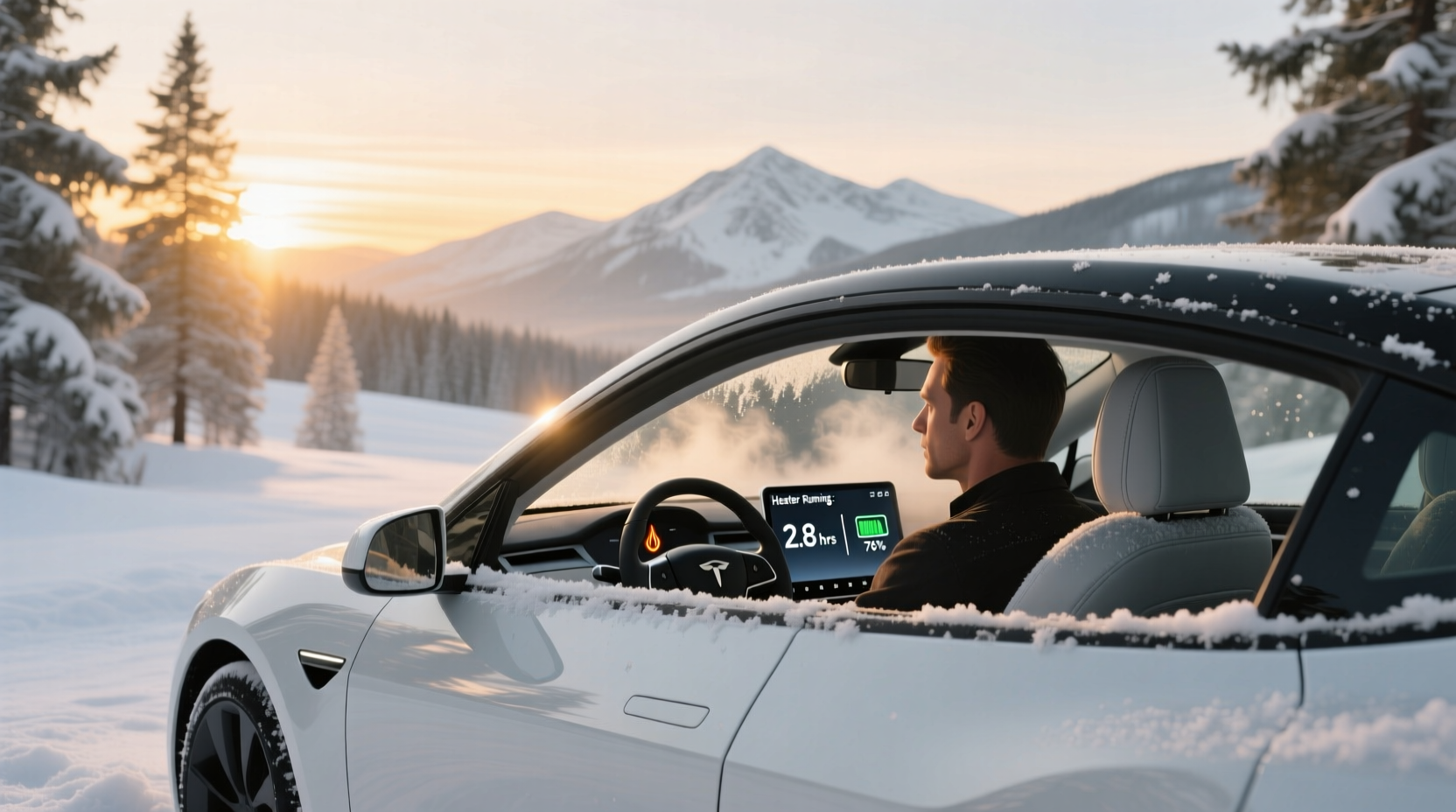
⚡ When evaluating how long a heater will run in an electric car, the most critical factor is the type of heating system: vehicles with heat pumps can extend heater runtime by up to 40% compared to those using resistive (PTC) heaters 1. Battery size and ambient temperature also play major roles—larger batteries provide more energy, while sub-freezing conditions increase power draw. For buyers in cold climates, prioritizing models with heat pumps and preconditioning features significantly improves both comfort and efficiency. This guide covers what to look for in car electric heating systems and how to assess real-world heater performance before purchasing.
About car electric heating, How long will a heater run in an electric car?
The question "how long will a heater run in an electric car?" reflects a growing concern among EV owners and prospective buyers about thermal comfort and energy use during cold weather. Unlike internal combustion engine vehicles that generate waste heat for cabin warming, electric cars rely entirely on stored battery energy to power their heating systems. This makes understanding car electric heating performance essential for daily usability, especially in regions with prolonged winter conditions.
Typical use cases include preheating the cabin before driving, maintaining warmth during commutes, or idling with climate control active (e.g., during rest stops or remote work from the vehicle). In all scenarios, the duration the heater can operate depends on how efficiently it converts electricity into heat and how much energy the battery can supply without compromising drivability.
Why car electric heating, How long will a heater run in an electric car? is gaining popularity
As global EV adoption rises, so does consumer awareness of real-world limitations beyond range alone. Cold-weather performance has emerged as a key decision factor, particularly in northern U.S. states, Canada, Scandinavia, and high-altitude regions. Drivers are increasingly asking not just “what’s the range?” but “how much range do I lose when it’s cold—and how long can I keep warm if I’m not moving?”
This shift is driven by practical experiences: studies show average EVs retain only 78% of rated range at freezing temperatures, dropping to 70% at 20°F (-7°C) 2. Much of this loss comes from HVAC use. As a result, buyers now actively seek information on heater efficiency and longevity—making car electric heating, how long will a heater run in an electric car? a high-intent research topic.
Types and variants
There are two primary types of electric vehicle heating systems, each with distinct trade-offs in efficiency, cost, and performance:
⚡ Resistive Heaters (e.g., PTC Heaters)
Positive Temperature Coefficient (PTC) heaters are widely used due to their simplicity and reliability. They generate heat directly by passing current through a resistive element.
- Pros: Fast heat-up time, consistent performance regardless of outside temperature, low manufacturing cost.
- Cons: High energy consumption (~1–3 kW), reduces driving range significantly, less efficient than alternatives.
✨ Heat Pumps
Heat pumps transfer thermal energy from the outside air into the cabin, functioning like a reverse air conditioner. Modern EVs increasingly adopt this technology for improved efficiency.
- Pros: 3–4x more efficient than resistive heaters, preserves battery range, better long-term heater runtime.
- Cons: Higher initial cost, reduced effectiveness below -13°F (-25°C), more complex maintenance.
Key features and specifications to evaluate
To answer “how long will a heater run in an electric car?” accurately, examine these technical and design factors:
- Battery Capacity (kWh): Larger packs offer more total energy for heating. A 100 kWh battery can theoretically power a heater twice as long as a 50 kWh pack under identical conditions.
- Heater Power Draw (kW): Check manufacturer specs or user reports for average consumption. For example, Tesla Model 3 with heat pump uses ~1.36 kWh/hour in cold weather 3.
- Ambient Temperature Rating: Performance varies drastically with external conditions. Look for data on HVAC efficiency at 20°F or lower.
- Cabin Preconditioning Support: Allows heating while plugged in, preserving battery charge. Available via mobile app scheduling in many modern EVs.
- Seat & Steering Wheel Heaters: These auxiliary systems consume far less power (~100–200 watts) and allow lower cabin temperatures while maintaining comfort.
Pros and cons
Understanding where each system excels helps align expectations with usage patterns.
✅ Suitable Scenarios
- Urban commuters with access to charging: Can use preconditioning effectively; moderate heater runtime sufficient.
- Cold-climate drivers: Benefit most from heat pumps and heated seats to minimize range loss.
- Rural or off-grid users: May need extended idle capability; prioritize large batteries and efficient systems.
❌ Less Ideal For
- Long-duration idling without charging: Even efficient heaters deplete batteries over time—unsuitable for overnight stationary heating unless solar-assisted or grid-connected.
- Extreme cold (< -22°F / -30°C): Both systems struggle, though PTC may perform more reliably than heat pumps near their operational limits.
- Budget-focused buyers: Vehicles with heat pumps often carry a price premium.
How to choose car electric heating, How long will a heater run in an electric car?
Follow this step-by-step checklist to make an informed decision:
- Determine your climate zone: Use NOAA or local weather data to assess average winter temperatures. Below freezing? Prioritize heat pumps.
- Check the heating system type: Review official specs or owner forums. Avoid guessing—many automakers don’t highlight this feature prominently.
- Estimate required runtime: Do you need 30 minutes of pre-warming or 8 hours of stationary heating? Calculate based on battery size and expected draw.
- Evaluate preconditioning options: Ensure the vehicle supports scheduled heating via app and works with your home charger.
- Look for zonal heating: Some EVs allow heating only the front row, reducing energy use.
- Review real-world owner reports: Search YouTube, Reddit (r/electricvehicles), or EV blogs for cold-weather test results.
🚩 Red Flags to Avoid
- No mention of heat pump in specs—likely uses less efficient PTC-only system.
- Limited preconditioning functionality (e.g., no timer or remote start).
- Small battery (< 60 kWh) combined with resistive heating in cold climates—expect significant range penalties.
- Vague claims about “efficient heating” without published energy metrics.
Price & market insights
Pricing varies significantly based on vehicle class and technology. There is no standalone aftermarket market for EV heating systems—they are integrated into the vehicle’s HVAC architecture.
- Entry-level EVs ($25k–$35k): Often use resistive heaters to reduce costs. Examples: Nissan Leaf, base Chevrolet Bolt EUV.
- Mainstream models ($35k–$55k): Mixed adoption—Tesla Model 3/Y (post-2021) include heat pumps; Hyundai Kona Electric offers one as standard.
- Premium/luxury EVs ($60k+): Most include heat pumps and advanced thermal management. Examples: BMW iX, Mercedes EQS, Lucid Air.
While heat pumps add $500–$1,500 to production cost, they typically come bundled with other upgrades. Buyers should assess overall value rather than isolate heating cost.
Top-seller & competitive analysis
Below is a comparison of popular EVs known for strong cold-weather heating performance:
| Model | Battery Size (kWh) | Heating System | Estimated Heater Runtime* | Preconditioning |
|---|---|---|---|---|
| Tesla Model 3 Long Range | 80 | Heat Pump | ~59 hours | Yes (via app) |
| Hyundai Ioniq 5 | 77.4 | Heat Pump | ~50–55 hours | Yes (scheduled) |
| Chevrolet Bolt EV | 65 | Resistive (PTC) | ~20–25 hours | Limited |
| Nissan Leaf Plus | 60 | Resistive (PTC) | ~18–22 hours | Basic timer |
*Estimated at moderate setting in sub-freezing conditions. Assumes 1.36 kWh/h for heat pump models, 2.6 kWh/h for resistive. Real-world results vary.
Customer feedback synthesis
Analysis of owner reviews across platforms (Reddit, Electrek, Consumer Reports) reveals recurring themes:
👍 Common Praises
- “The heat pump in my Model Y cuts winter range loss in half.”
- “Heated seats let me set cabin temp lower—huge energy saver.”
- “App-based preconditioning means I never enter a cold car.”
👎 Frequent Complaints
- “My Bolt loses nearly half its range with the heater on.”
- “No remote start for heating—have to go outside to warm it up.”
- “Dealer didn’t explain that heat pump stops working below -13°F.”
Sourcing & supplier tips
Since EV heating systems are factory-integrated, sourcing decisions revolve around selecting the right vehicle model and trim level.
- New vs Used: Post-2021 models are more likely to include heat pumps. Verify system type via VIN decode or service records.
- Trim Levels: Higher trims often include heat pumps even when base models don’t (e.g., Ford Mustang Mach-E).
- Dealer Verification: Ask for written confirmation of heating system type before purchase.
- International Models: European-spec EVs often include heat pumps earlier than North American versions—consider import implications.
Maintenance, safety & legal considerations
EV heating systems require minimal maintenance but follow general best practices:
- Replace cabin air filters annually to maintain airflow and efficiency.
- Use preconditioning regularly to avoid sudden high-power draws on cold batteries.
- Ensure software updates are installed—some improve thermal management logic.
- No specific regulations govern EV heater runtime, but local laws may restrict idling in certain areas (e.g., school zones).
Always consult the owner’s manual for safe operating procedures and temperature limits.
Conclusion
When deciding how to choose car electric heating and assessing how long a heater will run in an electric car, focus on three core elements: heating system type (prioritize heat pumps), battery capacity, and available smart features like preconditioning. If you drive in cold climates, select a model with a heat pump and heated seats to maximize comfort and efficiency. For milder regions, a resistive heater may suffice, especially with regular charging access. Always cross-check manufacturer claims with real-world user data to avoid surprises in winter performance.
Frequently Asked Questions
❓ How long can an EV heater run on a full charge?
It depends on battery size and heater type. A Tesla Model 3 with an 80 kWh battery and heat pump can run the heater for nearly 59 hours in cold weather at moderate settings. Smaller batteries or resistive heaters reduce this to 20–25 hours.
❓ Does using the heater drain the EV battery quickly?
Yes, especially with resistive (PTC) heaters. In extreme cold, HVAC use can reduce total range by up to 47%. Heat pumps reduce this impact significantly, improving cold-weather efficiency by 8–10%.
❓ Can I warm the car without using battery power?
Yes, through preconditioning while plugged in. The system uses grid electricity to heat the cabin and battery, preserving battery charge for driving.
❓ Are heated seats better than cabin heating for saving energy?
Yes. Heated seats consume about 100–200 watts, far less than the 1–3 kW needed for full cabin heating. Using them allows lower thermostat settings and extends heater runtime.
❓ Do all electric cars have heat pumps?
No. While adoption is growing, many entry-level and older EVs use resistive heaters. Always verify the heating system type in the vehicle’s technical specifications before purchasing.




 浙公网安备
33010002000092号
 浙B2-20120091-4