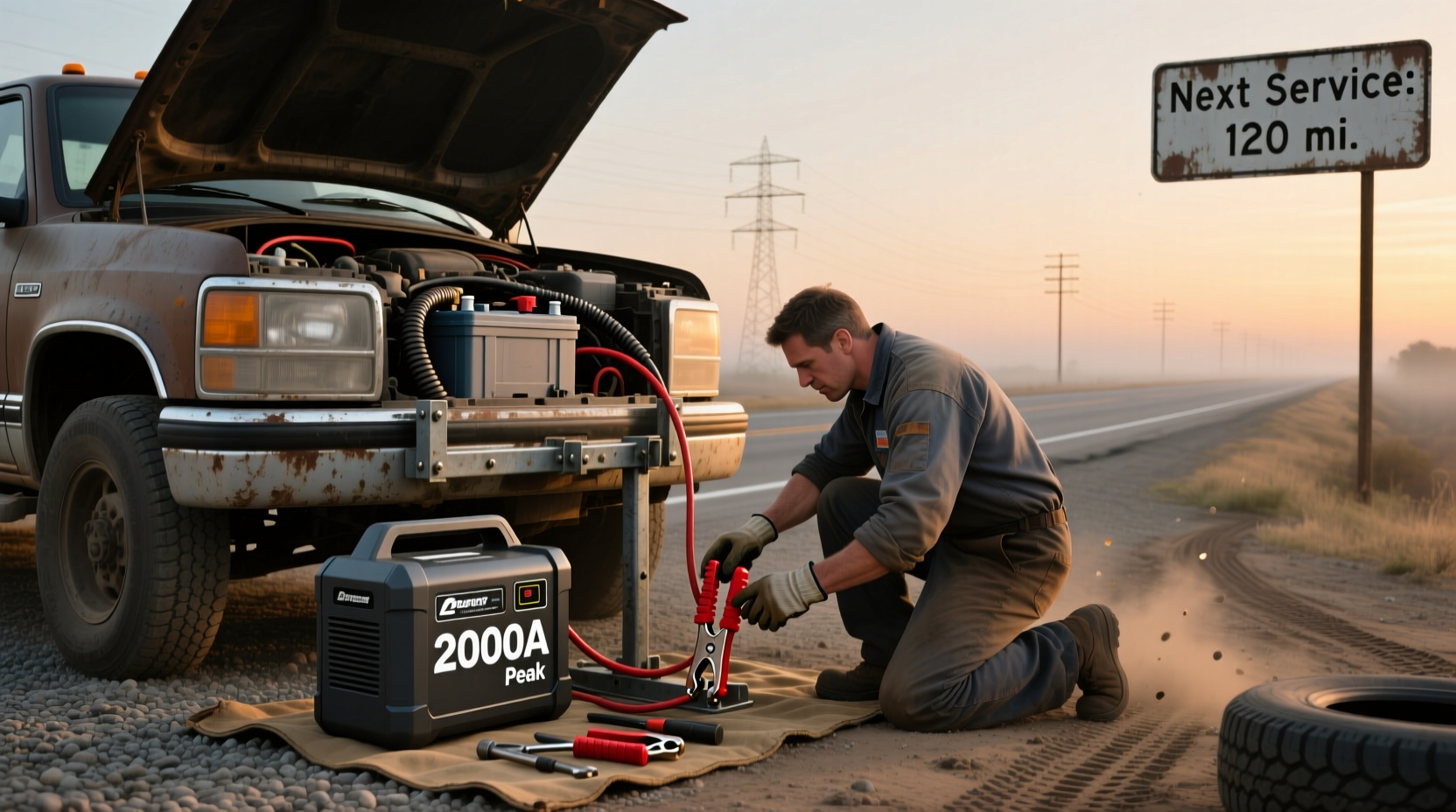
When choosing a diesel truck jump starter, the most critical factor is power output—specifically Cold Cranking Amps (CCA). Unlike gasoline engines, diesel trucks require significantly higher amps to overcome their high compression ratios and heavy internal components 1. For most diesel pickups and commercial vehicles, you’ll need a minimum of 1500 starting amps and 3000 peak amps, with larger engines (8L+) requiring up to 4000A+. A common rule of thumb is 120 CCA per liter of engine displacement 1. Always prioritize CCA over peak amps, ensure voltage compatibility (12V vs 24V), and consider real-world conditions like cold weather, which can drastically reduce battery efficiency.
About Diesel Truck Jump Starters and Amp Requirements
A diesel truck jump starter is a portable power device designed to deliver the high current needed to crank a diesel engine when its battery is depleted. Unlike standard car jump starters, these units must generate far greater power due to the inherent design of diesel engines, which feature higher compression ratios and heavier rotating assemblies 1. The primary use case involves roadside emergencies, fleet operations, or remote job sites where access to another vehicle or grid power is unavailable.
The central question—how many amps do you need to jump-start a diesel truck?—depends on engine size, ambient temperature, and battery condition. While small diesel cars may start with 1000–2000A, full-size pickups, delivery vans, and semi-trucks demand much higher outputs. Understanding this distinction is essential when selecting a unit that won’t fail under pressure.
Why Diesel Truck Jump Starters Are Gaining Popularity
As diesel-powered trucks remain prevalent in construction, transportation, and agriculture sectors, the demand for reliable, standalone jump-starting solutions has grown. Traditional jumper cables depend on another functioning vehicle, which isn’t always available in isolated locations. Portable lithium-ion jump starters eliminate this dependency, offering self-contained power in compact form factors 2.
Additionally, modern lifestyles and work patterns—such as long-haul trucking, off-grid deliveries, and rural service routes—make preparedness crucial. Users are increasingly seeking multifunctional devices that not only jump-start but also charge phones, power tools, or inflate tires. This convergence of reliability, portability, and added utility drives adoption across both individual owners and commercial fleets.
Types and Variants of Diesel Truck Jump Starters
Different technologies and designs cater to varying needs and budgets. Here are the main types available:
-
⚡
- Lithium-Ion Jump Starters: Lightweight, compact, and powerful. These dominate the market due to high energy density and fast recharge times. Ideal for personal use and light commercial applications.
-
🔋
- Sealed Lead-Acid (SLA) Units: Heavier and bulkier than lithium models but often more affordable. Better suited for stationary setups or garages where weight isn’t a concern.
-
🔌
- AC-Powered Boosters: Plug into wall outlets and deliver consistent high current. Used primarily in workshops or depots; not portable.
-
🚛
- 24V-Compatible Systems: Designed specifically for Class 8 semi-trucks and heavy equipment using dual-battery 24V systems. Some models offer switchable 12V/24V operation.
Each type serves distinct scenarios. Lithium units excel in field mobility, while SLA and AC models suit fixed locations. Always verify voltage compatibility before purchase.
Key Features and Specifications to Evaluate
To make an informed decision, assess the following specifications:
-
📏
- Cold Cranking Amps (CCA): The sustained current output at 0°F (-18°C). This is more important than peak amps for diesel engines 3. Look for at least 1500 CCA for medium-duty diesels.
-
📊
- Peak Amps: Maximum instantaneous surge capacity. Useful for initial turnover but less indicative of overall performance.
-
🔋
- Battery Voltage Compatibility: Most trucks use 12V systems, but large semis often use 24V. Confirm your vehicle’s electrical system before buying.
-
🌡️
- Low-Temperature Performance: Cold weather reduces battery efficiency. Choose a model rated to operate below freezing (e.g., -20°C or lower).
-
⚙️
- Additional Functions: Built-in air compressors, USB charging ports, and LED work lights add versatility 4.
-
🛡️
- Safety Protections: Reverse polarity, overcurrent, short-circuit, and spark-proof technology prevent damage during use.
Pros and Cons of Diesel Truck Jump Starters
| Pros | Cons |
|---|---|
| ✅ Eliminates need for second vehicle ✅ Compact and portable (especially lithium models) ✅ Multi-functional (charging, lighting, inflation) ✅ Faster response in emergencies ✅ Safer than traditional jumper cables |
❌ High-power models can be expensive ❌ Limited lifespan (3–5 years typical) ❌ May not work if completely discharged ❌ 24V models less common and heavier ❌ Requires periodic recharging |
These tools are ideal for truck owners, fleet managers, and field technicians. However, they are not substitutes for proper battery maintenance or alternator diagnostics. In extremely cold climates, even high-CCA units may struggle if batteries are aged or deeply drained.
How to Choose a Diesel Truck Jump Starter: Step-by-Step Guide
Selecting the right jump starter requires a structured approach. Follow this checklist:
-
📋
- Determine Engine Size: Larger engines require more cranking power. Use the 120 CCA per liter guideline as a baseline 1.
-
🔌
- Confirm Vehicle Voltage: Check whether your truck uses 12V or 24V. If unsure, consult the owner’s manual or inspect the battery configuration.
-
❄️
- Assess Operating Conditions: If you frequently operate in sub-zero temperatures, prioritize units with low-temperature ratings and higher CCA margins.
-
🔋
- Evaluate Battery Type: Lithium-ion offers better power-to-weight ratio; SLA is cheaper but heavier.
-
✨
- Consider Extra Features: Air compressors help maintain tire pressure; USB ports support device charging during downtime.
-
⚠️
- Avoid These Red Flags:
- Units advertising only “peak amps” without CCA
- No safety certifications (CE, FCC, RoHS)
- Lack of user reviews or manufacturer warranty
- Claims of starting all vehicles regardless of size
Always test the unit upon arrival and recharge it every 3–6 months to maintain readiness.
Price & Market Insights
Pricing varies widely based on power output, battery chemistry, and included features:
-
💰
- $80–$150: Mid-range lithium models with 1500–2500A output, suitable for light to medium-duty diesel pickups.
-
💼
- $150–$300: High-performance units with 3000A+ CCA, 24V support, and advanced accessories like compressors.
-
🏭
- $300+: Industrial-grade systems designed for large construction equipment or semi-trucks.
Higher price doesn’t always mean better value. Compare CCA ratings, build quality, and safety features rather than relying solely on marketing claims. Prices may vary by region and retailer, so check multiple sources before purchasing.
Top-Seller & Competitive Analysis
While specific brand recommendations aren’t provided, top-selling models typically share these traits: high CCA (≥2500A), durable casing, clear indicators, and robust clamp design. Below is a comparison framework to evaluate options:
| Feature | Entry-Level Model | Mid-Tier Model | Premium Model |
|---|---|---|---|
| Starting Amps (CCA) | 1500A | 2500A | 3500A+ |
| Peak Amps | 3000A | 4000A | 6000A |
| Voltage Support | 12V only | 12V/24V switchable | 12V/24V auto-detect |
| Battery Type | Lithium-ion | Lithium-ion | Lithium-Polymer |
| Additional Features | USB charging | LED light + USB | Compressor + screen + app |
| Weight | 2.5 lbs | 3.8 lbs | 5.5 lbs |
This table illustrates trade-offs between cost, capability, and convenience. Choose based on your actual usage scenario, not just maximum specs.
Customer Feedback Synthesis
Analysis of buyer reviews reveals consistent themes:
-
👍
- Common Praises: Reliability in cold weather, ease of use, inclusion of extra tools (like flashlights), strong clamps, and fast charging.
-
👎
- Frequent Complaints: Short cable length, misleading peak amp labeling, failure after 1–2 years, difficulty starting very large engines, and poor customer support.
Many users report success with 3000A+ units on 6.7L diesel pickups but note limitations with older or larger industrial engines. Real-world performance often depends on battery health and ambient temperature.
Sourcing & Supplier Tips
When purchasing, consider the following:
-
🛒
- Retail Channels: Reputable online marketplaces, automotive specialty stores, and industrial suppliers offer varied inventory.
-
📦
- Wholesale Options: For fleet operators, bulk purchases from authorized distributors may reduce per-unit cost.
-
🔍
- Verification Steps:
- Check product specifications directly from manufacturer websites
- Verify return policies and warranty terms
- Look for third-party safety certifications
- Read independent user reviews across platforms
Avoid counterfeit or unbranded units that exaggerate performance claims. When sourcing internationally, confirm voltage compatibility and plug types.
Maintenance, Safety & Legal Considerations
Proper care ensures longevity and safe operation:
-
🔋
- Maintenance: Recharge every 3–6 months, store in a cool dry place, and inspect cables for wear.
-
🚨
- Safety Practices: Connect clamps in correct order (positive first, then negative), avoid touching terminals, and keep away from flammable materials.
-
⚖️
- Compliance: Ensure the device meets local electrical safety standards (e.g., UL, CE). Regulations may vary by country, so verify compliance through official certification databases.
Never attempt to jump-start a damaged or leaking battery. Always follow the manufacturer’s instructions precisely.
Conclusion
Choosing the right diesel truck jump starter hinges on matching power output to engine size and operating environment. If you drive a light-duty diesel pickup, a 1500–2500A lithium unit should suffice. For heavy-duty trucks or cold climates, opt for 3000A+ with 24V support. Prioritize CCA over peak amps, verify voltage compatibility, and consider additional features that enhance utility. Avoid units lacking clear specifications or safety protections. By focusing on verified performance metrics and realistic use cases, you can select a reliable tool that delivers when it matters most.
Frequently Asked Questions
Can a 1000-amp jump starter start a diesel truck?
No, a 1000-amp unit is generally insufficient for most diesel trucks, especially those with engines over 3.0L. It may work for small diesel cars but will likely fail on pickups or commercial vehicles, particularly in cold weather.
What is the difference between CCA and peak amps?
CCA (Cold Cranking Amps) measures sustained power output at low temperatures, which is critical for starting diesel engines. Peak amps refer to the maximum instantaneous surge, which is less indicative of real-world performance.
Do I need a 24V jump starter for my semi-truck?
If your semi-truck uses a 24V electrical system (common in Class 8 trucks), then yes. Most consumer jump starters are 12V-only. Check your vehicle’s battery setup or owner’s manual to confirm voltage requirements.
How often should I recharge my diesel truck jump starter?
Recharge every 3 to 6 months, even if unused. Lithium-based units gradually lose charge over time. Regular charging maintains battery health and ensures readiness during emergencies.
Are lithium-ion jump starters safe for diesel engines?
Yes, provided they have sufficient power output and built-in safety features like reverse polarity protection. Modern lithium units are engineered to deliver stable current and prevent damage to vehicle electronics.




 浙公网安备
33010002000092号
 浙B2-20120091-4