Short Introduction
If you're launching or optimizing a mobile detailing business, one of the most practical questions is: how many cars can I wash with 100 gallons of water? The answer isn't fixed — it ranges from just 4 vehicles using standard pressure washing to over 800 using advanced waterless methods. This variation underscores why selecting the right water tanks for mobile detailing is critical. Your tank size, combined with your cleaning technique and equipment efficiency, determines daily output, operational cost, and environmental impact. In this guide, we’ll walk through what to look for in water tanks for mobile detailing, how different systems affect water consumption, and how to calculate real-world throughput so you can make an informed decision tailored to your service model.
About Water Tanks for Mobile Detailing & How Many Cars Can I Wash with 100 Gallons?
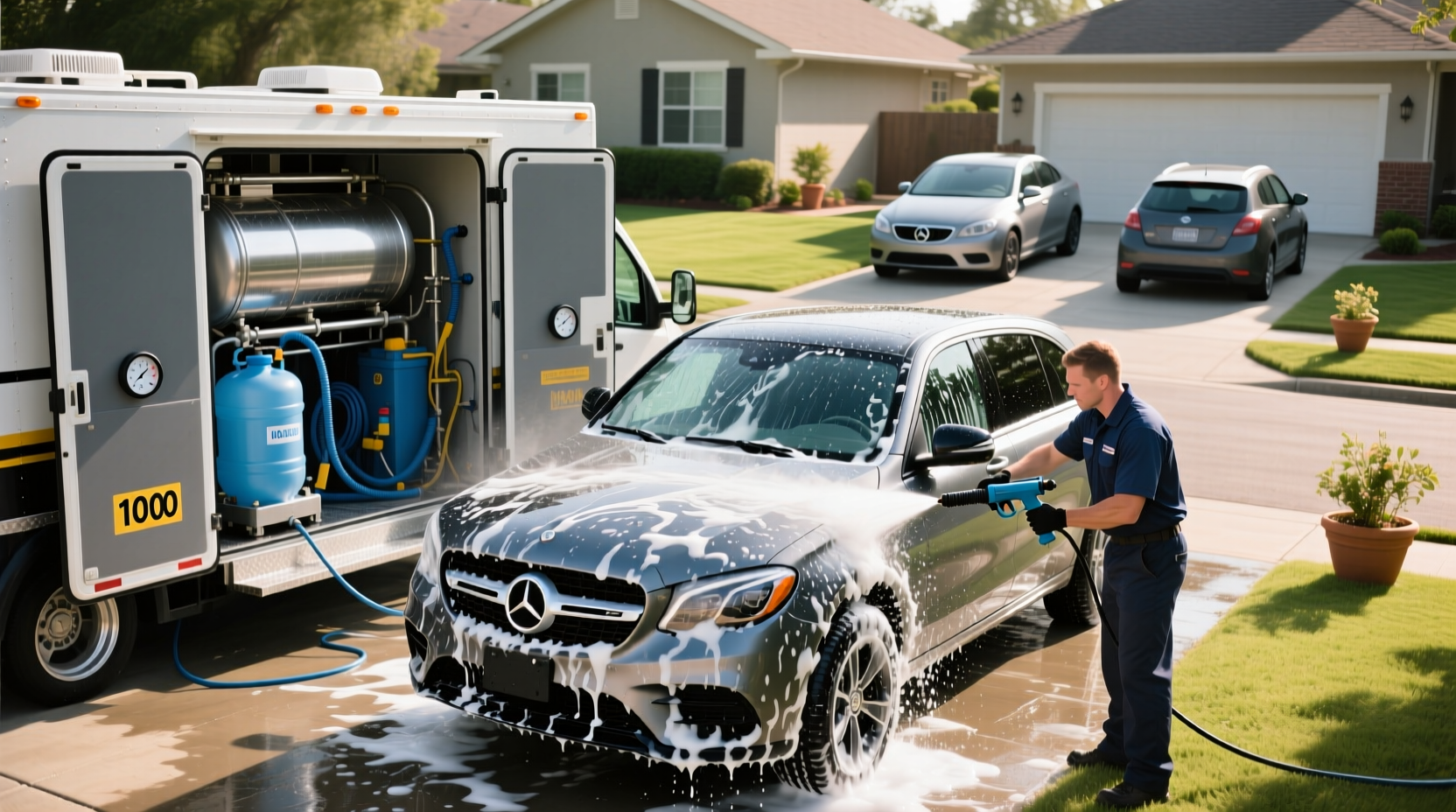
Mobile detailing involves bringing professional car cleaning services directly to customers’ locations — homes, offices, or parking lots. A core component of this operation is the onboard freshwater tank, which stores water used for exterior rinsing, foam application, and interior steam cleaning. These tanks typically range from 50 to 150 gallons, with 100-gallon units being a common mid-range choice 1.
The central performance metric — how many cars can be washed with 100 gallons of water? — depends not only on tank size but also on workflow design. Unlike traditional tunnel washes that may use 30–150 gallons per vehicle 2, mobile detailers have strong incentives to conserve water due to limited supply and refill logistics. As such, modern setups integrate efficient nozzles, recirculation systems, or even eliminate water entirely for certain steps.
Why Water Tanks for Mobile Detailing Are Gaining Popularity
The rise of mobile detailing reflects broader shifts in consumer behavior and sustainability priorities. Customers increasingly value convenience and time savings, preferring services that come to them rather than requiring a trip to a fixed facility. At the same time, regulatory pressures and public awareness around water conservation are pushing businesses toward low-impact models.
Water tanks enable mobility while ensuring consistent service delivery regardless of access to municipal hookups. Operators in drought-prone areas like California or Arizona benefit especially from closed-loop systems that minimize runoff and comply with local restrictions. Additionally, efficient water use reduces operating costs — less water means fewer refills, lower fuel usage, and extended route coverage per shift.
Types and Variants
Different types of water tanks serve distinct operational needs. Understanding these variants helps clarify how each impacts your potential output from a 100-gallon supply.
- 🛒 Plastic Polyethylene Tanks (50–150 gal)
Pros: Lightweight, corrosion-resistant, affordable.
Cons: Can degrade under prolonged UV exposure; may retain odors if not cleaned regularly.
Best for: Entry-level or seasonal operations where weight and budget matter. - 🔧 Stainless Steel Tanks
Pros: Durable, long-lasting, easy to sanitize, temperature-stable.
Cons: Heavy, expensive, requires secure mounting.
Best for: full-time professionals seeking reliability and hygiene compliance. - ⚙️ Composite Hybrid Tanks
Pros: Combine plastic liners with metal frames for balance of weight and strength.
Cons: Limited availability; higher cost than basic poly tanks.
Best for: fleets needing modular integration with pumps and filtration. - 🧼 Integrated System Tanks (with Pump & Hose Reels)
Pros: All-in-one design simplifies installation and improves ergonomics.
Cons: Less customizable; repairs may require replacing entire unit.
Best for: rapid deployment teams focused on speed and consistency.
Key Features and Specifications to Evaluate
When evaluating options for water tanks in mobile detailing, consider the following specifications that influence both functionality and efficiency:
- 📏 Capacity (50–150 gallons): Match tank size to average daily workload. A 100-gallon tank supports ~5–10 standard washes at 10–20 gal/car.
- 💧 Flow Rate & Pressure Compatibility: Ensure the tank works with your pressure washer (typically 1.5–3 GPM at 1200–2000 PSI).
- 🛡️ Material Grade: Look for FDA-compliant, UV-stabilized polyethylene or 304/316 stainless steel.
- 🚚 Portability & Mounting: Check dimensions, weight when full, and whether it fits your vehicle chassis.
- 🧰 Access Points: Top-fill ports, drain valves, overflow vents, and inspection hatches improve usability.
- 🔋 Pump Integration: Some tanks include built-in electric or gas-powered pumps; others require external attachment.
- 🌊 Water Conservation Design: Consider models with level gauges, flow restrictors, or dual-chamber systems (clean vs. grey water).
Pros and Cons
- Enables off-grid service delivery
- Supports eco-friendly, low-runoff operations
- Improves customer reach without infrastructure dependency
- Can be paired with waterless products to extend capacity
- Limited by refill frequency and sourcing logistics
- Heavy when full — affects vehicle payload and fuel economy
- Risk of contamination if not maintained properly
- Initial investment required for durable, compliant systems
How to Choose Water Tanks for Mobile Detailing & Estimate Output
Selecting the best water tank requires aligning technical specs with your service model. Follow this step-by-step process:
- ✔️ Define Your Service Type: Will you offer full exterior washes, interior detailing, or waterless express services? High-water services (e.g., soft-touch foam + rinse) consume 15–25 gallons per car 3. Low-water or waterless methods may use under 1 gallon 4.
- ✔️ Calculate Daily Demand: Estimate how many cars you plan to service per day. For example, 10 cars × 15 gal = 150 gallons needed. A 100-gallon tank would require midday refill(s).
- ✔️ Assess Vehicle Fit: Measure available space in van, trailer, or truck bed. Account for full weight: 100 gallons ≈ 834 lbs (378 kg).
- ✔️ Evaluate Pump Requirements: Confirm voltage (12V DC vs. 110V AC), flow rate match, and hose length needs.
- ✔️ Plan Refill Strategy: Identify reliable water sources (fire hydrants with permit, commercial sites, self-contained refill stations). Avoid relying on residential taps without permission.
Red Flags to Avoid:
- ❌ Buying undersized tanks without considering worst-case scenarios (e.g., muddy SUVs doubling water use 5)
- ❌ Ignoring local regulations on water discharge or suction methods
- ❌ Choosing opaque tanks without level indicators — leads to guesswork and downtime
- ❌ Overlooking ease of cleaning — biofilm buildup affects water quality and odor
Price & Market Insights
Pricing varies significantly based on material, capacity, and integration level:
- Basic Poly Tanks (50–100 gal): $150–$350
- Stainless Steel Units: $600–$1,200+
- Complete Systems (tank + pump + hoses): $800–$2,000
Prices may vary by region and supplier. While plastic tanks offer better upfront value, stainless steel often provides superior longevity and resale potential. For operators running 20+ jobs weekly, investing in durable, high-capacity systems typically pays off within 6–12 months via reduced maintenance and downtime.
Top-Seller & Competitive Analysis
Below is a comparison of popular water tank configurations used in mobile detailing. Note that actual performance depends on user technique and ancillary equipment.
| Model Type | Capacity | Material | Avg. Cars per 100 Gal* | Estimated Cost |
|---|---|---|---|---|
| PolyTank PT-100 | 100 gal | HDPE Plastic | 5–6 | $280 |
| AquaMaster ProStainless 100 | 100 gal | 304 Stainless Steel | 6–7 | $950 |
| EcoFlow Mobile Unit M100 | 100 gal | Composite w/ Pump | 7–8** | $1,400 |
*Average assumes 15–20 gal/car using pressure rinse. **Higher efficiency due to optimized flow control and filter system.
Customer Feedback Synthesis
Analysis of user reviews reveals consistent themes across platforms:
- Common Praise:
- “Lightweight poly tanks make van loading much easier.”
- “Stainless units last years with minimal maintenance.”
- “Built-in gauges prevent unexpected outages during routes.”
- Frequent Complaints:
- “Opaque tanks make it hard to monitor water levels.”
- “Cheap fittings leak after a few months.”
- “No drain plug location — had to drill my own.”
Sourcing & Supplier Tips
Water tanks for mobile detailing are available through industrial suppliers, automotive aftermarket retailers, and online marketplaces. For bulk purchases or fleet deployment:
- Request samples to test fit and material quality
- Negotiate volume discounts (typically 10–20% off for 5+ units)
- Verify return policies and warranty terms (look for 1–3 year coverage)
- Consider drop-shipping partners to reduce inventory risk
When importing or sourcing internationally, confirm compliance with local plumbing and transport safety standards. Always inspect welds, seals, and labeling upon delivery.
Maintenance, Safety & Legal Considerations
To ensure safe and compliant operation:
- Clean tanks every 4–6 weeks with non-toxic sanitizers to prevent algae and bacteria growth.
- Inspect hoses and valves monthly for cracks, leaks, or blockages.
- Never dispose of wastewater on streets or storm drains — many jurisdictions prohibit this due to chemical runoff. Use absorbent kits or portable containment systems.
- Check local ordinances regarding water withdrawal, reuse, and disposal. Rules vary by city and county.
- Secure tanks during transit to prevent shifting or rupture in accidents.
When in doubt, consult your municipality’s environmental services department or a mobile trade association for guidance.
Conclusion
The number of cars you can wash with 100 gallons of water hinges on your methodology and equipment choices. If you’re using conventional pressure rinsing, expect 4 to 6 vehicles. With optimized low-water systems, you might stretch to 10. For waterless or rinse-only touch-ups, outputs can exceed 800 cars — though these are niche applications 6. When choosing water tanks for mobile detailing, focus on durability, compatibility, and ease of monitoring. If you run a high-volume urban route, invest in stainless steel with integrated pumps. If you’re starting part-time, a food-grade poly tank offers a cost-effective entry point. Always validate local regulations and plan your refill strategy ahead of launch.
Frequently Asked Questions
- Can I refill my mobile detailing water tank from any source?
No. While potable water from approved spigots or fire hydrants (with permits) is acceptable, avoid contaminated or stagnant sources. Always verify water quality to protect equipment and finish integrity. - Does tank material affect water taste or smell?
Yes. Lower-grade plastics may leach odors over time, especially in heat. Use UV-stabilized, FDA-approved tanks to maintain neutral water properties. - How do I calculate my actual water usage per car?
Install a flow meter between the tank and pump. Record total gallons used after a set number of washes, then divide to get average consumption. - Are larger tanks always better?
Not necessarily. Larger tanks add weight, reduce payload, and may not fit smaller vehicles. Balance capacity with practicality and route density. - Can I use recycled or grey water in my detailing tank?
Generally not recommended. Used water contains dirt, chemicals, and microbes that can clog nozzles and damage surfaces. Freshwater ensures consistent results and protects your tools.




 浙公网安备
33010002000092号
 浙B2-20120091-4