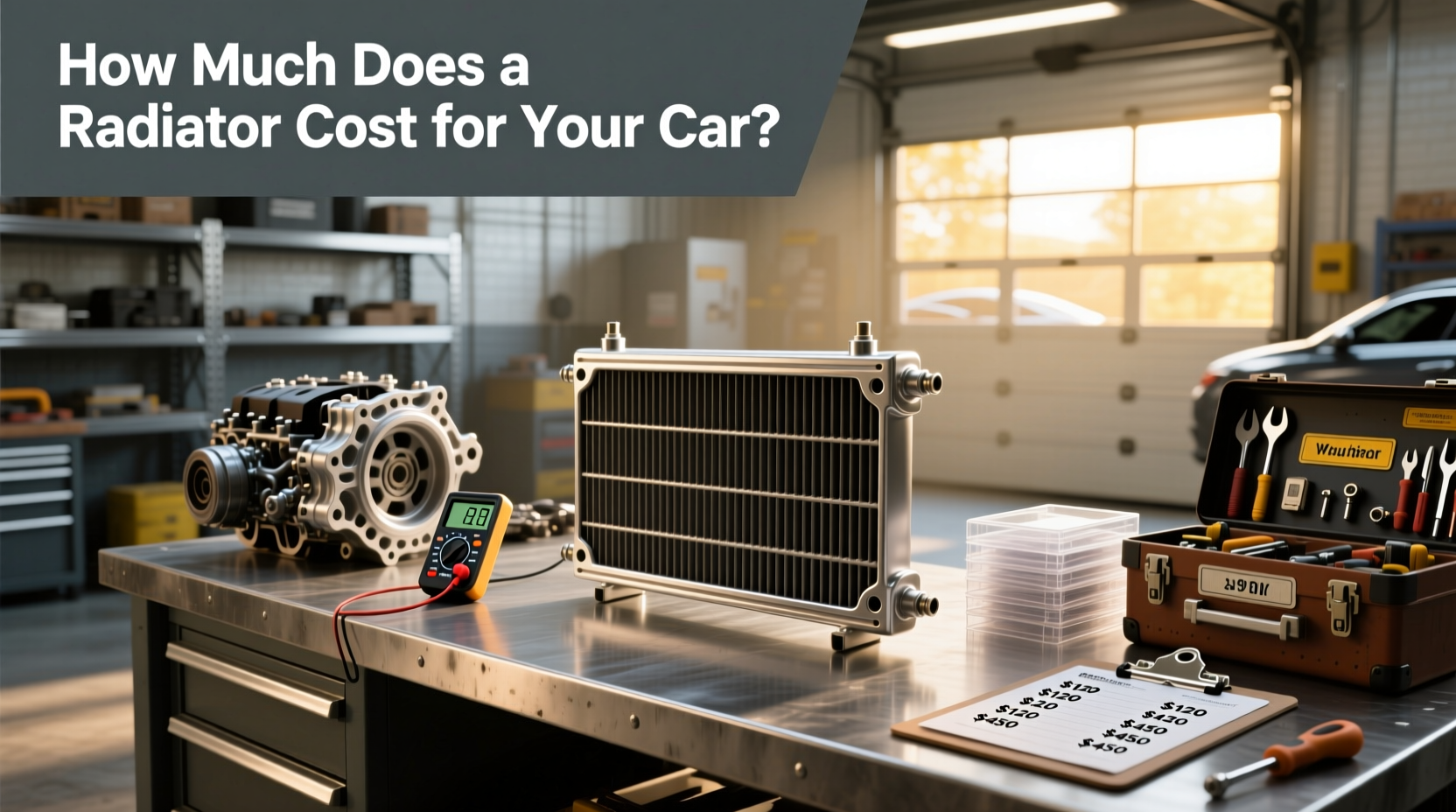
The total cost to replace a car radiator typically ranges from $700 to $1,000, including both parts and labor 1. However, this average can vary significantly based on your vehicle’s make and model, radiator type, and labor rates in your area. When deciding how to choose car radiator price, How much does a radiator cost for your car?, consider whether repair is viable—small leaks may be fixed for $10–$150 using sealants or hose replacements, while full replacements are necessary for major cracks or persistent overheating 2. Opting for aftermarket parts over OEM can reduce costs, but verify fitment carefully. Avoid delaying action: ignoring coolant issues risks engine damage costing thousands.
About Car Radiator Price: What Determines Replacement Cost?
Understanding car radiator price, How much does a radiator cost for your car?, starts with recognizing that it's not a single fixed number. The final expense depends on multiple interrelated factors including vehicle specifications, part type, labor complexity, and geographic location. A radiator’s primary function is to dissipate heat from the engine coolant, preventing overheating and maintaining optimal engine performance. When failure occurs—due to corrosion, impact damage, or aging seals—the system must be repaired or replaced.
This guide focuses on helping consumers navigate the decision-making process when facing radiator issues. Whether you're dealing with a minor leak or complete unit failure, knowing what influences cost allows for informed choices between repair options, part quality, and service providers. Typical scenarios include routine maintenance discoveries, sudden overheating warnings, or post-collision cooling system damage.
Why Understanding Radiator Costs Is Increasingly Important
Rising vehicle complexity and higher repair bills have made consumers more cost-conscious. Modern engines operate under tighter thermal tolerances, making radiator reliability critical. At the same time, older vehicles remain on the road longer, increasing demand for affordable repair solutions. Drivers are also more aware of the consequences of neglecting cooling systems—engine replacement due to overheating can exceed $3,000, far surpassing even high-end radiator replacements.
As a result, there's growing interest in evaluating long-term value rather than just upfront price. Questions like “how do radiator materials impact longevity and cost?” reflect deeper consumer engagement with durability and lifecycle expenses. Additionally, DIY trends and online part marketplaces empower owners to compare prices and consider self-installation, further driving demand for transparent pricing data and practical buying advice.
Types and Variants of Radiators
Radiators come in several configurations, each suited to different vehicles and use cases. Choosing the right type affects both performance and cost.
🔧 Aluminum Radiators
Most modern vehicles use aluminum radiators due to their lightweight design and efficient heat transfer. They are generally less expensive than copper-brass models and widely available as OEM or aftermarket units.
- Pros: Lightweight, cost-effective, good thermal conductivity
- Cons: Less durable under extreme conditions; harder to repair if cracked
🔧 Copper-Brass Radiators
Common in older or heavy-duty vehicles, these radiators offer superior durability and are easier to solder or weld when damaged.
- Pros: Highly durable, repairable via brazing/soldering, excellent heat retention
- Cons: Heavier, more expensive, less common in new models
🔧 OEM vs Aftermarket Radiators
OEM (Original Equipment Manufacturer) radiators match factory specifications exactly, ensuring perfect fit and compatibility. Aftermarket versions are produced by third parties and often cost 20–40% less.
- Pros of Aftermarket: Lower price, wider availability
- Cons: Quality varies; some may have fitment or durability issues
Key Features and Specifications to Evaluate
When assessing car radiator price, How much does a radiator cost for your car?, focus on measurable specs and compatibility factors:
- Material Type: Aluminum is standard; copper-brass offers better repairability 3
- Core Design: Tube-and-fin vs stacked plate cores affect airflow and cooling efficiency
- Fan Configuration: Some radiators include integrated electric fans; others rely on mechanical fans
- Fitment: Must match your vehicle’s year, make, model, and engine size—verify before purchase
- Pressure Rating: Should align with your vehicle’s cooling system requirements (typically 13–18 psi)
- Warranty: Look for at least 1-year coverage, especially for aftermarket parts
Pros and Cons of Repair vs Replacement
| Option | Advantages | Disadvantages |
|---|---|---|
| Radiator Sealant | Cheap ($10–$30), easy application | Temporary fix only; not suitable for large leaks |
| Hose Replacement | Affordable ($100–$300); addresses common failure point | Only useful if radiator body is intact |
| Welding/Soldering | Cost-effective repair ($150–$500); preserves original unit | Durability uncertain; not feasible for plastic tank damage |
| Full Replacement | Most reliable solution; includes new hoses and seals | Higher cost ($700+); requires significant labor |
Repair is viable only for minor issues. If the core is corroded or tanks are cracked, replacement is safer.
How to Choose Car Radiator Price: Your Step-by-Step Buying Guide
Making an informed decision involves several key steps:
- Diagnose the Issue: Confirm whether the problem is the radiator itself or a related component (hose, cap, water pump).
- Assess Damage Severity: Small pinhole leaks may allow repair; large cracks or warped fins require replacement.
- Determine Compatibility: Use your VIN or vehicle details to find exact-fit radiators.
- Compare Part Types: Decide between OEM and aftermarket based on budget and reliability needs.
- Get Multiple Quotes: Obtain estimates from at least three mechanics for labor costs.
- Evaluate Labor Complexity: Some vehicles require bumper removal or fan disassembly, increasing time and cost 4.
Price & Market Insights
Radiator pricing varies by vehicle class and region. Here’s a breakdown:
| Vehicle Type | Part Cost | Labor Cost | Total Estimated Cost |
|---|---|---|---|
| Standard Sedan (e.g., Honda Accord) | $400–$600 | $200–$300 | $700–$1,000 |
| Luxury/Performance (e.g., BMW, Mercedes) | $600–$1,200+ | $300–$500 | $900–$1,800+ |
| Classic Cars | $259–$1,000+ | $200–$400 | $500–$1,400+ |
| Trucks & SUVs | $500–$800 | $250–$350 | $750–$1,150 |
Prices may vary by location—urban areas often have higher labor rates. Aftermarket parts can save money but research brand reputation first. Consider total value: a slightly more expensive radiator with a lifetime warranty may outperform a cheaper one needing replacement in two years.
Customer Feedback Synthesis
Analysis of real-world buyer experiences reveals recurring themes:
- Positive Feedback: Customers appreciate precise fitment, included mounting hardware, and clear instructions—especially with aftermarket units. Long warranties (3+ years) increase satisfaction.
- Common Complaints: Poor-quality plastic tanks cracking prematurely, incorrect core dimensions leading to fitment issues, and misleading product descriptions online.
- Service-Related Issues: Some report mechanics charging extra for disposal fees or coolant refills not included in initial quotes.
Buyers who double-check compatibility and read recent reviews tend to have better outcomes.
Sourcing & Supplier Tips
You can source radiators from auto parts stores, online retailers (e.g., RockAuto, Amazon), or specialty vendors. For rare or classic vehicles, reproduction manufacturers like Classic Radiators or Ron Davis Racing offer custom builds.
- For Individuals: Compare prices across platforms and confirm return policies in case of fitment errors.
- For Mechanics/Shops: Bulk suppliers like LKQ or CARiD offer volume discounts. Ensure proper documentation for warranty claims.
- Verification Steps: Before installing, inspect for shipping damage, verify fin alignment, and test pressure if possible.
Maintenance, Safety & Legal Considerations
Proper maintenance extends radiator life. Check coolant levels monthly and inspect hoses for bulges or cracks. Flush the cooling system every 30,000–50,000 miles to prevent sediment buildup.
Safety-wise, never open a hot radiator cap—pressure and steam can cause severe burns. Dispose of old coolant responsibly; it’s toxic and regulated in many areas. While no federal certification is required for replacement radiators in the U.S., some states regulate emissions-related modifications—verify local rules if modifying stock cooling systems.
Conclusion: Making the Right Choice
If you’re facing a minor leak and want a quick, low-cost fix, try a sealant or replace a damaged hose. For moderate damage, welding may extend life temporarily. But if your radiator has major cracks, persistent overheating, or is over 10 years old, replacement is the safest long-term solution. Choose OEM for guaranteed fit and reliability, or select well-reviewed aftermarket brands to save costs. Always get labor estimates upfront and factor in coolant flush and disposal fees. By understanding what affects car radiator price, How much does a radiator cost for your car?, you can make a balanced decision that protects your engine and your wallet.
FAQs
Short distances at low speeds may be possible with constant coolant top-offs, but prolonged driving risks engine overheating and severe internal damage. It’s best to address leaks promptly.
For small leaks in copper-brass radiators, repair can be cost-effective. However, aluminum units with plastic tanks are rarely repairable long-term. Evaluate based on age, severity, and labor cost.
Most replacements take 2–4 hours depending on vehicle complexity. Some modern cars require bumper or fan assembly removal, extending the job.
Yes. Flushing removes debris and old coolant that could contaminate the new radiator and cause future blockages or corrosion.
Many are, especially from reputable brands like Denso, Spectra Premium, or Hayden. Check customer reviews and warranty terms before buying.




 浙公网安备
33010002000092号
 浙B2-20120091-4