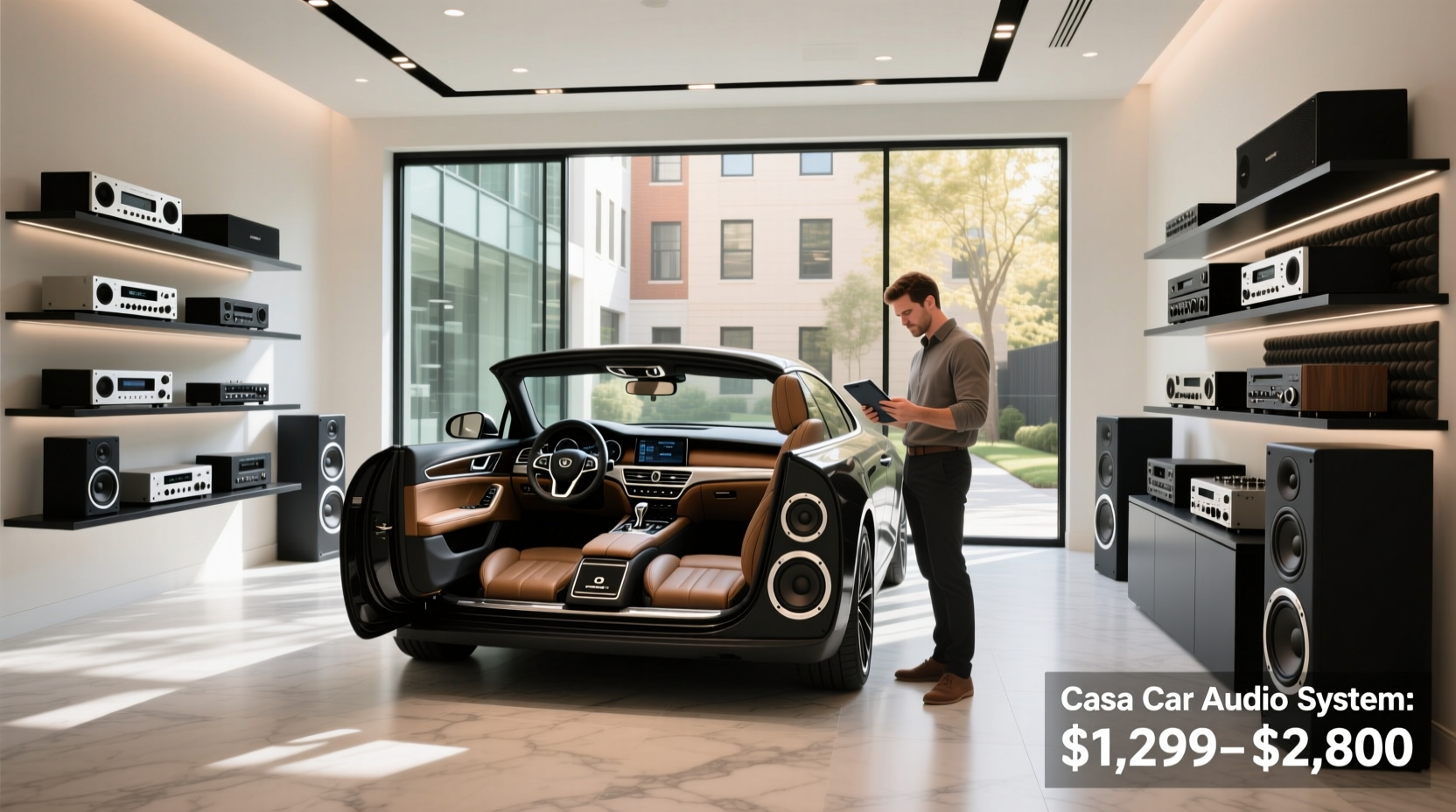
A good car speaker system typically costs between $500 and $1,500 for a balanced upgrade with quality sound, but prices can range from under $500 for basic improvements to over $3,000 for audiophile-grade setups [1]. When deciding how to choose caska car audio prices,How much does a good speaker system cost for a car?, consider your priorities: sound clarity, bass response, or seamless integration. Avoid cheap all-in-one kits that compromise on speaker separation and power handling. Instead, focus on component speakers paired with a dedicated amplifier if budget allows. Key factors like brand reputation, installation complexity, and system compatibility significantly affect long-term satisfaction.
About Car Audio Systems: What Defines 'Good' Sound?
A "good" car speaker system delivers clear, balanced audio across frequencies—crisp highs, defined mids, and deep, controlled bass—without distortion at moderate volumes. It's not just about loudness; it's fidelity, imaging (where instruments appear in space), and how well the system integrates with your vehicle’s acoustics [2]. Typical components include a head unit (receiver), speakers (front/rear), subwoofers for bass, and amplifiers to boost signal strength. Most factory systems lack sufficient power and speaker quality, making upgrades one of the most impactful modifications for drivers who value music, podcasts, or hands-free calling clarity.
Why Car Audio Upgrades Are Gaining Popularity
As vehicles become quieter and digital media consumption rises, drivers expect better in-cabin audio experiences. Factory-installed systems often use low-cost materials and underpowered electronics, leading to muffled sound and weak bass. Enthusiasts and daily commuters alike are investing in upgrades to enhance driving enjoyment. Additionally, advancements in digital signal processing (DSP), Bluetooth streaming, and smartphone integration have made high-fidelity audio more accessible. People now treat their cars as mobile listening spaces, fueling demand for systems that deliver concert-like immersion without requiring professional tuning expertise.
Types and Variants of Car Speaker Systems
Understanding the differences between speaker types helps align your choice with performance goals and budget.
🛒 Coaxial Speakers
These combine a tweeter and woofer in a single frame, making them easy to install and affordable. They're ideal for replacing factory speakers without major modifications.
Pros: Budget-friendly, simple replacement, widely available.
Cons: Limited sound staging, less precise frequency separation.
🔧 Component Speaker Systems
These separate the tweeter, woofer, and often include external crossovers. This design allows optimal placement (e.g., tweeters near dashboard) for improved stereo imaging.
Pros: Superior sound quality, better detail and directionality.
Cons: Higher cost, complex installation, requires more planning.
🔊 Full Systems with Subwoofers & Amplifiers
A complete setup includes multiple speakers, an amp, and a subwoofer enclosure. These deliver dynamic range and deep bass, especially for genres like hip-hop or electronic music.
Pros: High output, rich bass, customizable power delivery.
Cons: Expensive, needs trunk space, professional installation recommended.
Key Features and Specifications to Evaluate
To make an informed decision when evaluating caska car audio prices,How much does a good speaker system cost for a car?, assess these technical and practical aspects:
- Sensitivity (dB): Measures efficiency—higher sensitivity (85dB+) means louder sound with less power, ideal for systems without amplifiers.
- Power Handling (RMS): Look at continuous wattage (RMS), not peak power. Match RMS ratings between speakers and amplifiers to avoid damage.
- Frequency Response: Wider ranges (e.g., 40Hz–20kHz) indicate better bass and treble reproduction, though real-world cabin acoustics matter more than specs alone.
- Impedance: Most car systems run at 4 ohms. Ensure compatibility between head unit, amp, and speakers.
- Build Quality: Polypropylene cones and rubber surrounds last longer than paper or foam. Metal mesh grilles protect against debris.
- Connectivity: Modern head units support Apple CarPlay, Android Auto, USB, and Bluetooth—critical for usability.
Pros and Cons of Upgrading Your Car Audio
✅ Advantages
- Sharper, clearer sound compared to stock systems
- Better emotional engagement with music and media
- Increased resale value, especially with clean, documented installations
- Customization options for different listening preferences
❗ Limitations
- High-end systems require significant investment ($1,500+)
- Complex setups may void parts of vehicle warranty
- Improper installation can cause noise interference or electrical issues
- Space trade-offs—subwoofers reduce cargo room
How to Choose a Car Audio System: Step-by-Step Guide
Follow this checklist to avoid common pitfalls and ensure compatibility:
- Define Your Budget: Determine total spending limit—including equipment and potential labor.
- Assess Current System: Identify whether you need full replacement or selective upgrades (e.g., add sub only).
- Prioritize Components: For most users, upgrading speakers first yields the biggest improvement. Add an amp later if needed.
- Check Vehicle Compatibility: Speaker size (6.5", 6x9", etc.) varies by model. Use fitment tools from retailers like Crutchfield [3].
- Select Speaker Type: Choose coaxial for simplicity and cost; go component for superior sound.
- Decide on Amplification: If using a subwoofer or want higher volume, include a mono or multi-channel amp.
- Plan Installation: Basic speaker swaps can be DIY. Complex wiring or DSP tuning benefits from professionals.
Red Flags to Avoid:
- Products advertising unrealistic power output (e.g., “1000W peak” on $50 speakers)
- Mismatched impedance causing amplifier strain
- Universal-fit enclosures that don’t match your trunk dimensions
- Ignoring noise suppression (ground loops, alternator whine)
Price & Market Insights: What You’ll Pay
Car audio pricing varies widely based on brand, component quality, and labor. Here’s a realistic breakdown:
| Budget Tier | System Scope | Estimated Cost |
|---|---|---|
| Under $500 | Head unit + coaxial speakers | $200–$500 |
| $500–$1,500 | Mid-tier head unit, component speakers, compact sub | $500–$1,500 |
| $1,500–$3,000 | Premium speakers, multi-amp setup, DSP | $1,500–$3,000 |
| $3,000+ | Reference-grade components, custom enclosures, advanced DSP | $3,000+ |
Prices may vary by region and retailer. Always verify warranty terms and return policies before purchase. Entry-level brands like Kicker or Pioneer offer strong value, while JL Audio or Focal cater to discerning listeners willing to pay a premium.
Top-Seller & Competitive Analysis
Popular models balance performance, reliability, and ease of integration. Below is a comparison of frequently purchased systems within the mid-range segment:
| Brand | Best For | Typical Price Range | Sound Profile |
|---|---|---|---|
| Pioneer | Feature-rich head units | $150–$400 | Bright, modern with strong connectivity |
| Alpine | Detailed mids and highs | $200–$500 | Clean, natural tonality |
| Rockford Fosgate | All-around performance | $100–$450 | Powerful, dynamic |
| JL Audio | Audiophile-grade clarity | $300–$1,000+ | Accurate, refined |
| Kicker | Bass-focused budgets | $80–$350 | Punchy, aggressive |
No single brand dominates all categories. Mix-and-match approaches often yield better results than sticking to one manufacturer.
Customer Feedback Synthesis
Based on aggregated user reviews and forum discussions, here are recurring themes:
- 👍 Frequent Praise: Noticeable improvement over factory audio, reliable build quality from mid-tier brands, ease of pairing with smartphones.
- 👎 Common Complaints: Poor instructions for DIY kits, inconsistent bass response in small enclosures, difficulty matching aftermarket head units with steering wheel controls.
- 🔧 Installation Challenges: Many users underestimate wiring complexity, especially when integrating amplifiers or maintaining factory backup cameras.
- 💡 Positive Surprises: DSP-equipped systems offering room correction features that adapt to cabin acoustics.
Sourcing & Supplier Tips
Purchase from authorized dealers or reputable online retailers (e.g., Crutchfield, Sonic Electronix) to ensure genuine products and support. Check return windows (typically 30 days) and restocking fees. For bulk purchases or resale, contact distributors directly—but confirm authenticity through serial numbers. Before installing, inspect all components for shipping damage and test functionality in a safe environment. Keep original packaging until the system is fully verified.
Maintenance, Safety & Legal Considerations
Well-installed systems require minimal maintenance. Periodically check connections for corrosion, especially in humid climates. Avoid excessive volume levels that could damage speakers or impair driver awareness. While no universal laws ban upgraded audio, some regions restrict maximum volume or prohibit certain exterior speaker placements. Verify local ordinances regarding sound emission limits. Ensure all wiring is properly fused and grounded to prevent electrical fires or battery drain.
Conclusion: Matching System to Need
If you want noticeable improvement without overspending, invest $500–$800 in component speakers and a modest amplifier. For audiophiles seeking studio-quality sound, allocate $1,500+ toward premium brands and professional calibration. Budget-conscious buyers can start with coaxial speakers and upgrade incrementally. Ultimately, the best system matches your listening habits, vehicle type, and technical comfort level. Focus on compatibility, realistic expectations, and phased investments rather than chasing maximum specs.
FAQs
❓ How much should I spend on a good car audio system?
Aim for $500–$1,500 for a balanced upgrade with clear sound and added bass. This range covers quality speakers, a receiver, and possibly a compact subwoofer.
❓ Are expensive car speakers worth it?
They can be, especially if you listen critically to music. High-end speakers offer better materials, accuracy, and durability, but only if paired with proper amplification and installation.
❓ Can I install a car audio system myself?
Yes, for basic speaker or head unit replacements. However, systems with amplifiers, subs, or DSPs benefit from professional installation to ensure safety and optimal performance.
❓ Do I need an amplifier for better sound?
Not always, but an amplifier provides cleaner power, reduces distortion, and unlocks the full potential of quality speakers—especially when adding a subwoofer.
❓ How do I know if a speaker fits my car?
Use online fitment guides from retailers or consult your vehicle’s manual. Measure existing speaker openings and compare diameter and depth specifications before purchasing.




 浙公网安备
33010002000092号
 浙B2-20120091-4