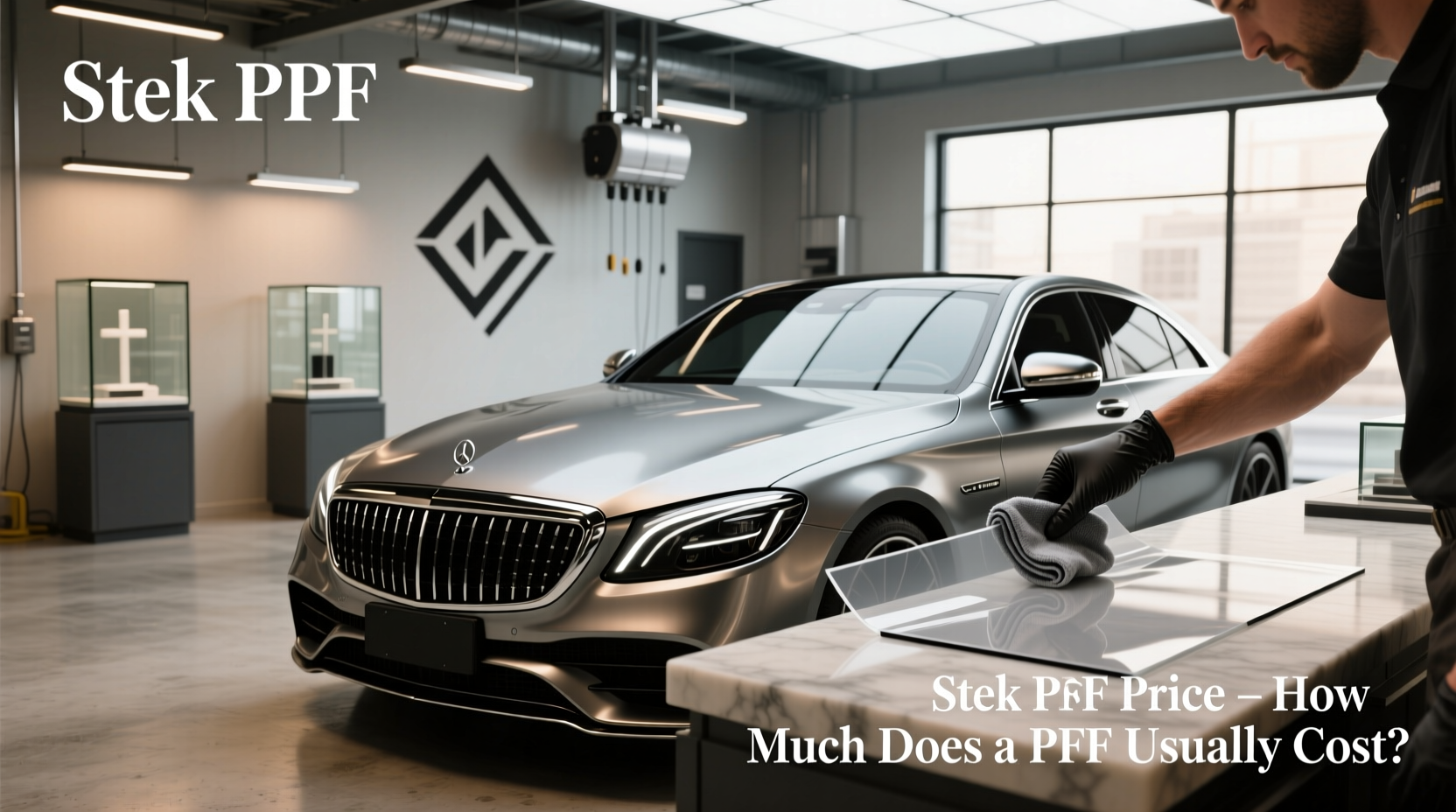
If you're asking how much does a PPF usually cost?, the answer depends on coverage level, vehicle size, and film quality. For STEK PPF, expect to pay $900–$1,500 for partial front protection, $1,600–$2,600 for full front, and $4,500–$8,000+ for full-vehicle coverage 12. When choosing STEK PPF price options, prioritize self-healing properties, hydrophobic coating, and warranty length over minor cost differences. Avoid installers offering prices significantly below market average—quality application is as critical as film performance.
About STEK PPF Price & Paint Protection Film
🛒 Paint Protection Film (PPF) is a transparent thermoplastic urethane layer applied to a vehicle’s exterior surfaces to shield against scratches, stone chips, UV damage, and chemical stains. It's commonly used on high-impact areas like hoods, bumpers, fenders, and side mirrors. Over time, PPF has evolved from basic "clear bras" to advanced films with self-healing capabilities and hydrophobic top coats.
STEK PPF, particularly the DYNOshield series, falls into the premium segment of this market. Its pricing reflects enhanced durability, optical clarity, and long-term protection. Unlike generic films, STEK integrates key performance features directly into the film structure, reducing the need for post-installation treatments.
Typical use cases include daily-driven vehicles in harsh environments, luxury cars requiring pristine finishes, and matte-painted models where touch-ups are difficult and costly. The investment makes the most sense when protecting vehicles expected to retain value over several years.
Why STEK PPF Is Gaining Popularity
📈 Demand for premium PPF solutions like STEK has grown due to increasing awareness of long-term vehicle preservation. As car ownership durations extend beyond five years, buyers seek ways to maintain factory finish integrity. STEK’s competitive positioning—offering similar performance to XPEL and SunTek at slightly lower price points—has expanded its appeal.
Consumer motivations include avoiding costly paint correction services, maintaining factory gloss, and simplifying maintenance. Vehicles driven in rural areas or regions with poor road conditions benefit most. Additionally, social media and detailing communities have highlighted real-world results, accelerating adoption among enthusiasts and everyday owners alike.
Types and Variants of PPF
📋 PPF comes in various grades and configurations. Understanding these helps contextualize STEK’s pricing within the broader market.
1. Standard Clear Bra (Economy Tier)
- Pros: Low upfront cost ($300–$800 for partial coverage)
- Cons: Limited durability, prone to yellowing, no self-healing, shorter warranty (1–3 years)
- Best for: Short-term protection or budget-conscious buyers
2. Mid-Range Urethane Films
- Pros: Better clarity and thickness than economy films; some offer basic scratch resistance
- Cons: Inconsistent quality between brands; may require additional coatings
- Best for: Moderate protection needs with balanced cost
3. Premium Films (e.g., STEK DYNOshield, XPEL Ultimate Plus)
- Pros: Self-healing topcoat, hydrophobic surface, 10-year warranty, excellent optical clarity
- Cons: Higher initial cost; requires skilled installation
- Best for: Long-term ownership, luxury vehicles, matte finishes
Key Features and Specifications to Evaluate
⚙️ When comparing PPF options, focus on measurable specifications rather than marketing claims:
- Thickness: Measured in mils or microns. STEK DYNOshield is 8.0 mils (190 μm), providing robust impact resistance without excessive rigidity 3.
- Self-Healing Capability: Look for films that recover from light swirls and scratches via heat activation (sunlight or warm water).
- Hydrophobic Properties: Built-in water-repellency reduces dirt buildup and simplifies cleaning. STEK includes this standard; some competitors charge extra.
- Warranty Length & Coverage: A 10-year warranty (like STEK’s) covering yellowing, cracking, and peeling indicates confidence in longevity.
- Optical Clarity: High-end films should be nearly invisible when properly installed, with no orange peel or haze.
Pros and Cons of STEK PPF
✅ Pros
- Integrated hydrophobic coating (no add-on cost)
- 10-year manufacturer warranty
- Proven self-healing performance under normal conditions
- Competitive pricing vs. XPEL and SunTek
- Wide availability through certified installer networks
❌ Cons
- Premium price point may deter budget buyers
- Installation quality varies by provider
- Limited DIY availability—best applied professionally
- May not be cost-effective for older vehicles nearing end-of-life
How to Choose STEK PPF: A Step-by-Step Guide
📌 Follow this checklist to make an informed decision when evaluating STEK PPF price and suitability:
- Assess Your Vehicle’s Risk Profile: Do you drive on gravel roads? Park outdoors? Own a luxury model? Higher exposure justifies more comprehensive coverage.
- Determine Desired Coverage Level: Partial front (hood, bumper, mirrors) is most common. Full front adds fenders. Full vehicle protects all painted panels.
- Verify Installer Certification: Use STEK’s official dealer locator. Certified installers undergo training and follow best practices.
- Request a Physical Sample: Ask to see a swatch applied to a test panel. Check clarity, texture, and edge adhesion.
- Compare Quotes Based on Labor Hours: Installation typically takes 6–10 hours for full front. Be wary of quotes under 5 hours—it may indicate rushed work.
- Avoid These Red Flags:
- Prices significantly below average
- No written warranty documentation
- Refusal to show film batch numbers or certification
- Pressure-selling extended service contracts
Price & Market Insights
💰 STEK PPF pricing varies based on region, installer expertise, and vehicle complexity. Below are typical U.S. market estimates:
| Coverage Level | Estimated Cost | Vehicle Examples |
|---|---|---|
| Partial Front | $900–$1,500 | Sedans, coupes, small SUVs |
| Full Front | $1,600–$2,600 | Midsize/large SUVs, trucks, sports cars |
| Full Vehicle | $4,500–$8,000+ | Luxury sedans, exotic cars, matte-finish models |
These ranges reflect national averages; urban areas with higher labor rates may exceed them. Always request itemized quotes separating material and labor costs. Remember, STEK’s wholesale film cost is around $5.00–$5.60 per square foot—installers charging under $1,000 for full front on a sedan likely cut corners 3.
Top-Seller & Competitive Analysis
📊 STEK competes directly with leading brands like XPEL and SunTek. All three offer high-performance films with 10-year warranties and self-healing technology. However, differences exist in feature inclusion and pricing.
| Feature | XPEL Ultimate Plus | SunTek Ultra | STEK DYNOshield |
|---|---|---|---|
| Self-Healing | ✅ Yes | ✅ Yes | ✅ Yes |
| Warranty | 10 years | 10 years | 10 years |
| Hydrophobic Coating | Optional (+cost) | Standard | Standard |
| Optical Clarity | Excellent | Excellent | Excellent |
| Partial Front Cost | $1,000–$1,500 | $800–$1,200 | $900–$1,300 |
| Full Front Cost | $1,800–$3,000 | $1,500–$2,500 | $1,600–$2,600 |
| Full Vehicle Cost | $5,000–$8,000 | $4,000–$7,000 | $4,500–$8,000 |
Data sourced from industry comparisons 24. STEK offers strong value by including hydrophobic properties at no extra charge, unlike XPEL.
Customer Feedback Synthesis
👥 Based on aggregated buyer reviews and forum discussions, here are the most frequent points raised about STEK PPF:
Frequent Praises:
- “Film remains clear after two winters with no yellowing.”
- “Minor scratches disappeared overnight after parking in the sun.”
- “Water beads up and rolls off easily, making washing faster.”
- “Installer provided detailed care instructions and warranty paperwork.”
Common Complaints:
- “One edge started lifting after 18 months—installer resealed it under warranty.”
- “Hard to find local installers with consistent quality.”
- “High upfront cost made me hesitate, though I don’t regret it.”
Issues often trace back to installation quality rather than film defects. Choosing a skilled technician is crucial.
Sourcing & Supplier Tips
🌐 STEK PPF is distributed through authorized dealers and professional installers. Direct consumer sales are limited, so sourcing typically occurs during the installation process.
- Use STEK’s official website to locate certified installers in your area.
- Ask for proof of authorization—legitimate providers display certification.
- For bulk purchases (e.g., fleet protection), contact STEK directly for distributor information.
- Inspect film packaging before installation: check batch number, expiration date, and tamper seals.
- Avoid third-party marketplaces selling unbranded or repackaged rolls—risk of counterfeit product is high.
Maintenance, Safety & Legal Considerations
🧼 Proper maintenance extends PPF life and performance:
- Clean regularly with pH-neutral soap and soft cloth or sponge.
- Avoid automated car washes with abrasive brushes; touchless washes are safer.
- Do not wax unless recommended—modern films like STEK already have protective coatings.
- Inspect edges monthly for lifting, especially after winter or chemical exposure.
No major safety hazards are associated with properly installed PPF. However, ensure installation doesn’t interfere with sensor operation (e.g., adaptive cruise control, parking assist). Confirm local regulations if modifying original equipment—most jurisdictions allow PPF as non-permanent modification.
Conclusion
✅ When considering how much does a PPF usually cost?, STEK presents a compelling option within the premium segment. It delivers comparable performance to XPEL and SunTek, often at a slightly better value due to included hydrophobic properties. For those seeking long-term protection, especially on newer or high-value vehicles, STEK DYNOshield’s 10-year warranty and proven durability justify the investment.
If you plan to keep your vehicle for more than three years, live in a region with harsh weather or rough roads, or own a specialty finish (matte, satin), full or partial front PPF is a smart financial decision. If budget is tight or the car is nearing end-of-life, consider delaying installation. Always verify installer credentials and get everything in writing before proceeding.
Frequently Asked Questions
How long does STEK PPF last?
STEK offers a 10-year warranty against yellowing, cracking, and peeling. With proper care and professional installation, the film can last beyond the warranty period.
Does STEK PPF need special maintenance?
No special products are required. Clean with mild, pH-neutral soap and water. Avoid abrasive polishes or waxes unless specified. The built-in hydrophobic layer reduces maintenance frequency.
Can PPF be removed later?
Yes, PPF can be safely removed by a professional without damaging factory paint, provided it hasn’t been compromised by improper installation or environmental exposure.
Is STEK PPF worth the cost compared to cheaper brands?
For long-term ownership, yes. Cheaper films may save money upfront but often degrade within 3–5 years, requiring replacement. STEK’s durability and warranty provide better lifetime value.
How do geographic location and labor rates affect STEK PPF price?
Labor costs vary widely by region—urban areas typically charge more. Always compare itemized quotes. Also, confirm whether the quoted price includes prep work, surface decontamination, and warranty registration.




 浙公网安备
33010002000092号
 浙B2-20120091-4