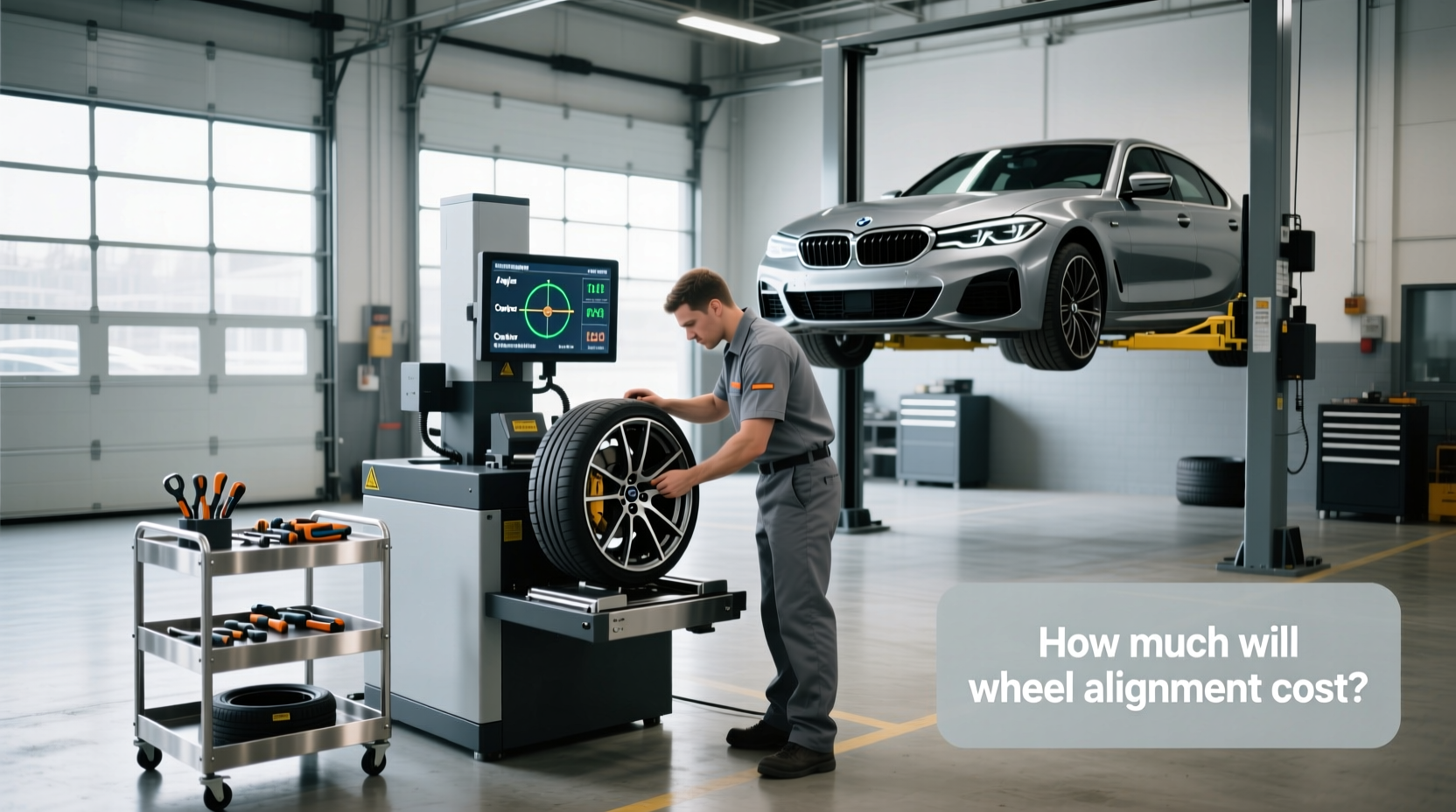
If you're asking how much will wheel alignment cost and how to choose wheel alignment, start here: most drivers need a four-wheel alignment every 2–3 years or after hitting potholes, with average costs between $100 and $175 1. Two-wheel alignments are cheaper ($50–$75) but only suitable for older vehicles. When choosing a service, prioritize alignment type compatibility with your vehicle, technician expertise, and whether Advanced Driver-Assistance Systems (ADAS) recalibration is needed—especially if your car has lane assist or adaptive cruise control. Avoid shops that skip a pre-alignment inspection of suspension parts, as worn components can invalidate the alignment.
About Wheel Alignment and Its Cost
_wheel alignment,How much will wheel alignment cost?_ refers to the process of adjusting a vehicle’s suspension system so that the wheels are positioned according to the manufacturer’s specifications. This adjustment ensures optimal contact between tires and the road, improving handling, safety, and tire longevity. While the service itself doesn’t involve replacing parts, it requires precision equipment and trained technicians to measure and adjust camber, caster, and toe angles.
The question how much will wheel alignment cost? arises frequently because prices vary widely based on vehicle design and regional labor rates. A typical passenger sedan may require only a standard four-wheel alignment, while trucks, SUVs, or performance vehicles often demand more complex procedures due to heavier-duty suspensions or specialized calibration needs 2.
Why Wheel Alignment Is Gaining Popularity
As vehicles become more technologically advanced, maintaining precise wheel alignment has become increasingly critical. Modern cars equipped with ADAS features like automatic emergency braking or lane-keeping assist rely on accurate sensor alignment, which depends on proper wheel geometry. Misaligned wheels can cause these systems to malfunction, triggering warning lights or reducing effectiveness 2.
Additionally, rising tire prices have made consumers more aware of preventive maintenance. Since improper alignment leads to uneven tire wear—and potentially premature replacement—drivers now view regular alignment checks as a cost-saving measure rather than an optional service.
Types and Variants of Wheel Alignment Services
- 🔧Two-Wheel (Front-End) Alignment: Adjusts only the front wheels. Best for older vehicles with solid rear axles. Less expensive but insufficient for most modern cars.
- 🔧Four-Wheel Alignment: Measures and adjusts all four wheels. Required for vehicles with independent rear suspension or all-wheel drive. More comprehensive and recommended for newer models 3.
- ⚙️Luxury/Performance Vehicle Alignment: Involves specialized tools and longer calibration times. Often includes dynamic alignment checks under load or motion simulation.
- ⚡ADAS-Capable Alignment: Includes post-alignment recalibration of forward-facing cameras and sensors. Necessary after any suspension work on modern vehicles.
Key Features and Specifications to Evaluate
When evaluating where and how to choose wheel alignment, consider these technical and service-related criteria:
- Alignment Type Compatibility: Confirm the shop offers the correct alignment type for your vehicle’s drivetrain and suspension setup.
- Equipment Quality: Look for providers using updated laser-guided or digital imaging systems. Older mechanical gauges may lack precision.
- Technician Certification: ASE-certified technicians typically follow standardized procedures and understand factory specifications.
- Pre-Inspection Process: A reputable shop should inspect suspension components (tie rods, ball joints, bushings) before performing alignment.
- Post-Service Report: You should receive a printout showing before-and-after measurements of camber, caster, and toe angles.
- ADAS Recalibration Capability: If your vehicle has driver-assist features, ensure the shop can perform static or dynamic recalibration.
Pros and Cons of Different Alignment Options
✅ Pros
- Extends tire life by preventing uneven wear patterns
- Improves fuel efficiency through reduced rolling resistance
- Enhances vehicle stability and steering response
- Reduces long-term suspension repair costs
❌ Cons
- Costs increase significantly for luxury or ADAS-equipped vehicles
- Potential hidden charges if suspension repairs are needed first
- Some shops may offer 'lifetime' packages that aren't transferable upon resale
- Inconsistent quality across providers without proper certifications
How to Choose Wheel Alignment: A Step-by-Step Guide
Follow this checklist when deciding where and how to get a wheel alignment:
- Determine Your Vehicle’s Needs: Check your owner’s manual—most modern vehicles require four-wheel alignment.
- Inspect Suspension Components: Have a technician check for worn tie rods, struts, or control arms before alignment.
- Verify ADAS Requirements: If your car has lane departure warnings or adaptive cruise control, confirm the shop offers recalibration.
- Compare Service Providers: Get quotes from dealerships, independent mechanics, and tire centers. Note what each includes.
- Ask About Warranties: Some shops offer 6–12 month alignment guarantees, allowing free re-adjustments if issues arise.
- Review Before/After Reports: Always request a detailed readout of alignment angles pre- and post-service.
🚩 Red Flags to Avoid:
- Shops that don’t perform a pre-alignment inspection
- No written report provided after service
- Unusually low prices that seem too good to be true
- Technicians unfamiliar with your vehicle make/model
- Refusal to explain what camber, caster, or toe means
Price & Market Insights
Understanding how much will wheel alignment cost helps set realistic expectations. Below is a breakdown of average U.S. pricing:
| Alignment Type | Average Cost (USD) | Best For |
|---|---|---|
| Two-Wheel (Front-End) | $50 – $75 | Older sedans with solid rear axles |
| Four-Wheel | $100 – $175 | Most modern cars, SUVs, AWD vehicles |
| Luxury/Performance | $150 – $200+ | European brands, sports cars, modified suspensions |
| With ADAS Recalibration | $200+ | Vehicles with camera-based safety systems |
Prices may vary by region—urban areas and dealerships often charge more than independent shops. Bundling alignment with tire rotation or oil changes can yield discounts. Some providers offer lifetime alignment plans (one-time fee ~$150–$300), which pay off for high-mileage drivers.
Top-Seller & Competitive Analysis
While no single brand dominates the wheel alignment market, major national chains like Firestone, Midas, and Meineke compete with local independents and dealership service centers. Each has trade-offs:
| Provider Type | Typical Price Range | Pros | Cons |
|---|---|---|---|
| Dealership | $120 – $250+ | Factory-trained techs, OEM specs, ADAS support | Higher labor rates, longer wait times |
| National Chain | $80 – $180 | Convenient locations, promotions available | Variable technician experience |
| Independent Shop | $75 – $160 | Personalized service, competitive pricing | May lack ADAS calibration tools |
| Tire Retailer | $100 – $200 (often bundled) | One-stop for tires + alignment | Sales pressure to buy new tires |
Customer Feedback Synthesis
Analysis of customer reviews reveals consistent themes:
- Frequent Praise: Quick turnaround time, clear explanation of results, noticeable improvement in ride smoothness, and extended tire life.
- Common Complaints: Unexpected additional charges for required repairs, lack of ADAS recalibration causing warning lights, and poor communication about alignment specs.
- Recurring Issue: Some customers report needing realignment within months—often due to undiagnosed worn suspension parts not replaced prior to service.
Sourcing & Supplier Tips
For individual consumers:
- Use online review platforms (e.g., Yelp, Google Maps) to assess shop reputation.
- Call ahead to confirm availability of ADAS recalibration tools.
- Ask whether the quoted price includes both front and rear adjustments.
For fleet managers or bulk purchasers:
- Negotiate service contracts with preferred vendors.
- Standardize alignment intervals based on mileage and road conditions.
- Maintain digital records of alignment reports for warranty and resale value.
Maintenance, Safety & Legal Considerations
Regular alignment checks (every 6,000–10,000 miles or annually) help maintain safety and performance. After alignment, monitor for pulling, vibration, or rapid tire wear—all signs the adjustment may have failed or underlying issues persist.
No federal law mandates alignment frequency, but some states include wheel condition in safety inspections. Always verify local requirements if operating commercial vehicles. Technicians should follow OEM guidelines to avoid voiding warranties.
Conclusion
Deciding how to choose wheel alignment,How much will wheel alignment cost? ultimately depends on your vehicle type, driving habits, and technology features. If you drive a modern car with ADAS, invest in a provider offering full recalibration services—even if it costs more. For basic maintenance on older models, a standard four-wheel alignment at an independent shop offers solid value. Prioritize transparency, certification, and diagnostic thoroughness over price alone. Regular alignment isn’t just about cost—it’s a foundational part of safe, efficient vehicle ownership.
Frequently Asked Questions
❓ How often should I get a wheel alignment?
Every 2–3 years, or immediately after hitting a major pothole or curb. Also recommended when installing new tires or noticing uneven wear.
❓ Does wheel alignment improve fuel efficiency?
Yes—properly aligned wheels reduce rolling resistance, which can improve fuel economy by up to 3%, saving money over time 4.
❓ Can I do wheel alignment at home?
No. Wheel alignment requires precision instruments and calibrated environments. DIY attempts are unsafe and ineffective.
❓ What happens if I don’t fix misaligned wheels?
You risk accelerated tire wear, reduced handling, increased fuel consumption, and potential damage to suspension components.
❓ Is a lifetime alignment package worth it?
Only if you keep the vehicle long-term and drive frequently. High-mileage drivers in rough conditions benefit most. Check transferability and coverage terms.




 浙公网安备
33010002000092号
 浙B2-20120091-4