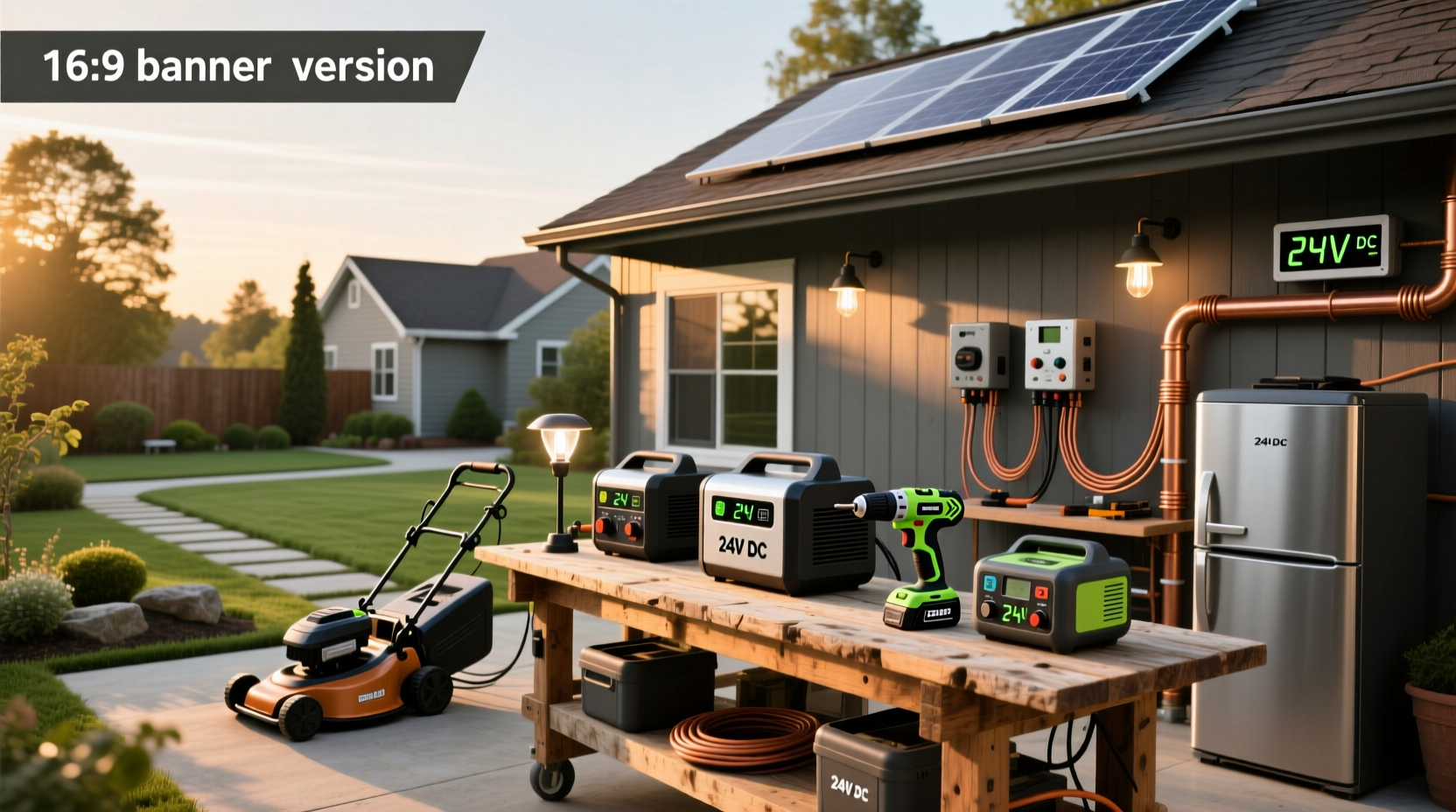
If you're asking how to choose 24v appliances or wondering what appliances are DC powered, start here: 24V DC-powered devices are ideal for off-grid systems, solar setups, RVs, and industrial control panels where energy efficiency and stable low-voltage operation matter. Key options include DC fans, pumps, refrigerators, lighting, and compressors. When evaluating what to look for in 24v appliances, prioritize voltage compatibility, power draw (wattage), IP rating for environmental protection, and EMI shielding—especially in sensitive electronics environments. Avoid AC-only devices unless using a reliable inverter, and always verify input specifications directly with the manufacturer.
About 24v Appliances, What Appliances Are DC Powered?
⚡ 24V appliances operate on a direct current (DC) voltage of 24 volts, commonly used in low-voltage power systems. Unlike standard household 120V/230V alternating current (AC) devices, these are designed for specialized applications where safety, efficiency, and integration with battery or renewable energy sources are priorities.
🔍 So, what appliances are DC powered? Common examples include:
- DC fans – Used in HVAC controls, server racks, and automotive cooling
- Water pumps – Especially in irrigation, aquariums, and solar water systems
- Refrigeration units – Portable fridges in RVs, boats, and telecom shelters
- LED lighting systems – Architectural, landscape, and emergency lighting
- Air compressors – For pneumatic tools in mobile workshops
- Chargers & converters – Powering small electronics from vehicle batteries
These appliances connect directly to DC power sources such as batteries, solar charge controllers, or rectified industrial power supplies, eliminating the need for inverters and reducing energy loss.
Why 24v Appliances, What Appliances Are DC Powered? Is Gaining Popularity
📈 The demand for 24V DC-powered solutions is rising due to several key trends:
- Energy efficiency: DC appliances avoid inverter losses (typically 10–20%), making them more efficient in solar and battery-backed systems.
- Safety: 24V falls within SELV (Safety Extra-Low Voltage) limits, reducing shock risk in wet or industrial environments.
- Integration with renewables: Solar panels and lithium battery banks often output 24V DC, enabling direct coupling without conversion.
- Noise reduction: Many 24V DC motors (like those in fans) use brushless technology, operating more quietly than AC equivalents.
- Longevity: Lower voltage stress can extend component lifespan in controlled environments.
Industries like telecommunications, transportation, marine, and off-grid housing increasingly adopt 24V systems, driving innovation and availability.
Types and Variants
📋 Understanding the different types of 24V DC appliances helps match them to your use case. Below are common categories with pros and cons:
1. DC Fans ⚙️
Used for ventilation in enclosures, data centers, and vehicles.
- Pros: Energy-efficient, quiet operation, long life (brushless models)
- Cons: Limited airflow compared to high-power AC fans
2. DC Water Pumps 🌊
Ideal for solar fountains, hydroponics, and coolant circulation.
- Pros: Can run directly from solar panels, self-priming variants available
- Cons: May require filters to prevent clogging; performance varies with voltage drop
3. DC Refrigerators ❄️
Common in RVs, vans, and remote monitoring stations.
- Pros: Low power draw, compatible with deep-cycle batteries
- Cons: Higher initial cost than AC units; limited capacity
4. DC Lighting 💡
Includes strip lights, spotlights, and emergency fixtures.
- Pros: Dimmable, cool operation, easy integration with sensors
- Cons: Wiring must handle continuous current; voltage drop over distance affects brightness
5. DC Air Compressors 🔧
Power tools in mobile repair setups or tire inflation systems.
- Pros: Portable, no need for grid power
- Cons: Slower pressure build-up; heat buildup in prolonged use
Key Features and Specifications to Evaluate
📊 When comparing 24v appliances, focus on these technical and practical factors:
- Voltage Tolerance: Check if the device accepts a range (e.g., 20–28V) to handle fluctuations.
- Power Consumption (Watts): Calculate daily load to size your battery bank correctly.
- Current Draw (Amps): High-draw devices need thicker wiring and circuit protection.
- Efficiency Rating: Look for ENERGY STAR or EU ErP labels where applicable.
- IP Rating: For outdoor/wet environments, aim for IP65 or higher.
- EMI/RFI Shielding: Critical in communication or medical equipment settings.
- Duty Cycle: Some motors aren’t designed for continuous operation—verify usage limits.
- Connectors & Terminals: Ensure compatibility with existing wiring (e.g., Anderson, XT60, screw terminals).
Always review the manufacturer’s datasheet rather than relying solely on product titles or marketing claims.
Pros and Cons
✅ Advantages of 24V DC Appliances
- Higher system efficiency when paired with solar/battery sources
- Improved safety in damp or confined spaces
- Quieter operation, especially with brushless motors
- Better control via PWM (Pulse Width Modulation) for speed/dimming
- Reduced fire risk due to lower arc potential
❗ Limitations and Trade-offs
- Limited selection compared to AC appliances
- Higher upfront cost for equivalent functionality
- Voltage drop over long cable runs requires larger gauge wires
- Fewer service technicians familiar with DC troubleshooting
- May require custom mounting or integration work
How to Choose 24v Appliances, What Appliances Are DC Powered? (Buying Guide)
🛒 Follow this step-by-step checklist when selecting 24V DC-powered devices:
- Define Your Use Case: Are you powering an RV, telecom cabinet, greenhouse, or backup system? This determines durability, size, and feature needs.
- Confirm Power Source Compatibility: Match appliance voltage to your battery or supply (e.g., 24V lead-acid or LiFePO₄). Don’t assume 12V/24V dual-rated unless specified.
- Calculate Total Load: Sum wattages of all devices to ensure your power source can sustain runtime. Include startup surges for motors.
- Check Environmental Requirements: Outdoor? Humid? Dusty? Select appropriate IP and NEMA ratings.
- Evaluate Control Needs: Do you need thermostat inputs, remote switches, or smart connectivity (e.g., CAN bus, Modbus)?
- Review Installation Constraints: Measure space, airflow clearance, and wiring access before purchase.
- Verify Safety Certifications: Look for CE, UL, or IEC marks depending on region. Confirm compliance with local electrical codes.
Red Flags to Avoid
- Products lacking detailed specs or test reports
- No clear warranty or support contact
- Claims of “universal voltage” without defined ranges
- Inconsistent labeling (e.g., says 24V but lists 110V input)
- Missing polarity protection or reverse-current blocking
When in doubt, request technical documentation from the seller before buying.
Price & Market Insights
💰 Pricing for 24v appliances varies significantly by type, quality, and origin:
- DC Fans: $15–$80 (basic axial to industrial blower)
- Water Pumps: $20–$150 (diaphragm vs. centrifugal)
- Refrigerators: $300–$1,200 (compact 12L to full-sized 80L)
- Lighting Kits: $10–$200 (per meter or full setup)
- Air Compressors: $80–$400 (portable 12V/24V dual models)
Premium brands often offer better sealing, bearings, and thermal management. However, mid-tier OEMs from reputable suppliers may provide comparable performance at lower cost. Be cautious with ultra-low-priced imports—these may lack proper insulation or fail under sustained load.
Prices may vary by region due to import duties, certification requirements, and shipping costs. Always compare total delivered cost, not just list price.
Top-seller & Competitive Analysis
⭐ While specific brand recommendations aren't made, understanding top-selling characteristics helps identify reliable models. The following comparison highlights typical features across popular 24V DC fan models—a representative category for broader insights:
| Model Type | Voltage Range | Power (W) | IP Rating | Noise Level | Smart Features |
|---|---|---|---|---|---|
| Basic Axial Fan | 20–28V | 12W | IP54 | 35 dBA | None |
| Brushless Blower | 18–30V | 25W | IP67 | 42 dBA | PWM Speed Control |
| Industrial Cabinet Fan | 20–28V | 30W | IP55 | 48 dBA | Thermal Sensor Input |
This illustrates how higher-end models offer wider voltage tolerance, better ingress protection, and advanced control—important for mission-critical or variable-environment deployments.
Customer Feedback Synthesis
👥 Analyzing real-world user experiences reveals recurring themes:
👍 Frequently Praised Aspects
- “Runs silently all night in my server rack”
- “Lasted 3+ years in a coastal telecom shelter”
- “Easy to wire and integrates well with solar controller”
- “Low power draw lets me run it off a small battery”
👎 Common Complaints
- “Stopped working after six months—no customer support”
- “Wiring was too short for my enclosure layout”
- “Overheated when used continuously despite ‘24/7’ claim”
- “Label said 24V but actually needed 28V to start”
Reliability and post-purchase support emerge as critical differentiators—even among similarly priced units.
Sourcing & Supplier Tips
📍 Where you buy matters as much as what you buy:
- Specialty Electronics Distributors: Offer datasheets, bulk pricing, and technical support (e.g., Digi-Key, Mouser).
- Industrial Suppliers: Provide ruggedized components suitable for harsh environments.
- Online Marketplaces: Useful for prototyping but verify seller ratings and return policies.
- OEM Manufacturers: Consider direct sourcing for volume orders (>50 units); request samples first.
For resellers or integrators: Ask about white-label options, minimum order quantities (MOQs), and compliance documentation. Always perform incoming inspection—check for correct labeling, secure terminals, and physical damage.
Maintenance, Safety & Legal Considerations
🔧 Proper care extends life and ensures safe operation:
- Cleaning: Dust buildup reduces cooling efficiency—clean fan blades and vents every 3–6 months.
- Inspection: Regularly check wiring connections for corrosion or looseness, especially in marine environments.
- Fusing: Install inline fuses per manufacturer guidelines to prevent overcurrent damage.
- Grounding: While 24V is low-risk, grounding metal enclosures prevents static discharge issues.
- Regulatory Compliance: In commercial installations, verify adherence to local electrical standards (e.g., NEC Article 411 in the US, IEC 60364 internationally). These may dictate wire gauge, fuse sizing, and installation methods.
Note: Regulations vary by country and application. Always consult a licensed electrician for permanent or high-power installations.
Conclusion
📌 Choosing the right 24V DC appliance depends on matching technical specs to your environment and energy system. If you’re building a solar-powered cabin, prioritize efficiency and low standby consumption. For industrial control panels, focus on IP rating, EMI resistance, and reliability. If you need quiet cooling, select brushless DC fans with PWM control. Avoid generic AC appliances unless you have a robust inverter setup. Always validate specifications through official channels and consider lifecycle costs—not just purchase price. By understanding what appliances are DC powered and how to evaluate them, you can build safer, more efficient systems tailored to your needs.
Frequently Asked Questions
- Can I use a 24V DC appliance with a 12V battery system?
No, unless the device explicitly supports dual voltage. Running a 24V appliance on 12V will likely prevent startup or cause malfunction. - Are there 24V versions of common household appliances?
Limited options exist—mainly fans, lights, fridges, and pumps. Major appliances like ovens or washing machines are rarely available in 24V DC. - Do I need an inverter for 24V DC appliances?
No—in fact, using an inverter defeats the efficiency benefit. These devices are meant to run directly from DC sources like batteries or solar controllers. - How do I calculate runtime for a 24V appliance on a battery?
Divide battery capacity (Ah) by appliance current draw (A). For example, a 100Ah battery powering a 5A device gives ~20 hours (adjust for depth of discharge and inefficiencies). - Where can I find reliable 24V DC appliance suppliers?
Reputable electronics distributors (e.g., Digi-Key, RS Components), industrial automation suppliers, or specialized renewable energy vendors offer vetted products with technical support.




 浙公网安备
33010002000092号
 浙B2-20120091-4