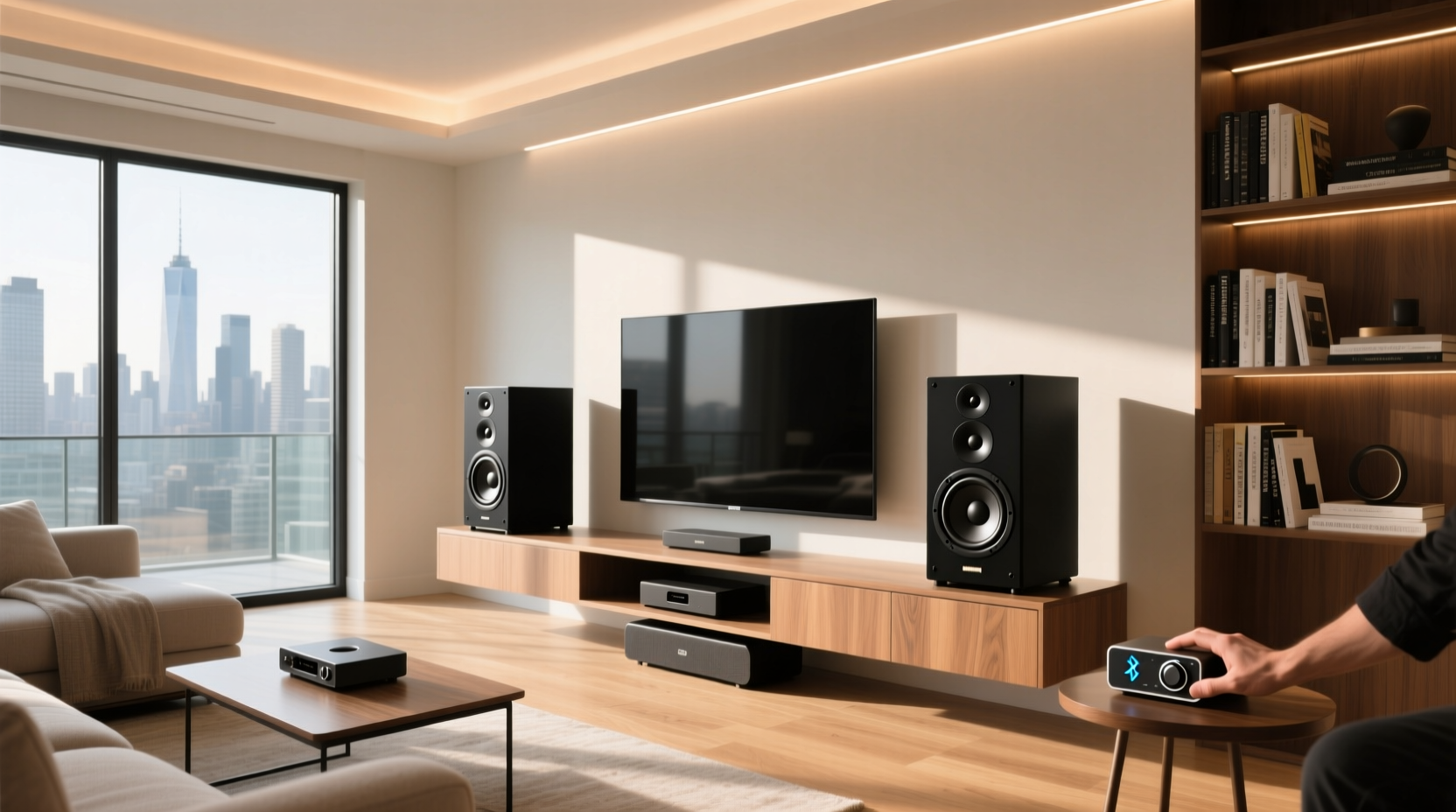
A 500W RMS sound system is powerful and reliable for most mid-to-large rooms, live performances, or outdoor events 1. When evaluating how to choose 500w rms speakers,Is a 500W sound system good?, focus on RMS (Root Mean Square) power—not peak ratings—as it reflects continuous performance 2. Match amplifier output to speaker RMS handling, prioritize speaker sensitivity (dB/W/m), and consider room size. Avoid systems advertising only peak power; they often underperform. For home theaters or medium venues, 500W RMS offers clean volume with headroom for dynamic peaks.
📍 About 500W RMS Speakers: What Does It Mean?
The term "500W RMS" refers to a speaker or sound system capable of handling 500 watts of continuous power over time without overheating or distorting 3. This is different from peak power, which indicates short bursts (milliseconds) the system can tolerate. RMS is the standard metric for comparing real-world performance across amplifiers and speakers.
In practical terms, a 500W RMS speaker system delivers consistent loudness and clarity, making it suitable for environments where audio fidelity matters—such as home theaters, small concert setups, DJ booths, or large living spaces. These systems are designed to operate safely at high volumes for extended periods, unlike lower-powered units that may clip or distort under stress.
📈 Why 500W RMS Systems Are Gaining Popularity
Consumers increasingly seek balanced performance between power, clarity, and durability. The rise in popularity of 500W RMS systems stems from their ability to deliver robust sound without requiring massive amplification infrastructure. They strike a sweet spot: powerful enough for parties and presentations, yet manageable for residential installations.
Advancements in driver materials and thermal management have made higher-RMS speakers more affordable and energy-efficient. Additionally, digital signal processing (DSP) allows modern 500W-rated systems to optimize output dynamically, reducing distortion and protecting components during transient peaks.
Another factor is consumer awareness. As misinformation about peak vs. RMS power fades, buyers now understand that sustained performance—not momentary spikes—defines quality. This shift has led manufacturers to emphasize RMS ratings more transparently, boosting trust in mid-tier professional gear like 500W systems.
🔧 Types and Variants of 500W RMS Speakers
500W RMS speakers come in several configurations, each suited to specific use cases:
✅ Passive Speakers
- Pros: Cost-effective, flexible pairing with external amplifiers, widely available.
- Cons: Require separate amp investment; impedance matching is critical.
- Best for: Custom hi-fi setups, studios, or users who already own an amplifier.
✅ Powered (Active) Speakers
- Pros: Built-in amplifiers tuned specifically to drivers; simpler setup; less cabling.
- Cons: Less flexibility in upgrading amps; typically heavier.
- Best for: Live sound reinforcement, mobile DJs, conference rooms.
✅ Subwoofers (Bass-Only)
- Pros: Specialized low-frequency reproduction; handles high RMS cleanly.
- Cons: Must be paired with full-range speakers; takes up floor space.
- Best for: Home theaters, EDM events, bass-heavy music genres.
✅ Full-Range PA Systems
- Pros: Designed for even frequency response across wide areas; durable enclosures.
- Cons: May lack deep bass without subs; directional sound patterns.
- Best for: Outdoor events, gymnasiums, school auditoriums.
📊 Key Features and Specifications to Evaluate
When assessing how to choose 500w rms speakers,Is a 500W sound system good?, examine these core technical aspects:
🔊 Speaker Sensitivity (dB/W/m)
This measures how efficiently a speaker converts power into sound. A sensitivity of 85 dB means the speaker produces 85 decibels of volume when fed 1 watt of power from 1 meter away. Higher sensitivity (e.g., 90+ dB) means louder output with less power, reducing strain on your amplifier.
🔌 Impedance (Ohms)
Most 500W RMS speakers are 4Ω or 8Ω. Ensure your amplifier supports the speaker’s impedance. Mismatches can cause overheating or reduced output. Lower impedance (4Ω) draws more current but allows higher power delivery if the amp supports it.
🎛️ Frequency Response
Indicates the range of audible frequencies the speaker reproduces (e.g., 50Hz–20kHz). Wider ranges capture more detail, though human hearing typically caps at 20kHz. Pay attention to roll-off points near extremes.
🏗️ Build Quality & Materials
Look for rugged cabinets (wood or reinforced plastic), metal grilles, weather-resistant coatings (for outdoor use), and secure mounting points. Drivers made from polypropylene, aluminum, or Kevlar offer better durability and sound consistency.
⚡ Thermal & Overload Protection
High-end models include circuitry that limits input during overheating or clipping. This extends lifespan and prevents sudden failure during prolonged use.
✅ Pros and Cons of 500W RMS Systems
👍 Advantages
- Ample headroom for dynamic audio content (e.g., orchestral swells, drum hits).
- Lower risk of distortion at high volumes compared to lower-wattage systems.
- Suitable for medium-sized venues (up to 200 people depending on acoustics).
- Better longevity due to conservative operating margins.
👎 Limitations
- Overkill for small rooms (< 20m²), potentially leading to sound fatigue.
- Higher power consumption and heat generation.
- May require dedicated circuits or surge protection.
- Limited benefit without proper room treatment or speaker placement.
📋 How to Choose 500W RMS Speakers: Step-by-Step Guide
- Determine Your Use Case: Will you use it indoors/outdoors? For music, speech, or movies? Large gatherings need dispersion control; home use benefits from tonal accuracy.
- Check Real RMS Rating: Confirm it's not peak power. Look for “continuous” or “RMS” in specs. If unclear, contact manufacturer.
- Match Amplifier Output: Pair with an amp delivering 80–110% of the speaker’s RMS rating. Underpowering causes clipping; overpowering risks damage 4.
- Evaluate Sensitivity: Aim for ≥88 dB for efficient performance. Below 85 dB may require excessive power for desired volume.
- Assess Room Size & Acoustics: Larger or reflective spaces benefit from higher output. Consider adding acoustic panels to reduce echo.
- Test Connectivity Options: XLR, TRS, or SpeakON inputs ensure professional-grade connections. Bluetooth or AUX may suffice for casual use.
- Review Mounting & Placement Needs: Floor stands, wall brackets, or pole mounts affect coverage and stability.
- Products listing only “peak power” without RMS.
- No published frequency response or sensitivity data.
- Extremely low price relative to known brands—may indicate misrepresented specs.
- Missing safety certifications (CE, RoHS, UL)—verify based on region.
💰 Price & Market Insights
Prices for genuine 500W RMS speakers vary by type and brand:
- Passive Bookshelf Models: $150–$300 per pair
- Powered PA Speakers: $300–$600 each
- Subwoofers: $250–$500
- Full PA Kits (Pair + Sub): $800–$1,500
Premium brands (e.g., JBL, QSC, Yamaha) command higher prices due to build quality and reliability. Budget options exist but often sacrifice thermal protection or driver materials. For best value, consider slightly used professional gear from verified sellers.
Note: Pricing may vary significantly by region and retailer. Always compare RMS ratings across models—not just wattage claims.
🏆 Top-Seller & Competitive Analysis
| Model | Type | RMS Power | Sensitivity | Price Range |
|---|---|---|---|---|
| JBL EON615 | Powered PA | 1000W (500W LF + 500W HF) | 96 dB | $599/unit |
| QSC K.2 Series K12.2 | Powered PA | 1000W (500W LF + 500W HF) | 98 dB | $650/unit |
| Yamaha DBR12 | Powered PA | 1000W (500W LF + 500W HF) | 97 dB | $525/unit |
| Behringer Eurolive B215XL | Passive PA | 500W RMS (per cabinet) | 98 dB | $299/pair |
These top-sellers share high sensitivity, robust thermal design, and versatile mounting. Note that some list combined RMS (low + high frequency drivers), so actual full-band power isn’t always additive. Research crossover networks and driver sizes when comparing.
👥 Customer Feedback Synthesis
Analysis of user reviews reveals consistent themes:
✅ Common Praises
- “Crisp sound even at high volumes.”
- “Reliable for weekly gigs—no overheating.”
- “Easy setup with clear labeling on inputs.”
- “Noticeable improvement over previous 200W system.”
❌ Frequent Complaints
- “Too loud for small rooms—even at low gain.”
- “Heavy and hard to transport alone.”
- “Bluetooth version has latency issues with video.”
- “No manual included in box—had to download PDF.”
🏭 Sourcing & Supplier Tips
When purchasing 500W RMS speakers:
- Buy from authorized dealers to ensure warranty validity and authentic products.
- For bulk orders (e.g., event companies), request demo units before committing.
- Verify return policies, especially for online purchases—some exclude opened audio gear.
- Inspect packaging and contents upon delivery: check for dents, loose parts, or missing cables.
- Ask for spec sheets—don’t rely solely on product page summaries.
🧼 Maintenance, Safety & Legal Considerations
To maximize lifespan and ensure safe operation:
- Allow ventilation space around powered units to prevent overheating.
- Use surge protectors—especially in areas with unstable power.
- Clean grilles regularly with dry cloth; avoid moisture near drivers.
- Follow local noise ordinances when using outdoors—limits vary by municipality.
- Confirm compliance with regional electrical safety standards (e.g., CE in EU, UL in US).
📌 Conclusion: Is a 500W RMS System Right for You?
A 500W RMS sound system is a strong choice for users needing dependable, high-output audio. However, its suitability depends on context. If you host frequent gatherings in large rooms, perform live music, or require clear public address, this power level provides ample headroom and clarity. Conversely, for compact apartments or background music, it may be excessive.
When exploring what to look for in 500w rms speakers,Is a 500W sound system good?, prioritize verified RMS ratings, speaker sensitivity, and proper amplifier matching over raw wattage alone. Consider room acoustics and long-term usage patterns. With careful selection, a 500W RMS system can deliver years of high-fidelity performance.
❓ Frequently Asked Questions
Can I connect a 500W RMS speaker to a lower-powered amplifier?
Yes, but ensure the amplifier can deliver stable power within 80% of the speaker’s RMS rating. Avoid turning the amp all the way up, as this causes clipping and can damage the speaker.
Does higher RMS always mean louder sound?
Not necessarily. Loudness depends more on speaker sensitivity than power alone. A 300W speaker with 92 dB sensitivity can be louder than a 500W model with 86 dB sensitivity.
Are 500W RMS speakers suitable for home theater?
Yes, especially for larger rooms or immersive formats like Dolby Atmos. Pair them with a subwoofer for full-range impact. Ensure receiver compatibility with impedance and power requirements.
What cable gauge should I use for 500W RMS speakers?
Use 14–12 AWG speaker wire for runs under 50 feet. Thicker gauges reduce resistance and power loss, especially for 4Ω systems or longer distances.
Do I need a separate crossover for a 500W RMS speaker?
If it’s a full-range passive speaker, no. But if bi-amping or using separate subwoofers, an active crossover improves control and efficiency.




 浙公网安备
33010002000092号
 浙B2-20120091-4