If you're evaluating automotive radar systems for advanced driver assistance (ADAS) or autonomous vehicle development, choosing between 24GHz and 77GHz technology is a critical decision. The shift from 24GHz to 77GHz radar is driven by superior performance, regulatory alignment, and evolving safety requirements 1. For most modern applications—especially long-range detection, high-resolution object classification, and compact integration—77GHz radar is now the preferred choice. When considering how to choose 77ghz radar,Why are automotive radar systems moving from 24GHz to 77GHz?, focus on bandwidth, resolution, physical size, transmit power, and regional compliance. Avoid legacy 24GHz systems if your project requires future-proofing or integration into next-gen vehicles.
About 77GHz Radar: What It Is and Where It’s Used
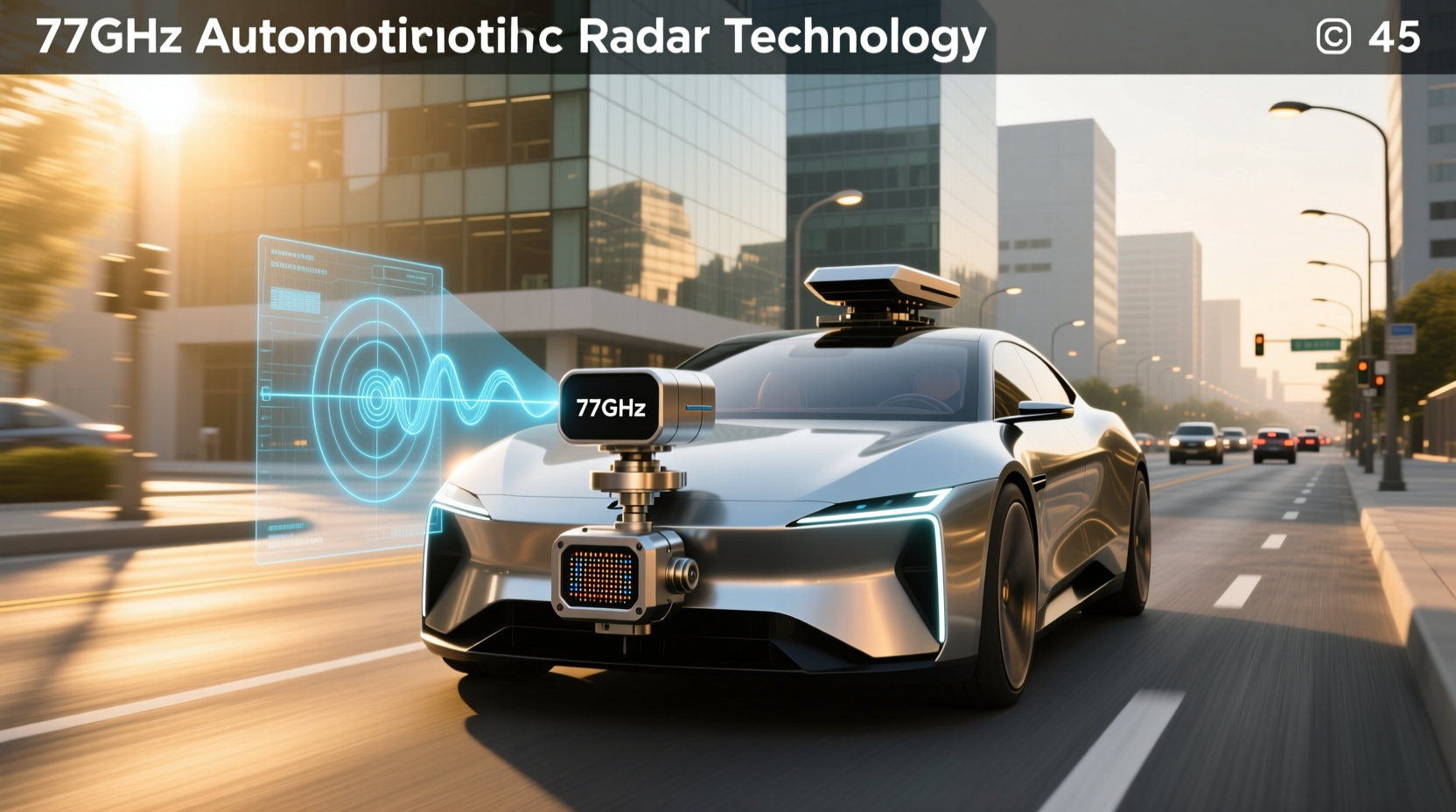
The term 77GHz radar refers to millimeter-wave radar systems operating in the 76–81 GHz frequency band, primarily used in automotive applications for environmental perception. These systems emit radio waves that reflect off objects, measuring distance, speed, and angle with high accuracy—even in poor visibility conditions like fog, rain, or darkness.
Common use cases include:
- ⚡ Adaptive Cruise Control (ACC)
- ✅ Forward Collision Warning (FCW)
- 🚗 Automatic Emergency Braking (AEB)
- 📍 Blind Spot Detection (BSD)
- 🔧 Lane Change Assist (LCA)
- 🌐 High-definition mapping for autonomous navigation
Unlike cameras or lidar, 77GHz radar performs reliably across diverse weather and lighting conditions, making it essential for functional safety in ADAS and self-driving platforms.
Why 77GHz Radar Is Gaining Popularity Over 24GHz
The transition from 24GHz to 77GHz is not merely technological—it's strategic. Several interrelated factors explain why 77ghz radar,Why are automotive radar systems moving from 24GHz to 77GHz? has become a central topic in automotive engineering.
📈 Market Demand for Higher Autonomy Levels
As vehicles advance from Level 2 to Level 3 and beyond, sensor precision becomes paramount. 77GHz radar enables reliable detection at ranges exceeding 200 meters, which is crucial for highway autonomy and emergency response timing 2.
🌍 Regulatory Harmonization
Global regulators have moved to standardize spectrum allocation. The 24GHz band (specifically 24.05–24.25 GHz) faces restrictions in Europe and parts of Asia due to interference concerns with 5G services 3. In contrast, the 76–79 GHz band is officially designated for automotive use in China, the U.S., and the EU, ensuring long-term viability.
📉 Cost Reduction Through Scale
While early 77GHz chipsets were expensive, advancements in RF CMOS and SiGe BiCMOS manufacturing have reduced costs by approximately 18% annually since 2018 4. This makes 77GHz viable even for mass-market vehicles.
Types and Variants of 77GHz Automotive Radar
77GHz radar systems are categorized based on range and application. Understanding these types helps align selection with specific vehicle functions.
| Variant | Range | Primary Use | Pros | Cons |
|---|---|---|---|---|
| Long-Range Radar (LRR) | 150–250m | ACC, FCW, AEB | High velocity & range accuracy; narrow beamwidth | Limited field of view (~10°); higher cost |
| Mid-Range Radar (MRR) | 50–100m | Blind spot monitoring, lane change assist | Balanced FOV (~60°); moderate cost | Lower resolution than LRR |
| Short-Range Radar (SRR) | Up to 30m | Parking assist, cross-traffic alert | Wide FOV (~120°); compact design | Lower penetration through obstacles |
Some newer systems integrate multiple functions using MIMO (Multiple Input Multiple Output) antenna arrays, enabling virtual aperture expansion and improved angular resolution.
Key Features and Specifications to Evaluate
When determining what to look for in 77ghz radar,Why are automotive radar systems moving from 24GHz to 77GHz?, assess these technical parameters:
- 🔍 Bandwidth: 77GHz systems offer up to 4 GHz bandwidth (vs. 200 MHz at 24GHz), enabling centimeter-level range resolution.
- 📏 Resolution: Higher bandwidth improves both range and Doppler (velocity) resolution, allowing distinction between closely spaced objects.
- 📡 Antenna Size: Due to shorter wavelengths (~3.9mm vs. ~12.5mm), 77GHz antennas can be up to 9x smaller in area than 24GHz equivalents 5.
- 🔋 Transmit Power (EIRP): 77GHz allows EIRP up to 55 dBm, compared to 20 dBm maximum for 24GHz, enhancing signal-to-noise ratio and detection range.
- ⚙️ Integration Level: Look for System-on-Chip (SoC) solutions (e.g., radar-on-chip) that reduce component count and simplify PCB design.
- 🌐 Software Support: SDKs, calibration tools, and AI-ready output formats (point clouds, object lists) accelerate development.
Pros and Cons of 77GHz Radar
| Advantages ✅ | Limitations ❗ |
|---|---|
| Higher Resolution: Detects small objects like pedestrians and debris accurately. | Material Attenuation: mmWave signals attenuate more through certain materials (e.g., thick plastic bumpers). |
| Smaller Footprint: Enables sleek integration into grilles, lights, and bumpers. | Design Sensitivity: Requires careful RF shielding and antenna placement. |
| Longer Range: Supports high-speed driving scenarios with ample reaction time. | Higher Component Cost (initially): Though decreasing, still above basic 24GHz modules. |
| Regulatory Future-Proofing: Aligned with global standards; no phase-out planned. | Skill Requirements: Needs experienced RF engineers for optimal implementation. |
How to Choose 77GHz Radar: Step-by-Step Buying Guide
Selecting the right system involves matching technical capabilities with project goals. Follow this checklist when navigating how to choose 77ghz radar,Why are automotive radar systems moving from 24GHz to 77GHz?
📋 Step 1: Define Your Application
Determine whether you need long-range forward sensing (LRR), side/rear monitoring (MRR), or close-proximity awareness (SRR). Mismatched radar type leads to over-engineering or performance gaps.
📌 Step 2: Confirm Frequency Compliance
Verify that your target market permits operation in the 76–81 GHz band. While harmonized in most regions, some countries may impose additional certification requirements.
🛒 Step 3: Assess Integration Constraints
Measure available space and consider mounting orientation. 77GHz radars are compact but sensitive to nearby metal structures and dielectric materials.
🔧 Step 4: Review Technical Documentation
Check datasheets for actual measured performance—not just theoretical specs. Pay attention to:
- Real-world detection range under adverse conditions
- Angular resolution and false alarm rates
- Power consumption and thermal management needs
🚩 Red Flags to Avoid
- ❌ Vague or missing radiation pattern data
- ❌ No FCC/CE/ETSI compliance documentation
- ❌ Lack of software development support or API access
- ❌ Claims of compatibility without test reports
Price & Market Insights
Pricing varies significantly based on type, volume, and integration level:
- 📊 Long-Range Modules: $80–$150 per unit (low volume)
- 🔧 MRR/SRR Modules: $40–$80
- ⭐ Radar-on-Chip ICs: $15–$30 (in bulk)
Economies of scale are accelerating adoption. By 2026, nearly 80% of new ADAS-equipped vehicles are expected to use 77GHz radar, up from 45% in 2023 4. The global automotive radar market is projected to grow from $6.73B in 2024 to $31.45B by 2030 2.
Top-Seller & Competitive Analysis
Major suppliers dominate the 77GHz radar landscape. Below is a comparison of leading vendors:
| Vendor | Product Example | Frequency Band | Key Strength | Ideal For |
|---|---|---|---|---|
| Continental AG | ARS540 | 77GHz | High-resolution imaging radar | Level 3+ autonomy |
| Bosch | LRR4 | 77GHz | Proven reliability in OEMs | Volume production |
| NXP Semiconductors | SAF85xx | 77GHz | Integrated AI processing | Edge computing platforms |
| Texas Instruments | AWR2544 | 77GHz | Single-chip solution | Rapid prototyping |
| Infineon Technologies | BGT60LTR11 | 77GHz | Low-power SRR | Parking systems |
No single vendor dominates all segments. Choose based on your development stage, volume needs, and software ecosystem preferences.
Customer Feedback Synthesis
Based on aggregated user reviews and industry reports:
👍 Frequent Praise
- “Superior object separation in dense traffic.”
- “Compact size allowed seamless bumper integration.”
- “Reliable performance during heavy rain and fog.”
👎 Common Complaints
- “Initial setup required expert RF tuning.”
- “Higher power draw affected thermal design.”
- “Documentation lacked real-world calibration examples.”
These insights highlight the importance of engineering support and thorough testing during integration.
Sourcing & Supplier Tips
Whether buying for R&D or production, consider these strategies:
- 🛒 For prototypes: Use evaluation kits from TI, NXP, or Infineon to validate performance.
- 🏭 For volume: Engage directly with Tier 1 suppliers (e.g., Bosch, Continental) or contract manufacturers with radar experience.
- 📦 For resellers: Ensure traceability of components and compliance certificates.
- 🔎 Always request sample test data under conditions similar to your intended use case.
Verify return policies and warranty terms, especially when importing across borders.
Maintenance, Safety & Legal Considerations
While radar systems require minimal maintenance, ensure:
- 🧼 Sensor lenses remain clean and unobstructed.
- 🔌 Wiring harnesses are secure and shielded from EMI.
- ⚠️ Installation avoids exposure to direct water ingress or extreme heat.
Legally, confirm that your system complies with local emissions and spectrum regulations. Even if hardware is compliant, improper installation (e.g., misaligned beam) could lead to non-conformance. Always check with national telecom authorities or work with certified integrators.
Conclusion: Making the Right Choice
The move from 24GHz to 77GHz radar is well underway, supported by better resolution, smaller size, higher power limits, and global regulation. If you're developing or integrating ADAS features that demand high precision and long-range detection, 77GHz is the logical choice. For short-range applications where cost is critical and performance demands are lower, 24GHz may still suffice—but only if regulatory allowances exist in your region.
In summary: If you need robust, scalable, and future-proof sensing for autonomous or semi-autonomous systems, choose 77GHz radar. If budget is tight and functionality limited to parking aids, evaluate 24GHz carefully—while confirming its regulatory status.
Frequently Asked Questions
- Can 77GHz radar detect pedestrians and cyclists effectively?
Yes, thanks to its high resolution and wide bandwidth, 77GHz radar can distinguish small, low-reflectivity targets even in cluttered environments. - Is 77GHz radar affected by weather?
Unlike optical sensors, 77GHz radar performs reliably in rain, snow, fog, and dust, though very heavy precipitation may slightly reduce effective range. - What’s the main challenge in adopting 77GHz radar?
The primary hurdles are RF design complexity and proper antenna placement; working with experienced engineers or using pre-certified modules mitigates this risk. - Will 24GHz radar be completely phased out?
In many regions—including Europe—it already has been for new designs. Some markets still allow ultra-wideband 24GHz, but 77GHz is the clear long-term standard. - How do I verify a 77GHz radar module is compliant?
Request official test reports (FCC, CE, ETSI) from the supplier and confirm alignment with your country’s telecommunications authority.




 浙公网安备
33010002000092号
 浙B2-20120091-4