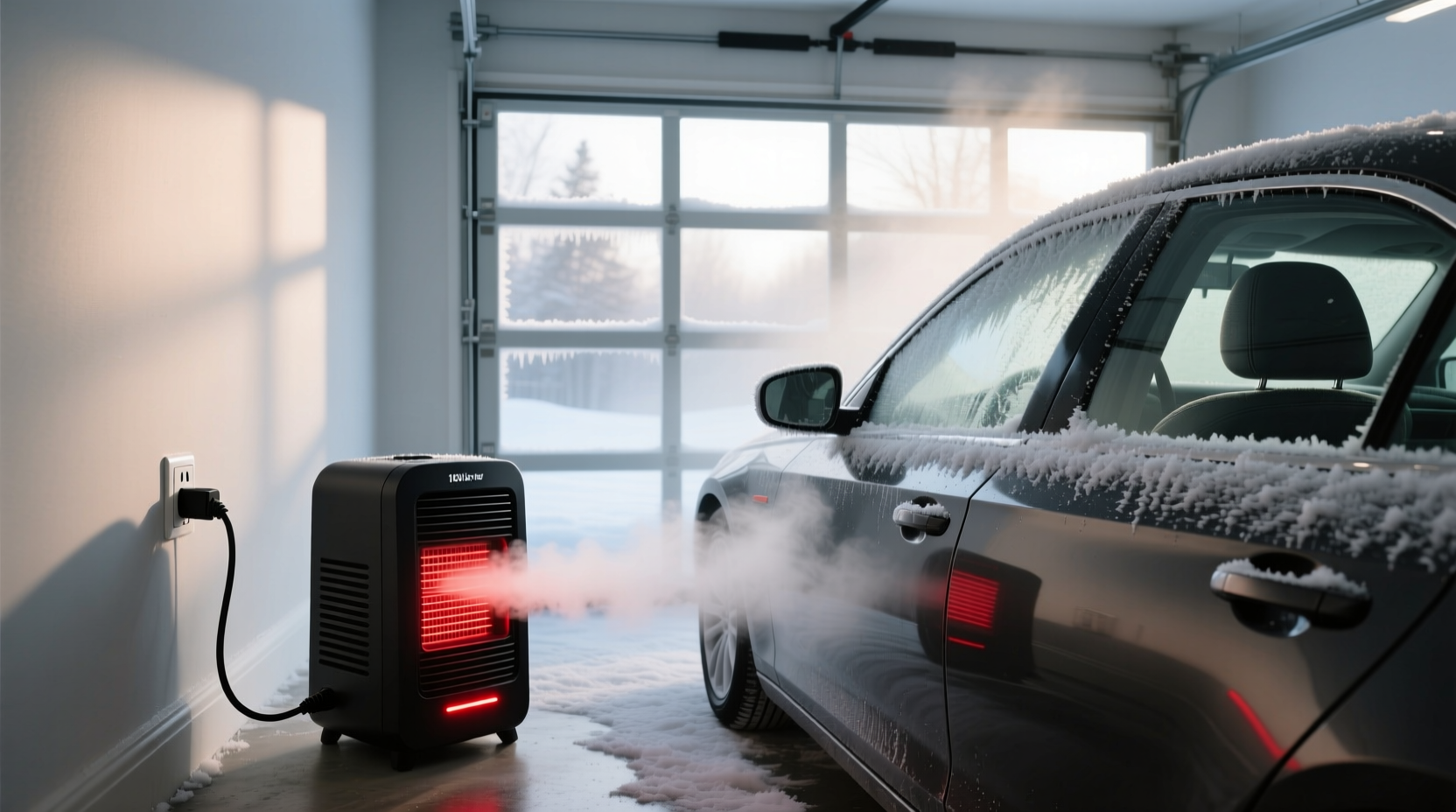
⚡ Yes, 110V plug-in car heaters can effectively warm a vehicle—but only when connected to an external power source like a wall outlet. If you're asking "Do plug-in car heaters actually work?", the answer is conditional: they are practical for pre-warming or maintaining cabin temperature in garages or campgrounds with access to electricity, but they cannot run off a car battery alone without risking deep discharge 1. When learning how to choose a 110v car heater, focus on wattage (up to 1500W), heater type (ceramic, infrared, oil-filled), safety features, and proper electrical setup. Avoid using standard extension cords; opt for heavy-duty 12- or 14-gauge outdoor-rated cables. These heaters work best in mild climates and insulated vehicles—extreme cold below -30°C may exceed their capacity 2.
❗ Key takeaway: A 110V plug-in heater is not a substitute for engine-based heating while driving. It’s a stationary solution for warming your car when parked near a power source.
About 110v Car Heaters: What Are They and How Do They Work?
A 110V plug-in car heater is a portable electric heating device designed to warm a vehicle's interior by plugging into a standard North American household outlet (110–120V). These units convert electrical energy into heat and are commonly used in vans, RVs, or cars stored in garages during winter 3. Unlike built-in engine-driven heaters, plug-in models rely entirely on external AC power.
The most common types include ceramic, infrared quartz, oil-filled radiators, and compact milk house heaters. All operate at up to 1500 watts—the maximum safe load for a standard 15-amp circuit—producing roughly 5100 BTUs per hour 2. This level of output can noticeably raise cabin temperature within 15–30 minutes, depending on insulation and outside conditions.
Typical use cases include:
- Pre-warming a car before morning commutes
- Maintaining livable temperatures in camper vans during overnight stays
- Defrosting windows or preventing ice buildup overnight
- Providing supplemental heat in poorly heated older vehicles
Why 110v Plug-in Car Heaters Are Gaining Popularity
Interest in plug-in car heaters has grown due to rising demand for comfort in mobile living setups and increasing awareness of fuel-efficient alternatives to idling engines. Van lifers, remote workers, and fleet operators are turning to these devices as a cost-effective way to stay warm without burning fuel or violating anti-idling laws 1.
Additionally, concerns about emissions and noise pollution have made electric heating more appealing. Since these heaters produce no combustion byproducts, they’re safer for enclosed spaces than propane alternatives. Their simplicity—just plug in and turn on—also makes them accessible to non-technical users.
Another driver is garage electrification. More homeowners now have outlets in driveways or garages, enabling easy access to power for seasonal vehicle prep. For electric vehicle owners, using a plug-in heater avoids draining the main battery pack, preserving range for actual driving.
Types and Variants of 110V Plug-in Car Heaters
Different heater technologies offer varying performance characteristics. Understanding these differences helps align your choice with specific needs such as speed, safety, or sustained warmth.
🛒 Ceramic Heaters
Pros: Fast startup, cool-to-touch housing, built-in thermostats, overheat protection.
Cons: Can dry air slightly; fan noise may be noticeable.
Ideal for continuous indoor use, especially in small cabins or vans. Widely used due to reliability and safety.
✨ Infrared Quartz Heaters
Pros: Instant directional heat, silent operation, efficient spot heating.
Cons: Less effective for whole-space warming; glowing elements may disturb sleep.
Best for quickly warming occupants rather than the entire vehicle. Effective when seated nearby.
🧼 Oil-Filled Radiator Heaters
Pros: Silent, retains heat after shutdown, provides even ambient warmth.
Cons: Slow to warm up; heavier and bulkier than other types.
Suitable for overnight use where gradual, consistent heating is preferred over rapid results.
🏭 Milk House Heaters
Pros: Compact, affordable, durable metal casing.
Cons: Basic controls; fewer modern safety features.
Originally designed for agricultural buildings, these rugged units work well in drafty or uninsulated vehicles.
Key Features and Specifications to Evaluate
When evaluating what to look for in a 110v car heater, consider these technical and functional criteria:
- Wattage (1000W–1500W): Higher wattage means faster heating. Ensure your circuit can handle the load.
- Voltage Compatibility: Confirm it runs on 110–120V AC—standard in North America.
- Thermostat & Timer: Allows automatic temperature control and scheduled shutoff, improving efficiency.
- Safety Features: Look for tip-over switches, overheat protection, and cool-touch exteriors.
- Noise Level: Fans in ceramic models vary; check decibel ratings if quietness matters.
- Cord Length: Short cords limit placement flexibility. Use only with heavy-duty extension cords if needed.
- Portability: Size and weight affect ease of storage and repositioning.
🔍 Always verify manufacturer specifications before purchase. Wattage claims may differ from actual draw, and safety certifications (like ETL or UL) indicate compliance with electrical standards.
Pros and Cons: Is a Plug-in Car Heater Right for You?
Advantages ✅
- Cost-effective compared to idling or auxiliary diesel heaters
- No emissions or fumes (ideal for enclosed spaces)
- Simple installation—no permanent modifications required
- Effective for pre-heating or maintaining warmth in mild winters
- Compatible with EVs without depleting traction batteries
Limitations ❗
- Requires constant access to external power—useless without outlet access
- Ineffective in extreme cold (< -30°C) unless vehicle is well-insulated
- Cannot operate while driving (unless via inverter, which is inefficient)
- Risk of tripping breakers if shared with other high-draw devices
- Potential fire hazard if misused (e.g., blocked vents, flammable materials nearby)
Best suited for: Urban dwellers with garage access, van lifers at campgrounds, EV owners, and anyone needing occasional pre-warming.
Not ideal for: Off-grid winter camping, extremely cold regions, or drivers without reliable shore power.
How to Choose a 110V Car Heater: Step-by-Step Buying Guide
- Assess Your Power Access: Do you park near an outlet? If not, a plug-in heater won’t work. Consider solar or diesel alternatives instead.
- Determine Heating Needs: Need quick warmth or all-night maintenance? Choose infrared for speed, oil-filled for consistency.
- Check Circuit Capacity: Most household circuits support 1500W max. Don’t overload—avoid running alongside microwaves or space heaters on same circuit.
- Prioritize Safety: Select models with tip-over shutoff, overheat sensors, and certification labels (UL, ETL).
- Select Based on Environment: In damp areas, ensure moisture resistance. For sleeping areas, prefer quieter models (oil or infrared).
- Use Proper Extension Cords: Never use thin indoor cords. Use 14- or 12-gauge outdoor-rated extensions to prevent overheating 1.
Red Flags to Avoid 🚩
- Heaters without automatic shut-off features
- Units with frayed cords or loose plugs
- Unbranded or uncertified products from unknown sellers
- Attempting to run a 1500W heater on a daisy-chained power strip
- Placing heater near curtains, seats, or paper
Price & Market Insights
Plug-in car heaters typically range from $30 to $120, depending on type, brand, and features:
- Budget ($30–$50): Basic ceramic or milk house models with manual controls.
- Mid-range ($50–$80): Include thermostat, timer, oscillation, and better build quality.
- Premium ($80–$120): Quiet oil-filled radiators or advanced infrared units with digital displays.
Prices may vary by region and retailer. While higher cost often reflects durability and safety, some budget models perform adequately for intermittent use. Focus on verified safety certifications rather than price alone.
Top-Seller & Competitive Analysis
| Model Type | Avg. Price | Wattage | Key Features | Best Use Case |
|---|---|---|---|---|
| Ceramic Fan Heater | $40 | 1500W | Overheat protection, adjustable thermostat | Quick cabin warm-up |
| Infrared Quartz Heater | $65 | 1500W | Silent, instant heat, tip-over switch | Near-seat personal heating |
| Oil-Filled Radiator | $90 | 1500W | Noiseless, retains heat, wheels for mobility | Overnight temperature hold |
| Milk House Heater | $35 | 1500W | Durable steel body, simple dial control | Garage or utility vehicle heating |
This comparison highlights trade-offs between speed, noise, and sustained performance. No single model excels in all categories—choose based on your primary use case.
Customer Feedback Synthesis
Analysis of user reviews reveals consistent themes across platforms:
Common Praises ✅
- "Heats my van in under 20 minutes when plugged in overnight."
- "Much cheaper than idling my engine for warmth."
- "Love that it turns off automatically if tipped over."
- "Perfect for defrosting windows before work."
Frequent Complaints ❌
- "Stopped working after two months—cheap internal wiring."
- "Fan is too loud to sleep with."
- "Cord is too short; had to buy a heavy-duty extension."
- "Doesn’t help much when it’s below zero outside."
Reliability issues often stem from unbranded units lacking quality control. Noise complaints are most common with fan-forced ceramic models.
Sourcing & Supplier Tips
These heaters are widely available through online retailers (Amazon, Walmart, Home Depot) and automotive suppliers. When sourcing:
- Buy from reputable brands or sellers with clear return policies.
- For bulk purchases (e.g., fleet use), verify warranty terms and replacement availability.
- If importing, confirm voltage compatibility and local electrical safety regulations.
- Inspect units upon arrival: check cord integrity, plug fit, and switch responsiveness.
Be cautious with third-party marketplaces—counterfeit or substandard units may lack proper insulation or fail safety tests.
Maintenance, Safety & Legal Considerations
Proper use ensures longevity and minimizes risks:
- Clean Regularly: Dust buildup can impair airflow and create fire hazards. Wipe grilles monthly.
- Store Safely: Coil cords loosely and keep in dry place to prevent cracking.
- Never Leave Unattended: Even with safety features, avoid running heaters while sleeping or away from vehicle.
- Ventilation: While electric heaters don’t emit CO, adequate airflow prevents humidity buildup and improves heat distribution 3.
- Legal Notes: Some municipalities restrict outdoor electrical use or require GFCI outlets for garage circuits. Verify local codes before permanent installation.
Conclusion
So, do plug-in car heaters actually work? Yes—but with important caveats. A 110V plug-in heater is a practical solution for warming your vehicle when parked near a power source. It’s not a standalone heating system for driving or off-grid scenarios. When deciding how to choose a 110v car heater, prioritize safety, correct wattage, and realistic expectations based on climate and insulation.
If you need fast, temporary warmth in a garage or campground, a 1500W ceramic or infrared heater is a solid choice. If you want quiet, sustained heat overnight, go for an oil-filled radiator. If you lack consistent power access, reconsider your options—these heaters simply won’t function without it.
Frequently Asked Questions
Can I run a 110V car heater from my car battery?
No, not directly. Car batteries provide DC power, while these heaters require AC. Using an inverter is possible but highly inefficient and risks draining the battery quickly, potentially leaving you stranded.
Are plug-in car heaters safe to leave on overnight?
While many models have safety features like overheat protection, it’s generally not recommended to leave any portable heater unattended or running while sleeping due to fire risk.
Will a 1500W heater trip my home circuit breaker?
It might, especially if other high-wattage devices are on the same circuit. A 1500W heater draws nearly the full capacity of a standard 15-amp, 120V circuit (1800W max). Avoid sharing the circuit with appliances like microwaves or hair dryers.
What size extension cord should I use?
Use a 14-gauge or 12-gauge extension cord rated for outdoor use and at least 10 feet long. Thicker gauges reduce resistance and prevent overheating under high load.
Can I use a plug-in heater in an electric vehicle?
Yes, as long as the EV is plugged into a charging station. The heater runs independently of the vehicle’s battery, making it an efficient way to pre-condition the cabin without reducing driving range.




 浙公网安备
33010002000092号
 浙B2-20120091-4