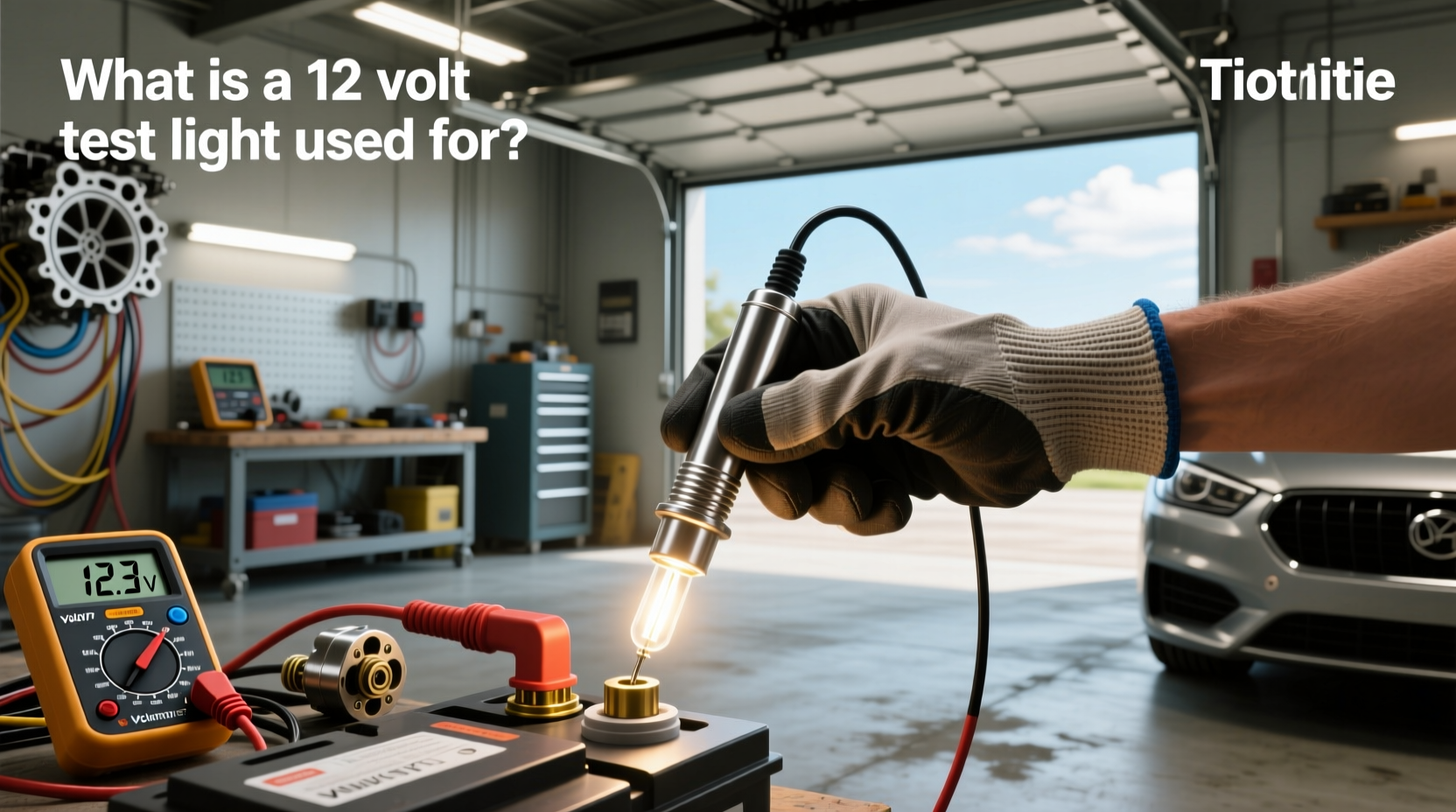
If you're asking what is a 12 volt test light used for?, the answer is simple: it's a basic but essential tool for checking voltage presence in automotive circuits. When choosing a 12v test lamp,What is a 12 volt test light used for?, prioritize models with a bright incandescent or LED bulb, durable insulated probe, secure alligator clip, and clear polarity markings. Avoid using it on high-voltage systems—this tool is designed only for low-voltage (12V) DC applications like cars, trucks, and motorcycles. For quick diagnostics such as testing fuses, relays, or ground connections, a 12V test light offers faster visual feedback than a multimeter, though it won’t measure exact voltage levels 1. Understanding how to choose 12v test lamp,What is a 12 volt test light used for? based on build quality and safety can prevent false readings and accidental shorts.
🛒 About 12v test lamp,What is a 12 volt test light used for?: Definition & Common Uses
A 12V test lamp, also known as a circuit tester or test light, is a handheld diagnostic device used primarily in automotive electrical systems to detect the presence of voltage. It typically consists of a small bulb housed in a plastic or metal body, connected to two leads—one with a sharp probe tip and the other with an alligator clip for grounding.
When the probe touches a live circuit point and the clip is attached to a good ground, the bulb illuminates, indicating that power is present. This makes it ideal for tasks such as:
- ⚡ Verifying if a fuse has power on both terminals
- 🔧 Checking whether a relay receives input voltage
- 📍 Testing switch functionality in lighting circuits
- 🔋 Confirming proper grounding points
- 🔍 Identifying parasitic battery drain by placing the test light in series with the negative battery terminal
It’s important to note that a 12V test light does not measure voltage—it only confirms its presence. Therefore, it cannot replace a digital multimeter when precise readings are needed, but it excels in fast, go/no-go checks 2.
📈 Why 12v test lamp,What is a 12 volt test light used for? Is Gaining Popularity
The resurgence in popularity of the 12V test light stems from its simplicity, affordability, and reliability in real-world repair scenarios. As vehicles become more electronically complex, DIY mechanics and technicians still rely on fundamental tools that deliver instant results without menu navigation or calibration.
Many users prefer a 12V test light over digital tools for basic fault finding because:
- ⏱️ Results are immediate—no interpreting numbers on a display
- ✅ No batteries required (powered by the circuit being tested)
- 🧰 Low cost compared to advanced diagnostic scanners
- 🔌 Easy to use even in tight engine bays
This trend reflects a growing demand for practical, no-frills tools among hobbyists, fleet maintenance crews, and roadside assistance professionals who value speed and dependability.
🔧 Types and Variants of 12V Test Lights
While all 12V test lights serve the same core purpose, they come in several designs tailored to different needs and environments.
1. Incandescent Bulb Test Lights
The traditional type uses a small tungsten filament bulb (usually 5–12W). These are widely available and inexpensive.
Pros:
- Inexpensive and easy to replace bulbs
- Clear visual indication under most lighting conditions
- No internal electronics to fail
Cons:
- Bulbs can burn out or break from vibration
- Dimmer output in low-light environments
- Limited lifespan compared to LEDs
2. LED Test Lights
Modern versions use LED bulbs, which are brighter, more durable, and energy-efficient.
Pros:
- Brighter illumination, visible even in sunlight
- Vibration-resistant and longer-lasting
- Sometimes include reverse polarity detection
Cons:
- May require internal resistors or current-limiting circuits
- Slightly higher initial cost
- Potential sensitivity to voltage spikes
3. Self-Powered vs. Circuit-Powered Models
Most 12V test lights are circuit-powered—they draw energy from the system being tested. However, some hybrid models combine a test light with a continuity buzzer powered by an internal battery.
Note: True 12V test lamps should not be confused with neon testers or solenoid-type indicators, which operate differently and may not provide reliable results in automotive DC systems.
⚙️ Key Features and Specifications to Evaluate
When evaluating how to choose 12v test lamp,What is a 12 volt test light used for?, consider these critical factors:
- Bulb Type: LED models offer better durability and visibility; incandescent bulbs are cheaper to replace.
- Probe Design: Look for a hardened steel probe with a fine tip for piercing insulation safely.
- Cable Length & Gauge: Longer cables (3–6 feet) improve reach; thicker gauge wire reduces resistance and improves signal clarity.
- Insulation Quality: High-quality rubber or PVC insulation prevents short circuits during use.
- Alligator Clip Strength: Must grip firmly to unpainted metal surfaces to ensure accurate grounding.
- Handle Ergonomics: Non-slip grips enhance control, especially in greasy or wet conditions.
- Polarity Indication: Some LED models illuminate differently based on polarity, helping identify wiring errors.
Also check for CE or RoHS markings, which indicate compliance with general safety and environmental standards (though these vary by region).
✅ Pros and Cons of Using a 12V Test Light
| Pros | Cons |
|---|---|
| Fast, intuitive voltage detection | Cannot measure exact voltage values |
| No batteries needed (in standard models) | Limited functionality beyond presence/absence |
| Durable and simple design | Risk of short circuits if probe slips |
| Ideal for fuse, relay, and ground testing | Not suitable for sensitive electronics (e.g., ECU pins) |
| Low cost and widely available | Potential for false negatives due to poor grounding |
Best suited for: Basic troubleshooting in older vehicles, pre-check before using a multimeter, educational purposes.
Less ideal for: Modern CAN bus systems, low-current circuits, or precision diagnostics.
📋 How to Choose 12v test lamp,What is a 12 volt test light used for?: Step-by-Step Buying Guide
Follow this checklist to make an informed decision:
- Determine Your Use Case: If you mainly check fuses and lights, a basic model suffices. For frequent diagnostics, invest in an LED version.
- Check Build Quality: Examine the probe tip, cable strain relief, and clip mechanism. Wiggle the connections to test for loose wires.
- Ensure Voltage Compatibility: Only use 12V-rated test lights on 12V DC systems. Never use them on household AC power or 24V truck systems unless specified.
- Test Before First Use: Always verify operation on a known live circuit (like the battery positive terminal) before relying on it.
- Avoid These Red Flags:
- Flimsy plastic housing
- Poorly soldered connections
- Thin, easily kinked cables
- No polarity markings
- Missing insulation on metal parts
Remember: A well-made 12V test light should last years with minimal maintenance.
💰 Price & Market Insights
Prices for 12V test lights vary significantly based on brand, build quality, and features:
- $3–$8: Entry-level incandescent models (common at auto parts stores)
- $8–$15: Mid-range LED versions with improved ergonomics
- $15–$25+: Professional-grade kits with spare bulbs, carrying cases, or dual-function (test + continuity)
There is no direct correlation between price and accuracy, but higher-priced models often feature better materials and safety design. Consider replacement bulb availability when comparing options. Prices may differ by region due to import duties or local manufacturing standards.
📊 Top-Seller & Competitive Analysis
Below is a comparison of common types found across major retailers:
| Feature | Basic Incandescent | LED Upgrade Model | Professional Combo Tool |
|---|---|---|---|
| Bulb Type | Incandescent (5W) | Red LED | Dual LED + Buzzer |
| Cable Length | 3 ft | 5 ft | 6 ft |
| Probe Material | Steel | Hardened Steel | Tungsten-Coated |
| Ground Clip | Plastic-coated | Rubber-insulated | Spring-loaded, heavy-duty |
| Special Features | None | Reverse polarity warning | Continuity tester, storage case |
| Typical Price | $4.99 | $12.99 | $22.99 |
For occasional users, the basic model offers excellent value. Frequent users benefit from the added durability and features of mid-to-high-end variants.
📌 Customer Feedback Synthesis
Analyzing buyer reviews reveals consistent patterns:
Frequent Praises:
- “Simple to use—even my teenager figured it out.”
- “Saved me time checking blown fuses without pulling each one.”
- “Bright LED makes it easy to see in dark engine compartments.”
Common Complaints:
- “Bulb burned out after two weeks of light use.”
- “Clip doesn’t hold well on rusty chassis points.”
- “Probe bent when I tried to pierce thick insulation.”
These insights highlight the importance of robust construction and realistic expectations regarding longevity.
🌐 Sourcing & Supplier Tips
When purchasing a 12V test light:
- Buy from Reputable Retailers: AutoZone, Amazon, Harbor Freight, or industrial suppliers like Grainger offer return policies and product verification.
- For Bulk Orders: Consider sourcing from B2B platforms like Alibaba or ThomasNet, but request samples first to assess quality.
- Verify Authenticity: Check for manufacturer branding, part numbers, and packaging integrity.
- Inspect Upon Arrival: Test the bulb, flex the cable, and ensure the clip operates smoothly.
If reselling or distributing, confirm supplier warranties and compliance documentation where applicable.
❗ Maintenance, Safety & Legal Considerations
To extend life and ensure safe operation:
- Store Properly: Keep in a dry place, coiled loosely to avoid cable damage.
- Replace Bulbs Promptly: Carry spares, especially for incandescent models.
- Never Use on Live AC Circuits: Risk of electric shock or tool destruction 1.
- Disconnect Battery When Possible: Prevents accidental shorting during probing 2.
- Use Insulated Gloves in Wet Conditions: Adds protection against stray currents.
While there are no specific regulations governing personal use of test lights in most countries, always follow workplace safety protocols if used professionally. Verify local electrical safety codes if integrating into service procedures.
📝 Conclusion: Who Should Buy Which Type?
Choosing the right 12v test lamp,What is a 12 volt test light used for? depends on your technical level and usage frequency:
- If you need a quick, reliable way to check fuses or wiring, a $5 incandescent model works perfectly.
- If you work regularly on vehicles, spend slightly more on an LED version with better cable and clip quality.
- If you want multi-function capability, consider a combo tool with continuity testing.
Always remember: a 12V test light answers “Is there power?”—not “How much?” For deeper analysis, pair it with a multimeter. By understanding what is a 12 volt test light used for? and selecting wisely, you gain a dependable ally in automotive troubleshooting.
❓ Frequently Asked Questions
- Can I use a 12V test light on a 24V system?
- No. Most 12V test lights have bulbs rated for ~12V DC. Using them on 24V systems will likely blow the bulb and could create a short circuit. Use a tester rated for the system voltage.
- Why isn’t my test light turning on even though the circuit should be live?
- Possible causes include a dead bulb, broken wire, poor ground connection, or lack of actual voltage. Always test the light on a known source first.
- Is a 12V test light safer than a multimeter?
- Neither is inherently safer. Both require caution. However, test lights pose a higher risk of short circuits if the probe slips, while multimeters can be damaged by incorrect settings.
- Can I use a 12V test light to check for parasitic drain?
- Yes. Connect the test light in series between the disconnected negative battery terminal and the chassis. If it glows, there’s a current draw. Remove fuses one by one to isolate the circuit causing the drain 2.
- Do modern LED test lights work on older cars?
- Yes. LED test lights are compatible with all 12V DC automotive systems, regardless of vehicle age, as long as the circuit provides sufficient current to activate the LED.




 浙公网安备
33010002000092号
 浙B2-20120091-4