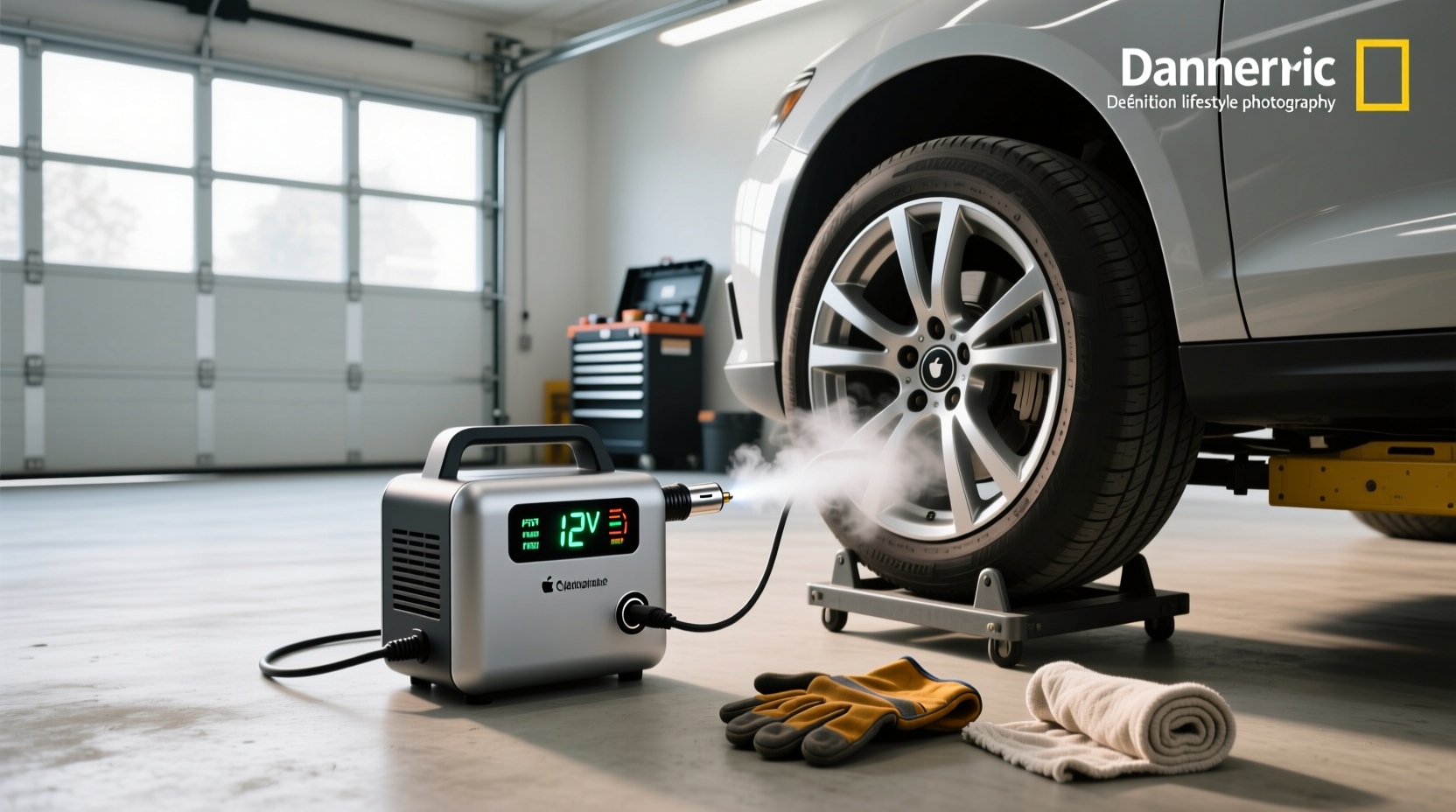
Yes, a 12V air compressor plugged into a car’s cigarette lighter can effectively fill a car tire, especially when topping off or addressing minor pressure loss 1[5]. When choosing a tire inflator cigarette lighter model, focus on inflation speed, maximum PSI (120–150 psi is typical), power source flexibility, and whether it has an auto-shutoff feature. These devices are best suited for passenger vehicles—not large trucks—due to lower airflow and potential overheating during extended use 2. Avoid models without built-in gauges unless you have a separate digital pressure meter.
About tire inflator cigarette lighter,Can a 12v air compressor fill a car tire?
A tire inflator cigarette lighter device is a portable 12V air compressor that draws power from your vehicle’s 12-volt socket (commonly known as the cigarette lighter). It's designed to inflate tires using engine battery power, making it ideal for roadside emergencies or routine maintenance. Most units include a hose, chuck connector, and either an analog dial or digital display to monitor pressure 1.
The primary question—Can a 12V air compressor fill a car tire?—has a qualified yes. While these compressors can reach standard tire pressures (typically 30–35 psi), they may struggle with completely flat tires due to limited motor strength and heat buildup. They work well for maintaining optimal pressure but are not replacements for high-capacity shop compressors 3.
Why tire inflator cigarette lighter,Can a 12v air compressor fill a car tire? is gaining popularity
These compact tools are becoming essential in emergency kits because they offer plug-and-play convenience. Drivers appreciate being able to maintain proper tire inflation without visiting gas stations or repair shops. Proper tire pressure improves fuel efficiency, handling, and safety—all factors driving adoption 4.
Additionally, many modern models now come with added features like LED lights, USB charging ports, and preset pressure settings, enhancing their utility beyond just tire inflation. This versatility makes them popular among daily commuters, road trippers, and fleet operators alike.
Types and variants
There are several variations of 12V-powered tire inflators, each with distinct advantages:
- >Direct Plug-In Models: Connect directly to the 12V socket. Pros: Simple operation, no charging needed. Cons: Limited cord length (~10 ft), requires running outlet.
- >Battery-Powered with 12V Charging: Have internal lithium-ion batteries that charge via the cigarette lighter. Pros: Greater mobility, usable even when engine is off. Cons: Requires pre-charging; battery lifespan varies.
- >Hybrid Units: Can run on both battery and direct 12V power. Pros: Flexible usage options. Cons: Heavier and more expensive than basic models.
- >Digital vs Analog: Digital models show precise PSI readings and often include auto-shutoff. Analog versions rely on dials, which can be less accurate over time.
Key features and specifications to evaluate
When evaluating a tire inflator cigarette lighter product, consider these critical factors:
- Max PSI Output: Most passenger cars require 30–35 psi. Ensure the inflator reaches at least 120 psi to cover all common needs, including bikes and small trailers.
- Inflation Speed: Measured in minutes to inflate a standard tire from low (e.g., 20 psi) to recommended level. Faster models take ~2–4 minutes; slower ones may exceed 8 minutes 5.
- Power Source Type: Decide if you prefer continuous power (plug-in) or independence (battery). Some users want both options.
- Auto Shutoff & Preset Pressure: Allows setting desired PSI; unit stops automatically. Reduces risk of overinflation.
- Nozzle Types & Accessories: Look for multiple adapters (for balls, air mattresses, etc.) and secure chuck types (screw-on preferred over push-on).
- Integrated Lighting & Display: LED lights help in dark conditions. Backlit digital screens improve readability.
- Portability & Storage: Weight (1–5 lbs typical), size, and included carrying case matter for storage in glove compartments or trunks.
Pros and cons
Understanding the trade-offs helps determine suitability:
Pros ✅
- Ideal for maintaining tire pressure between services
- Compact and easy to store in vehicles
- Simple setup—just plug into 12V socket
- Many include useful extras like flashlights and phone charging
- Safer than driving on underinflated tires
Cons ❗
- Limited power compared to AC or larger DC compressors
- May overheat when inflating fully deflated tires
- Cord length restricts access to rear tires on larger SUVs/trucks
- Lower-end models lack accuracy or durability
- Not suitable for heavy-duty vehicles requiring >100 psi
How to choose tire inflator cigarette lighter,Can a 12v air compressor fill a car tire?
Follow this step-by-step checklist to make an informed decision:
- ✅ Define Your Use Case: Are you topping off tires monthly, preparing for emergencies, or servicing larger vehicles? For occasional use, a plug-in model suffices. For frequent or remote use, opt for a rechargeable hybrid.
- ✅ Check Max PSI and CFM: Confirm the unit exceeds your vehicle’s max tire pressure. While CFM data is rarely listed, faster inflation times suggest better airflow.
- ✅ Verify Auto-Shutoff Functionality: Prevents overinflation and protects the motor. Test reviews for reliability of this feature.
- ✅ Evaluate Power Flexibility: If you plan to use it when the car is off, ensure it has a built-in battery or confirm the 12V outlet remains live.
- ✅ Assess Hose Length: Minimum 8–10 feet recommended to reach all four tires comfortably.
- ✅ Look for Clear Pressure Readout: Digital displays are easier to read accurately than analog gauges.
- ❗ Avoid These Red Flags:
- No pressure gauge (unless you’ll always use a separate one)
- Poor customer feedback on motor burnout
- Plastic housing prone to cracking
- Missing O-rings or poor valve seal design
Price & market insights
Prices for 12V tire inflators typically range from $25 to $80. Entry-level plug-in models start around $25–$40 and offer basic functionality. Mid-range ($40–$60) often includes digital displays, auto-shutoff, and battery backup. Premium models ($60+) add enhanced build quality, faster motors, and extra accessories.
Value isn’t solely about price. A slightly more expensive model with reliable auto-shutoff and durable construction may save money long-term by avoiding repeated purchases. Note that prices may vary by region, retailer, and seasonal demand. Always compare specs rather than relying on brand names alone.
Top-seller & competitive analysis
The following comparison highlights top-performing 12V tire inflators based on real-world performance metrics and user-reported reliability.
| Model | Power Source | Max PSI | Weight | Inflation Time (to 30 psi) | Notable Features |
|---|---|---|---|---|---|
| AstroAI Cordless Tire Inflator | Battery, 12V outlet | 160 psi | 3.6 lbs | 3:40 min | Digital display, flashlight, USB ports, multiple adapters |
| Craftsman 12V Max Portable Air Inflator | 12V outlet | 150 psi | 1.3 lbs | 4:18 min | Digital display, USB port, multiple adapters |
| Slime 12V Digital Tire Inflator | 12V outlet | 100 psi | 1.7 lbs | 4:18 min | Digital display, LED light, multiple adapters |
| Viair 88P | 12V battery | 120 psi | 5.6 lbs | 1:37 min | Analog gauge, multiple adapters, carrying case |
| Avid Power Cordless Tire Inflator | Battery, 12V outlet | 120 psi | 2.6 lbs | 3:45 min | Digital display, flashlight, USB port, multiple adapters |
Data sourced from independent testing and consumer reports 654. The Viair 88P stands out for speed despite its weight, while AstroAI offers the best balance of portability and smart features.
Customer feedback synthesis
Analysis of verified buyer reviews reveals consistent patterns:
Frequent Praises ✨
- “Easy to use—my wife inflated our SUV tire in under 5 minutes.”
- “Love the digital screen and automatic shutoff—no guesswork.”
- “Great emergency tool; used it after picking up a nail.”
- “USB port charged my phone while inflating the tire.”
Common Complaints ❗
- “Stopped working after three uses—motor burned out.”
- “Hose too short to reach rear tires without repositioning the car.”
- “Gauge was off by 5 psi compared to my calibrated tester.”
- “Battery doesn’t hold charge well after two months.”
Reliability concerns often stem from budget models lacking thermal protection or robust components. Users also stress the importance of checking actual performance versus advertised claims.
Sourcing & supplier tips
When purchasing, consider where and how you buy:
- 🛒 Buy from reputable retailers (e.g., auto parts stores, major e-commerce platforms) to ensure return policies and warranty support.
- 📦 For bulk orders (e.g., fleet vehicles), contact suppliers directly for volume pricing, but verify compatibility across vehicle models.
- 🔍 Inspect packaging upon delivery: check for missing parts, damaged hoses, or loose connectors.
- 📎 Test the unit before storing: inflate a tire or ball to confirm operation and gauge accuracy.
- 🌐 Consider third-party certifications (e.g., CE, FCC) as indicators of electrical safety compliance, though these may vary by country.
Maintenance, safety & legal considerations
To extend lifespan and ensure safe operation:
- 🧼 Clean the nozzle and chuck regularly to prevent debris from affecting seals.
- 🔋 If battery-powered, follow charging guidelines—avoid leaving on charger indefinitely.
- ⚠️ Never operate the inflator continuously for more than 10–15 minutes without a cooldown period to prevent overheating.
- 📍 Use in well-ventilated areas and avoid wet conditions to reduce electrical hazards.
- 📋 Check local regulations if using commercially; some jurisdictions regulate onboard electrical equipment modifications.
- 📝 Verify manufacturer warranty terms—typically 1–2 years—and keep proof of purchase.
Conclusion
If you need a convenient way to maintain tire pressure and handle minor flats, a 12V tire inflator powered by a cigarette lighter is a practical choice. For everyday drivers and road travelers, models with digital displays, auto-shutoff, and battery backup offer the best usability. However, if you frequently deal with completely flat tires or drive large trucks, consider a higher-powered system. Always prioritize build quality and verified performance over low cost. By understanding what to look for in tire inflator cigarette lighter devices and confirming answers to “Can a 12V air compressor fill a car tire?” for your specific scenario, you can make a confident, informed purchase.
Frequently Asked Questions
- Can a 12V air compressor fill a completely flat car tire?
- Yes, but with limitations. Most 12V inflators can refill a flat tire, though it may take 8–15 minutes and require cooling breaks to prevent overheating. Performance depends on motor strength and battery health.
- Do I need to run the car engine when using a 12V tire inflator?
- It’s recommended to keep the engine off or in accessory mode to provide stable voltage. Running the engine may cause voltage spikes that affect sensitive electronics in some models.
- Are battery-powered 12V inflators better than plug-in only ones?
- They offer more flexibility, especially if the 12V outlet turns off with the ignition. However, they require charging and eventual battery replacement. Choose based on your usage pattern.
- How accurate are built-in pressure gauges on 12V inflators?
- Accuracy varies. Digital models tend to be within ±2 psi of actual pressure, while cheaper analog gauges may drift over time. Calibrate periodically with a standalone gauge.
- Can I use a 12V tire inflator for motorcycles or bicycles?
- Yes, most models include adapters for various valve types. Just ensure the max PSI exceeds your vehicle’s requirements—motorcycles often need 30–40 psi, similar to cars.




 浙公网安备
33010002000092号
 浙B2-20120091-4