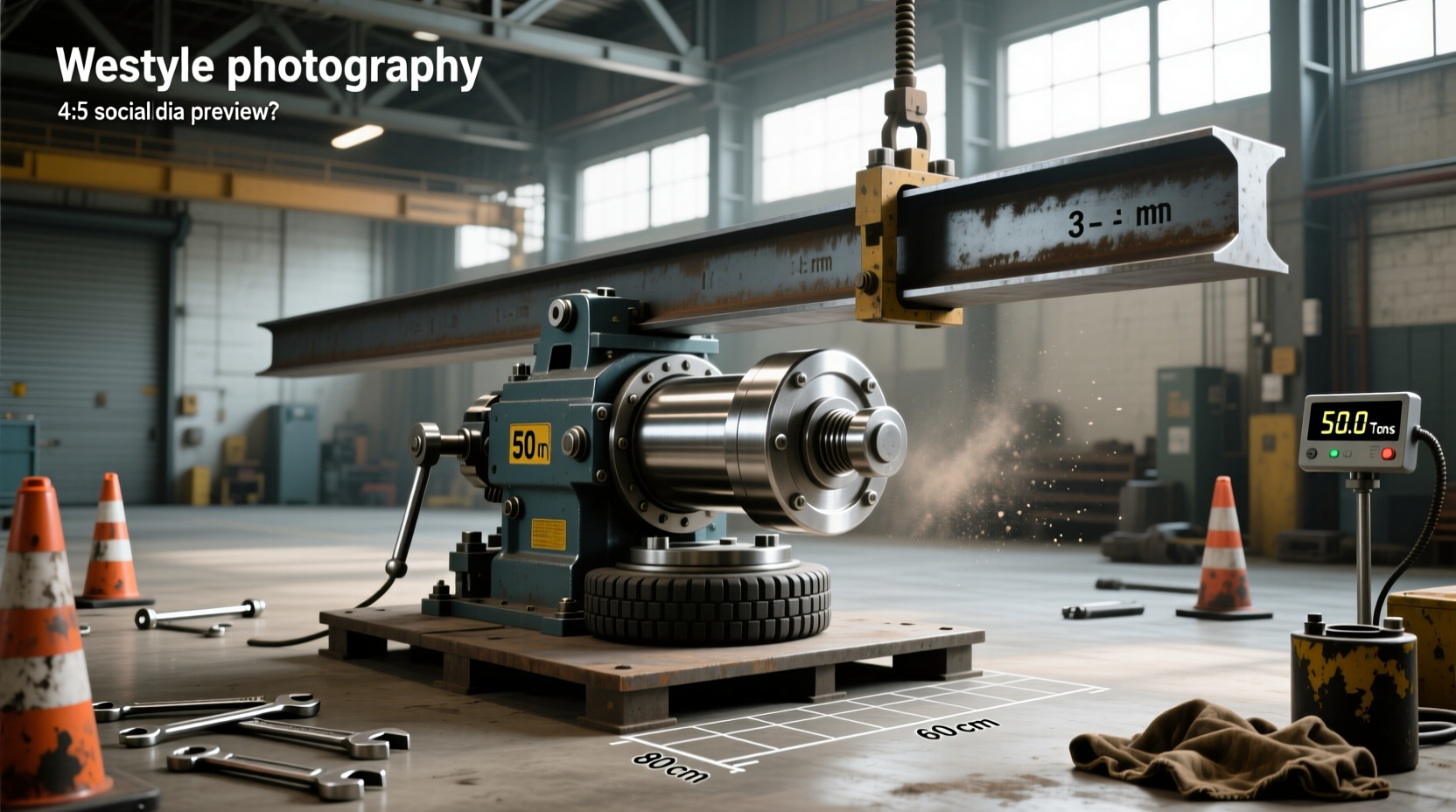
If you're asking how to choose hydraulic jack 50 ton capacity,What is the base size of a 50 ton jack?, start here: base dimensions typically range from 7.0" x 6.85" to 10.75" x 7.375", depending on model and application 1. For heavy lifting stability, prioritize jacks with forged steel bases and larger footprints like the ATD-7388W or Wilmar W1637. Compact models such as the Zinko ZMJ-50 suit precision tasks but offer less lateral support. Always verify minimum and maximum height for your workspace clearance. Avoid generic listings without clear specs—check manufacturer data before purchase.
🛒 About Hydraulic Jack 50 Ton Capacity, What Is the Base Size of a 50 Ton Jack?
A 50-ton hydraulic bottle jack is engineered to lift extremely heavy loads—up to 110,231 pounds (50 metric tons). These jacks are commonly used in industrial maintenance, bridge construction, heavy machinery alignment, and large vehicle repair. The base size—the footprint where the jack contacts the ground—is critical for load distribution and tipping resistance. While there's no universal standard, most full-size 50-ton bottle jacks have a rectangular base between 8" and 11" long and 6.7" to 7.4" wide.
Base dimensions directly affect stability. A narrow or undersized base increases the risk of tilting under off-center loads, especially when lifting tall structures. Miniature versions exist for confined spaces or fine adjustments, but they sacrifice some structural rigidity. When evaluating what to look for in hydraulic jack 50 ton capacity,What is the base size of a 50 ton jack?, always consider both load weight and center of gravity.
📈 Why Hydraulic Jack 50 Ton Capacity, What Is the Base Size of a 50 Ton Jack? Is Gaining Popularity
As industrial operations demand faster, safer lifting solutions, high-capacity hydraulic jacks are seeing increased adoption across sectors like construction, mining, and transportation logistics. Their popularity stems from reliability, compact design relative to lifting power, and ease of integration into existing workflows. Mobile mechanics servicing commercial trucks and RVs also rely on 50-ton units for axle and frame work.
Additionally, advancements in materials—such as forged steel housings and chrome-plated rams—have improved durability without significantly increasing weight. Air-assisted models now allow semi-automated operation, reducing manual effort. Buyers searching for a hydraulic jack 50 ton capacity,What is the base size of a 50 ton jack? buying guide often seek clarity on how these innovations impact real-world performance and space requirements.
🔧 Types and Variants
Different types of 50-ton hydraulic jacks serve distinct purposes. Understanding their differences helps match the tool to your task.
📌 Standard Manual Bottle Jacks
The most common type, featuring a hand pump lever. Ideal for garages and field repairs.
- Pros: Durable, cost-effective, portable
- Cons: Requires physical effort; slower cycle time
⚡ Air/Hydraulic (Pneumatic) Bottle Jacks
Uses compressed air to drive the hydraulic system. Often dual-mode (manual + pneumatic).
- Pros: Faster lifting, reduced operator fatigue
- Cons: Needs air compressor; slightly bulkier base due to motor housing 2
📍 Low-Profile / Mini Bottle Jacks
Designed for tight clearances, such as under machinery bases or during equipment alignment.
- Pros: Fits in narrow spaces; precise control
- Cons: Smaller base = lower stability; not for dynamic lifting
🏭 Industrial Push/Pull Cylinders
Not traditional jacks, but sometimes used interchangeably. Mounted systems for pushing beams or aligning components.
- Pros: High precision; reusable in fixed setups
- Cons: Not portable; requires mounting hardware
📊 Key Features and Specifications to Evaluate
When reviewing options for how to choose hydraulic jack 50 ton capacity,What is the base size of a 50 ton jack?, assess these core specifications:
- Base Dimensions: Length × width determines contact area and tipping resistance. Larger is generally better for uneven surfaces.
- Minimum Height: Critical for low-clearance applications (e.g., under trailers). Ranges from ~5.5" to 12".
- Maximum Height: Determines total lift range. Important when transferring load to stands.
- Material Construction: Forged steel bases resist deformation. Look for welded seams over bolted joints 3.
- Safety Systems: Overload bypass valves prevent over-pressurization and cylinder damage.
- Lifting Mechanism: Two-piece handles reduce stored length; folding designs improve portability.
✅ Pros and Cons
| Aspect | Advantages | Limitations |
|---|---|---|
| High Load Capacity | Can safely lift industrial equipment, trucks, and structural elements | Overkill for light-duty tasks; unnecessary expense |
| Compact Vertical Design | Takes minimal floor space compared to floor jacks | Narrow base requires careful leveling on soft ground |
| Portability | Most weigh 30–50 lbs; manageable with carry handle | Still heavy for frequent transport without wheels |
| Stability (Full-Size Models) | Forged steel bases resist shifting under load | Mini variants can tip if load isn’t centered |
Best suited for: Heavy equipment maintenance, bridge supports, factory machinery setup.
Not ideal for: Everyday car maintenance, DIY home projects, unstable surfaces without reinforcement.
📋 How to Choose Hydraulic Jack 50 Ton Capacity, What Is the Base Size of a 50 Ton Jack?
Follow this step-by-step checklist to make an informed decision:
- Define Your Use Case: Are you lifting vehicles, aligning beams, or doing precision calibration? Match jack type accordingly.
- Measure Available Clearance: Record minimum height under load and required stroke distance.
- Evaluate Base Stability Needs: On concrete? Use standard models. On dirt or gravel? Opt for wider base or add steel plate.
- Check Lifting Mechanism: Prefer speed and less effort? Consider air/hydraulic combo models.
- Verify Safety Features: Ensure overload protection and leak-resistant seals are included.
- Review Build Quality: Prioritize forged steel, welded construction, and chrome-plated pistons.
- No published base dimensions or material specs
- Missing safety certifications (look for ASME B30.1 or ISO 4414 compliance)
- Customer reviews reporting oil leaks or piston drift
- Pricing significantly below market average (risk of substandard materials)
💰 Price & Market Insights
Prices for 50-ton hydraulic bottle jacks vary widely based on type, brand, and features:
- $150–$250: Entry-level manual jacks; may lack robust warranties or detailed specs.
- $250–$400: Mid-tier models with forged bases, safety valves, and reliable brands (e.g., ATD Tools, Wilmar).
- $400–$700+: Air/hydraulic combos or industrial-grade units with quick-connect fittings and extended cycles.
Value isn't solely about price. Consider lifecycle cost: a $300 jack lasting 5 years outperforms a $180 model replaced annually. Regional availability and shipping costs can also influence final pricing—always compare landed costs.
⭐ Top-Seller & Competitive Analysis
Below is a comparison of leading 50-ton hydraulic bottle jacks based on verified product data:
| Model | Base L × W (in) | Min H (in) | Max H (in) | Key Feature |
|---|---|---|---|---|
| ATD-7388W | 8.27 × 6.93 | 10.43 | 16.73 | Welded body, overload bypass |
| Zinko ZMJ-50 | 7.0 × 6.85 | 5.51 | 6.70 | Ultra-low profile |
| Wilmar W1637 | 8.2 × 6.75 | 11.75 | 18.875 | Heavy-duty base, foldable handle |
| Omega 18502 | 10.75 × 7.375 | 12 | 19 | Air-actuated, quick hose connect |
| ATO-HBJ-50 | 5.04 × 3.15 | 6.38 | 10.31 | Specialized for bridge work |
Note: VEVOR lists no base dimensions publicly, making evaluation difficult. Transparency in specs is a key indicator of manufacturer confidence.
👥 Customer Feedback Synthesis
Based on aggregated user reviews and service reports:
- Frequent Praise: Smooth piston action, durable finishes, effective safety valves, and consistent performance under rated load.
- Common Complaints: Oil leakage in budget models, difficulty finding replacement parts, vague or missing dimensional drawings, and inadequate instruction manuals.
- Recurring Themes: Users appreciate jacks with clear markings and ergonomic handles. Those using mini-jacks note instability unless perfectly leveled.
🌐 Sourcing & Supplier Tips
Whether buying retail or sourcing wholesale:
- Buy from suppliers who provide downloadable spec sheets and CAD drawings.
- For bulk orders, request sample units to test build quality and sealing integrity.
- Use platforms that allow filtering by exact dimensions (e.g., base width ≤ 7") to narrow choices.
- Verify return policies—some sellers exclude heavy tools from returns.
- Ask for proof of third-party testing or compliance documentation (may be needed for workplace safety audits).
🧼 Maintenance, Safety & Legal Considerations
To ensure longevity and safe operation:
- Store upright to prevent seal damage.
- Use only recommended hydraulic fluid (typically ISO 32 or AW32); never mix fluids.
- Bleed air from the system after refilling or prolonged storage.
- Inspect for cracks, dents, or piston scoring before each use.
- Always use jack stands when working under a lifted load—never rely on the jack alone.
Legally, employers must comply with local occupational safety standards (e.g., OSHA in the U.S.). While specific rules vary, all require inspected, properly rated lifting equipment. Verify regulations applicable to your region before deployment.
📌 Conclusion
Choosing the right 50-ton hydraulic jack depends on matching its physical and functional specs to your environment. If you need maximum stability for outdoor or industrial use, select a model with a broad base (like the Omega 18502 at 10.75" × 7.375"). For tight spaces requiring precision, a compact unit like the Zinko ZMJ-50 works well—but pair it with a stable platform. Always confirm base dimensions, material quality, and safety mechanisms before purchasing. By focusing on verified specs rather than marketing claims, you’ll invest in a reliable, long-term solution.
❓ FAQs
What is the typical base size of a 50-ton hydraulic bottle jack?
Most standard 50-ton hydraulic bottle jacks have a base between 8.2" and 10.75" long and 6.75" to 7.375" wide. Miniature models can be as small as 5" × 3.15". Always check manufacturer specifications for exact dimensions.
Does a larger base improve jack stability?
Yes. A larger base increases the moment arm against tipping and distributes load over a wider area, enhancing stability—especially on softer surfaces or with off-center loads.
Can I use a 50-ton jack for regular car repairs?
It’s possible but generally impractical. These jacks are oversized for passenger vehicles, often too tall or slow for routine tasks. A 2–3 ton floor jack is more suitable for cars.
How do I maintain a 50-ton hydraulic jack?
Keep it clean and dry, use correct hydraulic fluid, avoid overloading, and inspect seals and piston movement regularly. Bleed air if pumping feels spongy.
Are all 50-ton jacks made of forged steel?
No, while most reputable models use forged steel for strength, some lower-cost versions may use cast metal or thinner weldments. Check product details to confirm construction type.




 浙公网安备
33010002000092号
 浙B2-20120091-4