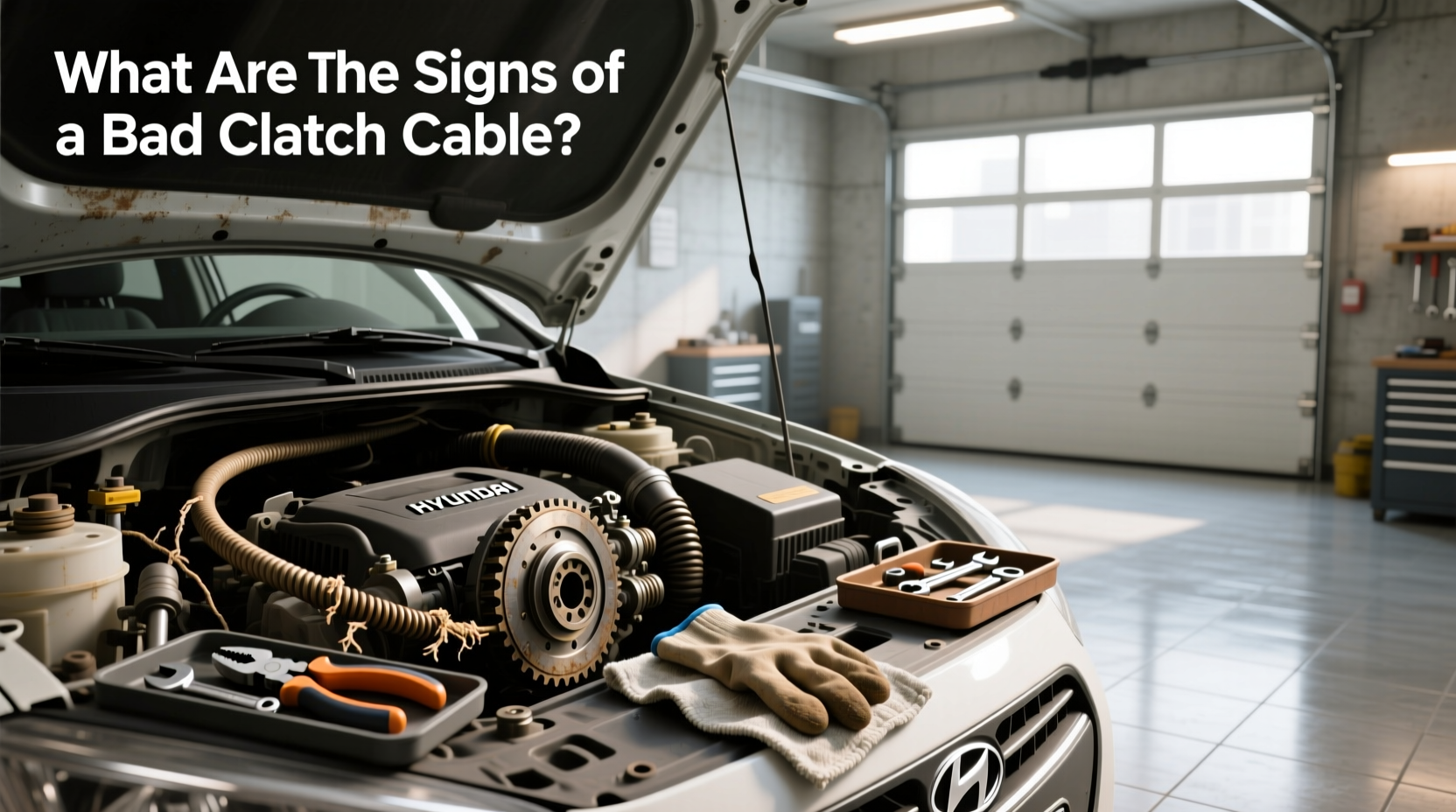
If you're experiencing difficulty shifting gears or notice your clutch pedal feels unusually loose or stiff, you may be dealing with a failing clutch cable—especially if you drive a Hyundai i10 from 2007–2013. When choosing a replacement clutch cable for your Hyundai i10, prioritize models designed to resist rust and corrosion, as water ingress around the engine bay is a known issue in these vehicles 1. Also, inspect the pedal box for fractures before installation, since stress from a worn cable can damage this component. Opt for cables with sealed housings and stainless-steel internals for longer service life. This guide will walk you through how to choose a clutch cable for Hyundai i10 by identifying failure signs, comparing types, evaluating specs, and avoiding common pitfalls during selection and installation.
About Clutch Cables in the Hyundai i10
A clutch cable is a mechanical linkage that connects the clutch pedal to the clutch release lever. When you press the pedal, the cable pulls the release lever, disengaging the clutch so you can shift gears smoothly. In the Hyundai i10, particularly right-hand-drive models produced between 2007 and 2013, the clutch system relies entirely on a cable rather than a hydraulic setup. This design choice affects both performance and maintenance needs.
The primary use case for a clutch cable is daily driving under normal conditions. However, frequent city driving with constant stop-and-go traffic increases wear. The cable’s location—routed behind the engine—makes it prone to exposure to moisture and road debris, which accelerates corrosion 2. Understanding this context helps explain why certain symptoms appear earlier in i10s compared to other vehicles.
Why Knowing Clutch Cable Issues Is Important
While not a trending consumer product, awareness of clutch cable problems in the Hyundai i10 has grown among owners and mechanics due to recurring reliability issues. Drivers are increasingly proactive about diagnosing early signs like pedal slack or gear resistance before total failure occurs. This shift reflects broader trends in vehicle maintenance: more DIY repairs, greater access to online repair guides, and cost-conscious decisions to fix rather than replace aging cars.
For many i10 owners, especially in regions with high humidity or winter road salting, replacing the clutch cable isn’t a matter of “if” but “when.” As such, knowing how to choose clutch cable Hyundai i10 variants becomes essential for ensuring long-term drivability without unexpected breakdowns.
Types and Variants of Clutch Cables
Clutch cables come in different designs based on material, housing type, and compatibility. For the Hyundai i10, three main variants exist:
- 🔧Standard OEM-Style Cable: Matches original factory specifications. Often made with galvanized steel inner wire and plastic-coated outer housing. Affordable but susceptible to rust over time.
- ✨Heavy-Duty Aftermarket Cable: Features reinforced stainless-steel core and sealed rubber boots at both ends to prevent moisture entry. More durable but slightly stiffer in operation.
- 🛒Budget Replacement Cable: Lower-cost option typically found in generic auto parts stores. May lack precise tolerances or corrosion protection. Suitable only for short-term fixes.
Each variant serves different needs. OEM-style offers balanced feel and cost. Heavy-duty versions are better suited for harsh climates. Budget cables should be avoided unless used temporarily while sourcing a higher-quality part.
Key Features and Specifications to Evaluate
When evaluating clutch cables for your Hyundai i10, consider these critical factors:
- 📏Length and Fitment: Must match exact OEM dimensions. Even minor deviations affect pedal travel and engagement point.
- 🛡️Corrosion Resistance: Look for teflon-lined or fully stainless-steel internals. Sealed end fittings help block water ingress.
- ⚙️Tensile Strength: Higher-rated cables withstand repeated tension without stretching.
- 📎End Connector Design: Should precisely match the clutch lever and pedal arm geometry to avoid slippage.
- 🌡️Temperature Tolerance: Cables exposed near exhaust manifolds need heat-resistant sheathing.
Always verify compatibility using your VIN or model year before purchase. Some aftermarket brands offer multiple versions for slight manufacturing variations across production years.
Pros and Cons of Replacing Your Clutch Cable
- Restores smooth gear shifts and proper clutch engagement
- Prevents further damage to transmission components
- Relatively low-cost repair compared to full clutch assembly replacement
- Can be done DIY with basic tools
- May require pedal box inspection or reinforcement
- Limited lifespan in wet environments without protective upgrades
- Potential misalignment if not installed correctly
- Does not address underlying clutch wear if the friction disc is slipping
Replacing the cable is ideal when symptoms are isolated to pedal feel and shifting difficulty. If the car exhibits clutch slippage under load (engine revs without acceleration), the issue may extend beyond the cable to the clutch disc or pressure plate.
How to Choose a Clutch Cable for Hyundai i10: Step-by-Step Buying Guide
Follow this checklist to ensure you select the right clutch cable:
- 🔍Confirm the Symptom: Use the engine-off test—try shifting into gear with the engine off. If successful, the problem lies in the clutch actuation system (likely the cable).
- 📋Inspect the Pedal Box: Check for cracks or deformation where the cable attaches. A broken pedal box requires repair before installing a new cable 1.
- 📍Identify Your Model Year: Early i10s (2007–2010) have slightly different routing than later facelift models (2011–2013).
- ✅Select Corrosion-Resistant Materials: Prioritize cables with stainless-steel cores and sealed housings.
- ❗Avoid These Red Flags: Steer clear of unlabeled cables with no manufacturer data, mismatched connectors, or visibly frayed wires.
- 🧰Check Installation Tools Needed: Most replacements require only basic hand tools, but some positions may need extension bars.
This process ensures you’re not just replacing a part, but solving the root cause effectively.
Price & Market Insights
Clutch cable prices for the Hyundai i10 vary significantly by region and supplier:
- 💰Budget Range ($10–$20): Generic brands with minimal corrosion protection.
- ⭐Mid-Tier ($20–$40): Known aftermarket brands offering improved materials and fitment accuracy.
- 🏭Premium / OEM ($40–$70): Genuine Hyundai parts or high-end aftermarket equivalents with extended warranties.
Prices may differ based on local taxes, availability, and whether sold individually or as part of a kit. While OEM cables ensure perfect fit, some mid-tier aftermarket options provide superior durability at lower cost due to upgraded materials. Always factor in labor if using a mechanic—DIY saves money but requires confidence in your skills.
Top-Seller & Competitive Analysis
The following table compares popular clutch cable options available for the Hyundai i10:
| Brand/Type | Material Quality | Corrosion Protection | Price Range | Best For |
|---|---|---|---|---|
| Genuine Hyundai OEM | Galvanized steel | Moderate | $45–$70 | Exact fit, dealer warranty |
| Meyle HD Upgrade | Stainless steel core | Sealed ends, teflon liner | $35–$50 | Longevity in wet climates |
| Brembo Standard | High-tensile alloy | Coated housing | $25–$38 | Balanced performance and price |
| Generic Unbranded | Unknown alloy | Minimal | $10–$18 | Temporary fix only |
While OEM parts guarantee compatibility, third-party upgrades like Meyle offer enhanced engineering specifically addressing the i10’s vulnerability to rust.
Customer Feedback Synthesis
Analysis of owner reviews reveals consistent patterns:
- 👍Frequent Praise: Users appreciate heavy-duty cables for lasting longer than originals. Easy installation and accurate fitment are also commonly highlighted.
- 👎Common Complaints: Some budget cables fail within months due to internal fraying. Others report incorrect length or connector shape, leading to improper operation.
- 🔄Recurring Advice: Many recommend upgrading to a sealed, stainless-steel cable even if the original hasn’t failed yet—especially in rainy or coastal areas.
This feedback underscores the importance of investing in quality despite higher upfront cost.
Sourcing & Supplier Tips
You can source clutch cables from several channels:
- 🌐OEM Dealerships: Offer genuine parts with full traceability but at premium prices.
- 🏪Auto Parts Retailers: Stores like AutoZone or Euro Car Parts carry compatible aftermarket options.
- 🚚Online Marketplaces: Amazon, eBay, and specialized sites like RockAuto provide variety but require careful vetting of seller ratings and product descriptions.
When buying in bulk or for resale, confirm return policies and minimum order quantities. Inspect samples for build quality—check for smooth cable movement inside the housing and secure crimping at connection points.
Maintenance, Safety & Legal Considerations
After installation, periodically check the cable for free play and smooth operation. Lubrication is generally not recommended unless specified by the manufacturer, as it can attract dirt. Ensure all clips and brackets are securely fastened to prevent snagging or premature wear.
Safety-wise, never drive with a compromised clutch system. Incomplete disengagement can lead to gear grinding or inability to stop safely in traffic. From a regulatory standpoint, ensure any replacement part meets local vehicle standards—though clutch cables are rarely subject to emissions or safety certification, compliance with general roadworthiness rules applies.
Conclusion
Choosing the right clutch cable for your Hyundai i10 involves more than matching a part number. You must account for environmental exposure, pedal box integrity, and long-term reliability. If you live in a damp or salty environment, opt for a heavy-duty cable with stainless-steel construction and sealed housing. If you prefer factory consistency, go with genuine OEM. And if the pedal box is cracked, repair it before installing any new cable. By understanding what causes failure and what features improve durability, you can make a smart, lasting repair decision.
Frequently Asked Questions
- What are the signs of a bad clutch cable? Common symptoms include a loose or stiff pedal, inability to shift gears, grinding noises, or the pedal falling to the floor. These indicate stretching, binding, or breakage.
- Can I drive with a broken clutch cable? No. A snapped cable prevents clutch disengagement, making gear changes impossible and stranding the vehicle.
- How often should I replace the clutch cable on my Hyundai i10? There’s no fixed interval, but monitor it after 60,000 miles or if you notice changing pedal feel. Earlier replacement may be needed in corrosive environments.
- Is a hydraulic clutch conversion possible for the i10? While technically feasible, it’s complex and costly. Most owners find upgrading to a better cable more practical.
- Do I need to bleed the system after replacing the clutch cable? No—bleeding applies to hydraulic systems. Cable-operated clutches require only adjustment and testing.




 浙公网安备
33010002000092号
 浙B2-20120091-4