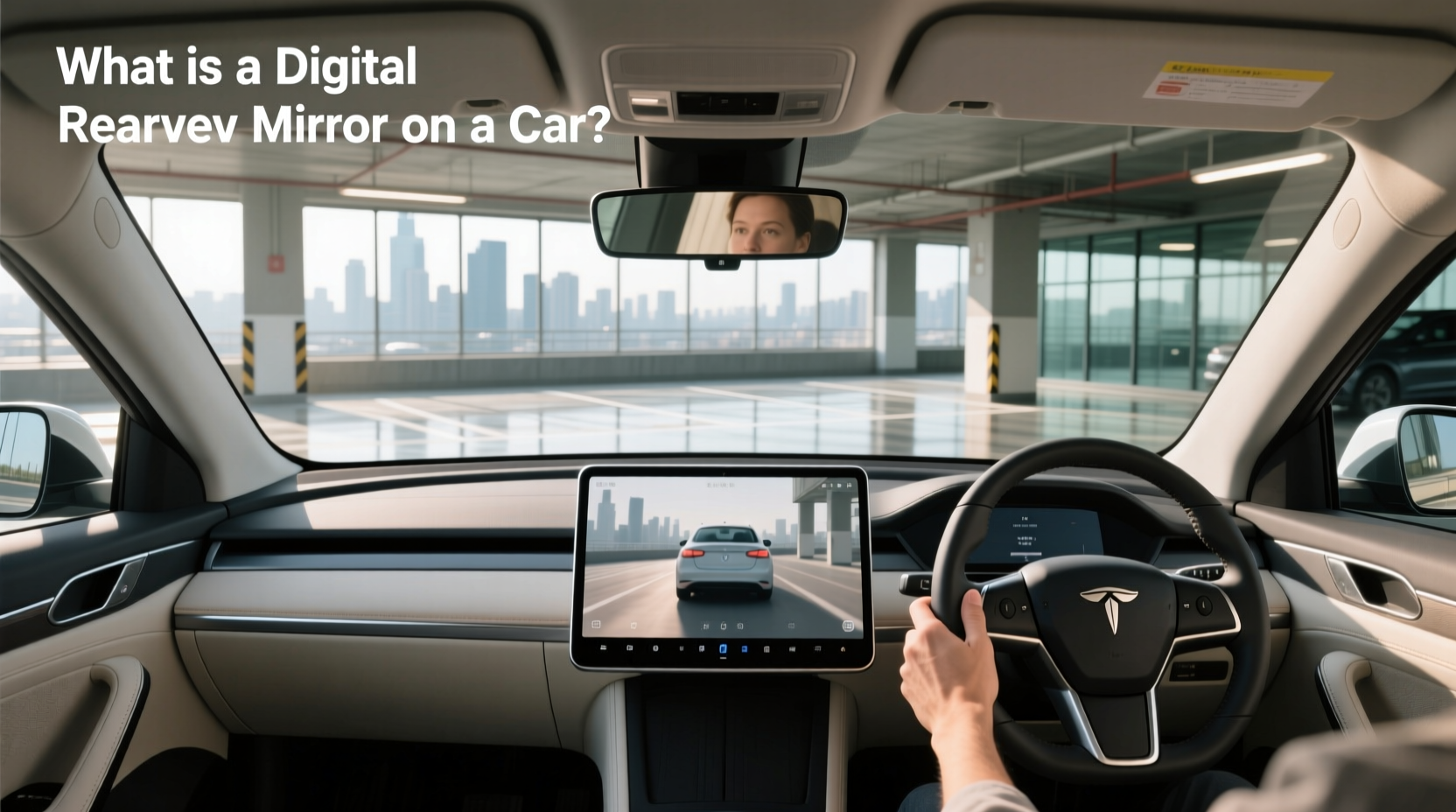
When choosing a car digital rearview mirror, it’s essential to understand what to look for in car digital rearview mirror, what is a digital rearview mirror on a car? A digital rearview mirror replaces the traditional glass mirror with a screen that displays a live video feed from a rear-mounted camera 1. This setup provides a wider, unobstructed view of the area behind your vehicle, especially useful when carrying cargo or passengers that block the rear window 2. For drivers of SUVs, vans, or trucks, this technology significantly improves safety during lane changes and reversing. Key considerations include display resolution, camera quality, low-light performance, and compatibility with existing vehicle systems. Avoid models with high latency or poor weather resistance. If you frequently drive at night or in rain, prioritize units with HDR and automatic brightness adjustment.
🛒 About Car Digital Rearview Mirror, What Is a Digital Rearview Mirror on a Car?
A car digital rearview mirror, also known as a smart or live-view rearview mirror, uses a rear-facing camera to transmit a real-time video feed to a display embedded in the mirror housing 3. Unlike traditional mirrors that rely on reflected light through the rear windshield, digital versions eliminate visual obstructions caused by headrests, cargo, or dirt. The system typically includes a high-definition camera mounted near the license plate, a processing unit, and an LCD or OLED screen inside the cabin.
These mirrors are particularly beneficial in large vehicles where rear visibility is limited. They’re commonly used during highway driving, city navigation, parking, and towing. Some advanced models allow toggling between the digital feed and a standard reflective surface, offering flexibility based on lighting conditions or driver preference.
📈 Why Car Digital Rearview Mirror, What Is a Digital Rearview Mirror on a Car? Is Gaining Popularity
Digital rearview mirrors are increasingly adopted due to their ability to enhance driver awareness and reduce blind spots. With rising demand for advanced driver assistance systems (ADAS), automakers are integrating digital mirrors into new models as part of broader safety suites 4. Drivers report greater confidence when changing lanes or reversing, especially in adverse weather.
Another reason for growing interest is design innovation. Vehicles like the Polestar 4 have eliminated physical rear windows entirely, relying solely on digital mirror systems for rear visibility 5. This shift supports aerodynamic efficiency and modern aesthetics. As regulatory bodies evaluate standards for camera-monitor systems (CMS), more manufacturers are expected to offer these solutions across trim levels.
🔧 Types and Variants
- Integrated OEM Systems: Factory-installed digital mirrors, such as those in Cadillac Lyriq or Ram trucks, are fully integrated with vehicle electronics. Pros: Seamless design, reliable calibration, warranty coverage. Cons: High cost, not available for retrofitting.
- Aftermarket Clip-On Units: These replace the existing mirror with a digital display powered via USB or 12V port. Pros: Affordable, easy installation. Cons: May lack durability, limited integration with car systems.
- Hybrid Mirrors: Combine a reflective surface with a digital overlay that activates when needed. Pros: Dual functionality, no dependency on electronics for basic use. Cons: More complex mechanism, higher failure risk.
- Mirrorless CMS: Entirely camera-based systems with displays replacing side and rear mirrors. Pros: Maximum visibility, reduced drag. Cons: Regulatory restrictions in many regions, high price.
⚙️ Key Features and Specifications to Evaluate
To make an informed decision when buying a car digital rearview mirror, assess the following technical aspects:
- Display Resolution: Look for at least 720p; 1080p offers sharper image clarity, crucial for identifying distant objects.
- Camera Quality: A wide-angle lens (≥130°) captures more of the surrounding area. Check for low-light sensitivity and dynamic range (HDR support improves contrast in bright/dark conditions).
- Latency: Delay between camera capture and display should be under 100ms to ensure real-time responsiveness.
- Weather Resistance: The external camera must be sealed against moisture, dust, and temperature extremes (IP67 rating preferred).
- Power Source: Integrated systems draw power from the vehicle’s reverse light circuit. Aftermarket units may require constant power or battery backup.
- User Controls: Buttons or touch-sensitive zones for switching modes, adjusting brightness, or zooming.
- Integration Capabilities: Some models support multi-camera views (e.g., trailer backup), lane departure alerts, or cross-traffic detection 6.
✅ Pros and Cons
| Advantages | Disadvantages |
|---|---|
| Wider field of view than traditional mirrors | Potential lag in video transmission affects reaction time |
| Unaffected by rear-seat obstructions or dirty rear glass | Dependent on electrical system—failure disables function |
| Better visibility in low light and bad weather with HDR/night vision | Higher initial cost compared to standard mirrors |
| Reduced glare from headlights at night | May not comply with regulations in all countries |
| Supports advanced safety integrations (alerts, multiple cameras) | Limited availability for older vehicle models |
📋 How to Choose Car Digital Rearview Mirror, What Is a Digital Rearview Mirror on a Car?
Follow this step-by-step guide to select the right digital rearview mirror:
- Assess Your Vehicle Type: Larger vehicles benefit more from digital mirrors due to inherent blind spots.
- Determine Installation Type: Decide between factory-integrated, plug-and-play aftermarket, or hybrid models.
- Evaluate Display Size and Clarity: Ensure the screen is large enough (≥4 inches) and readable in sunlight.
- Test Low-Light Performance: Review sample footage or user videos taken at night.
- Check Compatibility: Confirm if the model works with your car’s voltage, fuse layout, and reverse signal wiring.
- Review Return Policy: Buy from retailers offering returns in case of poor fit or performance issues.
- Choosing ultra-cheap models with unverified latency or resolution claims.
- Ignoring regional legal requirements—some areas still mandate physical mirrors.
- Overlooking camera placement—ensure it won’t be blocked by bike racks or trailers.
- Buying systems without proper waterproofing for outdoor climates.
💰 Price & Market Insights
Prices vary widely based on type and integration level:
- Aftermarket Clip-On Models: $80–$200. Suitable for budget-conscious buyers seeking basic functionality.
- OEM Optional Packages: $300–$800. Often bundled with other tech upgrades.
- Full CMS Mirrorless Systems: $1,000+. Found in premium EVs and concept vehicles.
Mid-range options ($150–$300) often provide the best value, balancing performance and reliability. Prices may differ by region due to import taxes or dealer markups. Always compare specs rather than price alone—higher cost doesn't guarantee better image quality.
📊 Top-Seller & Competitive Analysis
Popular models include OEM offerings from Ford, Cadillac, and Ram, as well as third-party brands like Sorena and Auto-Vox. Below is a comparison of common features:
| Model Type | Resolution | HDR/Night Vision | Installation | Price Range |
|---|---|---|---|---|
| Ford Transit OEM | 1080p | Yes | Factory Installed | $500+ |
| Cadillac Lyriq System | 1080p | Yes | Integrated | $600+ |
| Sorena Live View | 720p | Yes | Aftermarket | $120–$180 |
| Auto-Vox M2 Pro | 1080p | Yes | Aftermarket | $100–$150 |
👥 Customer Feedback Synthesis
Analysis of buyer reviews reveals consistent themes:
- Positive Feedback: Users praise improved visibility, especially when hauling cargo. Many appreciate automatic dimming and wide-angle views. Reliability of OEM systems is frequently highlighted.
- Common Complaints: Some aftermarket units suffer from fogging camera lenses, screen glare in direct sun, or unstable mounts. Intermittent power issues and short cable lengths are recurring concerns.
- Surprise Benefits: Several users note reduced eye strain during long drives and easier parking in tight spaces.
🏭 Sourcing & Supplier Tips
For individual buyers, purchase from authorized dealers or reputable online platforms with verified seller ratings. When sourcing in bulk—for fleet upgrades or resale—contact distributors directly to negotiate pricing and warranty terms. Request product samples before large orders to test image quality and build durability. Verify compliance with local vehicle safety standards, which may affect resale or installation legality. Consider drop-shipping partners if offering installation services.
🧼 Maintenance, Safety & Legal Considerations
Maintain optimal performance by regularly cleaning the external camera lens with a microfiber cloth and non-abrasive cleaner. Avoid using harsh chemicals that can damage coatings. Inspect wiring connections annually, especially in vehicles exposed to vibration or extreme temperatures.
Safety-wise, ensure the system defaults to a fail-safe mode—if the camera fails, the display should not obstruct the traditional mirror view unless physically replaced. Test the mirror after installation to confirm alignment and responsiveness.
Legally, while some countries like Japan and parts of Europe permit digital mirrors under specific standards (e.g., UN Regulation 46), others still require conventional mirrors. Always verify local regulations through official transportation department websites or consult a certified mechanic before removing physical mirrors.
📌 Conclusion
Choosing the right car digital rearview mirror depends on your vehicle type, driving habits, and budget. If you need enhanced rear visibility for towing or frequent urban driving, a digital system offers tangible benefits. OEM-integrated models deliver the highest reliability but come at a premium. Aftermarket options provide affordability and flexibility but require careful selection to avoid performance issues. Prioritize low-latency video, weather-resistant cameras, and clear displays. Avoid removing physical mirrors unless legally permitted. For most users, a hybrid or high-quality aftermarket mirror strikes the ideal balance between innovation and practicality.
❓ FAQs
- Can I install a digital rearview mirror myself? Yes, many aftermarket models are designed for DIY installation using existing wiring. However, improper setup can lead to power drain or poor camera alignment. Follow manufacturer instructions carefully or consult a professional.
- Do digital rearview mirrors work in heavy rain or snow? Most systems perform well in wet conditions thanks to sealed cameras and HDR processing. However, accumulated snow or mud on the lens can impair visibility. Regular clearing is necessary.
- Are digital mirrors allowed by law? Regulations vary by country. In the U.S., FMVSS 111 requires a functioning rearview mirror, but does not explicitly ban digital ones if they meet visibility standards. Always check local rules before modifying your vehicle.
- What happens if the camera fails while driving? The display will go blank or show an error. In hybrid models, you can revert to the reflective surface. In full digital setups, rear visibility is lost until repaired—treat this as a critical system failure.
- Can I use a digital mirror with a trailer? Yes, some models support auxiliary camera inputs for hitch alignment. Ensure the system has expandability features if you plan to tow frequently.




 浙公网安备
33010002000092号
 浙B2-20120091-4