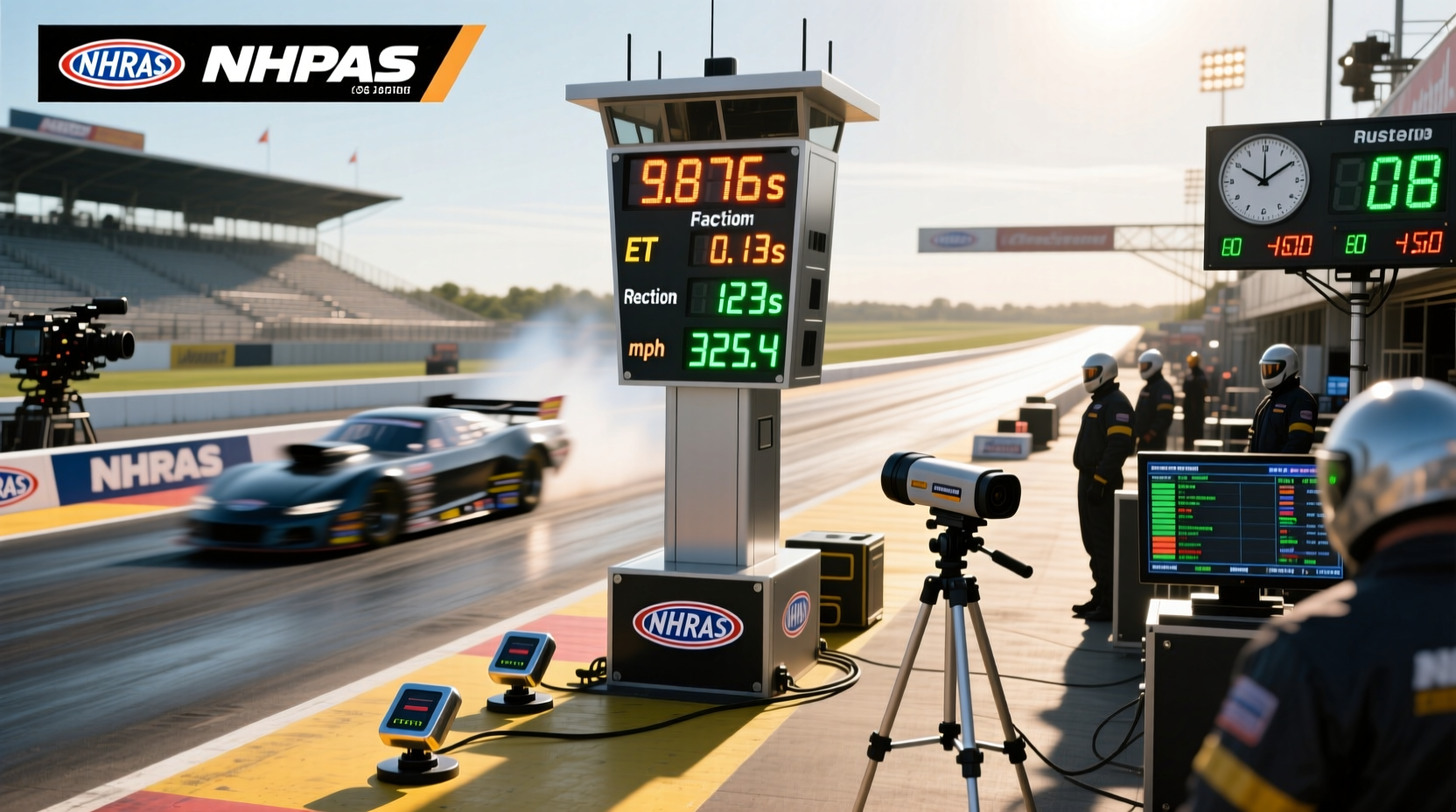
If you're evaluating a drag race timing system, prioritize precision (down to 0.001 seconds), reliability, and integration with existing track infrastructure like the Christmas Tree and scoreboards. Understanding how drag racing timing work? is essential—systems use photocells, transponders, and split-timing beams at key points (60-foot, 660-foot, finish line) to capture reaction time, elapsed time (ET), and speed. For amateur tracks, modular systems with LED displays and timeslip printers offer cost-effective accuracy; professional venues need tamper-proof, networked systems with AI-ready software for data analysis and live results distribution 12. Avoid standalone timers without redundancy or cybersecurity safeguards.
About Drag Race Timing Systems: How Do They Work?
A drag race timing system is a specialized electronic setup designed to measure vehicle performance with extreme accuracy—often to the thousandth of a second (0.001). This level of precision is critical in drag racing, where races are frequently decided by margins smaller than a blink of an eye 3.
The core function revolves around detecting when a vehicle crosses specific points on the track using infrared beams (photocells) or RFID transponders. These points include:
- 🚦 Staging beams: Confirm the car is in position before launch
- 🟢 Start line: Triggered by the Christmas Tree’s green light and vehicle movement
- 📏 Split zones: 60-foot, 330-foot, and 660-foot markers for acceleration analysis
- 🏁 Finish line: Stops the elapsed time clock
- ⚡ Speed trap: Located 66 feet before the finish to calculate MPH average
Data from these sensors flows into a central timer box, which processes reaction time (RT), elapsed time (ET), top speed (MPH), and split times. Results appear instantly on LED scoreboards and printed timeslips, enabling real-time decisions and post-run diagnostics 2.
Why Drag Race Timing Systems Are Gaining Popularity
Modern motorsports demand transparency, fairness, and instant feedback—all of which digital timing systems deliver. Beyond basic timekeeping, today's solutions support bracket racing rules, enforce red-light violations, and integrate with race management platforms for seamless event operations 4.
Enthusiasts and track operators alike benefit from:
- 📊 Real-time analytics for tuning and driver training
- 📱 Live result sharing via mobile apps and social media
- 🔐 Tamper-resistant data logs for official competitions
- 🔄 Interoperability with ticketing, registration, and scoring software
As amateur drag racing grows through grassroots events and street-legal strips, affordable yet reliable timing systems have become accessible even to small clubs and private facilities.
Types and Variants of Drag Race Timing Systems
Different racing environments require different system configurations. Here are the main types available:
1. Standalone Track Systems ⏱️
Designed for permanent or semi-permanent installation at dedicated drag strips. These include full sensor arrays, Christmas Trees, scoreboards, and central processing units.
- Pros: Highest accuracy, multi-lane support, robust weatherproofing
- Cons: High upfront cost, complex setup, requires trained personnel
- Best for: NHRA-sanctioned tracks, professional circuits
2. Portable Modular Kits 🧰
Compact, battery-powered systems that can be deployed quickly at temporary or remote locations. Often used in index racing, test-and-tune sessions, or mobile events.
- Pros: Easy transport, lower cost, quick deployment
- Cons: Limited range, less durability, may lack redundancy
- Best for: Club meets, weekend racers, educational programs
3. Vehicle-Mounted Transponder Systems 📎
Uses onboard RFID tags or GPS modules that communicate with fixed track receivers. Common in endurance-style drag racing or multi-class events where lane consistency matters.
- Pros: Accurate across multiple runs, immune to beam misalignment
- Cons: Requires per-vehicle hardware, subscription fees possible
- Best for: Series racing, national tours, large-scale events
4. Hybrid Digital-Analog Systems ✨
Combines traditional photocell beams with cloud-connected software dashboards. Offers backward compatibility while adding modern features like remote monitoring and AI-assisted diagnostics.
- Pros: Scalable, future-proof, supports firmware updates
- Cons: Dependent on network stability, potential cybersecurity risks
- Best for: Mid-tier tracks upgrading legacy equipment
Key Features and Specifications to Evaluate
When comparing systems, focus on measurable performance criteria rather than brand reputation alone.
⏱️ Timing Accuracy & Resolution
Look for systems that record to at least 0.001-second resolution. Top-tier models (e.g., Accutime II) offer 0.0001-second precision for win margin and reaction time calculations 1. Verify calibration procedures and whether the system syncs to atomic or GPS time standards.
📡 Sensor Technology
Infrared photocells remain standard, but newer systems use laser-based detection or dual-mode IR/radio frequency for improved reliability in dusty or low-light conditions. Ensure sensors are shielded against ambient light interference.
🖥️ Software & Data Management
Modern systems should include software for race scheduling, results export (CSV/JSON), API access, and integration with third-party platforms. Cloud backup and offline mode functionality improve resilience.
🔌 Connectivity & Redundancy
Evaluate wired vs. wireless communication between components. Wired systems reduce latency and hacking risk; wireless offers easier setup. Look for dual-path transmission (primary + backup) to prevent data loss during critical races.
🖨️ Output Devices
Essential outputs include:
- LED scoreboard (visible in daylight)
- Timeslip printer (thermal or impact)
- Mobile app or web dashboard
Pros and Cons: Who Should Buy What?
| System Type | Suitable For | Not Recommended For |
|---|---|---|
| Standalone Track Systems | Professional tracks, sanctioned events, high-volume operations | Budget-conscious users, occasional use |
| Portable Kits | Amateur clubs, mobile events, personal testing | Full-season commercial tracks |
| Transponder-Based | National series, multi-event scoring, consistent tracking | One-off races, budget builds |
| Hybrid Systems | Tracks transitioning from analog, tech-forward venues | Areas with poor internet connectivity |
How to Choose a Drag Race Timing System: Step-by-Step Guide
Follow this checklist to make an informed decision based on your operational needs:
- Define Your Use Case: Is this for a permanent strip, weekend events, or personal vehicle testing? Volume and frequency matter.
- Assess Infrastructure: Do you already have a Christmas Tree, pit control, or scoreboard? Choose a system that integrates seamlessly.
- Verify Precision Requirements: Bracket racing demands sub-millisecond accuracy; casual testing may tolerate 0.01-second variance.
- Check Compatibility: Ensure the system supports your track length (1/8 mile, 1/4 mile, 1000 ft) and number of lanes.
- Evaluate Support & Training: Onboarding staff requires documentation, training videos, and responsive technical support.
- Review Cybersecurity Measures: If using wireless or cloud features, confirm encryption protocols and update policies 3.
Red Flags to Avoid ❗
- No independent calibration certificate
- Lack of redundancy in sensor networks
- Proprietary software with no data export options
- Unverified claims about AI or machine learning capabilities
- Poor customer service response during pre-sale inquiries
Price & Market Insights
Pricing varies significantly based on scale and capability:
- 🛒 Entry-level portable kits: $1,500–$4,000 (basic beams, timer, printout)
- 🏭 Mid-range modular systems: $8,000–$20,000 (multi-lane, LED display, software suite)
- ⚡ Professional turnkey installations: $25,000–$75,000+ (full integration, redundancy, cloud analytics)
Prices may vary by region and supplier. Consider total cost of ownership—including maintenance, replacement parts, software licenses, and technician training. Some vendors offer leasing or rental options for short-term events.
Top-Seller & Competitive Analysis
While specific brand comparisons evolve, leading systems share common traits: proven accuracy, industry adoption, and ongoing support. The acquisition of Accutime by Trackside Systems in late 2025 signals a trend toward integrated ecosystems combining timing, entry management, and fan engagement tools 4.
| Feature | Basic Kit | Mid-Tier System | Pro Installation |
|---|---|---|---|
| Accuracy | 0.001 sec | 0.0005 sec | 0.0001 sec |
| Lanes Supported | 1 | 2–4 | 4+ |
| Display Type | Basic LCD | Outdoor LED | Large-format video board |
| Software Integration | None | Local PC app | Cloud platform + API |
| Maintenance Needs | User-calibrated | Annual service | Dedicated technician |
Customer Feedback Synthesis
Based on user reports and industry reviews, common themes emerge:
✅ Frequent Praises
- Reliable start-finish detection under varied lighting
- Clear, readable scoreboard output
- Fast timeslip generation after each run
- Intuitive interface for race officials
- Strong build quality in outdoor-rated enclosures
❌ Common Complaints
- Complex initial setup without detailed manuals
- Wireless interference causing missed triggers
- Limited software customization
- High cost of spare sensors or replacement parts
- Slow response from support teams during peak seasons
Sourcing & Supplier Tips
Purchase from authorized distributors or directly from manufacturers to ensure warranty coverage. For bulk purchases (e.g., supplying multiple tracks), inquire about volume discounts or demo units.
- 🔍 Always request a live demonstration or trial period
- 📎 Verify compatibility with existing Christmas Trees and safety systems
- 🚚 Inspect shipments immediately for damaged sensors or loose connections
- 🧼 Test all components under real-world conditions before final acceptance
Maintenance, Safety & Legal Considerations
Regular maintenance ensures long-term accuracy:
- Clean sensor lenses weekly to prevent false readings
- Calibrate annually using certified reference timers
- Inspect wiring and mounts for wear, especially after storms
- Update firmware to patch security vulnerabilities
Safety-wise, ensure all electrical components meet local codes and are installed away from traffic zones. While no universal certification exists, many tracks follow NHRA or FIA guidelines for timing integrity.
Note: Compliance requirements may vary by country or sanctioning body. Always check manufacturer specs and confirm local regulations before deployment.
Conclusion
Choosing the right drag race timing system depends on your operational scale, accuracy needs, and budget. If you run a professional track, invest in a fully integrated, redundant system with sub-millisecond precision and cybersecurity protections. For amateur or club-level use, a portable kit with solid build quality and clear readouts offers excellent value. Understanding how drag racing timing work? helps you verify system design and avoid overspending on unnecessary features. Prioritize reliability, ease of integration, and vendor support over flashy add-ons. When in doubt, test before you buy—and always validate specifications independently.
FAQs
How does a drag race timing system detect reaction time?
It measures the interval between the green light on the Christmas Tree and the moment the vehicle breaks the starting line beam. This data is recorded to the nearest 0.001 or 0.0001 second depending on system capability 2.
Can I use a consumer GPS device instead of a professional timing system?
Consumer GPS lacks the precision required for competitive drag racing, often varying by 0.05 seconds or more. Professional systems use fixed-position photocells for consistent, verifiable results.
What is the purpose of the 60-foot timer in drag racing?
The 60-foot split time indicates launch efficiency—how quickly the car gains traction off the line. It heavily influences overall elapsed time and helps drivers tune suspension and tire pressure settings 2.
Do drag race timing systems require internet access?
No, core timing functions operate offline. However, internet connectivity enables live results streaming, cloud backups, and integration with digital race management platforms.
How often should a drag race timing system be calibrated?
Annually for most systems, or after any major component replacement. Some high-end models self-calibrate using internal references, but external verification with a master clock is recommended yearly.




 浙公网安备
33010002000092号
 浙B2-20120091-4