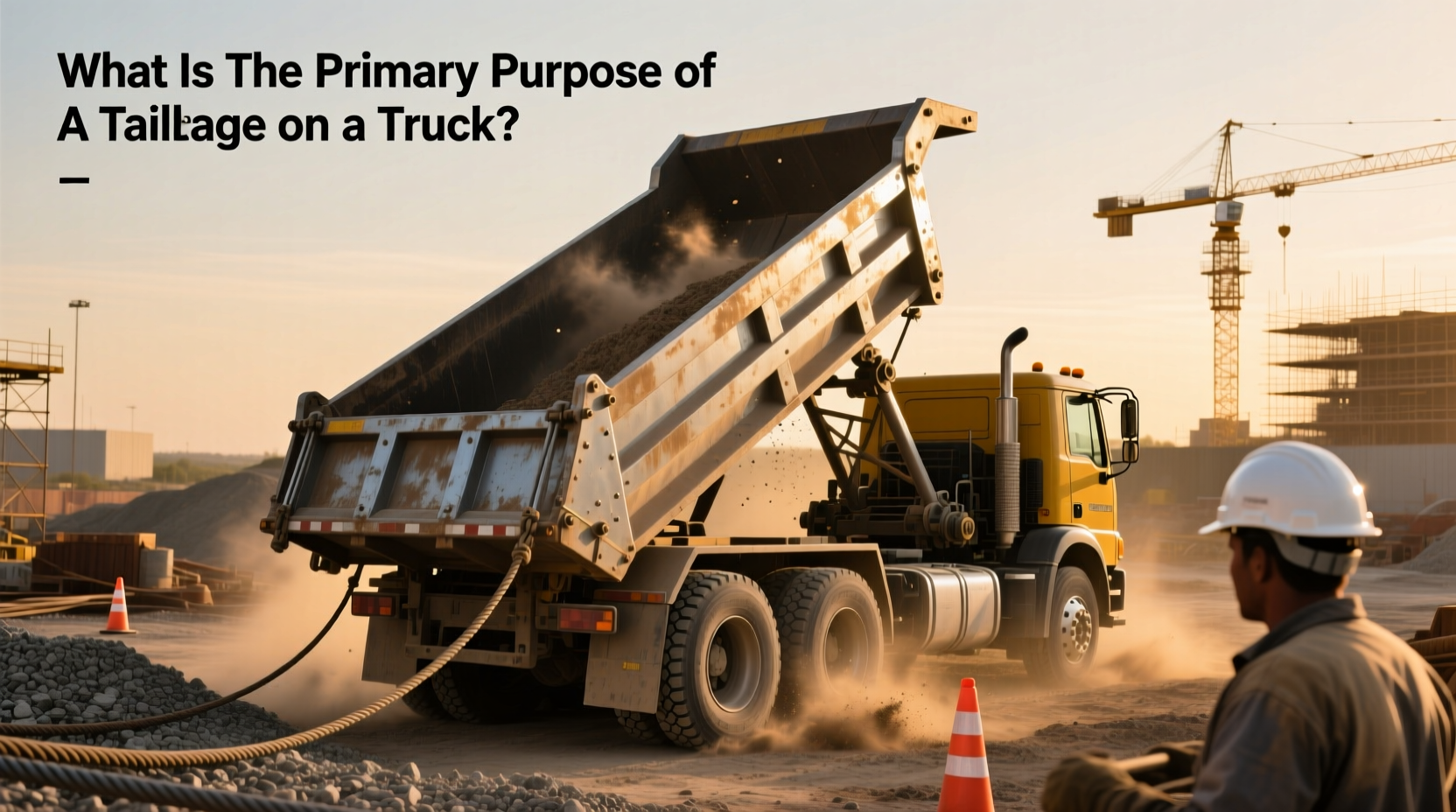
If you're asking how to choose a dump truck tailgate, start by identifying your hauling material type and payload goals. The primary purpose of a tailgate on a dump truck is to seal the rear of the bed, maximizing load capacity by preventing spillage during transport 1. Scissor-style models offer faster operation and lower maintenance than dropdown types, making them ideal for high-volume operations like mining or aggregates 2. Avoid under-specifying strength—always match the tailgate’s construction to your truck’s rated capacity and job site conditions.
About Dump Truck Tailgates: Purpose and Use Cases
The primary purpose of a tailgate on a dump truck is to close the open rear end of the dump body, creating a fully enclosed container during transit. This simple mechanical addition allows operators to fill the truck bed to its maximum volumetric and weight capacity without fear of material spilling out the back 3. Without a tailgate, loaders often leave space at the rear, reducing effective payload by up to 15–20% 4.
Tailgates are commonly used in mining, quarrying, construction, and landfill operations where loose materials like rock, soil, gravel, or demolition debris are transported over short to medium distances. They are especially valuable in environments with steep haul roads or tight turning radii, where uncontrolled spillage could create safety hazards or require frequent road maintenance.
Why Tailgates Are Gaining Popularity
Dump truck tailgates are increasingly adopted due to measurable improvements in operational efficiency and return on investment (ROI). Operators report that installing a tailgate can increase per-load capacity by 10–17%, directly boosting daily throughput 4. For a fleet of six 100-ton trucks, this translates into thousands of dollars in additional profit per day simply from fuller loads.
Another key driver is reduced maintenance cost. Without a tailgate, operators tend to overload the front of the bed to avoid rear spillage, leading to uneven weight distribution. This stresses front axles and accelerates tire wear—front tires can wear out up to 40% faster 5. A properly installed tailgate enables optimal weight balance (typically one-third front, two-thirds rear), extending component life across the vehicle.
Types and Variants of Dump Truck Tailgates
Choosing the right type depends on your dumping frequency, material characteristics, and maintenance capabilities.
🛒 Scissor-Style Tailgates
These use a parallelogram linkage system to lift vertically. They open quickly and provide unobstructed rear clearance for clean dumping.
- Pros: Fast cycle time, fewer moving parts, less prone to jamming
- Cons: Higher initial cost, requires overhead space for lifting
🔧 Dropdown Tailgates
Swing downward via hinges, similar to a tailgate on a pickup truck.
- Pros: Lower profile when open, suitable for low-clearance areas
- Cons: Slower operation, more grease points, vulnerable to impact damage during dumping
⚙️ Curved vs. Flat Tailgate Panels
Curved designs improve material flow, especially for wet, sticky, or cohesive soils. Flat panels are simpler and cheaper but may lead to residue buildup.
- Curved: Better flow, self-cleaning effect, ideal for clay or damp aggregates
- Flat: Easier fabrication, lower cost, sufficient for dry, free-flowing materials
Key Features and Specifications to Evaluate
When evaluating options for what to look for in a dump truck tailgate, consider these technical and operational factors:
- Material Thickness & Steel Grade: Look for high-strength steel (e.g., AR400 or equivalent) with minimum 3/8-inch thickness for heavy-duty applications.
- Lifting Mechanism: Hydraulic systems should have adequate flow and pressure ratings. Ensure hoses and cylinders are protected from debris.
- Chain Type: Alloy steel chains with fiber bushings reduce maintenance needs compared to standard roller chains 2.
- Sealing Method: Some models include rubber flaps or lips to prevent fine particle leakage without restricting dump flow.
- Compatibility: Confirm fitment with your truck make, model, and bed length before purchase.
Pros and Cons of Using a Tailgate
| Advantages ✅ | Limitations ❗ |
|---|---|
| Increased Payload: Up to 20% more material per trip | Added Weight: Can add 800–1,500 lbs depending on size |
| Better Weight Distribution: Reduces front axle stress | Clearance Needs: Scissor types require vertical space to operate |
| Reduced Spillage: Lowers road cleanup costs and downtime | Initial Cost: $8,000–$18,000 per unit (see pricing section) |
| Extended Tire Life: Even loading cuts front tire replacement costs by ~40% | Maintenance Complexity: Additional hydraulics and linkages need periodic inspection |
Suitable for: High-volume hauling, long haul cycles, regulated sites with strict spill control rules.
Less ideal for: Short-cycle urban jobs with limited overhead space, very small fleets where ROI is harder to justify.
How to Choose a Dump Truck Tailgate: Step-by-Step Guide
Follow this checklist to make an informed decision tailored to your operation:
- Define Your Hauling Material: Wet clay? Dry limestone? Sticky topsoil? Choose curved panels for cohesion-prone materials.
- Assess Truck Compatibility: Check bed width, tailgate hinge locations, and available hydraulic flow from your existing system.
- Select Operation Type: Prioritize speed and reliability? Go scissor-style. Limited overhead clearance? Consider dropdown.
- Evaluate Maintenance Capacity: Fewer grease points mean lower upkeep. Scissor mechanisms typically require less lubrication.
- Calculate Potential ROI: Estimate added tonnage per day and multiply by your revenue per ton. Many users recoup costs within weeks 4.
Red Flags to Avoid
- ❌ Generic “universal fit” claims without model-specific mounting kits
- ❌ Lack of documentation on hydraulic requirements
- ❌ Thin gauge steel (<1/4 inch) marketed for heavy-duty use
- ❌ No warranty or unclear service support channels
Price & Market Insights
Pricing varies widely based on design, materials, and brand. As of recent data:
- Dropdown Models: $8,000 – $12,000
- Scissor-Style: $12,000 – $18,000
- Custom/Bolt-On Solutions: $15,000+
While scissor-style units cost more upfront, their durability and faster cycle times often deliver better long-term value in high-utilization settings. However, prices may vary significantly by region and supplier. Always request detailed quotes and compare total cost of ownership—not just sticker price.
Top-Seller & Competitive Analysis
Several manufacturers dominate the North American market, including TAISUN, Multiquip, and custom fabricators serving mining sectors. While specific brand comparisons aren't provided here, focus on verified performance metrics rather than popularity alone.
| Feature | Scissor-Style | Dropdown |
|---|---|---|
| Avg. Cycle Time (Open/Close) | 10–15 seconds | 20–30 seconds |
| Moving Parts Count | Low (4–6 major joints) | Medium-High (8+ joints, pins) |
| Vulnerability to Impact Damage | Low (elevated position) | High (exposed during dump) |
| Recommended for Wet/Sticky Materials? | Yes (especially with curve) | Limited (risk of hang-up) |
Customer Feedback Synthesis
Analysis of user reviews and industry reports reveals consistent themes:
- Frequent Praise: Improved loading confidence, visible reduction in spillage, smoother weight distribution noted by drivers.
- Common Complaints: Slow operation on poorly sized hydraulic systems, difficulty sourcing replacement parts for older models, occasional misalignment after heavy impacts.
- Surprise Benefit: Enhanced loader operator efficiency—larger target area makes precise loading easier 2.
Sourcing & Supplier Tips
Purchase through authorized dealers or reputable industrial equipment suppliers. For bulk orders (3+ units), negotiate bundled shipping and installation support. If sourcing internationally (e.g., via B2B platforms), ensure clear communication on:
- Hydraulic interface specifications
- Mounting dimensions
- Warranty terms and spare parts availability
Before accepting delivery, inspect weld quality, chain tension, and actuator alignment. Conduct a functional test with the truck’s own hydraulic system if possible.
Maintenance, Safety & Legal Considerations
Regular maintenance includes checking chain tension, inspecting pivot pins for wear, and ensuring hydraulic connections are leak-free. Lubricate only as specified—over-greasing can attract abrasive dust.
Safety-wise, always depressurize the hydraulic system before performing inspections. Train operators to confirm the tailgate is fully closed and locked before travel.
Legally, while there's no universal mandate for tailgates, many jurisdictions enforce anti-spillage regulations under general road safety or environmental protection laws. Verify compliance requirements with local transportation authorities, especially if operating on public roads.
Conclusion
If you need to maximize payload, reduce spillage, and extend vehicle lifespan, investing in a well-chosen dump truck tailgate is highly justified. For most commercial operations handling bulk materials, a scissor-style tailgate made from high-strength steel offers the best balance of performance and longevity. However, if space constraints limit vertical movement, a robustly built dropdown model may be preferable. Always base your choice on material type, truck specs, and measurable ROI potential—not just initial cost.




 浙公网安备
33010002000092号
 浙B2-20120091-4