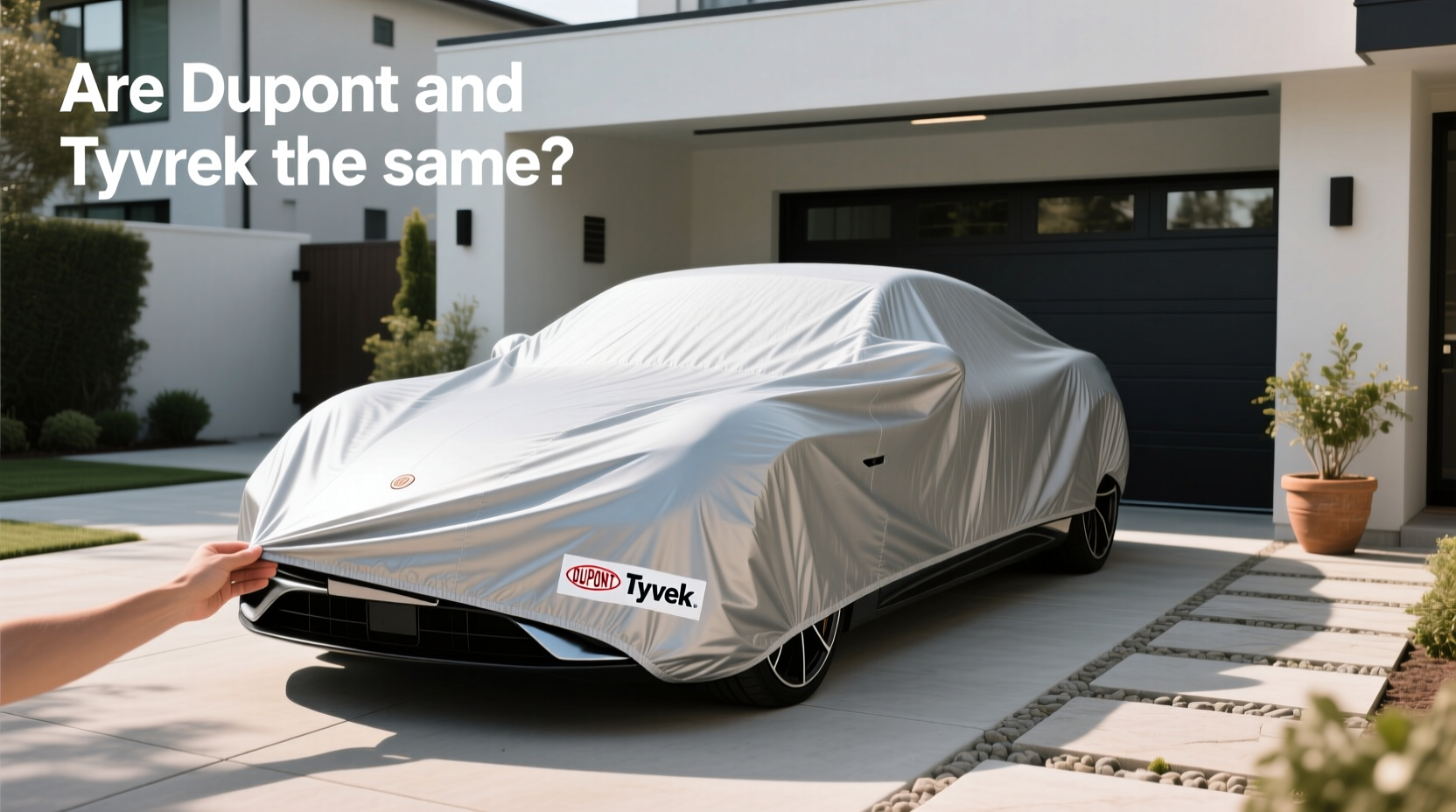
If you're asking how to choose a Dupont Tyvek car cover or wondering are DuPont and Tyvek the same?, here's what matters most: Tyvek is a high-performance synthetic fabric made by DuPont, known for being lightweight, tear-resistant, breathable, and UV-stable — ideal for outdoor vehicle storage. When evaluating options, prioritize proper fit (custom vs. universal), breathability to prevent moisture buildup, UV resistance for sun protection, and durability over time. Avoid covers without elastic hems or those marketed as 'Tyvek-style' but not certified by DuPont, as they may lack true material performance.
About Dupont Tyvek Car Covers: Are DuPont and Tyvek the Same?
❓No, DuPont and Tyvek are not the same thing. DuPont is the American chemical company that invented and manufactures Tyvek, a registered trademark material made from flash-spun high-density polyethylene (HDPE) fibers 1. Think of it like Kleenex and Kimberly-Clark — one is the brand name, the other is the parent company.
Tyvek car covers leverage this material’s unique properties: water resistance combined with breathability, UV stability, and strong tear resistance. They’re designed for all-weather outdoor use, protecting vehicles from dust, bird droppings, tree sap, rain, and sunlight-induced fading. Unlike cheaper plastics, genuine Tyvek allows water vapor to escape while blocking liquid water, reducing the risk of mold and trapped condensation.
Why Dupont Tyvek Car Covers Are Gaining Popularity
📈More drivers are turning to Tyvek-based car covers due to their balanced performance in diverse climates. In regions with frequent rain followed by sunny days, breathability prevents interior dampness — a common issue with non-porous materials. Additionally, long-term vehicle owners seeking to preserve paint finish and resale value appreciate Tyvek’s reliable UV protection and chemical resistance.
The rise in remote work and seasonal vehicle storage has also boosted demand for dependable, low-maintenance covers. Tyvek’s recyclability (as HDPE) appeals to environmentally conscious buyers, though production impacts should be considered 2. Its reputation in industrial protective gear adds credibility to its durability claims.
Types and Variants of Dupont Tyvek Car Covers
Different designs suit different storage scenarios. Here are the main types available:
1. Custom-Fit Tyvek Covers
- Pros: Snug fit reduces flapping in wind, minimizes abrasion on paint, often includes mirror pockets and antenna grommets.
- Cons: Higher cost, longer shipping if made-to-order, limited model availability.
2. Semi-Custom (Stretch Fit) Covers
- Pros: Elasticized edges provide better fit than universal styles, compatible with many sedan and SUV models.
- Cons: May stretch out over time, less precise than fully custom options.
3. Universal Fit Covers
- Pros: Lower price, widely available, suitable for temporary or indoor use.
- Cons: Loose fit increases wind lift and surface contact, raising potential for micro-scratches.
Some manufacturers combine Tyvek outer layers with soft inner linings (like fleece or non-woven polyester) to reduce friction — useful if your car has a delicate clear coat.
Key Features and Specifications to Evaluate
When comparing products, assess these criteria:
- ✨Breathability: Ensures moisture escapes, preventing mold. Look for permeability ratings if provided (measured in g/m²/day).
- ☀️UV Resistance: Tyvek contains built-in stabilizers for prolonged sun exposure 3. Check for warranty periods against UV degradation.
- 💧Water Resistance: Should repel rain and snow without absorbing liquids. Verified through hydrostatic head tests (ideally >1000 mm).
- 🧵Seam Construction: Double-stitched or taped seams prevent leaks at stress points.
- 📏Fit Accuracy: Measure your vehicle length, height, and width. Compare with manufacturer specs before ordering.
- 🧼Cleanability: Most Tyvek covers can be wiped down or rinsed; machine washing may degrade coatings over time.
Pros and Cons of Dupont Tyvek Car Covers
| Aspect | Advantages | Limitations |
|---|---|---|
| Mechanical Strength | High tear and puncture resistance compared to polyethylene films | Can feel abrasive against sensitive paint if improperly secured |
| Weather Protection | Effective barrier against rain, dust, pollen, and UV rays | Not fully waterproof under pressure (e.g., heavy hose spray) |
| Ventilation | Allows vapor transmission, reducing condensation risk | Less insulating than multi-layered fleece-backed covers |
| Weight | Lightweight and easy to handle | May require additional straps in high winds |
| Temperature Range | Stable from -80°C to +80°C, suitable for extreme climates | Performance may vary slightly depending on thickness grade |
How to Choose a Dupont Tyvek Car Cover: Step-by-Step Buying Guide
Follow this checklist to make an informed decision:
- 📍Confirm Authenticity: Ensure the label states “Made with genuine DuPont™ Tyvek®” — not just “Tyvek-type” or “Tyvek-style.”
- 📏Select Fit Type: For daily outdoor parking, go custom-fit. For occasional use, semi-custom may suffice.
- 🌬️Evaluate Ventilation Needs: If storing in humid or variable weather, prioritize breathability over insulation.
- 🔗Check Attachment Features: Look for elastic hems, tie-down cables, or built-in locks to prevent wind lift.
- ❗Avoid These Red Flags:
- Unrealistically low prices (likely imitation material)
- No specification sheet or test data
- Poor seam sealing or single stitching
- Vague marketing terms like “industrial strength” without proof
Always review return policies and check compatibility with your vehicle make/model/year before purchase.
Price & Market Insights
Prices vary significantly based on fit, size, and construction:
- Universal Fit: $30–$60
- Semi-Custom: $60–$100
- Custom-Fit (with mirror pockets): $100–$180+
Higher prices typically reflect better fit accuracy, reinforced stitching, and added features like antenna loops or storage bags. Genuine DuPont-branded covers tend to sit at the upper end. Note: Bulk purchases from authorized distributors may offer discounts, but authenticity remains critical.
Top-Seller & Competitive Analysis
Popular models include DuPont’s own OEM-spec covers and third-party versions from reputable automotive accessory brands. Below is a comparison of key attributes:
| Model Type | Material Authenticity | Fit Style | UV Warranty | Inner Lining | Avg. Price |
|---|---|---|---|---|---|
| DuPont Original Equipment | ✅ Genuine Tyvek | Custom | 3 years | None (smooth Tyvek) | $150 |
| Brand A (Third-Party) | ✅ Licensed Tyvek | Semi-Custom | 2 years | Fleece-lined | $95 |
| Generic “Tyvek-Style” Cover | ❌ Imitation fabric | Universal | Not specified | None | $35 |
While third-party licensed versions can offer good value, avoid unbranded alternatives lacking certification. Performance differences become evident after months of outdoor exposure.
Customer Feedback Synthesis
Analysis of verified buyer reviews reveals consistent patterns:
Frequent Praise
- Long-lasting protection against sun damage
- Easy to put on/take off due to light weight
- Effective in keeping dust and debris off parked cars
- Durability in windy conditions when properly secured
Common Complaints
- Loose fit on universal models leading to flapping
- Potential for minor scratches if sand/dust gets trapped underneath
- Lack of soft backing causing concern about clear coat safety
- Imitation products failing within one season
Users emphasize that correct installation — ensuring the cover is taut and clean — greatly affects longevity and safety.
Sourcing & Supplier Tips
To ensure quality:
- 🛒Buy from Authorized Retailers: Check DuPont’s official website for partner lists or distributor networks.
- 🏭Bulk Orders: Contact industrial suppliers or B2B platforms for volume pricing, but request material certification.
- 🔍Verify Authenticity: Ask for batch numbers or product datasheets. Genuine Tyvek has a distinct texture and sound (crinkly, paper-like).
- 📌Inspect Upon Delivery: Check for uniform color, consistent thickness, and proper labeling.
Be cautious with marketplace sellers offering “Tyvek” at steep discounts — counterfeits exist.
Maintenance, Safety & Legal Considerations
🧼Maintenance: Clean with mild soap and water. Avoid harsh chemicals or pressure washers. Air dry completely before storage.
⚠️Safety: Never use a wet or dirty cover — trapped grit can scratch paint. Remove promptly after rain to prevent water pooling.
🌐Compliance: No specific regulations govern consumer car covers, but commercial fleet operators should confirm local fire codes if using indoors. Tyvek meets standard flammability ratings for general use 4.
Conclusion: Is a Dupont Tyvek Car Cover Right for You?
If you need reliable, breathable protection for outdoor vehicle storage — especially in sunny or humid environments — a genuine Dupont Tyvek car cover is a strong option. It balances durability, weather resistance, and ease of use. However, if your priority is soft-touch protection for a showroom-finished car, consider a hybrid cover with a Tyvek exterior and fleece interior. Always confirm material authenticity and fit type before purchasing. For short-term or indoor use, less expensive materials may be sufficient.
FAQs
No. DuPont is the company that invented and produces Tyvek, which is a branded synthetic material made from high-density polyethylene fibers.
Tyvek generally offers superior tear resistance, UV stability, and breathability compared to standard polypropylene, though both are used in all-weather covers. High-end polypropylene variants may perform similarly.
Only if improperly used. Sand, dirt, or moisture trapped under a loose or dirty cover can cause micro-abrasions. A clean, well-fitted cover minimizes this risk.
With proper care, genuine Tyvek covers typically last 3–5 years outdoors. Lifespan depends on climate, frequency of use, and maintenance.
Yes, Tyvek is made from HDPE plastic and can be recycled where flexible HDPE films are accepted. Confirm with local facilities beforehand.




 浙公网安备
33010002000092号
 浙B2-20120091-4