Short introduction
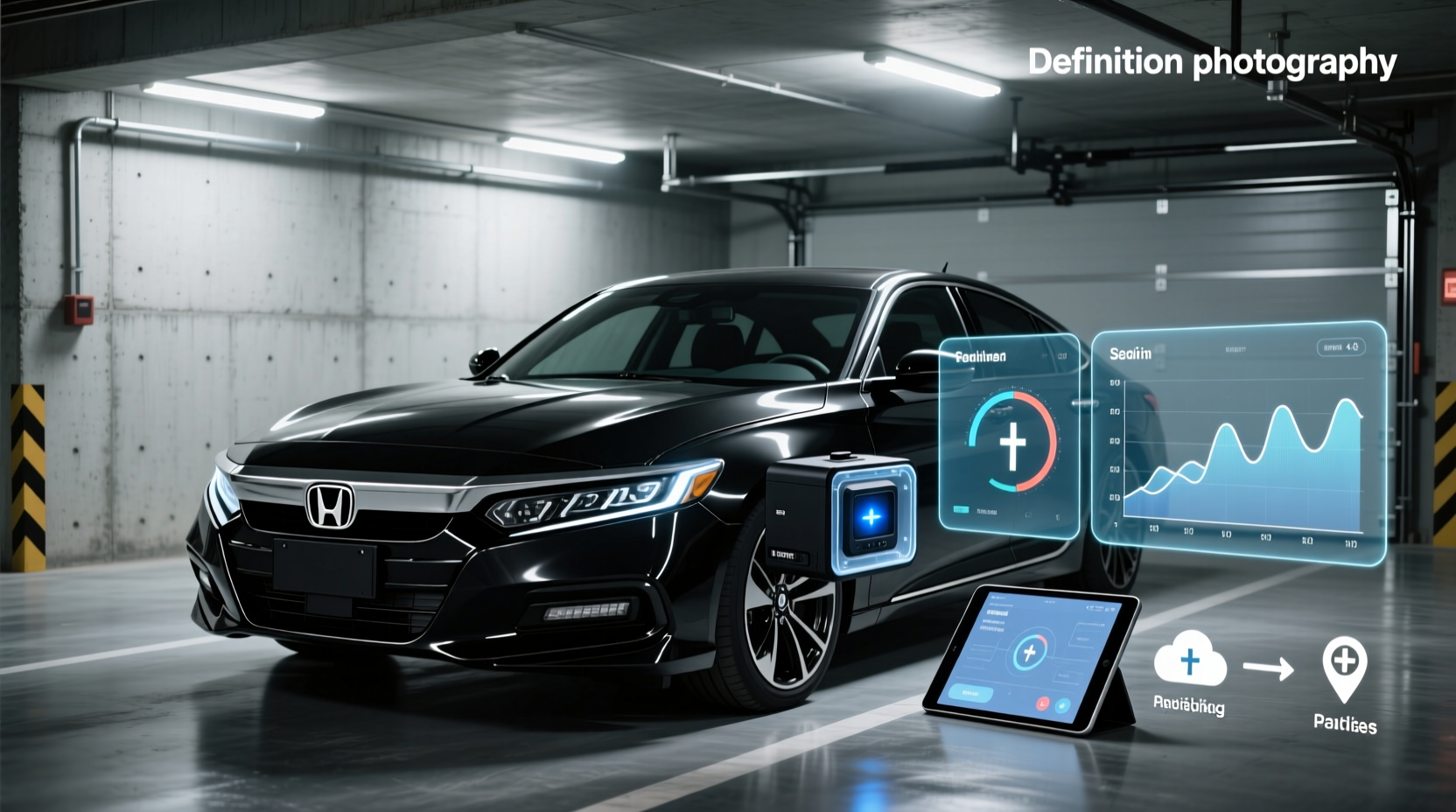
If you're asking how to choose black box honda accord,What does a black box on a car do?, the answer starts with understanding that this device—officially called an Event Data Recorder (EDR)—is not something you buy separately like a dashcam or GPS tracker. It's a factory-installed component typically embedded in your Honda Accord’s airbag control module. So, rather than choosing a model to purchase, your real decision lies in knowing whether your vehicle has one, what data it records, how to access it after a crash, and how to protect your privacy rights. Key factors include model year (most Accords from 2003 onward have EDRs), data retrieval capability, and awareness of legal permissions. Avoid third-party devices claiming to be "black boxes" unless they clearly define their recording scope and compliance.
About black box honda accord,What does a black box on a car do?
⚙️ A "black box" in a Honda Accord refers to its Event Data Recorder (EDR), a small electronic module designed to capture critical vehicle and driver behavior information during a crash event 1. Unlike aftermarket gadgets, this is a built-in system required by federal regulations for most vehicles manufactured after September 1, 2012.
The primary function of the EDR is to record data in the moments before, during, and immediately after a collision. For example, if your 2003 Honda Accord EX was involved in a moderate front-impact crash, the EDR would log parameters such as vehicle speed, brake application, throttle position, seatbelt status, and airbag deployment timing 2.
This data serves a forensic purpose—helping accident investigators reconstruct events accurately. It does not continuously track location, record audio, or monitor driving habits like some telematics systems might. Its role is strictly limited to safety-critical incidents.
Why black box honda accord,What does a black box on a car do? is gaining popularity
📈 Public interest in automotive black boxes has grown due to increased transparency about data collection and rising reliance on objective evidence in insurance claims and legal disputes. Drivers want to know: Can EDR data prove I wasn’t at fault? Or conversely, could it be used against them?
In personal injury cases, EDR data has become pivotal. Law enforcement and insurers often request downloads following serious crashes. As more people learn that their Honda Accord holds verifiable driving data, questions about ownership, access, and accuracy have surged 3.
Additionally, automakers use aggregated EDR data to improve passive safety systems. This feedback loop between real-world crash performance and engineering helps refine future models’ structural integrity and airbag algorithms.
Types and variants
🧰 While there are no consumer-purchasable “types” of OEM-installed EDRs, different Honda Accord model years vary in data capacity and trigger sensitivity:
- Pre-2012 Models (e.g., 2003–2011 Accord): These early EDRs recorded fewer parameters—typically up to 5–8 data points—and were less standardized. They may only activate upon airbag deployment.
- Post-2012 Models (2013+ Accord): Compliant with U.S. Federal Motor Vehicle Safety Standard No. 563, these units record at least 15 predefined data elements, including delta-v (change in velocity), brake status, and seatbelt usage 4. Trigger thresholds are also more consistent (e.g., 5 mph delta-v over 150 ms).
- Aftermarket Telematics Devices: Not true EDRs, but sometimes confused with them. Products like insurance dongles or fleet trackers may claim to offer “black box” functionality. These differ significantly—they often collect GPS location, driving duration, and harsh braking events for usage-based insurance programs.
Key distinction: True EDRs are passive, crash-triggered, and focused on safety forensics; telematics devices are active, continuous monitors used for behavioral analytics.
Key features and specifications to evaluate
🔍 When assessing what to look for in black box honda accord,What does a black box on a car do?, focus on these measurable aspects:
- Data Parameters Recorded: Check your owner’s manual or NHTSA documentation to confirm which metrics your model captures. At minimum, expect speed, brake use, throttle, airbags, and seatbelts.
- Trigger Threshold: Does it record minor fender-benders? Most require a minimum change in velocity (delta-v) of ~5 mph within a short timeframe.
- Memory Locking: After airbag deployment, the data should be permanently locked and non-erasable—a crucial feature for evidentiary integrity.
- Storage Duration: Pre-crash data is usually stored for 5–20 seconds. Some advanced systems retain multiple event cycles if no deployment occurs.
- Compatibility with Diagnostic Tools: The EDR must be readable using industry-standard tools like Bosch CDR (Crash Data Retrieval) software and compatible hardware interfaces.
Pros and cons
✅ Pros: Objective crash data improves accident investigation accuracy; supports fair insurance settlements; aids vehicle safety research; protects drivers falsely accused of negligence.
❗ Cons: Potential misuse in court without proper chain-of-custody verification; privacy concerns if accessed without consent; limited user control over data extraction; requires specialized equipment to read.
Suitable for: Accident victims seeking factual support, legal professionals, safety researchers.
Not suitable for: Real-time monitoring, theft prevention, routine driving feedback.
How to choose black box honda accord,What does a black box on a car do?
📋 Since you can't buy a new EDR for your Honda Accord, this guide focuses on making informed decisions around existing systems:
- Determine if Your Accord Has an EDR: Consult your owner’s manual or visit NHTSA’s database to verify EDR presence based on VIN or model year.
- Review What Data Is Collected: Look up your specific model in NHTSA FMVSS 563 compliance reports to see recorded parameters.
- Understand Access Rights: Under the Driver Privacy Act of 2015, you own the data. No one can retrieve it without your consent, a court order, or emergency medical need 5.
- Identify Retrieval Options: If in an accident, contact a certified collision repair center or forensic expert equipped with CDR tools.
- Avoid Misleading Aftermarket Claims: Don’t confuse insurance telematics devices with true EDRs. Read product descriptions carefully.
Red flags to avoid:
- Companies selling “upgrade black boxes” that claim to replace OEM EDRs—these are likely incompatible or fraudulent.
- Unverified services offering EDR data download without proper credentials or equipment.
- Assuming all data is automatically saved—non-deployment crashes may not trigger recording.
Price & market insights
💰 There is no direct consumer cost for the OEM-installed EDR—it comes standard in eligible Honda Accords. However, accessing the data post-crash involves third-party services.
The tools needed for retrieval (e.g., Bosch CDR kit) range from $6,000 to $25,000 6, so individuals typically pay service fees instead. Expect costs between $200–$500 for professional data download and analysis, depending on location and provider.
Insurance companies or law enforcement usually cover retrieval when investigating major claims. Independent experts charge higher rates, but ensure impartiality.
Top-seller & competitive analysis
📊 Since OEM EDRs aren’t sold directly, comparison centers on diagnostic accessibility across Accord generations:
| Model Year | EDR Present | Key Data Points | Trigger Sensitivity | Notes |
|---|---|---|---|---|
| 2003–2007 | Yes (select trims) | Speed, RPM, throttle, brake, seatbelt | Airbag deployment only | Limited pre-crash buffer (~5 sec) |
| 2008–2012 | Yes | + Delta-v, lateral acceleration | Moderate impact threshold | Better integration with ACM |
| 2013+ | Standard | All 15+ FMVSS 563 parameters | 5 mph delta-v over 150ms | Locked memory post-deployment |
Customer feedback synthesis
👥 Based on public forums and legal case discussions, common sentiments include:
- Frequent Praise: “The EDR proved I was under the speed limit”—users appreciate objective validation in disputes.
- Common Complaints: “No one told me the data existed until after the crash”—lack of awareness leads to missed opportunities.
- Technical Frustrations: Difficulty finding qualified technicians to extract data, especially in rural areas.
- Privacy Concerns: Worry about insurers or police accessing data without permission, despite legal protections.
Sourcing & supplier tips
🌐 You cannot source a replacement EDR as a standalone part unless repairing a damaged airbag module. In that case:
- Purchase OEM modules from authorized Honda dealers or verified rebuilders.
- Ensure the replacement unit matches your VIN-specific calibration.
- After installation, have the system scanned with Honda HDS (Honda Diagnostic System) to confirm EDR functionality.
For data retrieval, work only with ASE-certified shops or forensic engineers trained in CDR procedures.
Maintenance, safety & legal considerations
⚖️ The EDR requires no maintenance—it operates autonomously. However:
- Do not attempt to disconnect or tamper with the airbag control module—it may disable airbags and create safety risks.
- After a crash, preserve the ACM even if the car is totaled. Data can still be retrieved from salvaged modules.
- Legally, always verify who requests access to your EDR data. You have the right to deny consent unless compelled by law.
- Check local regulations—while federal law governs data ownership, state laws may impose additional rules on admissibility in court.
Conclusion
If you’re trying to understand what to look for in black box honda accord,What does a black box on a car do?, remember: it’s not a product to shop for, but a feature to understand. For accurate post-crash analysis, ensure your Accord’s EDR is functional, know what data it captures, and protect your right to control access. If you need crash evidence for insurance or legal purposes, act quickly to retrieve data through certified professionals. Avoid confusion with telematics devices, and always verify technical details through official sources like NHTSA or Honda documentation.
FAQs
- Can I disable the black box in my Honda Accord? No, the EDR cannot be disabled by owners. It activates automatically during qualifying events and is integrated into essential safety systems.
- Who owns the data recorded by my car’s black box? Under U.S. federal law, the vehicle owner or lessee owns the data. Access by others requires consent, a warrant, or specific legal exceptions.
- How long is EDR data stored after a crash? Once airbags deploy, the data is permanently locked and remains in memory indefinitely, even if the battery is disconnected.
- Can I view my EDR data myself? Not directly. Reading the data requires specialized hardware and software. Certified technicians or forensic experts must perform the download.
- Does every Honda Accord have a black box? Most models from 2003 onward include an EDR, but full standardization began in 2013. Verify via your owner’s manual or NHTSA resources.




 浙公网安备
33010002000092号
 浙B2-20120091-4