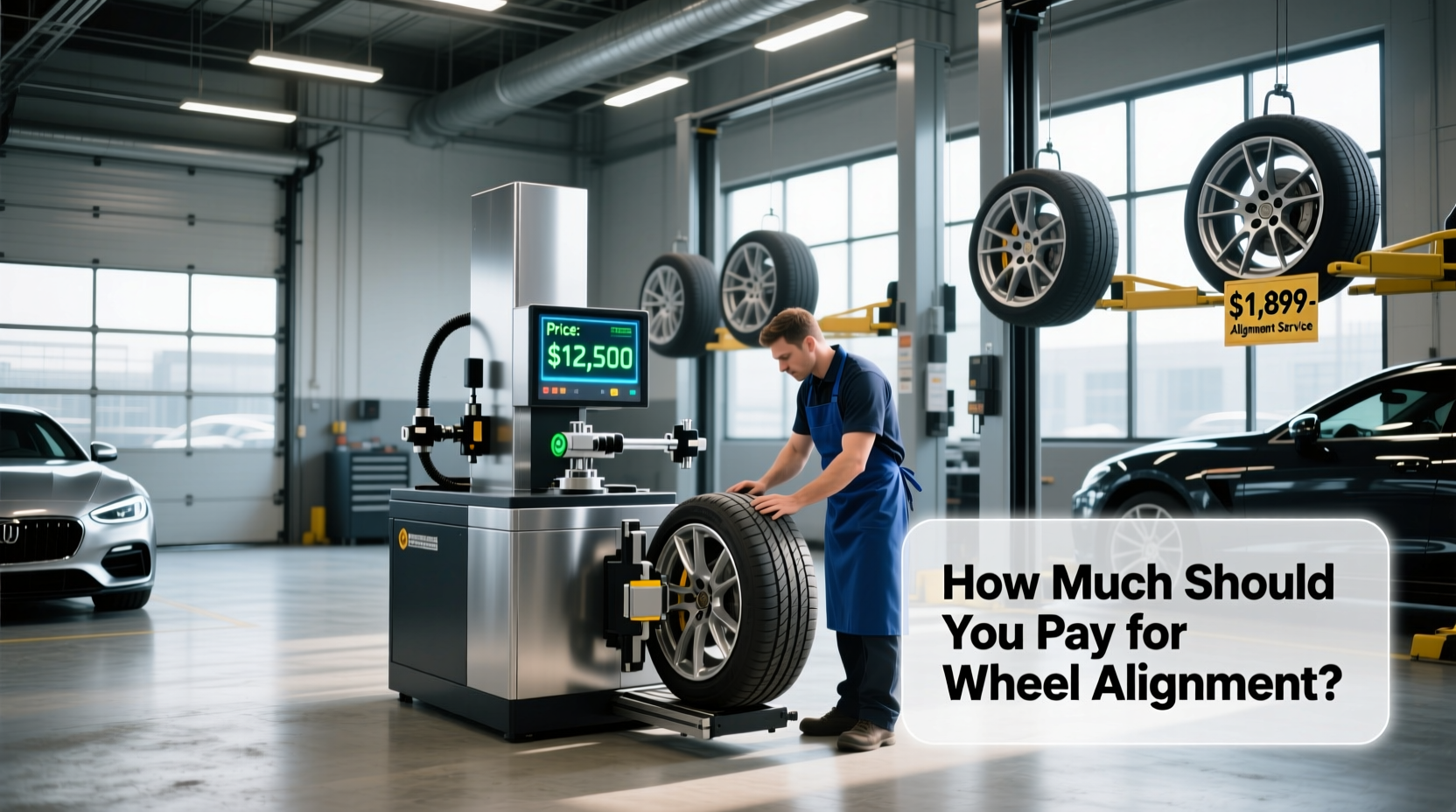
If you're evaluating the price of wheel alignment machine Hunter systems, expect to invest between $25,000 and over $40,000 for new models—this range reflects differences in imaging technology, software integration, and service support. When deciding how much should you pay for wheel alignment equipment, focus not just on upfront cost but on long-term return through accuracy, durability, and compatibility with modern vehicle types. For shops serving high-end or fleet vehicles, investing in advanced 3D imaging systems like the V4400 Commander or V2380 can justify higher prices due to faster calibration cycles and OEM-level diagnostics. Avoid under-budgeting for installation, training, and calibration accessories, which can add 10–15% to total costs 1.
About Price of Wheel Alignment Machine Hunter, How Much Should You Pay for Wheel Alignment?
The term "price of wheel alignment machine Hunter" refers to the cost of diagnostic systems manufactured by Hunter Engineering, a leading brand in professional automotive alignment solutions. These machines are used in repair shops, dealerships, and tire centers to measure and adjust wheel angles—camber, caster, toe, and thrust—to manufacturer specifications. Understanding how much should you pay for wheel alignment hardware involves assessing both initial purchase price and operational value.
Common use cases include routine passenger vehicle maintenance, commercial fleet servicing, performance tuning, and collision repair. Hunter systems integrate cameras, sensors, and software to provide real-time feedback during adjustments. They are often paired with turn plates, slip plates, and clamps. The investment is typically made by medium-to-large auto service businesses where precision, speed, and reporting capabilities impact customer trust and throughput.
Why Price of Wheel Alignment Machine Hunter, How Much Should You Pay for Wheel Alignment? Is Gaining Popularity
As vehicles adopt more complex suspension designs—including adaptive damping, air ride, and electronic steering—manual alignment methods are no longer sufficient. This shift has increased demand for advanced systems like those from Hunter. Shops that want to maintain certification with OEM networks (e.g., BMW, Mercedes-Benz) must use approved alignment technologies, many of which align with Hunter’s platform.
Additionally, digital vehicle health reports and automated calibration processes improve transparency for customers. A shop using a Hunter system can generate before-and-after alignment printouts, demonstrating value and justifying service costs. With rising tire prices and fuel efficiency concerns, consumers are more receptive to preventive services when backed by data—making accurate alignment tools essential for customer retention.
Types and Variants
Hunter offers several wheel alignment configurations, each suited to different shop sizes and service focuses:
- ⚙️2D Laser Systems (Legacy): Older models relying on laser targets and mechanical arms. Rarely sold new today. Pros: Lower initial cost. Cons: Slower setup, less accurate, incompatible with modern ADAS calibrations.
- ✨3D Imaging Systems (Most Common): Use digital cameras and reflective targets. Examples: V2280, V2380. Pros: Fast measurements, high accuracy, easy recalibration. Cons: Sensitive to lighting and obstructions.
- ⚡Commander Series (High-End): Top-tier models like V4400 with larger displays, enhanced software, and integrated ADAS calibration workflows. Pros: Supports advanced driver assistance systems setup, cloud connectivity, multi-user interface. Cons: Highest price point, requires trained technicians.
- 🌐WLAN & Cloud-Connected Models: Feature wireless communication between sensors and console. Enable remote updates and diagnostics. Pros: Reduced cable clutter, easier mobility within bay. Cons: Potential interference in busy RF environments.
Key Features and Specifications to Evaluate
When analyzing what to look for in price of wheel alignment machine Hunter, consider these technical and operational factors:
- 🔍Measurement Technology: 3D imaging is standard. Ensure sub-0.01° repeatability for consistent results.
- 🖥️Display Size & Interface: Larger screens (24”+) reduce technician strain. Touchscreen functionality improves workflow.
- 🚗Vehicle Coverage Database: Must be regularly updated to include new makes, models, and lift kits.
- 🛠️ADAS Integration: Critical if offering camera or radar calibration. Look for guided procedures and pre/post-checklists.
- 📦Accessories Included: Clamps, turn plates, and mounting heads vary by package. Verify compatibility with your common vehicle types.
- 🔄Software Updates: Frequent database refreshes ensure ongoing accuracy. Check update frequency and cost model.
- 📊Reporting Capabilities: Ability to export PDFs or print detailed alignment reports enhances customer communication.
Pros and Cons
| Aspect | Advantages | Limitations |
|---|---|---|
| Accuracy & Reliability | Industry-leading precision; trusted by OEMs | Requires proper setup and environment control |
| Service Network | Nationwide support and certified technicians available | Service calls may incur fees depending on warranty status |
| Resale Value | Holding strong resale value compared to lesser-known brands | Initial depreciation still significant in first year |
| Training Requirements | Comprehensive training resources provided | Learning curve for older technicians |
| Total Cost of Ownership | Lower downtime and rework due to reliability | Higher upfront cost than generic alternatives |
Suitable for: Dealerships, franchise shops, high-volume repair centers, and specialty performance garages.
Less ideal for: Small independent mechanics with low alignment volume or limited floor space.
How to Choose Price of Wheel Alignment Machine Hunter, How Much Should You Pay for Wheel Alignment?
Follow this step-by-step guide when making your decision:
- 📌Assess Your Service Volume: If performing fewer than 10 alignments per week, consider leasing or buying used. High-volume shops benefit from premium models.
- 📋Determine Required Features: Do you service luxury/SUVs? Then ADAS support is non-negotiable. Are you focused on economy cars? A mid-tier 3D system may suffice.
- 🧰Verify Compatibility: Confirm that the machine works with your existing lifts, clamps, and shop layout.
- 🤝Request On-Site Demo: Test usability, speed, and clarity of reports before committing.
- 💰Get Full Quote Including Installation: Ask about delivery, setup, training, and calibration costs—these are often quoted separately.
- ❗Avoid These Pitfalls:
- Buying without checking software update policies
- Ignoring power or lighting requirements in your bay
- Overlooking warranty terms and response times for repairs
- Choosing based solely on lowest price without considering long-term support
Price & Market Insights
The price of wheel alignment machine Hunter varies significantly by model and configuration:
| Model | Type | Price Range | Best For |
|---|---|---|---|
| V2280 Imaging System | Mid-tier 3D | $30,586 | General repair shops |
| 1-WA623 with 24" Display | Entry-level | $25,466 | Budget-conscious operators |
| V2380 Imaging System | Advanced 3D | $36,997 | Fleet & performance shops |
| V4400 Commander | Premium with ADAS | $41,667 | Dealerships, luxury service |
| VAS6292WM | OEM-integrated | $39,400 | VW/Audi specialists |
Used units can reduce costs by 30–50%, but verify remaining warranty and sensor condition. Prices may vary by region and distributor. Always request a formal quote to confirm final pricing 1. Consider financing options—many distributors offer lease-to-own plans.
Top-seller & Competitive Analysis
Hunter competes with brands like Beissbarth and Bosch. While Beissbarth offers comparable pricing (e.g., KDS II at $31,688), Hunter maintains stronger brand recognition and broader dealer network access.
| Model | Brand | Price | Key Differentiator |
|---|---|---|---|
| V2380 | Hunter | $36,997 | Excellent ADAS support, intuitive UI |
| Q.Lign T.41 | Beissbarth | $35,214 | Included Q.Grip adapters for damaged rims |
| KDS 3D WLAN | Beissbarth | $27,721 | Wireless convenience, lower entry cost |
Hunter's advantage lies in its deep integration with U.S. service standards and widespread technician familiarity.
Customer Feedback Synthesis
Based on user reviews and industry forums:
- ✅Frequent Praise: Accuracy consistency, clear reporting, responsive customer service, reliable software updates.
- ❗Common Complaints: High initial cost, occasional software glitches after updates, need for recalibration after minor impacts, steep learning curve for non-digital-native staff.
- ⭐Unexpected Benefits: Increased customer upsell opportunities due to visual reports, improved shop credibility, reduced warranty comebacks.
Sourcing & Supplier Tips
Purchase through authorized distributors to ensure full warranty coverage and access to training. Major suppliers include Snap-on Industrial, Viking Equipment, and dealership-specific vendors. For bulk purchases (e.g., franchise rollouts), negotiate bundled packages including extended warranties and on-site training.
When buying used:
- Inspect all camera housings for cracks
- Test sensor responsiveness
- Confirm software version and update eligibility
- Check for prior accident damage or misalignment history
Maintenance, Safety & Legal Considerations
Regular maintenance includes cleaning lenses, checking clamp integrity, and verifying levelness of turn plates. Recalibrate annually or after any impact to the rig. Technicians should follow OSHA-compliant lifting practices when positioning vehicles.
No federal certification is required to operate alignment machines in the U.S., but some states regulate emissions-related settings. Always follow manufacturer guidelines and vehicle OEM procedures to avoid liability. Data privacy laws may apply if storing customer vehicle reports—ensure compliance with local regulations.
Conclusion
If you run a high-volume or specialty shop and need precise, reportable alignments with ADAS support, investing in a top-tier Hunter model like the V4400 or V2380 is justified despite the higher price of wheel alignment machine Hunter. For smaller operations, an entry-level system such as the 1-WA623 offers solid performance at a lower cost. Ultimately, determining how much should you pay for wheel alignment depends on your business model, service mix, and growth goals. Prioritize total value—not just sticker price—when selecting your system.
FAQs
How much does a Hunter wheel alignment machine cost?
A new Hunter alignment system typically ranges from $25,000 to over $41,000, depending on model and features. Used units may cost 30–50% less, but verify condition and warranty status.
Do I need ADAS calibration capability?
Yes, if you service late-model vehicles with driver assistance features (e.g., lane keep, adaptive cruise). Without it, you cannot properly reset systems after suspension work.
Can I install a Hunter alignment machine myself?
Installation is possible with technical skill, but factory-certified setup ensures accuracy and preserves warranty. Most buyers opt for professional installation.
How often does the system need calibration?
Annual calibration is recommended. More frequent checks may be needed in high-use or unstable environments (e.g., unheated bays).
Are software updates included?
Basic updates may be included initially, but long-term subscriptions often apply. Confirm update costs and frequency with your supplier before purchase.




 浙公网安备
33010002000092号
 浙B2-20120091-4