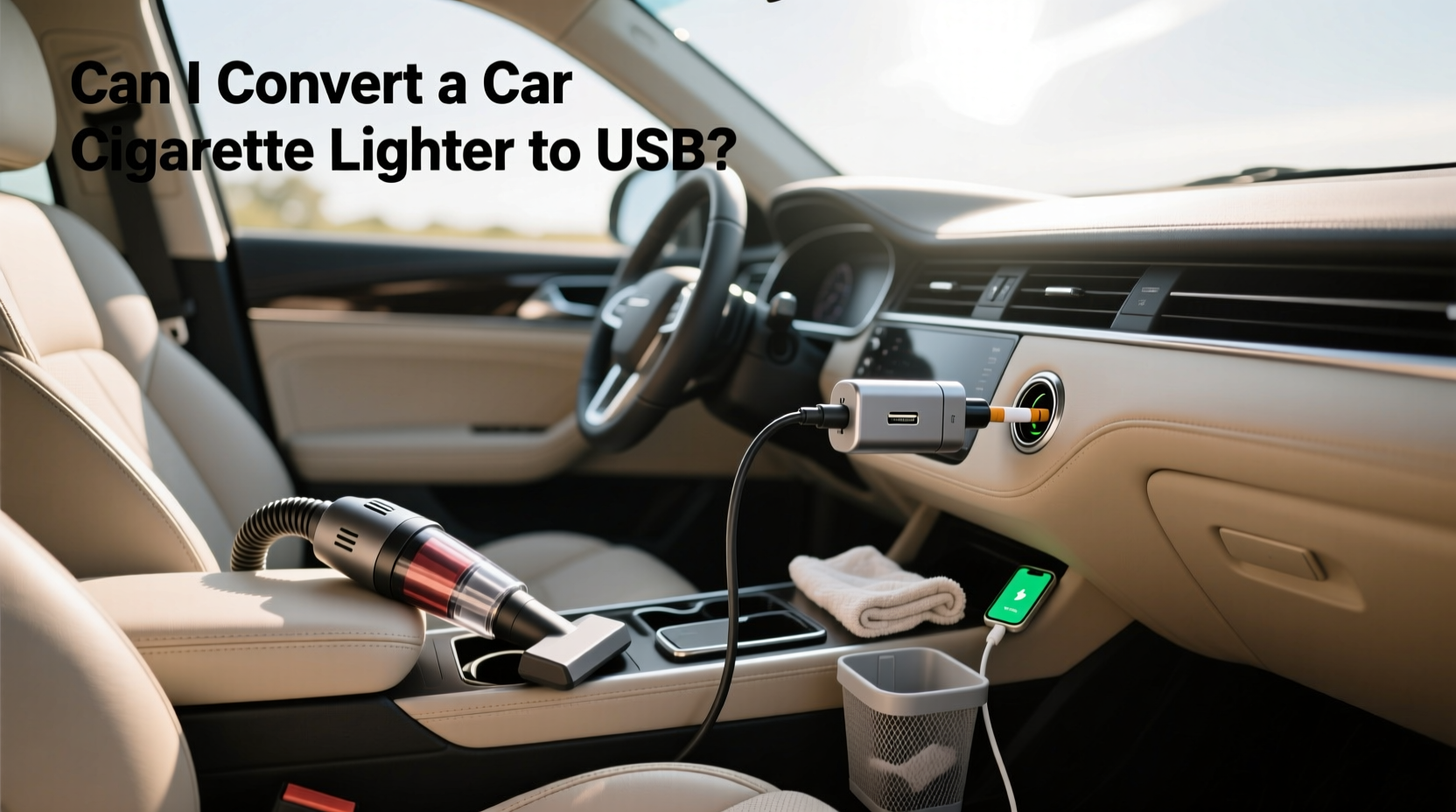
Short introduction
If you're asking how to choose a power adapter for car vacuum cleaner,Can I convert a car cigarette lighter to USB?, here's the quick answer: standard USB ports cannot power most 12V car vacuums because they lack sufficient voltage and wattage ✅. A typical USB cigarette lighter adapter outputs only 5V/15W, while car vacuums need at least 12V and 60W ⚡. Instead of using a USB-to-12V inverter (which may underperform), opt for a dedicated 12V power adapter plugged directly into the cigarette lighter socket or switch to a battery-powered handheld vacuum that charges via USB 🧼. Avoid mismatched voltage adapters—they risk damaging devices or blowing fuses ❗.
About power adapter for car vacuum cleaner,Can I convert a car cigarette lighter to USB?
A power adapter for a car vacuum cleaner typically refers to a 12V DC plug that connects to the vehicle’s cigarette lighter socket, delivering enough current (usually over 5A) to run motorized cleaning tools. These are designed specifically for high-draw appliances like portable vacuums that require sustained power output 🔌.
In contrast, converting a car cigarette lighter to USB usually means using a 12V-to-5V step-down adapter that allows charging smartphones, tablets, or GPS units from the same socket 📱. This conversion is common in older vehicles where modern USB ports aren’t available. However, this does not enable powering higher-voltage devices such as most car vacuums—it only changes the output format for low-power electronics.
So while both involve the cigarette lighter port, their purposes differ significantly: one powers high-wattage tools, the other enables digital device charging.
Why power adapter for car vacuum cleaner,Can I convert a car cigarette lighter to USB? is gaining popularity
As newer cars phase out traditional cigarette lighter sockets in favor of built-in USB-A or USB-C ports, drivers face compatibility issues with older 12V accessories like car vacuums 🚗. This shift has increased interest in solutions that either adapt existing systems or replace them entirely.
At the same time, consumer demand for on-the-go convenience drives adoption of compact, multi-functional adapters. People want to charge phones while also running small cleaning tools during road trips or after transporting pets. The question “Can I convert a car cigarette lighter to USB?” reflects efforts to modernize vehicle interiors without sacrificing utility ✨.
Additionally, rising ownership of battery-powered gadgets makes USB-powered handheld vacuums more appealing, especially for urban commuters or parents needing quick cleanup options without relying on engine runtime.
Types and variants
🛒 1. 12V Cigarette Lighter Power Adapters (for Vacuums)
- Pros: Direct power delivery; compatible with most 12V car vacuums; reliable performance
- Cons: Only works if your car has an active 12V socket; limited by fuse rating (typically 10–20A)
🔧 2. USB Cigarette Lighter Adapters (12V to 5V)
- Pros: Enables phone/tablet charging; widely available; plug-and-play design
- Cons: Outputs only 5V; insufficient for vacuums; may overheat under prolonged use
🏭 3. USB-to-12V Inverters (Reverse Conversion)
- Pros: Allows use of 12V vacuums in cars with only USB ports; useful stopgap solution
- Cons: Low efficiency due to double conversion (DC→DC); often capped at 60W; may shut down under load
🔋 4. Battery-Powered Handheld Vacuums with USB Charging
- Pros: Cordless freedom; usable anywhere; charges via any USB source
- Cons: Limited runtime; lower suction than 12V models; requires pre-charging
🧰 5. Hardwired USB Port Replacements (DIY)
- Pros: Permanent upgrade; clean look; dedicated USB output
- Cons: Requires electrical knowledge; voids warranty if done incorrectly; irreversible modification
Key features and specifications to evaluate
When evaluating options related to what to look for in power adapter for car vacuum cleaner,Can I convert a car cigarette lighter to USB?, focus on these technical and practical criteria:
| Feature | What to Look For | Why It Matters |
|---|---|---|
| Voltage Output | Match device requirement: 12V for vacuums, 5V for USB devices | Mismatched voltage can damage equipment or prevent operation |
| Current Rating (Amps) | ≥5A for vacuums; ≥2.4A per port for fast-charging USB | Insufficient amperage leads to weak performance or shutdown |
| Power (Watts) | ≥60W for vacuums; ≤15W for standard USB adapters | Determines whether the adapter can handle the load |
| Safety Protections | Overcurrent, short-circuit, thermal protection | Prevents fire hazards and protects vehicle wiring |
| Port Configuration | Single vs. dual/multi-port; USB-A vs. USB-C PD | Affects versatility and charging speed |
| Build Quality | Heat-resistant materials; secure fit in socket | Reduces risk of disconnection or melting from engine heat |
Pros and cons
- Drivers with older vehicles still equipped with 12V sockets
- Users who frequently clean interiors and need strong suction
- Those seeking plug-and-play reliability without recharging delays
- New EVs or luxury models lacking 12V outlets
- Passengers wanting to simultaneously charge multiple devices and run a vacuum
- Anyone expecting USB ports to power high-wattage appliances directly
How to choose power adapter for car vacuum cleaner,Can I convert a car cigarette lighter to USB?
Follow this step-by-step checklist when deciding what solution fits your needs:
- Check your vacuum’s power requirements — Look at the label or manual for voltage (V), current (A), and wattage (W). Most require 12V and draw over 5A.
- Inspect your car’s power outlets — Does it have a functioning 12V cigarette lighter socket? If not, consider alternatives like inverters or battery vacuums.
- Evaluate total power draw — Add up all connected devices. Don’t exceed the circuit’s fuse rating (commonly 10–20A).
- Select the correct adapter type — Use a direct 12V adapter for vacuums; reserve USB converters for charging phones.
- Prioritize safety features — Ensure built-in protections against overheating, overloads, and short circuits.
- Verify cable quality — Poor wires increase resistance and reduce effective power delivery.
- Adapters without clear labeling of input/output specs
- Cheap models with plastic housings that feel flimsy
- Products claiming to “run any device” from USB—physically impossible due to power limits
- Using a USB-to-12V inverter for long durations without monitoring temperature
Price & market insights
Prices vary based on type, brand reputation, and feature set:
- Basic 12V power adapters: $8–$15 — Functional but minimal safety features
- Premium USB car chargers: $15–$30 — Include fast charging, multiple ports, robust build
- High-power USB-to-12V inverters: $25–$50 — Often rated up to 60W, suitable for light-duty vacuums
- Battery-powered USB vacuums: $40–$100+ — Vary by suction power, battery life, and brand
Value isn't always tied to price—some affordable adapters meet safety standards. However, extremely low-cost options may lack proper circuitry or durability. Always check independent reviews and verify certifications like CE or FCC, which indicate basic compliance 1.
Top-seller & competitive analysis
While specific models change frequently, top-selling categories share common traits: consistent power delivery, compact size, and strong user feedback on reliability.
| Product Type | Avg. Price | Key Features | User Satisfaction |
|---|---|---|---|
| 12V Vacuum Power Adapter | $12 | Direct plug-in, 10A fuse-compatible | ⭐⭐⭐⭐☆ (4.2) |
| Dual-Port USB Charger | $18 | QC 3.0 + USB-C PD, 3.4A total | ⭐⭐⭐⭐★ (4.5) |
| USB-to-12V Inverter | $35 | 60W max, cooling fan, overload protection | ⭐⭐⭐☆☆ (3.6) |
| USB-Rechargeable Handheld Vacuum | $65 | 2000Pa suction, 25min runtime, washable filter | ⭐⭐⭐★★ (4.0) |
Note: Ratings based on aggregated e-commerce platform data; actual performance may vary by model and usage conditions.
Customer feedback synthesis
Analysis of real buyer comments reveals recurring themes:
✅ Common praises:- “Easy setup—just plug and go”
- “Charges my phone fast even on long drives”
- “Battery vacuum lasts long enough for quick cleanups”
- “Inverter shuts off when vacuum runs” (due to overload)
- “Adapter melted after 10 minutes of use” (poor heat dissipation)
- “Said it supports 12V devices but only gives 5V” (misleading product descriptions)
Sourcing & supplier tips
Whether buying retail or sourcing in bulk:
- For individual buyers: Purchase from reputable retailers with return policies. Check seller ratings and review photos for signs of poor manufacturing.
- For resellers or fleets: Work with suppliers offering product specifications sheets, safety certifications, and sample testing.
- Verify authenticity: Look for molded branding, proper labeling, and absence of spelling errors on packaging.
- Test before deployment: Run adapters under load for 15–30 minutes to check for excessive heat or voltage drop.
When importing or distributing, confirm regional electrical standards compliance—this may affect legality of sale in certain markets.
Maintenance, safety & legal considerations
To ensure longevity and safe operation:
- Unplug adapters when not in use to prevent parasitic drain on the car battery.
- Clean socket contacts periodically with compressed air or contact cleaner.
- Avoid daisy-chaining multiple high-draw devices through splitters.
- Never leave inverters unattended during extended use—monitor for overheating.
Legally, modifications like hardwiring USB ports may affect vehicle warranties or fail inspection in some regions. Always consult a qualified technician before permanent alterations 2. Additionally, devices should carry recognized safety marks (e.g., CE, UL, E-Mark), though enforcement varies globally.
Conclusion
If you’re trying to solve the puzzle of power adapter for car vacuum cleaner,Can I convert a car cigarette lighter to USB?, remember: these are two separate needs. You can convert a cigarette lighter to USB for charging phones—but that won’t power a 12V vacuum. For best results:
- If your car has a 12V socket → use a direct power adapter for your vacuum.
- If your car only has USB ports → consider a high-wattage inverter (with caution) or switch to a USB-rechargeable battery vacuum.
- If upgrading permanently → install a dual system (USB + 12V) via professional wiring.
Always match the adapter to the device’s power profile, prioritize safety, and verify specs before purchase.
FAQs
- Can I use a USB port to power a car vacuum cleaner directly?
- No. Standard USB ports provide 5V/15W maximum, while most car vacuums require 12V and over 60W. Direct connection will not work and could damage the circuit.
- Is it safe to convert a cigarette lighter socket to USB?
- Yes, if done correctly using a certified plug-in adapter. Hardwiring a USB port is possible but should be performed by a qualified technician to avoid electrical risks.
- What happens if I overload a cigarette lighter adapter?
- You may blow the fuse protecting the circuit, cut power to the outlet, or cause the adapter to overheat and potentially melt. Always stay within the rated amperage.
- Are there USB-powered car vacuums available?
- Yes—battery-powered handheld vacuums that charge via USB are increasingly common. They offer less suction than 12V models but greater portability and flexibility.
- How do I know if my car’s 12V socket is active?
- Insert a known-working device (like a phone charger). If it powers on, the socket is live. Some sockets only activate when the ignition is on; consult your owner’s manual for details.




 浙公网安备
33010002000092号
 浙B2-20120091-4