If you're asking
how to choose a power seat adjuster, what is power seat adjustment?, start here: prioritize compatibility with your vehicle model, number of adjustment directions (6-way vs 8-way), presence of a memory module for multi-driver use ⚙️, and integration with heating/cooling or lumbar support ✨. Avoid universal kits unless professionally installed — mismatched motors or wiring can cause failure ❗. For families or shared vehicles, models with programmable memory settings are worth the upgrade.
This guide breaks down everything you need to know about power seat adjusters — from basic function to advanced electronic controls — so you can make an informed decision based on comfort needs, budget, and vehicle type.
📍 About Power Seat Adjuster, What Is Power Seat Adjustment?
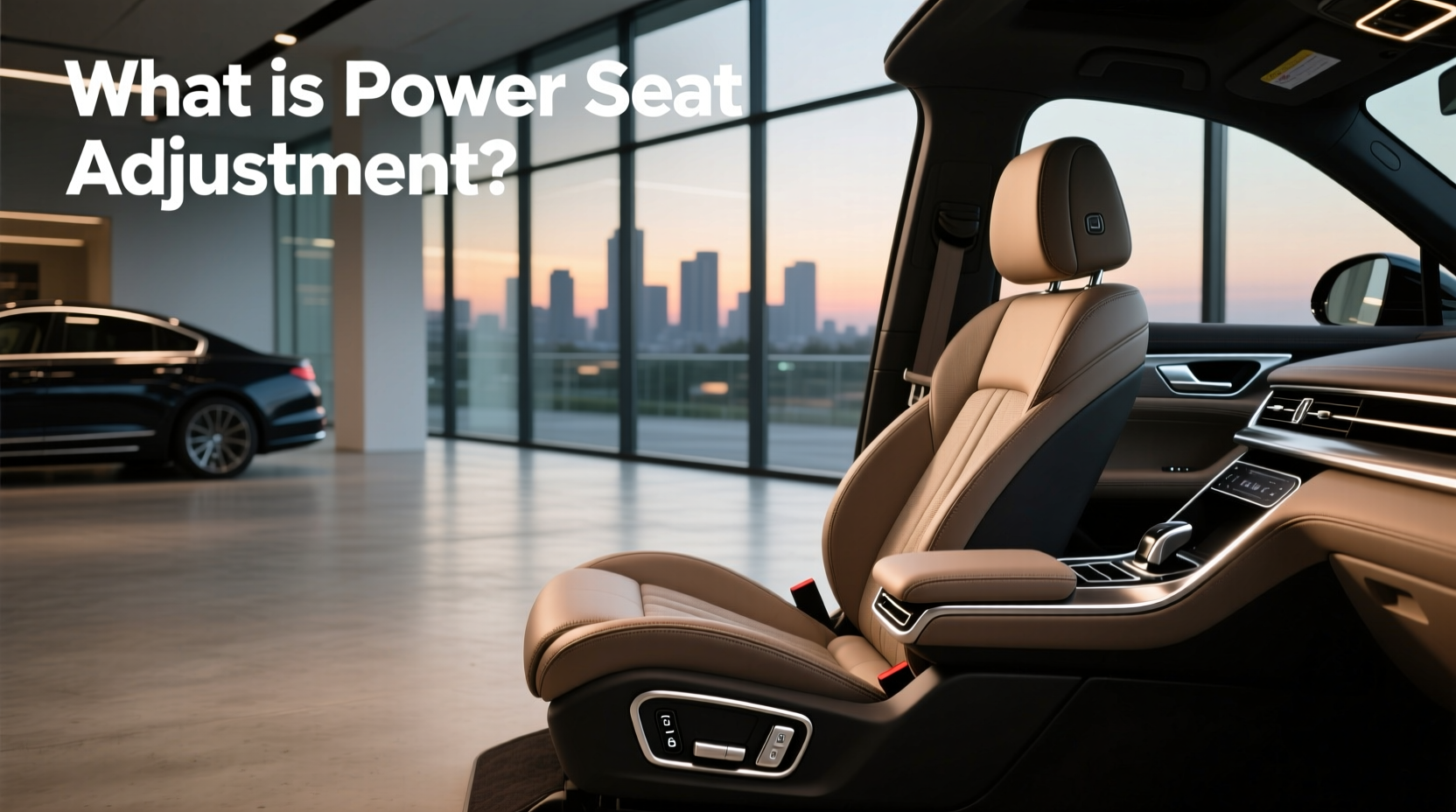
A power seat adjuster is an electromechanical system that allows drivers and passengers to change their seating position using electric motors instead of manual levers. What is power seat adjustment? It refers to the ability to electronically control seat height, forward/backward movement, recline angle, and sometimes lumbar support or thigh extension via buttons usually located on the side of the seat.These systems are commonly found in modern sedans, SUVs, and luxury vehicles. They improve driving ergonomics by enabling precise positioning, which reduces fatigue on long drives and enhances visibility and control. Unlike manual adjustments, power seat systems offer smoother, incremental changes and often include presets for different users 👥.Power seat adjusters typically consist of:- Electric motors (one per direction of movement)
- Control switch panel
- Linkage mechanisms and rails
- Wiring harness and connectors
- Optional: memory module 🧠
📈 Why Power Seat Adjuster, What Is Power Seat Adjustment? Is Gaining Popularity
Demand for power seat adjusters has grown due to rising expectations for comfort, convenience, and personalization in vehicles. Modern consumers expect cars to adapt to them — not the other way around.One major driver is the inclusion of power seat memory modules, which allow multiple drivers to save and recall preferred seating positions with the press of a button 🔘. This feature is increasingly standard in mid-to-high-end models and aftermarket upgrades.Additionally, health awareness plays a role: proper posture reduces back strain and improves circulation during long commutes or road trips. Employers managing fleet vehicles also invest in ergonomic seating to reduce driver fatigue and injury risk.As electric and hybrid vehicles emphasize tech-forward interiors, seamless integration between seats, mirrors, and infotainment becomes more common — making power adjustment a baseline expectation rather than a luxury.🔧 Types and Variants
Different types of power seat adjusters vary by range of motion, complexity, and integration level.4-Way Power Seat Adjuster
Allows forward/backward slide and up/down height adjustment (usually front only).- ✅ Pros: Affordable, widely compatible, sufficient for basic needs
- ❌ Cons: Limited customization; no recline or lumbar control
6-Way Power Seat Adjuster
Adds recline control to the 4-way system. Most common in entry-level power seats.- ✅ Pros: Better posture support, easy to install in many vehicles
- ❌ Cons: Still lacks lateral or lumbar adjustments
8-Way and 10-Way Power Seat Adjuster
Includes full height adjustment (front and rear), slide, recline, and often lumbar or bolster control.- ✅ Pros: Maximum comfort tuning, ideal for tall or short drivers
- ❌ Cons: Higher cost, complex wiring, may require ECU calibration
Memory-Enabled Power Seat Systems
Integrates with a power seat memory module that stores positions linked to key fobs or driver profiles.- ✅ Pros: Seamless switching between drivers, integrates with mirrors and climate settings
- ❌ Cons: Requires compatible vehicle electronics; higher failure rate if poorly integrated
⚙️ Key Features and Specifications to Evaluate
When evaluating how to choose a power seat adjuster, consider these technical and practical aspects:- Number of Adjustment Directions: More directions mean greater customization but also increased mechanical complexity.
- Motor Quality & Durability: Look for sealed motors resistant to dust and moisture, especially in humid climates.
- Switch Type: Illuminated switches improve usability at night; soft-touch panels feel premium but may wear faster.
- Compatibility: Must match your vehicle’s make, model, year, and trim. Check connector types and rail dimensions.
- Memory Module Support: Ensure the system supports programming and links to existing vehicle modules (e.g., BCM or gateway ECU).
- Integration with Other Systems: Some high-end models sync with heated/cooled seats, massage functions, or adaptive cruise (seat position affects sensor alignment).
- Current Draw: High-power systems may overload circuits in older vehicles — verify amperage requirements.
- Build Material: Steel rails last longer than plastic guides. Reinforced gearboxes resist stripping.
✅ Pros and Cons
Pros:
- Improved driver comfort and reduced fatigue ⭐
- Better visibility and control through optimal seating position 🌐
- Suitable for shared vehicles with memory presets 👥
- Accessibility benefits for elderly or disabled users 🛠️
- Potential resale value increase 📈
Cons:
- Higher initial cost compared to manual seats 💸
- More points of failure (motors, switches, wiring) ❗
- Complex diagnostics when issues arise 🔍
- Limited availability for older or rare car models 🚫
- May void warranty if improperly installed after market 📋
📋 How to Choose Power Seat Adjuster, What Is Power Seat Adjustment?
Follow this step-by-step checklist when shopping:- Confirm Vehicle Compatibility: Use your VIN to check OEM part numbers or consult fitment databases. Don’t rely solely on year/make/model.
- Determine Desired Adjustment Range: Do you need only basic slide/height, or full lumbar and bolster control?
- Check for Memory Module Needs: If multiple drivers use the vehicle, prioritize systems with programmable memory linked to key fobs or profiles.
- Evaluate Installation Complexity: Factory-installed units integrate easily. Aftermarket kits may require cutting, splicing, or coding via OBD-II.
- Review Warranty & Return Policy: Look for at least 1-year warranty. Confirm return eligibility if fitment is incorrect.
- Assess Power Requirements: Ensure your vehicle’s electrical system can handle the load without voltage drops.
- Look for Safety Certifications: While not always required, UL, CE, or ISO markings indicate basic quality standards.
- "Universal" kits with no specific vehicle listing
- No clear wiring diagram or installation manual
- Missing motor specs (RPM, torque, voltage)
- Sellers unwilling to provide compatibility verification
- Extremely low prices suggesting counterfeit parts
💰 Price & Market Insights
Pricing varies significantly based on type, brand, and integration level:- Basic 4–6 Way Replacements: $150–$300 per seat
- 8–10 Way with Lumbar: $300–$600
- OEM Units with Memory Module: $600–$1,200+
- Full Aftermarket Conversion Kits: $800–$2,000 (includes rails, motors, wiring, controller)
📊 Top-Seller & Competitive Analysis
Below is a comparison of popular power seat adjuster types available in the North American and European markets as of 2024:| Type | Avg. Price | Adjustment Ways | Memory Support | Best For |
|---|---|---|---|---|
| OEM Replacement (e.g., Toyota, Ford) | $400 | 8-way | Yes (if equipped) | Factory repair, warranty compliance |
| Aftermarket Premium (e.g., Bosch-based) | $550 | 10-way | Limited | Upgrades, custom builds |
| Remanufactured OEM Unit | $320 | 8-way | Yes | Budget-conscious owners |
| Universal Kit (No Brand) | $180 | 6-way | No |
📝 Customer Feedback Synthesis
Based on aggregated reviews across retail and automotive forums:✅ Frequent Praises:- "Smooth operation restored after replacing noisy factory motor"
- "Memory function makes switching between spouses effortless"
- "Precise height adjustment improved my highway visibility"
- "Wrong connector sent — had to splice wires myself"
- "Motor stalled under load; seems underpowered for heavy user"
- "No instructions included; took hours to figure out mounting"
- "Stopped working after six months — likely cheap gears inside"
🛒 Sourcing & Supplier Tips
Where you buy matters:- OEM Dealerships: Most reliable for exact replacements, though pricier. May require programming.
- Authorized Distributors: Offer genuine parts with traceable warranties.
- Online Retailers (e.g., RockAuto, Amazon): Compare seller ratings, return policies, and photos of actual product.
- Salvage Yards / Recycled Parts: Cost-effective option for discontinued models — inspect for wear and test if possible.
🔧 Maintenance, Safety & Legal Considerations
Regular maintenance extends lifespan:- Clean debris from seat tracks monthly, especially in snowy or dusty areas 🧼
- Lubricate rails annually with silicone-based grease
- Inspect wiring for fraying or rodent damage
- Test all functions quarterly
- Ensure seats lock securely in place — never drive with loose or drifting seats
- Use circuit breakers when installing aftermarket systems to prevent fire risk
- Keep fingers clear during adjustment cycles
📌 Conclusion
Choosing the right power seat adjuster depends on your vehicle, usage pattern, and comfort priorities. If you need basic functionality and drive alone, a 6-way system suffices. If you share the car regularly, invest in a model with a power seat memory module for seamless transitions. For older vehicles, verify compatibility carefully — retrofitting requires expertise. Prioritize build quality over price, and always test before finalizing installation.Understanding what is power seat adjustment? helps you appreciate its role in safety, comfort, and accessibility — making it more than just a convenience feature.❓ FAQs
Can I add a power seat adjuster to a manual seat?
Yes, but it requires a complete conversion kit including motors, rails, wiring, and controls. Professional installation is recommended due to complexity and potential ECU coding needs.
Do power seat memory modules work across different car brands?
No, memory modules are brand- and often model-specific due to proprietary communication protocols and wiring layouts.
How long do power seat adjusters typically last?
Most last 8–15 years under normal use. Lifespan depends on motor quality, frequency of use, and environmental conditions like humidity or road salt exposure.
Are there wireless power seat adjustment systems?
Not for primary movement. Some luxury cars use Bluetooth-enabled apps for preset recall, but physical wiring remains necessary for motor power and control.
What should I do if my power seat stops moving?
First, check fuses and wiring connections. Listen for motor sounds. If silent, the motor or switch may be faulty. If humming, the mechanism could be jammed. Diagnose step-by-step before replacing parts.




 浙公网安备
33010002000092号
 浙B2-20120091-4