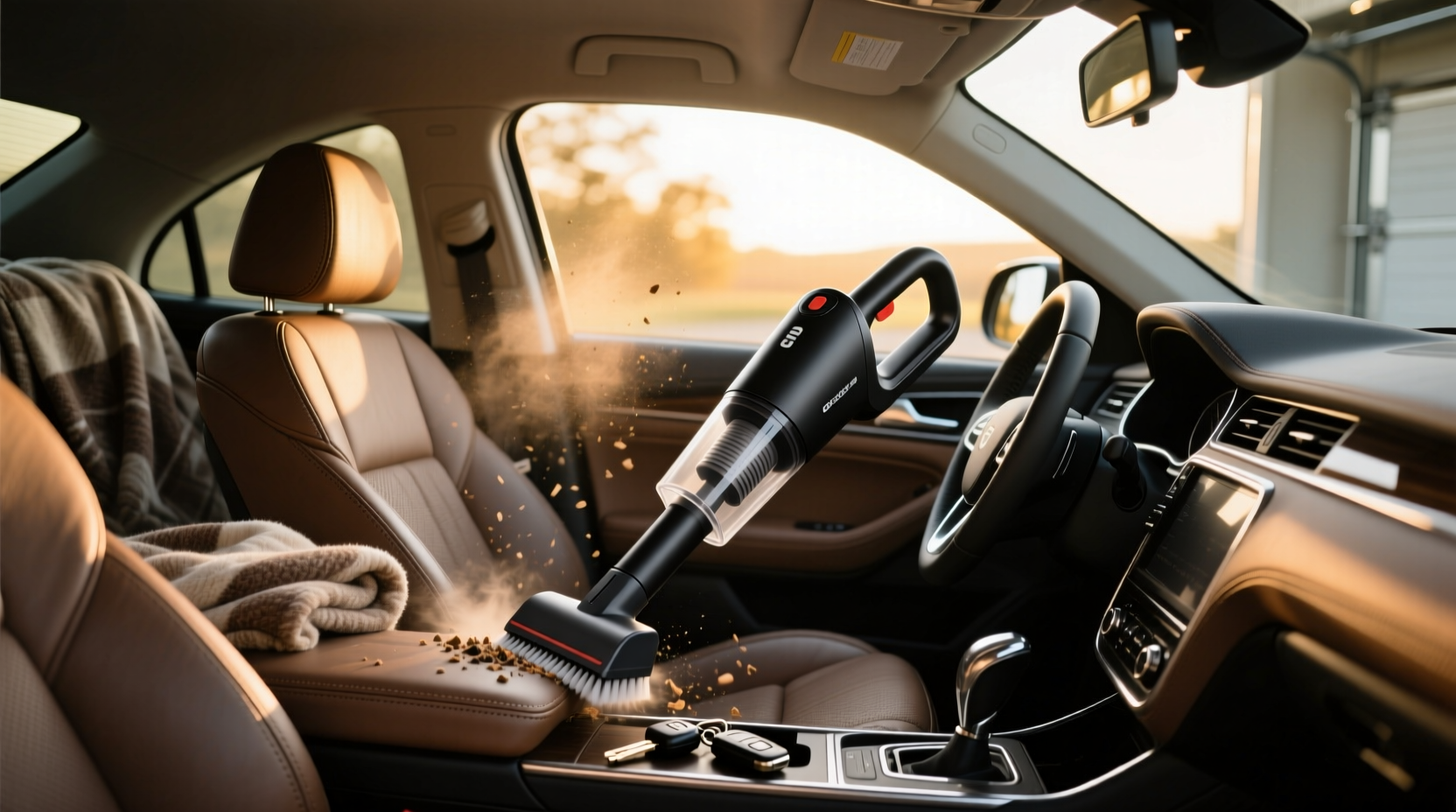
About handheld car vacuum cleaner,Which handheld vacuum has the best suction?
A handheld car vacuum cleaner is a compact, portable device designed specifically for removing dust, crumbs, pet hair, and debris from vehicles. Unlike full-sized home vacuums, these tools are lightweight and often battery-powered, making them easy to store in a glove compartment or trunk. The core question—Which handheld vacuum has the best suction?—depends heavily on motor power (measured in watts or air watts), airflow design, and nozzle efficiency. High-suction models typically feature digital motors and cyclonic technology to maintain consistent performance without clogging.
These devices are commonly used in sedans, SUVs, trucks, and even RVs. Key areas of focus include floor mats, seat crevices, cup holders, and dashboard vents. Some models come with specialized attachments like crevice tools, soft brushes, and 🔧 motorized brush heads for deep-cleaning fabric surfaces. Understanding what to look for in handheld car vacuum cleaner,Which handheld vacuum has the best suction? starts with identifying your primary use case: light dusting vs. heavy-duty pet hair removal.
Why handheld car vacuum cleaner,Which handheld vacuum has the best suction? is gaining popularity
As vehicle interiors become more complex—with multiple storage compartments, touchscreens, and premium upholstery—keeping them clean requires precision tools. Traditional wiping or compressed air cans are ineffective for embedded dirt. Consumers increasingly seek convenience and immediate cleanup solutions, especially parents, rideshare drivers, and pet owners. According to market trends, demand for cordless, high-performance handheld vacuums grew over 18% annually between 2020 and 2023 1.
The rise of electric vehicles (EVs) also contributes to this trend. EV owners often lack access to garage outlets, favoring rechargeable models. Additionally, improved battery tech allows modern handheld vacuums to deliver sustained suction for 15–30 minutes per charge—enough for thorough cabin cleaning. When considering how to choose handheld car vacuum cleaner,Which handheld vacuum has the best suction?, users now expect both portability and professional-grade performance.
Types and variants
- ⚡ Corded Electric Models: Plug directly into a 12V car socket (cigarette lighter). Offer continuous power but limited mobility due to cord length.
- Pros: Unlimited runtime, consistent suction
- Cons: Restricted movement, less convenient for tight spaces
- 🔋 Cordless Battery-Powered: Most popular type. Powered by removable or built-in lithium-ion batteries (10–22V common).
- Pros: Full mobility, compact design, quick cleanup
- Cons: Limited runtime, performance declines as battery depletes
- 🧰 Wet/Dry Handheld Vacuums: Can handle liquid spills and solid debris. Include sealed tanks and moisture-resistant motors.
- Pros: Versatile for accidents (spilled drinks, mud)
- Cons: Heavier, require drying after wet use
- 🔍 Mini/Pocket-Sized: Ultra-compact (<6 inches), ideal for quick pickups.
- Pros: Fits in pockets, silent operation
- Cons: Low suction, small dustbin capacity
Key features and specifications to evaluate
When assessing which handheld vacuum has the best suction, consider these measurable and functional criteria:
Suction Power (Air Watts or kPa)
Measured in air watts (AW) or kilopascals (kPa), this reflects actual pickup force. Look for models rated at least 60 AW or 10 kPa for effective car cleaning. Higher values (e.g., 100+ AW) indicate stronger performance on pet hair and ground-in dust.
Battery Voltage & Runtime
Voltage (V) correlates with motor strength. Units under 15V suit light tasks; 18–22V models offer deeper cleaning. Check manufacturer-stated runtimes—but note real-world usage often delivers 20–30% less, especially under max suction.
Dustbin Capacity & Emptying Mechanism
Typical range: 0.2–0.6 liters. Larger bins reduce emptying frequency. One-touch eject systems minimize hand contact with debris—a hygiene plus.
Filtration System
HEPA filters capture 99.97% of particles down to 0.3 microns, crucial for allergy sufferers. Washable filters lower long-term costs. Ensure the filter is easily accessible for cleaning.
Attachments & Motorized Brush Head
🔧 As noted in usage reports, a handheld vacuum with motorized brush significantly improves pickup of pet hair and fibers embedded in upholstery. Other useful tools include crevice nozzles, foam brushes, and extension wands.
Noise Level (dB)
Most operate between 70–85 dB. Quieter models (<75 dB) are preferable for use around children or pets.
Pros and cons
Advantages ✅
- Portable and easy to store in vehicles
- Effective for spot-cleaning and routine maintenance
- Many support wall mounting or magnetic dash attachment
- Some double as home cleaners for stairs or furniture
Limits ❗
- Not suitable for whole-house cleaning
- Cordless models require charging discipline
- Poorly sealed units may leak fine dust back into air
- Low-end models struggle with wet messes or thick carpet
How to choose handheld car vacuum cleaner,Which handheld vacuum has the best suction?
Follow this step-by-step checklist when comparing options:
- Define Your Use Case: Are you removing crumbs daily, cleaning up after pets, or handling occasional spills? Heavy-duty needs justify investing in higher suction.
- Check Suction Metrics: Prioritize models listing air watts or kPa—not just “high power” claims. Compare across brands using standardized units.
- Evaluate Battery Specs: Opt for at least 18V if cleaning large vehicles. Confirm whether the battery is replaceable or integrated.
- Look for a Motorized Brush: Especially important if dealing with pet hair. Verify it’s powered independently (not just rotating via airflow).
- Assess Filter Type: HEPA is recommended for indoor air quality. Confirm washability and replacement cost.
- Test Ergonomics: Weight should be under 3 lbs (1.4 kg) for comfortable one-handed use. Check grip texture and button placement.
- Review Noise and Runtime: Longer runtime (≥20 min) helps complete full cleanings. Lower noise enhances user experience.
- Avoid These Red Flags:
- No published suction data (only vague terms like "strong")
- Plastic construction prone to cracking
- Non-removable batteries in budget models
- Inadequate sealing leading to dust leakage
Price & market insights
Pricing varies widely based on brand, power, and features:
- Budget ($20–$40): Entry-level models with 10–15V batteries. Suitable for light dry debris. May lack HEPA or motorized tools.
- Mid-Range ($40–$80): Best value tier. Typically includes 18–20V motors, HEPA filters, and at least two attachments. Many top-rated handheld car vacuums fall here.
- Premium ($80–$150): High suction (100+ AW), advanced filtration, durable builds. Often from established home appliance brands.
Prices may vary by region and retailer. Always check warranty length (1–2 years typical) and verify return policies before purchase. Value isn’t solely about price—it’s performance per dollar over time.
Top-seller & competitive analysis
While specific model rankings change frequently, leading sellers share common traits: strong suction, reliable batteries, and versatile tool kits. Below is a generalized comparison of representative models within each category:
| Model Type | Suction (AW) | Battery (V/min) | Motorized Brush | HEPA Filter | Price Range |
|---|---|---|---|---|---|
| Basic Cordless | 40–50 | 12V / 8–12 min | No | No | $25–$35 |
| Mid-Tier Cordless | 70–90 | 20V / 20 min | Yes | Yes | $50–$70 |
| Premium Wet/Dry | 100+ | 22V / 25 min | Yes | Yes | $90–$130 |
| Corded 12V | 50–60 | N/A / Unlimited | Optional | Sometimes | $30–$50 |
Note: Actual specs may vary by region and model year. Always check manufacturer specifications before purchasing.
Customer feedback synthesis
Based on aggregated reviews across retail platforms, common user sentiments include:
Frequent Praises ✨
- “Great for quick cleanups between washes”
- “The motorized brush made a huge difference on pet hair”
- “Easy to charge via USB-C and keeps its charge well”
- “Lightweight and fits perfectly under the seat”
Common Complaints 📝
- “Battery life dropped noticeably after 6 months”
- “Dustbin is too small—had to empty it three times during one cleaning”
- “Nozzle doesn’t fit into tight seat gaps”
- “Filter clogged quickly and wasn’t clearly labeled as washable”
Sourcing & supplier tips
Handheld car vacuums are widely available through online retailers (Amazon, Walmart, Best Buy), automotive stores (AutoZone, Advance Auto Parts), and direct brand websites. For bulk purchases (e.g., fleet vehicles or resale), consider contacting distributors or OEM suppliers—but verify certifications (CE, FCC, RoHS) for safety compliance.
When sourcing internationally, confirm voltage compatibility and plug types. Test units upon arrival: inspect build quality, verify all accessories are included, and run a short cycle to check suction consistency. For resellers, ensure clear return agreements and warranty support from suppliers.
Maintenance, safety & legal considerations
To extend lifespan:
- Empty the dustbin after each use
- Clean or replace filters every 1–3 months (based on usage)
- Store in a cool, dry place away from direct sunlight
- Charge batteries periodically if unused for weeks
Safety tips:
- Never immerse the motor unit in water
- Don’t use on flammable liquids or near open flames
- Supervise children during use
Legally, most consumer models comply with general electrical safety standards (e.g., UL in the U.S., CE in Europe). However, compliance may vary by country. Always check local regulations if importing or selling commercially. No special licensing is required for personal use.
Conclusion
If you need powerful, reliable cleaning for pet hair or frequent car use, choose a cordless handheld vacuum with at least 20V power, a motorized brush head, and HEPA filtration. For occasional spot-cleaning, a compact 12–15V model may be sufficient. The answer to “Which handheld vacuum has the best suction?” depends on your specific needs—prioritize measurable suction (AW/kPa), battery longevity, and build quality over marketing claims. By understanding how to choose handheld car vacuum cleaner,Which handheld vacuum has the best suction?, you can make a decision grounded in real-world performance and long-term usability.
FAQs
Can I use a handheld car vacuum on wet spills?
Only if it's explicitly labeled as a wet/dry model. Standard dry-only vacuums can be damaged by liquid and may pose electrical risks. Always check the manual before attempting wet cleanup.
How often should I clean the filter?
For average weekly use, clean washable filters every 4–6 weeks. In dusty environments or with pet hair, clean monthly. Replace non-washable filters every 6–12 months, or as the manufacturer advises.
Do motorized brush heads really make a difference?
Yes—especially for embedded pet hair and lint in fabric seats. A powered brush agitates debris more effectively than suction alone. However, they consume more battery, so consider trade-offs based on your primary use.
Are higher voltage models always better?
Not necessarily. While voltage influences motor power, overall suction depends on airflow design, seal integrity, and nozzle efficiency. A well-engineered 18V model can outperform a poorly designed 22V unit. Focus on total system performance, not just voltage.
What should I do if suction weakens over time?
First, check for clogs in the nozzle, hose, or dustbin. Clean or replace the filter, as a dirty filter restricts airflow. If issues persist, inspect for cracks or loose seals. Persistent loss may indicate motor wear, especially in older models.




 浙公网安备
33010002000092号
 浙B2-20120091-4