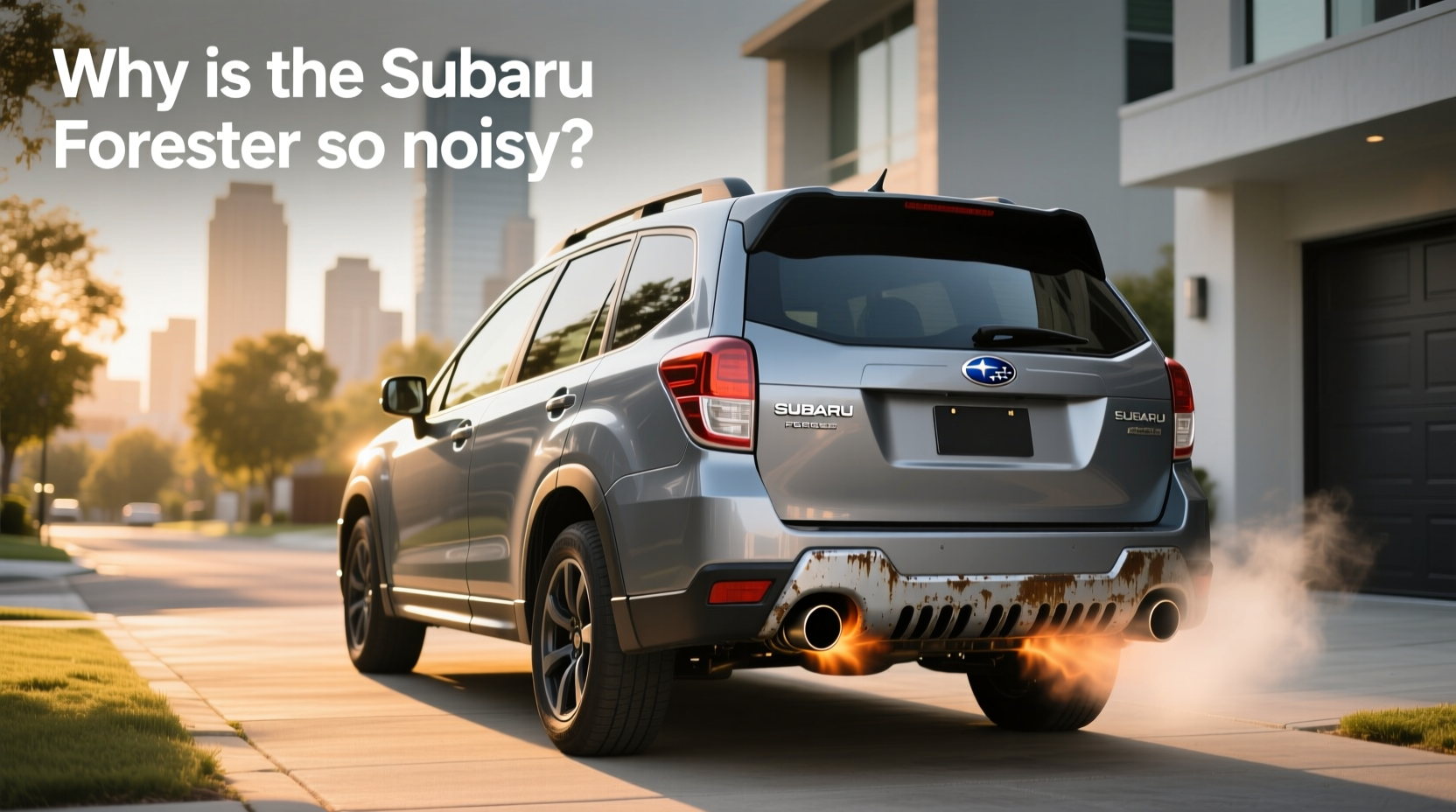
If you're asking how to choose Subaru Forester exhaust, Why is the Subaru Forester so noisy?, start here: The Forester’s boxer engine naturally produces more vibration and low-frequency rumble than inline engines, contributing to cabin noise. When selecting an exhaust system, prioritize components that maintain OEM integrity or use mandrel-bent tubing and quality mufflers to avoid increasing unwanted sound. Avoid cheap, thin-walled aftermarket systems—they often amplify noise and fail prematurely. For drivers seeking quieter operation, focus on inspecting for leaks and consider adding sound-deadening materials rather than modifying the exhaust itself.
About Subaru Forester Exhaust: Common Noise Sources and Use Cases
The Subaru Forester’s horizontally opposed (boxer) engine layout is central to understanding its exhaust characteristics ⚙️. Unlike conventional inline engines, the pistons move laterally, creating inherent vibration and a distinctive engine note. This design lowers the vehicle's center of gravity, improving stability, but transmits more mechanical noise into the cabin 1.
Exhaust-related noise in the Forester typically arises from:
- 🔧Cracked manifolds: Common in older models due to thermal cycling
- 🔧Failed gaskets: Between exhaust manifold and downpipe
- 🔧Damaged mufflers or resonators: Can cause loud droning or rumbling
- 🔧Loose hangers or mounting brackets: Lead to rattling under acceleration
Typical use cases for exhaust inspection or replacement include addressing sudden increases in engine noise, diagnosing performance issues, or restoring factory sound levels after component failure.
Why Understanding Forester Exhaust Noise Is Gaining Importance
As SUV buyers increasingly expect car-like refinement, the Forester’s relatively noisy cabin has drawn attention ✨. While its all-wheel-drive capability and practicality remain strong selling points, owners are more frequently seeking ways to improve acoustic comfort—especially on long drives or highway commutes.
This trend is driven by:
- 📈Rising expectations for NVH (Noise, Vibration, Harshness) performance across compact SUVs
- 👥Long-term ownership patterns—many keep their Foresters beyond 100,000 miles, where wear amplifies original noise sources
- 🔍Greater online community knowledge sharing about DIY fixes and upgrades
Understanding whether noise stems from mechanical issues or inherent design helps owners make informed decisions—whether repairing, replacing, or upgrading components.
Types and Variants of Exhaust Systems
When evaluating options for your Forester, it’s essential to distinguish between replacement types:
| System Type | Pros | Cons |
|---|---|---|
| OEM Replacement | Precise fit, maintains factory noise levels, covered under warranty if applicable | Higher cost, limited availability for older models |
| Aftermarket Full System | Wider selection, potentially lower price, some offer improved flow | Variable quality; may increase noise or void emissions compliance |
| Performance Exhaust | Enhanced throttle response, deeper tone (if desired), better corrosion resistance | Louder cabin noise, not ideal for quiet driving preferences |
| Muffler-Only Replacement | Cost-effective fix for specific noise issues, easy installation | Does not address upstream problems like cracked manifolds |
Each variant serves different goals: maintenance, restoration, or modification.
Key Features and Specifications to Evaluate
To properly assess any exhaust option for your Forester, examine these technical and functional aspects:
- ⚙️Material Quality: Look for aluminized steel or stainless steel construction. Stainless lasts longer but costs more.
- 📏Tubing Diameter: Stock is typically 2.25”–2.5”. Larger diameters can reduce backpressure but may affect low-end torque.
- 🔄Bend Type: Mandrel bends maintain consistent inner diameter, improving flow vs. crush bends.
- 🔇Noise Damping Design: Multi-chambered or absorption-type mufflers reduce drone better than reflective designs.
- 🧰Fitment Accuracy: Ensure compatibility with your model year and trim—especially important post-2019 models with updated emissions systems.
- 🌍Emissions Compliance: Verify presence of required catalytic converters and O2 sensor bungs.
Always cross-reference part numbers with your VIN when ordering replacements.
Pros and Cons: Is an Exhaust Upgrade Right for You?
• You value cabin tranquility
• Drive primarily for commuting or family trips
• Want to preserve resale value
• Live in areas with strict noise ordinances
• You prefer a sportier engine note
• Already have other modifications (intake, tuning)
• Accept trade-offs in interior noise
• Confirm local regulations allow modified exhausts
Remember: Modifying the exhaust will not fix underlying vibrations from the boxer engine—it may only change how those vibrations sound.
How to Choose Subaru Forester Exhaust: Step-by-Step Buying Guide
Follow this checklist to make a confident decision:
- 🔍Diagnose First: Confirm the source of noise. Use a mechanic’s stethoscope or visual inspection to check for cracks, rust, or loose parts.
- 📝Review Factory Specs: Note original pipe diameter, muffler type, and hanger locations.
- 🛒Select Based on Goal: Repair? Replace? Modify? Match product type accordingly.
- 🔗Verify Compatibility: Use fitment tools on retailer sites and confirm with customer support if unsure.
- 📌Avoid These Red Flags:
- Unusually low prices indicating thin gauge metal
- No mention of catalytic converter placement
- Vague fitment descriptions like "fits most years"
- Lack of return policy or warranty
- 🚚Plan Installation: Decide between DIY (moderate skill level) or professional shop work.
For best results, pair exhaust repairs with a full inspection of engine mounts and suspension bushings, which also influence perceived noise.
Price & Market Insights
Replacement costs vary significantly:
- 💲OEM Muffler: $300–$600 + labor
- 💲Full Aftermarket System: $400–$900 (installed)
- 💲Performance Cat-Back: $600–$1,200 depending on brand
Prices may differ by region and model year. Used OEM parts from salvage yards can reduce cost but require careful inspection for rust or damage. Consider total lifecycle value—higher upfront cost for stainless steel may save money over time.
Top-Seller & Competitive Analysis
Popular brands in the market include:
| Brand | Type | Notable Feature | Noise Level |
|---|---|---|---|
| Subaru OEM | Direct Replacement | Perfect fit, emission-compliant | Factory standard |
| HKS | Performance | Titanium tips, valved system | Moderate increase |
| Corsa | Sport Back | Drone-free technology | Slight resonance |
| Walker | Aftermarket | Wide availability, affordable | Similar to OEM |
No single brand is universally best—the right choice depends on your priorities: reliability, cost, or sound character.
Customer Feedback Synthesis
Analysis of owner reports reveals consistent themes:
Common Praises:- Relief after replacing a failing OEM muffler with a durable aftermarket unit
- Appreciation for precise fitment of OEM-style systems
- Satisfaction with reduced drone using resonator-equipped designs
- Increase in cabin noise after installing so-called "touring" exhausts
- Short lifespan of budget systems due to corrosion
- Difficulty aligning hangers on non-OEM parts
Many users emphasize that managing boxer engine vibration requires additional measures beyond exhaust changes—such as firewall insulation or motor mount inspection.
Sourcing & Supplier Tips
When purchasing:
- 🌐Buy from authorized dealers or reputable online auto parts retailers
- 📦For bulk or resale, contact distributors directly—some offer volume discounts
- ✅Inspect packaging upon delivery; check for dents, missing gaskets, or incorrect flange angles
- 📜Keep invoices and packaging for warranty claims
Verify return policies before ordering, especially for custom-fit items.
Maintenance, Safety & Legal Considerations
Maintain your exhaust system by:
- 🧼Regularly inspecting for rust, cracks, or sagging pipes
- 🔧Tightening loose clamps or hangers promptly
- ⛽Ensuring proper functioning of oxygen sensors and catalytic converter
Safety note: Never drive with a leaking exhaust—carbon monoxide exposure is a serious risk.
Legally, modified exhausts must comply with local noise and emissions laws. In many U.S. states and Canadian provinces, removing catalytic converters or exceeding decibel limits is prohibited. Always check local regulations before making changes.
Conclusion: Matching Your Needs to the Right Choice
If you’re dealing with excessive noise and wondering what to look for in Subaru Forester exhaust, Why is the Subaru Forester so noisy?, remember: much of the sound is inherent to the boxer engine design. A new or repaired exhaust system should aim to restore quiet, efficient operation—not amplify it. For most owners, sticking with OEM-spec replacements offers the best balance of durability, compliance, and comfort. Reserve performance upgrades for vehicles already modified for sportier driving, and always verify legal and environmental requirements beforehand.
FAQs
A: Increased engine noise under load is normal due to the boxer engine’s design. However, a sudden or harsh rumble could indicate an exhaust leak, damaged muffler, or cracked manifold—inspect thoroughly.
A: Yes, if replacing a damaged or corroded muffler. However, most aftermarket systems don’t reduce overall noise significantly. For real improvement, combine exhaust repair with sound-deadening materials.
A: Legality depends on your location. Systems that remove catalytic converters or exceed noise limits are generally illegal. Always verify compliance with local transportation authorities.
A: Inspect annually or every 15,000 miles, especially if driving in snowy regions where road salt accelerates corrosion.
A: The horizontal motion can contribute to stress fractures in manifolds over time, particularly in earlier models. Later generations have improved designs, but regular checks are still recommended.




 浙公网安备
33010002000092号
 浙B2-20120091-4