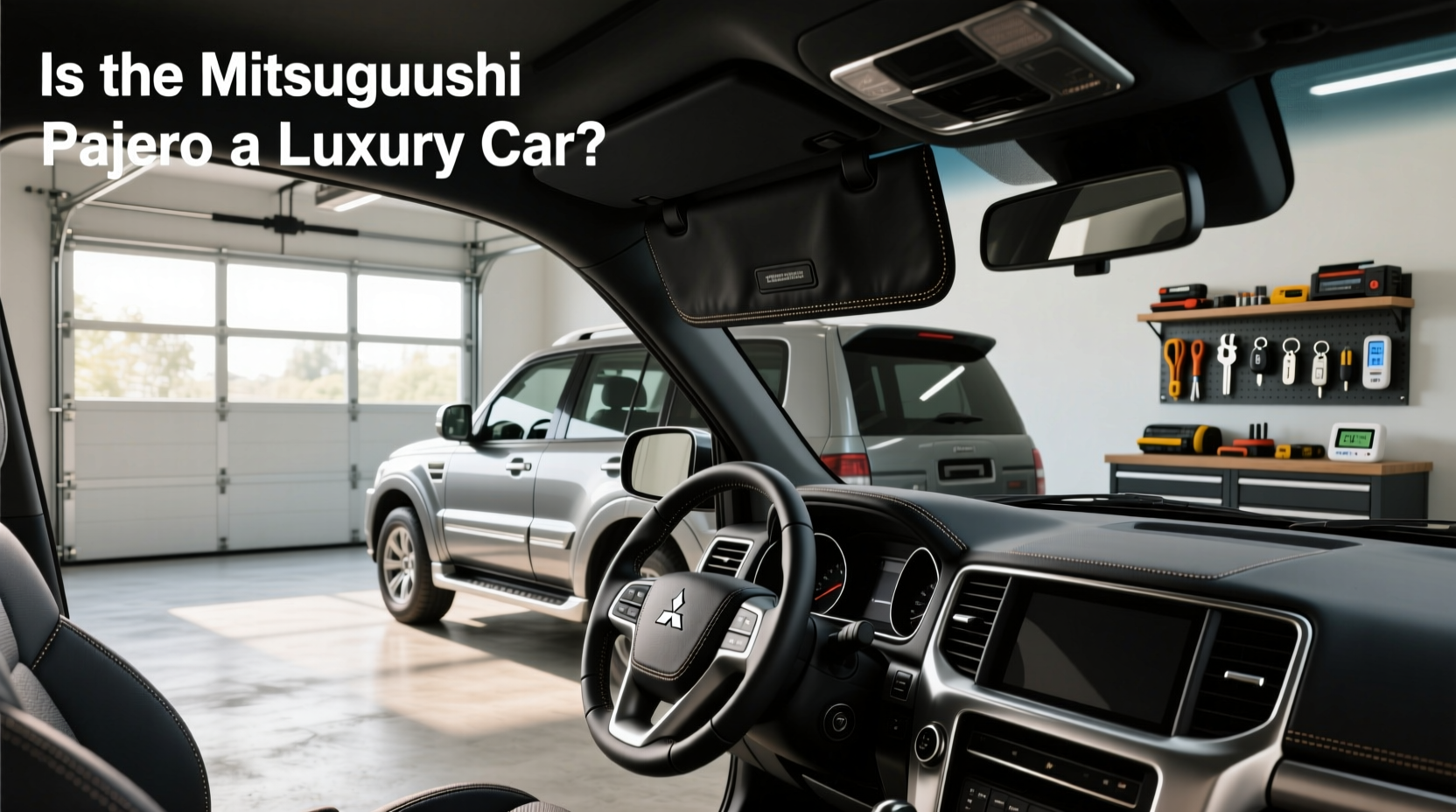
If you're asking how to choose a sun visor for Pajero or wondering whether the Mitsubishi Pajero is a luxury car, this guide gives you direct answers. For sun visors, match the part to your model year, body type, door count, and left/right position—used OEM parts from dismantlers are common and cost-effective 1. As for luxury status: while early Pajeros were marketed as "luxury off-roaders," today’s models prioritize rugged utility over premium refinement. They compete on durability and off-road ability, not on-road comfort like Range Rover or Land Cruiser 2. So if you need reliable shade replacement or clarity on Pajero's market role, focus on compatibility, condition, and realistic expectations—not luxury claims.
About Sun Visor for Pajero & Is the Mitsubishi Pajero a Luxury Car?
The term sun visor for Pajero refers to the interior cabin component designed to block sunlight from the driver’s or passenger’s eyes. These are standard features across all Mitsubishi Pajero generations, including variants like the Pajero Hardtop, Canvas Top, Pinin, and Sport. Replacement becomes necessary due to wear, broken hinges, or damage during entry/exit.
Meanwhile, the question Is the Mitsubishi Pajero a luxury car? stems from its historical branding. Originally launched as a sophisticated off-roader, it competed with high-end SUVs. However, over time, its identity shifted toward ruggedness and affordability. Today, the Pajero is best understood as a capable, durable SUV rather than a luxury vehicle.
When choosing a sun visor, consider both functional fit and broader context: knowing the Pajero’s utilitarian nature helps set realistic expectations about interior quality and part availability.
Why Sun Visor for Pajero & Pajero's Market Role Are Gaining Attention
Interest in sun visor for Pajero parts has grown due to aging fleets. Many Pajeros on the road today are pre-2010 models, increasing demand for affordable replacements. Used OEM parts from European dismantlers offer exact matches at lower costs than new factory options.
Simultaneously, discussions around whether the Mitsubishi Pajero is a luxury car persist because of nostalgia and evolving SUV markets. As modern luxury SUVs become more tech-focused and softer-riding, buyers compare them to older, body-on-frame SUVs like the Pajero that emphasize toughness over plushness.
This dual interest reflects real user needs: maintaining classic vehicles while understanding their place in today’s automotive hierarchy.
Types and Variants of Sun Visors for Pajero
Sun visors for the Pajero vary by model generation, configuration, and location (driver vs. passenger side). Understanding these types ensures proper fitment.
🔧 OEM Original Equipment Manufacturer (Used)
Most available sun visors come from dismantled vehicles. These are original parts removed during recycling.
- Pros: Perfect fit, factory color match, no compatibility issues
- Cons: Limited stock, potential wear, no warranty
🔧 Aftermarket Reproductions
Newly manufactured visors designed to mimic OEM specs.
- Pros: New condition, consistent availability
- Cons: May not match exact shape or texture, risk of poor hinge mechanism
🔧 Mirror-Integrated Visors
Some higher-trim Pajeros include vanity mirrors in the passenger visor.
- Pros: Added functionality
- Cons: More expensive, harder to source, may not be needed
Always verify whether your current visor includes a mirror before replacing it.
Key Features and Specifications to Evaluate
To make an informed decision when selecting a sun visor for Pajero, assess these specifications:
- 📍 Model/Variant: Match exactly (e.g., Pajero Hardtop V6/7 vs. Pinin H6/H7)
- 🗓️ Year of Construction: A 2000 model may differ from a 2009 one even within the same series
- 🚪 Door Count: 2-door vs. 4-door models can have different mounting points
- 🚗 Body Type: Jeep/SUV classification helps filter correct listings
- 🧭 Location: Left (driver) or right (passenger) side—do not interchange
- 🎨 Color: Usually gray or light gray; ensure visual consistency
- 🏭 Supplier Reputation: Prefer recyclers with ratings or verification systems
Ignoring any of these factors risks incorrect installation or mismatched aesthetics.
Pros and Cons of Choosing Used OEM vs. New Alternatives
• Exact OEM fit for your specific Pajero model
• Lower cost compared to dealer-priced new parts
• Environmentally friendly (reuse of components)
• Proven durability—these parts lasted years in original use
• No warranty or return policy in many cases
• Risk of hidden damage (cracks, loose hinges)
• Limited availability based on salvage inventory
• May require shipping from overseas suppliers
For most owners, used OEM remains the preferred choice—but only if condition and compatibility are verified.
How to Choose a Sun Visor for Pajero: Step-by-Step Buying Guide
Follow this checklist to avoid mistakes when answering what to look for in a sun visor for Pajero:
- 📋 Identify Your Exact Model: Check VIN or owner’s manual for precise variant (e.g., Pajero Sport K7/9 2.5 TD GLS)
- 🔍 Determine Side & Trim: Note if it’s left or right, and whether it has a mirror
- 📊 Compare Listings: Use supplier tables to match year, doors, and color 1
- 📞 Contact Supplier: Ask for photos of the actual part, especially hinge area
- 📦 Review Shipping & Returns: Confirm delivery time and return options before purchase
- 🔎 Inspect Upon Arrival: Test pivot function and check for cracks or fading
Red flags to avoid: Vague descriptions, no images, mismatched classification codes, prices significantly below market.
Price & Market Insights
Prices for used sun visor for Pajero typically range from $20 to $60 USD, depending on supplier, condition, and shipping origin. New aftermarket versions may cost $30–$80 but often lack OEM precision.
The Pajero itself sits in a unique market tier. While the Mitsubishi Pajero is not a luxury car, it occupies a respected niche among off-road enthusiasts. Its value lies in proven reliability and strong resale in regions where rugged SUVs are prized (Middle East, Africa, Australia).
When buying parts, expect price variation by region. European dismantlers often list lower prices but add shipping fees. Always calculate total landed cost before deciding.
Top-Seller & Competitive Analysis
Based on availability and demand, certain configurations appear more frequently in inventories.
| Model Variant | Year | Side | Color | Average Price (USD) | Availability |
|---|---|---|---|---|---|
| Pajero Hardtop 3.2 DI-D | 2000–2009 | Right | Gray/Light Gray | $25–$45 | High |
| Pajero Sport 2.5 TD | 2005 | Right | Gray | $30–$50 | Moderate |
| Pajero Pinin 2.0 GDI | 2001 | Left | Gray | $20–$40 | Moderate |
| Pajero Canvas Top 3.2 DI-D | 2001 | Left | Gray | $35–$60 | Low |
Frequent sellers include Autorecycling Reuvers B.V., Japoto Parts B.V., and V.Deijne Jap.Auto-onderdelen BV. Their listings show consistent categorization, aiding search accuracy.
Customer Feedback Synthesis
Analysis of buyer experiences reveals recurring themes:
- 👍 Frequent Praise: “Exact match to my 2009 Pajero,” “Saved money versus dealership,” “Sturdy build quality”
- 👎 Common Complaints: “No return option,” “Shipping took 4 weeks,” “Hinge was stiff upon arrival,” “Color slightly off”
The most satisfied customers double-checked model details and communicated with suppliers beforehand. Dissatisfaction usually stemmed from assumptions about speed or condition without verification.
Sourcing & Supplier Tips
When sourcing a sun visor for Pajero, consider these practical steps:
- 🌐 Use Specialized Platforms: Sites like proxyparts.com aggregate dismantler stock across Europe
- 👥 Verify Seller History: Look for businesses with physical addresses and customer service contacts
- 📎 Request Real Photos: Avoid generic catalog images; insist on current unit photos
- 🚚 Factor in Logistics: International shipping can take 2–6 weeks; track packages
- 🧰 Consider Bulk Orders: If restoring multiple vehicles, ask about discounts for paired sets (left + right)
For resellers or repair shops, building relationships with trusted dismantlers improves long-term supply reliability.
Maintenance, Safety & Legal Considerations
Once installed, maintain your sun visor by:
- Regularly cleaning with mild soap and water
- Lubricating pivot points annually with silicone spray
- Checking for secure attachment—loose visors can become projectiles in accidents
Safety-wise, a missing or broken visor reduces visibility control in bright conditions, potentially contributing to glare-related incidents.
No specific legal requirement mandates visor presence in most jurisdictions, but functional visibility aids are expected under general roadworthiness rules. Always check local regulations if operating commercially or in regulated fleets.
Conclusion: Making the Right Choice
If you’re searching for how to choose sun visor for Pajero, prioritize exact model-year-side matching and buy from transparent suppliers. Used OEM parts offer the best balance of fit and cost.
Regarding is the Mitsubishi Pajero a luxury car—the answer is nuanced. It began with luxury aspirations but evolved into a rugged, value-driven SUV. Its strength is capability, not opulence.
So: If you need a durable, compatible sun visor, go for verified used OEM. If you’re evaluating the Pajero as a vehicle, appreciate it for its off-road legacy, not luxury benchmarks.
FAQs
No. Left and right visors may differ in length, bracket angle, or mirror inclusion. Always replace with the correct side-specific part.
No. While early models had luxury elements, modern perception positions it as a capable, durable SUV focused on utility, not premium comfort or technology.
They vary widely. Some reproduce OEM designs well; others fail in hinge durability. Used OEM parts generally provide better reliability and fit.
Cross-check your VIN, model name, year, door count, and side. Contact the seller with photos of your current visor if unsure.
Check for cracks, smooth pivot movement, color match, and secure mounting clips. Compare directly to your old unit.




 浙公网安备
33010002000092号
 浙B2-20120091-4