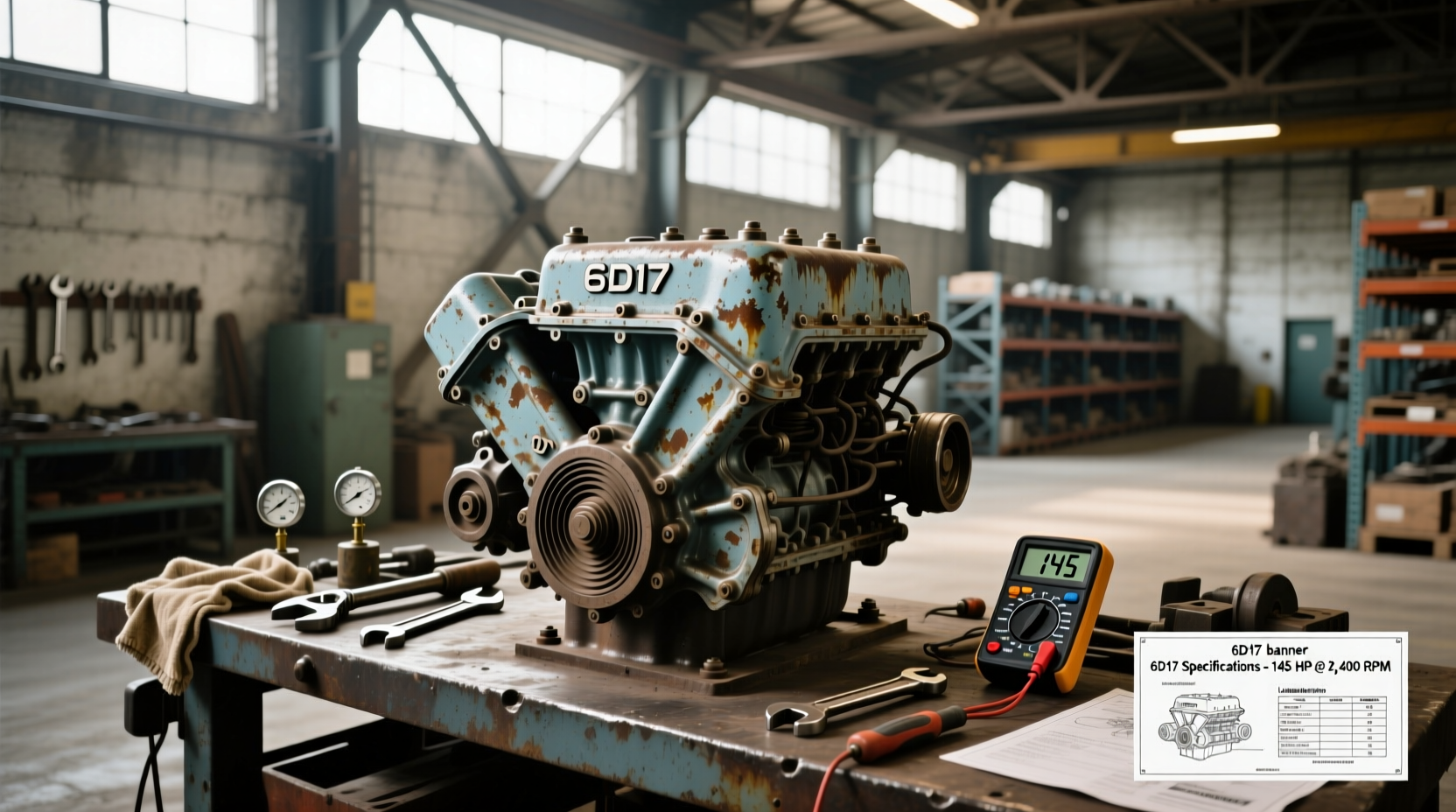
If you're asking how much horsepower does a 6D17 have?, the answer varies: expect between 180–225 HP, depending on model year, configuration (naturally aspirated vs. turbocharged), and application. When choosing a used engine 6d17, prioritize matching horsepower and torque output to your specific use—such as heavy-duty trucking, construction machinery, or industrial power generation. The 6D17's 8.2L inline-6 diesel design delivers high torque (up to 637 Nm), making it ideal for load-intensive operations 1. However, be cautious of emissions compliance in regulated regions and verify service history to avoid hidden wear. This guide covers key specs, variants, and practical steps to help you decide what to look for in a used engine 6d17.
About the Used 6D17 Engine: Definition & Typical Use Cases
The Mitsubishi 6D17 is an 8.2-liter inline-six, direct-injection diesel engine primarily used in commercial and industrial applications. Known for its mechanical fuel system and robust build, it powers a wide range of equipment where durability and consistent performance are critical 🏭.
Common applications include:
- 🚚 Heavy-Duty Trucks: Especially the Mitsubishi Fuso Fighter series, widely exported from Japan to Africa, Southeast Asia, and South America.
- 🏗️ Construction Equipment: Excavators, dump trucks, cranes, and loaders requiring high low-end torque.
- ⚡ Industrial Generators: Ranging from 100–160 kW output for backup or remote power systems.
- 🌾 Agricultural & Forestry Machinery: Tractors and harvesters in rugged environments.
- ⚓ Marine Auxiliary Systems: Onboard generators and pumps in workboats.
Because of its widespread deployment in durable machinery, the 6D17 frequently enters the global used engine market after decommissioning or vehicle replacement. Its popularity stems from proven reliability and ease of maintenance with standard tools ⚙️.
Why the Used 6D17 Engine Is Gaining Popularity
Demand for used 6D17 engines has grown due to several factors:
- ✅ Cost Efficiency: Compared to new industrial engines, a used 6D17 offers significant savings while maintaining core functionality.
- 🌍 Global Reuse Economy: Japanese exporters regularly dismantle retired Fuso trucks and resell engines to developing markets needing affordable power solutions.
- 🔧 Simplicity & Repairability: With a mechanical injection pump and no complex electronics, repairs can be done locally without specialized diagnostic tools.
- 🔋 High Torque Output: Delivers strong pulling power essential for hauling, digging, and climbing—ideal for off-road and rural infrastructure projects.
This makes the used engine 6d17 especially appealing to small fleet operators, independent mechanics, and industrial workshops seeking dependable replacements without OEM pricing.
Types and Variants of the 6D17 Engine
The 6D17 comes in multiple configurations that affect horsepower, torque, and compatibility. Understanding these helps ensure you select the right variant for your needs.
1. Naturally Aspirated (6D17)
- Horsepower: ~210 HP
- Torque: Up to 637 Nm
- Pros: Simpler design, fewer failure points, easier tuning.
- Cons: Lower power density; not ideal for high-altitude or sustained uphill operation.
2. Turbocharged (6D17T)
- Horsepower: Up to 225 HP (in some Fuso Fighter models)
- Torque: Enhanced low-to-mid range response
- Pros: Better performance under load; improved efficiency at higher speeds.
- Cons: Turbo adds complexity; potential for oil coking if shut down hot.
3. Cleaner Emission Variant (6D17-II)
- Horsepower: ~200 HP
- Emissions: Meets earlier Tier I / pre-Euro standards
- Pros: May meet basic environmental thresholds in some regions.
- Cons: Reduced power; limited availability.
4. Model-Year Specific (e.g., 6D17-1A2, 1995–2002)
- Horsepower: As low as 185 HP
- Use Case: Older Fuso FK/FM series trucks
- Pros: Abundant in salvage yards; well-documented repair procedures.
- Cons: Higher wear risk; harder to verify exact condition without teardown.
Key Features and Specifications to Evaluate
When evaluating a used engine 6d17, focus on measurable technical parameters and physical condition indicators.
Core Specifications
- Displacement: 8,201 cc (8.2L) – consistent across all variants
- Bore × Stroke: 118 mm × 125 mm – indicates long-stroke, torque-focused design
- Fuel System: Mechanical injection pump – allows manual adjustments
- Aspiration: Naturally aspirated or turbocharged (verify visually)
- Compression Ratio: Not publicly standardized; assume ~17:1 typical for this class
Performance Metrics
- Horsepower Range: 180–225 HP — depends on model and tuning 2
- Torque Range: 490–637 Nm — crucial for load handling
- RPM Range: Peak torque typically below 2,000 RPM
Physical Inspection Checklist
- ✅ Check for oil leaks around valve cover, oil pan, and rear main seal
- ✅ Inspect turbocharger (if present) for shaft play or oil residue
- ✅ Examine radiator and coolant passages for rust or blockage
- ✅ Look for cracks in cylinder head or block (especially near exhaust manifold)
- ✅ Verify completeness: injectors, fuel pump, mounts, brackets
Pros and Cons of the Used 6D17 Engine
| Advantages ✅ | Limitations ❗ |
|---|---|
| High torque output suitable for heavy loads | Limited emissions compliance in modern jurisdictions |
| Mechanical fuel system = easier diagnostics & field repairs | No electronic controls — less precise fuel metering |
| Proven durability in harsh operating conditions | Heavy weight (~800 kg) may limit mounting options |
| Widely available parts and technical knowledge | Fuel efficiency lower than newer common-rail diesels |
| Affordable acquisition cost in secondary markets | Variability in actual horsepower based on model/year |
How to Choose a Used 6D17 Engine: Step-by-Step Buying Guide
Follow this checklist to make an informed decision when purchasing a used engine 6d17.
- Define Your Application: Will it go into a truck, generator, or construction machine? Match torque and RPM profile accordingly.
- Confirm Horsepower Needs: If you need over 200 HP, look for turbocharged or Fuso Fighter-specific models.
- Verify Configuration: Check for turbo presence, emission badges, and model plate (e.g., 6D17-1A2).
- Request Service History: Ask for maintenance logs, oil analysis reports, or prior usage records.
- Inspect Visually: Look for corrosion, leaks, missing components, and signs of overheating.
- Test Compression (if possible): Low compression in one or more cylinders indicates internal wear.
- Check Legal Compliance: Confirm whether the engine meets local emissions or noise regulations.
Price & Market Insights
Pricing for a used engine 6d17 varies widely based on region, condition, and configuration:
- Japan Export Market: $1,800–$3,000 USD for running units with documentation
- Africa / Southeast Asia: $2,500–$4,000 USD due to shipping and import costs
- North America / Europe: Rare; prices may exceed $4,000 if imported, plus compliance hurdles
Turbocharged and cleaner models command a 10–15% premium. Engines with verified low hours and recent rebuilds justify higher prices. Always compare per-horsepower value rather than total cost alone.
Top-Seller & Competitive Analysis
The most commonly traded variant is the 6D17-1A2 from 1995–2002 Fuso Fighters. It balances availability, known performance (~185–210 HP), and global support.
| Model | Horsepower | Torque (Nm) | Best For | Market Availability |
|---|---|---|---|---|
| 6D17 (NA) | 210 | ~637 | General industrial use | Moderate |
| 6D17T (Turbo) | 225 | ~650 (est.) | Heavy haulage, high altitude | Low |
| 6D17-II | 200 | ~600 | Regions with basic emissions rules | Low |
| 6D17-1A2 | 185–210 | 490–637 | Replacement in older trucks | High |
Customer Feedback Synthesis
Based on buyer reviews and export dealer reports, here are the most frequent sentiments:
👍 Common Praises
- "Engine started immediately after installation—no issues after 6 months."
- "Much stronger than our old generator motor. Handles full load smoothly."
- "Simple to work on. My mechanic adjusted injectors without special tools."
👎 Frequent Complaints
- "No warranty provided. Had to return due to internal knocking sound."
- "Oil leak developed within two weeks—seals were old."
- "Horsepower was lower than advertised—likely a de-tuned version."
Buyers appreciate reliability but often cite lack of post-purchase support and inconsistent condition grading.
Sourcing & Supplier Tips
Where you buy matters as much as what you buy.
- 🛒 Trusted Exporters: Japanese dealers like EVERY, Carused.jp, and RAMP provide inspection videos and mileage data.
- 🌐 Online Marketplaces: Alibaba, TradeWheel, and eBay Motors list numerous sellers—verify feedback and request references.
- 👥 Local Distributors: In Africa and Southeast Asia, some vendors offer installation support and short warranties.
For bulk purchases, ask about container loading efficiency (up to 8 engines per 20ft container). Always inspect upon arrival—even if photos looked good.
Maintenance, Safety & Legal Considerations
To maximize lifespan and ensure safe operation:
- 🧼 Regular Oil Changes: Use CF-grade diesel oil every 250–500 hours or 10,000 km.
- 🔧 Fuel Filter Replacement: Critical due to mechanical injection sensitivity to contamination.
- ⏱️ Cool-Down Period: If turbocharged, idle 1–2 minutes before shutdown to prevent turbo damage.
- 🌐 Emissions Compliance: The 6D17 predates strict Euro III+ standards. Do not install in regulated urban zones without verification.
- 📌 Registration Requirements: Some countries require engine number verification during vehicle re-registration.
Always consult local authorities before installing a used imported engine in a road vehicle.
Conclusion: Who Should Buy a Used 6D17 Engine?
The Mitsubishi 6D17 remains a solid choice for users prioritizing durability, simplicity, and torque over emissions compliance or peak efficiency. If you need a used engine 6d17 for off-grid power, heavy transport, or rebuilding commercial equipment, it offers proven performance at a reasonable price.
Recommendation summary:
- If you need high torque and mechanical simplicity → Choose a standard 6D17 or 6D17-1A2.
- If you operate in high-altitude or demanding terrain → Opt for the turbocharged 6D17T.
- If you're in a regulated emissions zone → Avoid unless grandfathered or used off-road.
Always verify horsepower claims against model specifications and conduct a thorough inspection before purchase.
Frequently Asked Questions (FAQs)
How much horsepower does a 6D17 engine have?
The Mitsubishi 6D17 engine produces between 180 and 225 horsepower, depending on the model. Naturally aspirated versions typically deliver 210 HP, while turbocharged (6D17T) and specific Fuso Fighter configurations can reach up to 225 HP. Older or cleaner variants may produce as low as 185–200 HP.
What is the displacement of the 6D17 engine?
The 6D17 has a displacement of 8,201 cc (8.2 liters), with a bore and stroke of 118 mm × 125 mm. This large displacement contributes to its high torque output, making it suitable for heavy-duty applications.
Can a used 6D17 engine be installed in a modern vehicle?
It may be possible, but significant modifications are likely needed. Compatibility depends on chassis, transmission, and emissions regulations. In many regions, installing a pre-Euro diesel engine in a modern vehicle violates emissions laws. Always check local regulations before retrofitting.
What are common problems with the 6D17 engine?
Common issues include oil leaks from aging seals, turbocharger wear (in turbo models), and injector clogging if poor-quality fuel is used. Due to its age, finding exact replacement gaskets or mounts can sometimes be challenging.
Is the 6D17 engine reliable?
Yes, the 6D17 is known for durability and long service life when properly maintained. Many units operate beyond 500,000 km with regular oil changes and fuel filter replacements. Its mechanical design reduces electronic failure risks.




 浙公网安备
33010002000092号
 浙B2-20120091-4