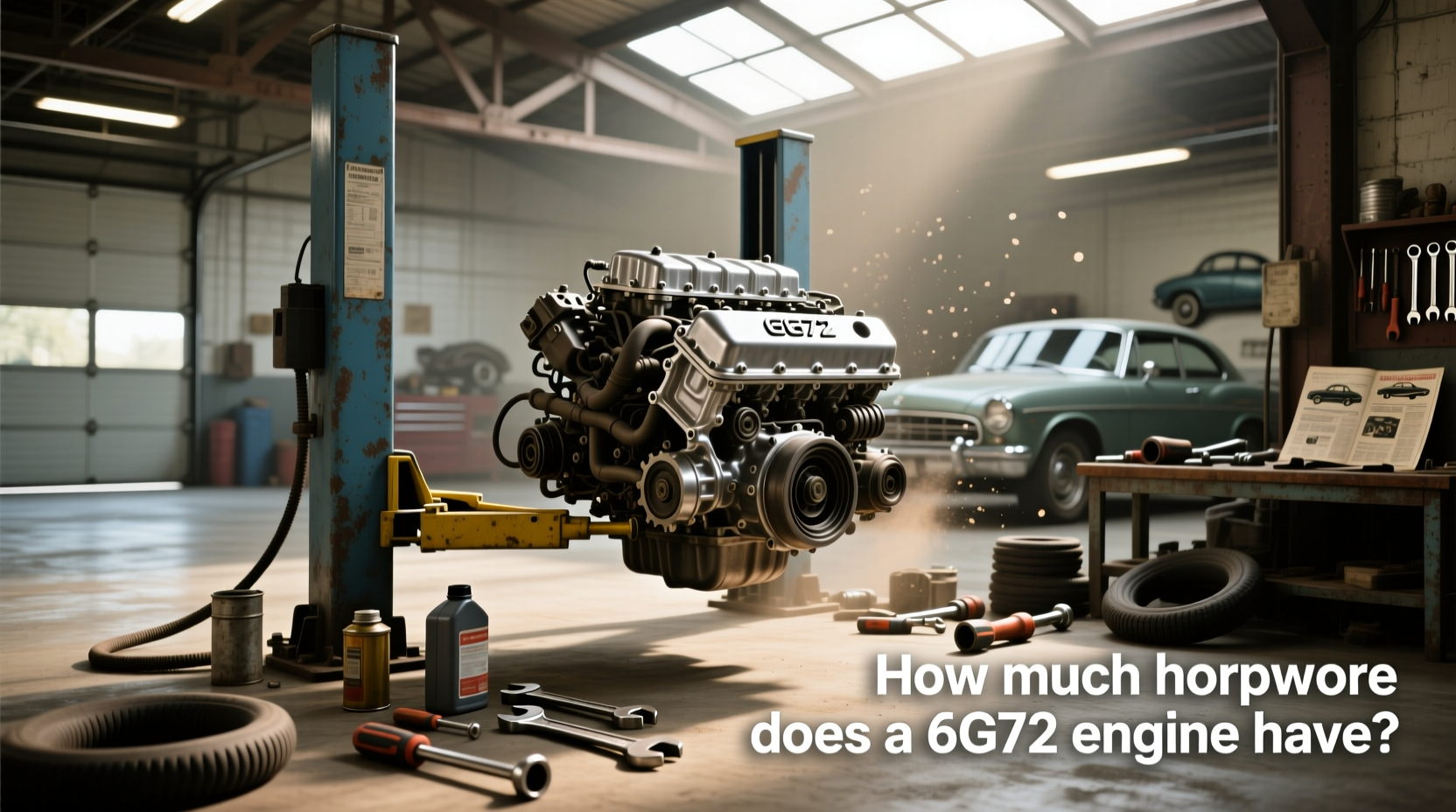
If you're buying a used 6G72 engine, your first question should be: which variant are you getting? The answer directly affects performance—horsepower ranges from 141 hp in basic SOHC 12-valve models to over 324 hp in turbocharged DOHC versions. Knowing the difference is critical for matching the engine to your vehicle and goals. When choosing a used 6G72 engine, always verify its exact configuration—SOHC, DOHC, MIVEC, or turbocharged—as this determines not only power output but also maintenance needs and compatibility. ⚙️ A common mistake is assuming all 6G72 engines are equal; inspect service history, check for timing belt replacement, and confirm compression levels before purchase. This guide covers everything from horsepower specs to red flags in used units, helping you make an informed decision.
About the 6G72 Engine and Its Horsepower Range
The Mitsubishi 6G72 is a 3.0-liter V6 engine produced from 1986 to 2018, widely used across Mitsubishi, Dodge, and Chrysler vehicles such as the Pajero (Montero), Eclipse, Dodge Caravan, and Diamante [8]. One of the most frequently asked questions is: how much horsepower does a 6G72 engine have? The answer isn't simple—it depends on the specific version. Horsepower varies significantly based on valvetrain design, aspiration, and technology like MIVEC (variable valve timing). Understanding these differences is essential when selecting a used unit that meets your performance and reliability expectations.
This engine was designed for versatility, appearing in both front-wheel-drive minivans and rear-wheel-drive SUVs and sports cars. Its cast iron block and aluminum heads provide durability and moderate weight (~429 lbs), making it suitable for swaps and replacements [6][7]. Whether you're restoring a classic Eclipse or replacing a failed engine in a Montero, knowing the correct 6G72 variant ensures proper fitment and expected output.
Why the Used 6G72 Engine Market Remains Active
Despite being out of production, demand for the used 6G72 engine remains steady, especially among owners of older Japanese and American vehicles where OEM replacements are no longer available. Enthusiasts value its proven durability—many well-maintained units exceed 250,000 miles [7][9]. Additionally, the engine's popularity in the engine swap community has boosted secondary market activity. Its compact size, balanced power delivery, and availability in high-output forms make it a candidate for restomods and off-road builds.
Another driver of interest is cost-effectiveness. Compared to modern crate engines, a tested used 6G72 offers a budget-friendly solution for keeping older vehicles on the road. However, buyers must be cautious—condition varies widely, and undocumented maintenance can lead to costly failures shortly after installation.
Types and Variants of the 6G72 Engine
The 6G72 comes in several configurations, each with distinct performance and maintenance profiles. Choosing the right one depends on your application—daily driving, towing, performance use, or restoration.
🛒 SOHC 12-Valve (Naturally Aspirated)
Found primarily in early Chrysler and Dodge minivans (e.g., Caravan, Grand Caravan), this base model uses two valves per cylinder and a single camshaft per head.
- Power: 141–170 hp
- Torque: 172–255 lb-ft
- Pros: Simple design, easier to maintain, lower fuel demands
- Cons: Lower efficiency and power compared to later versions
Ideal for economical replacements in family vans where high performance isn’t required.
🛒 SOHC 24-Valve (Naturally Aspirated)
An evolution of the SOHC design with four valves per cylinder, improving airflow and combustion efficiency.
- Power: 195–210 hp
- Torque: ~205 lb-ft
- Pros: Better breathing than 12V, used in Eclipse and Galant models
- Cons: Still limited at high RPMs due to SOHC layout
A solid mid-tier option for standard replacements in Pajeros or older coupes.
🛒 DOHC 24-Valve (Naturally Aspirated)
The high-performance NA version with dual overhead cams, found in sportier applications like the Mitsubishi GTO/3000GT.
- Power: 222 hp
- Torque: 205 lb-ft
- Pros: Strong top-end power, smoother operation
- Cons: More complex, higher maintenance costs
Suitable for drivers seeking a balance between performance and reliability.
🛒 DOHC 24-Valve Turbocharged (6G72TT)
The most powerful factory version, equipped with twin turbos in some models.
- Power: 280–324 hp
- Torque: 300–315 lb-ft
- Pros: High output, excellent for performance builds
- Cons: Prone to turbo and intercooler issues, requires upgraded cooling
Best for enthusiasts doing swaps or restorations of high-performance models.
🛒 MIVEC (Variable Valve Timing)
Features Mitsubishi’s MIVEC system on the intake cam for optimized low- and mid-range torque.
- Power: 273 hp
- Torque: 224 lb-ft
- Pros: Improved efficiency and throttle response
- Cons: MIVEC actuator can fail; harder to source parts
Rare and desirable, but ensure full documentation when buying used.
Key Features and Specifications to Evaluate
When assessing a used 6G72 engine, focus on measurable indicators of health and compatibility:
- ⚙️ Horsepower and Torque Output: Confirm the actual variant using VIN or engine code. Don’t rely on seller claims.
- 🔧 Compression Test Results: Request recent numbers. Healthy cylinders should read within 10% of each other and above 150 psi.
- 🧼 Oil Consumption History: Excessive oil burning may indicate worn rings or valve seals.
- 📌 Timing Belt Service Record: Replacement every 60,000–90,000 miles is critical to prevent valve damage [7].
- 🔍 Hydraulic Lash Adjusters (HLAs): Known to fail; listen for ticking noises or request replacement proof.
- 🌐 Compatibility: Verify ECU, wiring harness, and mounting points match your vehicle.
- 🏭 Build Date and Origin: Later models may have improved materials or tolerances.
Pro Tip: Always ask for a cold compression test video or dyno sheet if available. These provide objective data beyond visual inspection.
Pros and Cons of the Used 6G72 Engine
- ✅ Pros:
- Proven long-term reliability with proper care
- Widely used, so many parts and knowledge resources exist
- Variety of power outputs for different needs
- Suitable for engine swaps due to manageable size and weight
- ❗ Cons:
- Spark plug access requires intake manifold removal—labor-intensive
- HLAs prone to wear; may need replacement every 60k miles
- Turbo versions require additional cooling and maintenance
- Older units may lack emissions compliance in strict regions
Best suited for: Restoring older Mitsubishis, replacing failed engines in compatible vehicles, or moderate-performance swaps.
Not ideal for: Buyers needing plug-and-play simplicity, zero-maintenance setups, or those in areas with strict smog laws without verification.
How to Choose a Used 6G72 Engine: Step-by-Step Guide
Selecting the right used 6G72 engine involves more than just price and horsepower. Follow this checklist:
- ✅ Define Your Use Case: Daily driver? Off-roader? Performance build? Match the variant accordingly.
- ✅ Identify the Correct Variant: Use your vehicle’s original specs or consult a dealership VIN lookup.
- ✅ Request Maintenance Records: Look for timing belt, HLA, and oil change history.
- ✅ Inspect Visually: Check for oil leaks, corrosion, damaged mounts, or cracked manifolds.
- ✅ Verify Compression and Leak-Down Tests: Ask for documented results or arrange an independent assessment.
- ✅ Confirm Emissions Compliance: In states like California, ensure the engine meets current regulations for registration.
- ✅ Avoid These Red Flags:
- No service history
- Visible coolant in oil (white sludge = head gasket issue)
- Excessive play in crankshaft pulley
- Seller refuses test start or inspection
Never skip a pre-purchase inspection—even if buying locally. Consider hiring a mechanic familiar with JDM engines.
Price & Market Insights
Used 6G72 engine prices vary by condition, variant, and location:
- Basic SOHC 12V: $400–$800
- SOHC 24V / DOHC NA: $800–$1,500
- Turbo (6G72TT) or MIVEC: $1,500–$3,000+
Prices are typically higher in North America due to import logistics and demand. Engines from Japan (JDM) are often cleaner but may lack accessories or wiring. Factor in shipping ($200–$600) and core charges ($200–$500). A rebuilt unit from a reputable shop may cost more upfront but offer better warranty coverage.
Value tip: An engine with documented maintenance and recent timing belt service is worth paying extra for—avoiding a catastrophic failure saves thousands.
Top-Seller & Competitive Analysis
While there are no official “top-seller” rankings for used 6G72 engines, certain variants dominate specific markets:
| Variant | Avg. Price (USD) | Reliability | Best For |
|---|---|---|---|
| SOHC 24V | $900 | ⭐⭐⭐⭐☆ | Daily drivers, Pajero replacements |
| DOHC 24V NA | $1,200 | ⭐⭐⭐☆☆ | Performance sedans, GTO swaps |
| 6G72TT (Turbo) | $2,200 | ⭐⭐☆☆☆ | Enthusiast builds, high-output projects |
| MIVEC | $2,500 | ⭐⭐⭐☆☆ | Restoration, OEM+ upgrades |
Choose based on your project’s needs—not just peak horsepower.
Customer Feedback Synthesis
Analysis of owner reports and forum discussions reveals consistent patterns:
- 👍 Frequent Praise:
- Durability beyond 200k miles with regular oil changes
- Smooth power delivery in V6 applications
- Good availability of aftermarket support
- 👎 Common Complaints:
- Difficulty accessing spark plugs (requires manifold removal)
- Timing belt failure causing bent valves if neglected
- HLA ticking noise after 80k–100k miles
- Lack of emissions-ready components in imported units
Buyers who prioritize maintenance tend to report high satisfaction, while those skipping inspections often face expensive repairs.
Sourcing & Supplier Tips
You can source used 6G72 engines from:
- Local Junkyards: Allows physical inspection and test starts.
- Online Marketplaces: eBay Motors, RockAuto, and specialty forums like MightyRam50.net.
- JDM Importers: Provide low-mileage engines but verify compatibility and import legality.
Tips:
- Ask for videos of the engine running and compression tests.
- Confirm return policy—reputable sellers offer 30-day warranties.
- Verify whether the engine includes ECU, sensors, and manifolds.
- For bulk buyers: negotiate pricing with dismantlers in Japan or the U.S. Southeast.
Maintenance, Safety & Legal Considerations
After installation, follow these guidelines:
- 🔧 Replace HLAs and timing belt immediately if service history is unknown.
- 🧼 Flush the cooling system to prevent debris from old radiators damaging the new engine.
- ⚡ Check wiring harness integrity—older connectors may be brittle.
- 📜 Verify local emissions regulations before registering a swapped engine. Some states require the replacement to match the original in emissions rating.
- ⚠️ Ensure proper grounding and fuel line connections to avoid fire hazards.
Always refer to factory service manuals for torque specs and procedures.
Conclusion: Which Used 6G72 Engine Should You Buy?
The best used 6G72 engine depends on your needs. If you need reliability and moderate power for a daily-driven Pajero or minivan, choose a SOHC 24-valve with full service records. If you’re building a performance project, the turbocharged 6G72TT offers exciting potential—but budget for supporting mods. For OEM replacements, match the original factory specs exactly. Regardless of type, prioritize documented maintenance and verified compression over low price. By focusing on condition, compatibility, and configuration, you’ll avoid costly mistakes and get a dependable powerplant that lasts.




 浙公网安备
33010002000092号
 浙B2-20120091-4