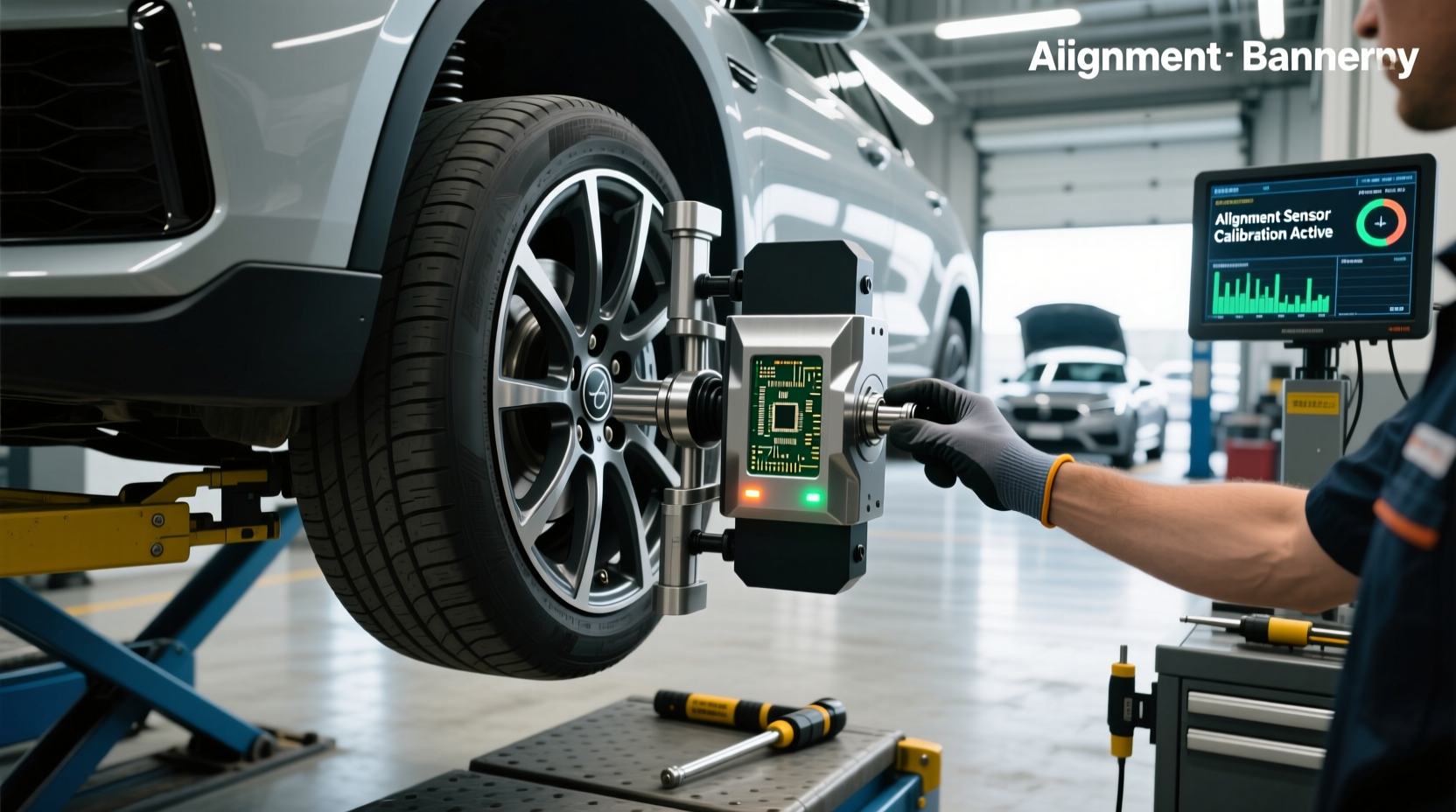
Short Introduction
If you're asking how to choose a wheel alignment sensor, start by identifying your primary use—professional auto repair, mobile service, or DIY diagnostics. Modern alignment systems rely on precise sensors to measure camber, caster, and toe angles, ensuring vehicle safety, tire longevity, and compatibility with Advanced Driver Assistance Systems (ADAS) 1. The most critical decision is selecting between 3D camera, CCD, and laser-based systems. For most workshops, a 3D camera system offers the best balance of speed, accuracy, and ease of use. Avoid outdated laser models unless budget is extremely limited, as they require more manual input and are prone to operator error 2. Always ensure the system supports post-alignment steering angle sensor (SAS) calibration, especially for modern vehicles with ADAS features.
About Wheel Alignment Sensors: What Is an Alignment Sensor?
A wheel alignment sensor is not a standalone component but part of a larger diagnostic system used to measure the angular relationship between a vehicle’s wheels and its frame. These sensors feed data into alignment machines that calculate critical suspension parameters: camber (inward or outward tilt), caster (steering axis angle), and toe (whether wheels point inward or outward relative to each other) 3.
The term "alignment sensor" can sometimes refer to the Steering Angle Sensor (SAS), which is located in the steering column and monitors steering wheel position and rotation speed. This data is sent to the Electronic Control Unit (ECU) and is essential for stability control, traction systems, and ADAS functions like lane-keeping assist 4.
In practice, when technicians refer to alignment sensors, they often mean the sensing units within alignment machines—such as cameras, targets, or electronic pods—that capture wheel positioning data. Understanding this distinction is crucial when researching options, as some guides conflate onboard vehicle sensors with diagnostic equipment components.
Why Wheel Alignment Sensors Are Gaining Popularity
Modern vehicles increasingly depend on precise sensor data for both performance and safety. As ADAS adoption grows, accurate wheel alignment has become a prerequisite for proper system function 5. Misaligned wheels can cause false lane departure warnings or degraded adaptive cruise control responsiveness.
This shift has elevated the importance of high-precision alignment systems in repair shops. Independent garages now invest in professional-grade tools once reserved for dealerships. Additionally, consumers are more aware of uneven tire wear and handling issues, increasing demand for reliable alignment services.
The rise of electric vehicles (EVs), which often have unique suspension geometries and heavier unsprung weights, further drives innovation in alignment technology. As a result, the market for advanced alignment sensors continues to expand, with emphasis on faster setup, wireless connectivity, and integration with broader diagnostic platforms.
Types and Variants
Different alignment technologies offer varying levels of precision, speed, and complexity. Here's a breakdown of the main types:
🛒 3D Camera Alignment Systems
These systems use multiple high-resolution digital cameras mounted on walls or stands to track reflective targets attached to each wheel. Software constructs a 3D model of the vehicle’s suspension geometry.
- Pros: Fast measurement cycles, minimal physical contact, less prone to calibration drift, intuitive interface
- Cons: Higher initial cost, requires consistent lighting and clean targets, space-intensive installation
🔧 CCD (Charge-Coupled Device) Alignment Systems
Each wheel hub connects to a sensor pod containing CCD arrays that communicate via cables or wireless links. Measurements are processed centrally.
- Pros: Good accuracy, portable setups available, suitable for mobile technicians
- Cons: Pods vulnerable to damage, frequent calibration needed, cable management can be cumbersome
🏭 Laser Alignment Systems
One of the earliest methods, using laser beams bounced off mirrors mounted on wheels to determine angles manually.
- Pros: Low upfront cost, simple mechanics
- Cons: Time-consuming, highly dependent on technician skill, outdated for modern ADAS requirements
For most users, 3D camera systems represent the current standard due to their reliability and automation.
Key Features and Specifications to Evaluate
When assessing a wheel alignment sensor system, consider these technical and operational factors:
- ⚙️Measurement Accuracy: Look for sub-0.01° resolution in camber and toe readings. Higher precision reduces repeat visits.
- 🌐Vehicle Coverage: Ensure the software database includes makes and models you commonly service, including EVs and commercial vehicles.
- ✨ADAS Compatibility: Must support dynamic or static recalibration procedures after alignment work 6.
- 📱Software Interface: A user-friendly UI reduces training time and errors. Touchscreen support and guided workflows are beneficial.
- 🔋Connectivity: Wi-Fi or Ethernet enables remote updates and cloud-based reporting.
- ⏱️Setup Time: 3D systems typically take under 5 minutes per vehicle; older systems may require 10–15 minutes.
- ✅Calibration Requirements: Frequent recalibration increases downtime. Some systems self-diagnose alignment integrity.
Pros and Cons
Understanding suitability helps avoid mismatched investments.
👍 Best For
- Professional repair shops performing 5+ alignments daily
- Facilities offering ADAS calibration services
- Technicians prioritizing repeatability and audit trails
👎 Not Ideal For
- Occasional DIY users (high cost-to-use ratio)
- Spaces with poor lighting or vibration (affects 3D camera accuracy)
- Budget-constrained startups without trained staff
How to Choose a Wheel Alignment Sensor: Step-by-Step Guide
Follow this checklist to make a confident selection:
- 📌Define Your Use Case: Are you a mobile technician, small shop owner, or fleet manager? Mobile users may prefer compact CCD systems; fixed shops benefit from 3D cameras.
- 🔍Evaluate Accuracy Needs: If servicing luxury or EV models, prioritize ±0.01° tolerance.
- 📋Verify ADAS Support: Confirm the system includes OEM-specific calibration routines for brands like Tesla, BMW, or Toyota.
- 🧰Assess Installation Requirements: 3D systems need wall mounting and controlled ambient light. Measure your bay space and ceiling height.
- 📊Review Software Updates: Check how often the manufacturer releases updates and whether they’re included in the purchase.
- 📎Check Integration Options: Can it connect to your existing diagnostic scanner or shop management software?
- ❗Avoid These Red Flags:
- No SAS reset functionality
- Limited vehicle coverage
- No technical support or training included
- Vague claims about “AI-powered” features without explanation
Price & Market Insights
Pricing varies significantly based on type and capability:
- Laser Systems: $1,000–$3,000 — largely obsolete for modern needs
- CCD Systems: $5,000–$12,000 — mid-tier option with moderate maintenance
- 3D Camera Systems: $15,000–$30,000+ — industry standard for professional shops
Entry-level 3D systems have entered the market around $10,000, blurring the line with high-end CCD kits. However, long-term value depends on durability, update frequency, and support quality. Consider leasing or financing if upfront cost is prohibitive. Prices may vary by region and distributor, so request formal quotes from multiple suppliers.
Top-Seller & Competitive Analysis
While specific brand recommendations are avoided, top-tier systems generally share these traits: robust software ecosystems, global technical support, and compliance with ISO or OIML standards where applicable.
| Feature | 3D Camera System | CCD System | Laser System |
|---|---|---|---|
| Accuracy | ±0.01° | ±0.02° | ±0.1° |
| Setup Time | 3–5 min | 5–8 min | 10–15 min |
| ADAS Support | Yes (full) | Limited | No |
| Maintenance Need | Low | Moderate | High |
| Best Environment | Fixed bay | Mobile/flexible | Basic garage |
When comparing models, focus on total cost of ownership—not just purchase price. Factor in expected lifespan (typically 7–10 years), calibration costs, and software subscription fees if applicable.
Customer Feedback Synthesis
Based on aggregated reviews and technician reports:
✅ Frequently Praised
- Speed and consistency of 3D systems
- Clear visual guidance during alignment process
- Reliable ADAS calibration modules
- Responsive customer support from established brands
❌ Common Complaints
- Sudden software bugs after updates
- Targets easily damaged or lost
- Complex licensing models restricting multi-bay use
- Inadequate training materials for new hires
Many negative experiences stem from improper installation or lack of technician training rather than hardware flaws.
Sourcing & Supplier Tips
Procurement decisions should include due diligence:
- 🛒Purchase Channels: Buy directly from authorized distributors to ensure warranty validity.
- 👥Volume Buyers: Inquire about bulk pricing for multi-bay installations or franchise operations.
- 🚚Shipping & Handling: Alignment cameras are sensitive; confirm insurance and handling protocols.
- 🧼Pre-Delivery Checks: Inspect all components upon arrival. Test communication between sensors and console before final payment.
- 🔗Reseller Verification: Confirm the supplier provides access to firmware updates and technical documentation.
For international buyers, verify voltage compatibility and language localization of software interfaces.
Maintenance, Safety & Legal Considerations
To maintain accuracy and safety:
- 🔧Perform regular system checks using calibration fixtures.
- 🔋Keep batteries in wireless pods charged; low power affects signal stability.
- 👁️Clean camera lenses and targets frequently to prevent dust-induced errors.
- ⚖️Follow local regulations regarding equipment certification—some regions require periodic metrological verification.
- 📝Document all calibrations and alignments for liability protection.
Always follow manufacturer guidelines for operation and storage. Never modify software or bypass safety interlocks.
Conclusion
If you need fast, accurate alignments for modern vehicles—especially those with ADAS—a 3D camera-based system is the optimal choice. For mobile or budget-limited operations, a well-maintained CCD system can suffice. Avoid legacy laser systems unless working exclusively on older, non-computerized vehicles. Ultimately, your selection should align with your volume, technical capacity, and service goals. Prioritize systems with strong software support, clear calibration workflows, and proven reliability in real-world conditions.




 浙公网安备
33010002000092号
 浙B2-20120091-4