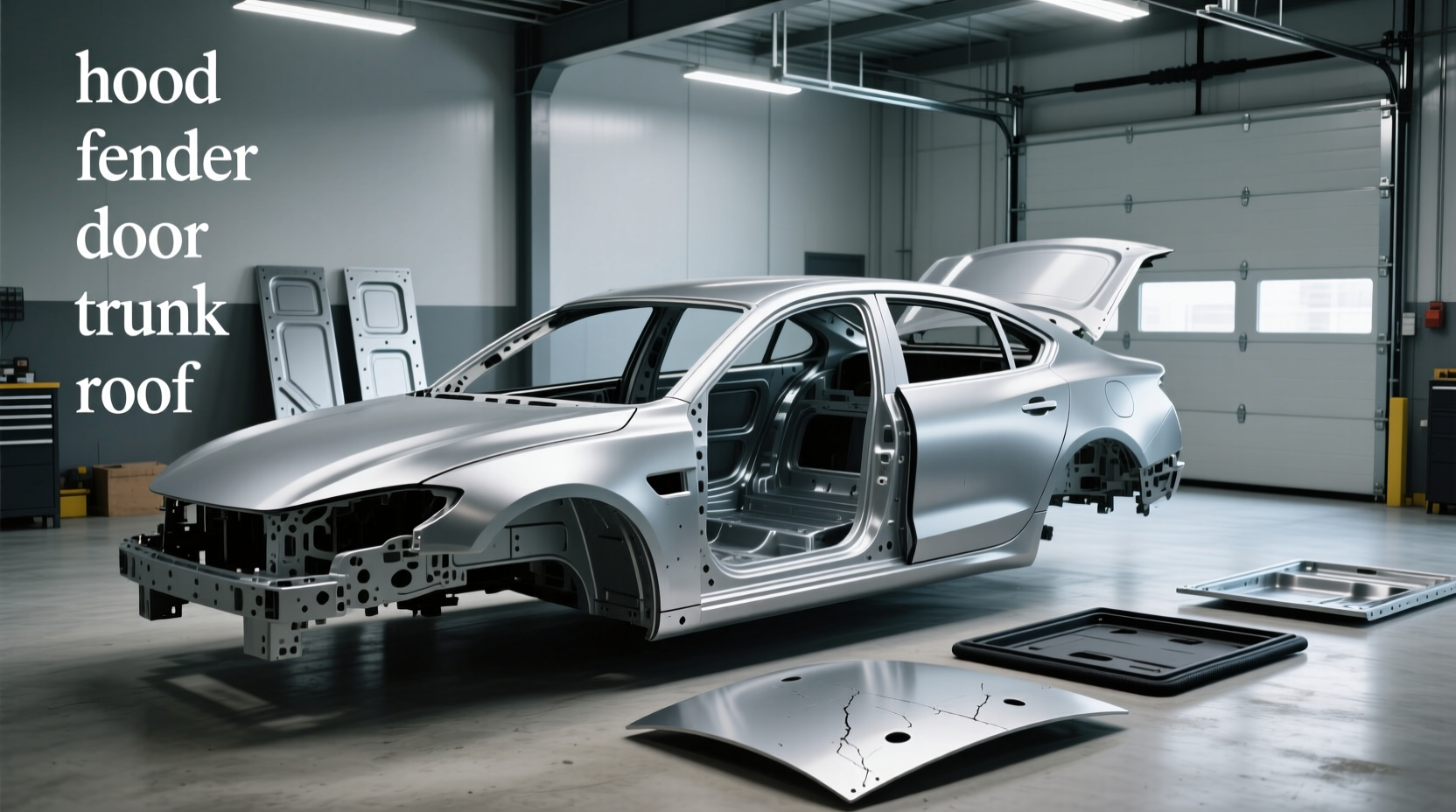
If you're asking how to choose panel board for cars or wondering what are the panels on a car called, start here: exterior body panels like fenders, quarter panels, bumpers, and hoods are critical for structural integrity, aerodynamics, and aesthetics 1. When replacing or upgrading, prioritize OEM-matched fit, material durability (steel vs. aluminum vs. composite), corrosion resistance, and compatibility with your vehicle’s make and model. Avoid cheap aftermarket panels with poor alignment—these increase wind noise and reduce resale value.
Understanding correct terminology—such as A-pillar, rocker panel, or trunk lid—is essential during insurance claims, repairs, or sourcing replacements 2. Whether restoring a classic car or repairing collision damage, knowing what each panel is called helps ensure accurate communication with mechanics and suppliers. This guide breaks down types, materials, costs, and key evaluation criteria so you can make an informed decision when buying car body panels.
About Panel Board for Cars, What Are the Panels on a Car Called?
The term "panel board for cars" may be misleading—there isn't a single component known as a "panel board." Instead, vehicles use multiple individual metal or composite body panels that form the outer shell. These include structural and cosmetic parts such as fenders, doors, hoods, bumpers, and roof panels. Collectively, they’re referred to as automotive body panels.
Exterior panels serve several functions: protecting internal components, shaping aerodynamic performance, absorbing impact energy via crumple zones, and maintaining unibody rigidity 1. Interior panels—like dashboards, door trims, and pillar covers—are typically made from plastic, vinyl, or fabric and contribute to comfort and sound insulation.
Common naming conventions often use location-based labels:
- 📍Fender: Covers front wheels
- 📍Quarter Panel: Rear side section behind doors
- 📍Rocker Panel/Sill: Below door openings
- 📍Hood/Bonnet: Engine compartment cover
- 📍Trunk/Boot Lid: Rear storage access
- 📍Pillars (A, B, C): Vertical roof supports
Knowing these terms ensures clarity when ordering replacements or discussing repairs.
Why Panel Board for Cars, What Are the Panels on a Car Called? Is Gaining Popularity
Interest in car body panels has grown due to rising repair costs, increased demand for customizations, and more DIY enthusiasts tackling restoration projects. With higher insurance premiums after minor collisions, many drivers now consider purchasing individual panels instead of relying solely on dealerships.
Additionally, electric vehicle (EV) designs often feature unique panel geometries optimized for battery integration and drag reduction, increasing consumer curiosity about panel materials and construction methods. Lightweight composites and aluminum are becoming more common to improve efficiency 3.
Online marketplaces have also made it easier to source both OEM and aftermarket panels globally, fueling interest in understanding specifications before purchase. Buyers want to know not just what the panels are called, but also how to evaluate quality, fitment, and long-term value—key aspects covered in this buying guide.
Types and Variants
Different vehicles require specific panel types based on design, function, and placement. Here's a breakdown of major categories and their variants:
1. Exterior Body Panels
- 🛒OEM (Original Equipment Manufacturer)
Pros: Perfect fit, factory finish, warranty coverage
Cons: High cost, limited availability for older models - 🛒Aftermarket
Pros: Lower price, wide selection
Cons: Inconsistent quality, potential misalignment, thinner gauge metal - 🛒Salvage/Used Panels
Pros: Cost-effective, original finish intact
Cons: Risk of hidden damage, no warranty, paint mismatch
2. By Material Type
- ⚙️Steel: Most common; durable but prone to rust
- ⚙️Aluminum: Lighter, corrosion-resistant; used in luxury/EVs; harder to repair
- ⚙️Composite/Fiberglass: Flexible, lightweight; often in bumpers or custom kits; less rigid than metal
3. Functional Classifications
- 🔧Structural Panels: Hood supports, radiator frames, floor pans—critical for safety
- ✨Cosmetic Panels: Fenders, trim pieces—mainly aesthetic
- 🛡️Impact-Absorbing: Bumpers, crumple zone sections—designed to deform safely
Choosing depends on whether you need functional replacement or visual upgrade.
Key Features and Specifications to Evaluate
When evaluating what to look for in panel board for cars, what are the panels on a car called?, focus on these measurable factors:
- 📏Dimensional Accuracy: Must match OEM specs within ±2mm to avoid gaps or stress points
- 🔩Mounting Points: Check number and position of bolt holes and clips
- 🎨Finish Type: Pre-painted, primed, or bare metal? Pre-painted saves labor but risks color mismatch
- 🌧️Corrosion Resistance: Galvanized steel or e-coated surfaces last longer in humid climates
- ⚖️Weight: Aluminum panels reduce overall weight (~30–50% lighter than steel)
- 🧱Material Gauge: Thicker gauges (lower number) offer better dent resistance
- 🌐VIN Compatibility: Confirm panel fits your exact year, make, model, and trim level
Always request dimensional drawings or comparison photos from suppliers if detailed specs aren’t listed.
Pros and Cons
Every panel type comes with trade-offs. Consider these before deciding:
| Panel Type | Best For | Limitations |
|---|---|---|
| OEM Steel Panels | Factory-quality repairs, high-resale vehicles | Expensive, long lead times |
| Aftermarket Aluminum | Weight-sensitive builds, modern restorations | Harder to weld, requires specialized tools |
| Composite Bumpers | Off-road protection, flexible impact zones | Less structural support, UV degradation over time |
| Used Salvage Panels | Budget fixes, rare models | No guarantee of condition, possible prior accident history |
Suitable Scenarios:
- ✅ Collision repair requiring precise fit
- ✅ Classic car restoration needing authentic appearance
- ✅ Custom builds where weight savings matter
Not Recommended For:
- ❌ Structural safety-critical areas without professional installation
- ❌ High-humidity environments without proper undercoating
- ❌ Vehicles intended for long-term ownership unless corrosion protection is verified
How to Choose Panel Board for Cars, What Are the Panels on a Car Called? (Buying Guide)
Follow this step-by-step checklist when selecting car panels:
- 🔍Identify the Exact Panel: Use diagrams or VIN lookup tools to confirm name and location (e.g., driver-side front fender)
- 📊Compare Material Options: Decide between steel (cost-effective), aluminum (lightweight), or composite (flexible)
- 📋Verify Fitment Data: Ensure compatibility with your vehicle’s generation and body style
- 🎨Evaluate Finish Needs: Bare metal allows custom paint; pre-finished reduces labor but may not match
- 🏭Assess Supplier Reputation: Look for warranties, return policies, and customer reviews
- 🧰Plan Installation Method: Will you install yourself or hire a shop? Some panels require welding or frame alignment
Red Flags to Avoid:
- ❌ Vague product descriptions lacking measurements
- ❌ No clear return policy or fitment guarantee
- ❌ Panels priced significantly below market average (indicates thin metal or defects)
- ❌ Missing mounting hardware or instructions
Ask suppliers for sample images of installed units and check forums for user experiences with specific brands.
Price & Market Insights
Prices vary widely depending on type, material, origin, and region:
- 💲OEM Steel Panels: $200–$800 each (hoods, fenders)
- 💲Aftermarket Steel: $80–$300
- 💲Aluminum Panels: $400–$1,200+ (due to manufacturing complexity)
- 💲Used/Salvage Panels: $50–$250 (condition-dependent)
Prices may differ by country due to import duties, shipping, and local labor rates. Always factor in painting and installation costs, which can double total project expense. For best value, consider OEM-equivalent aftermarket panels from reputable manufacturers that offer fitment guarantees.
Top-Seller & Competitive Analysis
While no universal “best” panel exists, top-selling options share consistent traits: precise engineering, rust protection, and broad compatibility. Below is a comparison of commonly purchased panel types:
| Brand/Type | Material | Avg. Price | Fit Accuracy | Warranty |
|---|---|---|---|---|
| Genuine OEM (e.g., Toyota, Ford) | Steel/Aluminum | $500+ | ⭐⭐⭐⭐⭐ | Lifetime (dealer) |
| Dorman Aftermarket | Steel | $180 | ⭐⭐⭐☆ | 1-year limited |
| Replace® Brand | Steel | $220 | ⭐⭐⭐⭐ | 3-year limited |
| APC (Auto Parts China) | Steel | $150 | ⭐⭐☆ | 6-month |
Note: Ratings based on aggregated customer feedback. Fit accuracy may vary by vehicle model. Always confirm part number cross-references.
Customer Feedback Synthesis
Analysis of buyer reviews reveals recurring themes:
Common Praises:
- “Perfect fit right out of the box” – especially noted for OEM and Replace® brand
- “Saved hundreds compared to dealership pricing” – frequent with Dorman and APC users
- “Pre-primed surface made painting easy” – appreciated in DIY communities
Frequent Complaints:
- “Hole positions were off by 5mm—had to drill new ones” – mainly aftermarket budget panels
- “Metal felt too thin; dented during installation” – lower-tier suppliers
- “Color didn’t match my car even though labeled ‘factory-matched’” – issue with pre-painted finishes
These insights highlight the importance of vetting fitment and finish claims before purchase.
Sourcing & Supplier Tips
Where you buy matters as much as what you buy:
- 🏪Dealerships: Best for OEM panels; high cost but guaranteed compatibility
- 🌐Online Retailers (e.g., RockAuto, CARiD): Competitive pricing, user reviews, return options
- 🚛Wholesale Distributors: Ideal for shops or bulk buyers; MOQs apply
- 🔄Salvage Yards (e.g., Pick n Pull): Good for rare or discontinued models; inspect carefully
Tips:
- Request high-resolution photos of actual inventory
- Confirm return window and restocking fees
- For international orders, clarify customs responsibilities
- Check if hardware (pins, brackets) is included
When buying in bulk, negotiate packaging standards to prevent transit damage.
Maintenance, Safety & Legal Considerations
Proper maintenance extends panel life:
- 🧼 Regular washing to remove road salt and contaminants
- 🛡️ Apply wax or ceramic coating to painted surfaces
- 🔧 Inspect seams and welds annually for rust or cracks
Safety-wise, never compromise structural panels with substandard replacements—improperly fitted hoods or pillars can fail in crashes. Repairs involving load-bearing areas should be done by certified technicians using recommended adhesives and fasteners.
Legally, modified or replaced panels must comply with local vehicle inspection standards. While cosmetic changes are usually allowed, alterations affecting lighting, visibility, or emissions may require certification. Always verify local regulations before installing non-OEM panels.
Conclusion
Choosing the right car body panel involves balancing cost, material, fit, and long-term reliability. If you need factory-level precision and plan to keep the vehicle long-term, OEM panels are worth the investment. For budget-conscious repairs, select well-reviewed aftermarket brands with fitment guarantees. Enthusiasts modifying EVs or performance cars should explore lightweight aluminum or composite options—but ensure they don’t interfere with sensor systems or structural integrity.
Remember: knowing what are the panels on a car called empowers clearer communication and smarter purchases. Whether you're answering how to choose panel board for cars or comparing suppliers, use this guide to assess real-world performance, avoid common pitfalls, and make confident decisions.
Frequently Asked Questions
- What are the main exterior panels on a car?
- The primary exterior panels include the hood, fenders, doors, roof, quarter panels, trunk lid, bumpers, and rocker panels. Each serves structural, protective, or aesthetic purposes.
- Are aftermarket car panels reliable?
- Some aftermarket panels are well-made and offer good value, but quality varies. Look for brands with fitment warranties and positive user feedback to minimize risk.
- How do I know if a panel will fit my car?
- Use your VIN to confirm compatibility, compare dimensions with OEM specs, and consult fitment charts provided by reputable sellers. When in doubt, contact the supplier directly.
- Can I install a car panel myself?
- Simple panels like fenders or bumpers can be DIY-installed with basic tools. Structural or welded panels (e.g., floor sections) require professional equipment and expertise.
- Do car panels affect fuel efficiency?
- Yes—damaged or poorly aligned panels increase aerodynamic drag. Lightweight materials like aluminum can slightly improve efficiency by reducing vehicle mass.




 浙公网安备
33010002000092号
 浙B2-20120091-4