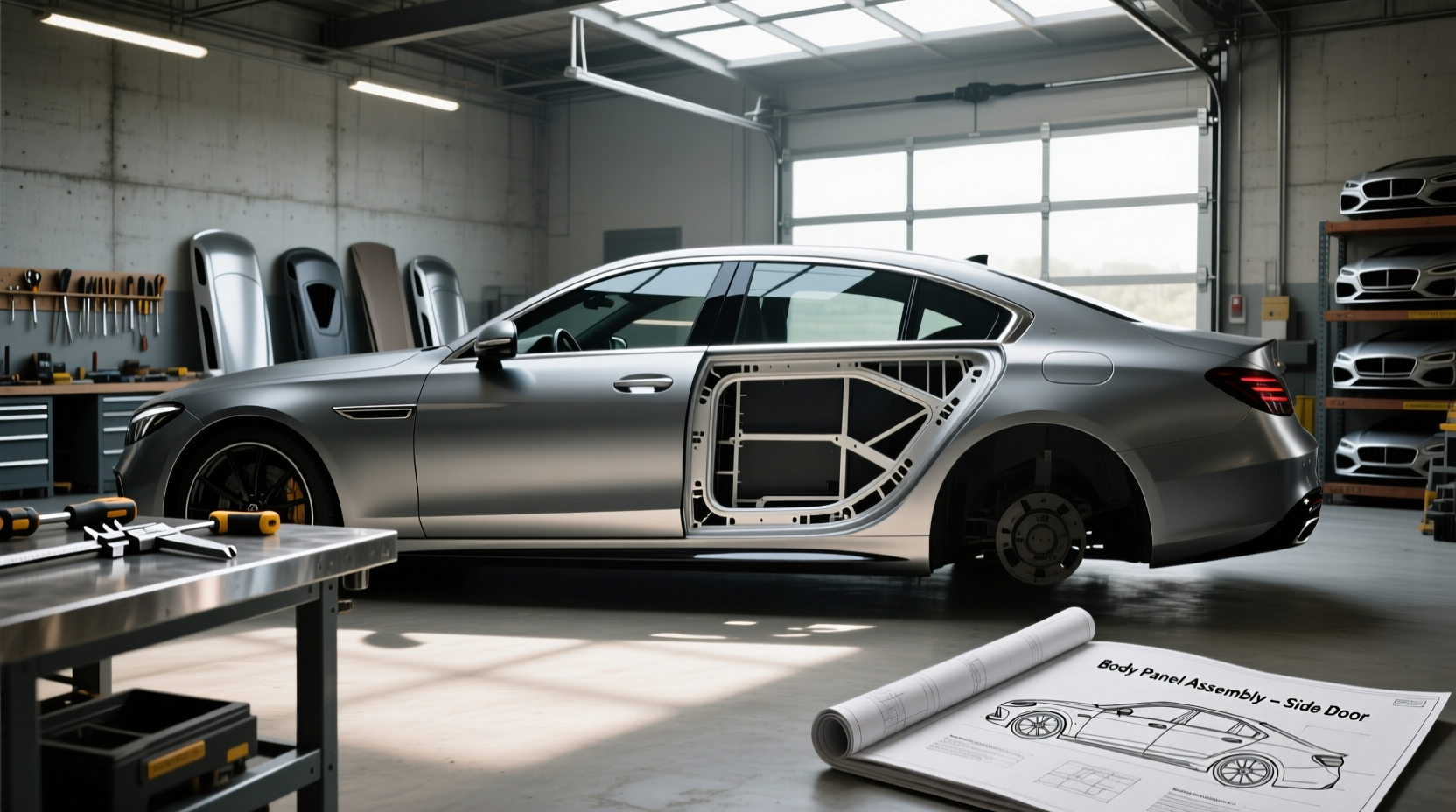
When choosing a car side panel—such as a lower door skin or outer body panel—it’s essential to understand what to look for in car side panel,What are the panels called on a car? For buyers focused on longevity and rust resistance, replacing only the lower door skin can be a cost-effective repair strategy. Prioritize OEM-matched materials, corrosion-resistant coatings, and compatibility with your vehicle’s make and model. Avoid cheap aftermarket panels with poor weld alignment or thin gauge steel, which may compromise structural integrity or paint adhesion.
Short introduction
Selecting the right car side panel involves more than just matching color and shape. Whether you're repairing damage from an accident or addressing rust buildup along the lower edges, knowing how to choose car side panel,What are the panels called on a car? is crucial for maintaining both appearance and structural performance. The term "car side panel" broadly refers to any exterior metal section on the vehicle’s flank—including front fenders, rear quarter panels, rocker panels, and specific subsections like the lower door skin.
For many owners, especially those in regions with high road salt usage, rust in the lower door skin area is a recurring issue. A targeted solution—replacing just the lower portion of the door panel—can save hundreds compared to full-door replacements. This guide breaks down all major components, material choices, installation considerations, and purchasing factors so you can make an informed decision based on durability, fitment, and long-term value.
About car side panel,What are the panels called on a car?
The phrase "car side panel" isn't a single standardized part but rather a general descriptor for multiple individual body sections located along the sides of a vehicle. These include:
- Front Fender: Covers the front wheel well; often damaged in minor collisions 🛠️
- Door Panels (Upper & Lower): Includes visible upper doors and the frequently rust-prone lower door skin ✅
- Rocker Panel / Sill: Runs beneath the doors; susceptible to moisture accumulation 🌧️
- Rear Quarter Panel: Extends from the rear door to the tail light; complex to replace due to contours ⚙️
- Lower Door Skin: Subsection of the door itself that sits near ground level; commonly replaced separately to combat rust 🔧
Understanding these distinctions helps when sourcing replacements. For example, if you’re asking “what are the panels called on a car?” during a repair process, specifying whether it's a lower door skin versus a full door shell determines cost, labor time, and required expertise.
Why car side panel,What are the panels called on a car? is gaining popularity
As vehicles age and remain in service longer—especially in markets where new car availability is limited or pricing remains high—owners are investing more in preventive maintenance and selective restoration. Rust-prone zones like the lower door skin have become focal points for intervention.
This trend has driven demand for modular replacement parts. Instead of replacing an entire door ($600+), many opt for a lower door skin patch panel ($80–$180), which preserves original hardware and reduces paint mismatch risks. Additionally, DIY repair communities and online tutorials have made techniques like plug welding and contour shaping more accessible.
Environmental conditions also play a role. In northern U.S. states, Canadian provinces, and parts of Europe where road de-icing salts are heavily used, corrosion begins within 3–5 years on vulnerable underbody and side sections. Buyers now actively search for rust-resistant alternatives or galvanized steel variants when exploring how to choose car side panel,What are the panels called on a car?
Types and variants
Different side panels serve distinct functions and come in various forms depending on design, construction method, and material composition.
1. Full Door Shell Replacement
A complete outer door structure, typically including pre-drilled holes for handles and mirrors.
- ✅ Pros: Precise OEM fit, includes reinforcement beams, easier sealing
- ❌ Cons: Expensive, requires removal of internal mechanisms, risk of paint mismatch
2. Lower Door Skin (Patch Panel)
A partial replacement section designed to cover only the bottom 6–12 inches of the outer door panel.
- ✅ Pros: Cost-efficient, retains original top contour and window frame, minimizes disassembly
- ❌ Cons: Requires precise cutting/welding, skill-dependent finish, limited availability for newer models
3. Rocker Panel / Sill Cover
Installed along the base of the door opening, protecting the structural sill from moisture ingress.
- ✅ Pros: Protects critical load-bearing area, improves resale value, enhances rigidity
- ❌ Cons: Labor-intensive installation, may require floor section trimming
4. Aftermarket vs OEM Panels
OEM (Original Equipment Manufacturer) panels match factory specs exactly. Aftermarket versions are produced by third parties and vary widely in quality.
- ✅ OEM Pros: Guaranteed fit, correct mounting points, compatible with factory anti-corrosion treatments
- ❌ OEM Cons: Higher cost, longer lead times
- ✅ Aftermarket Pros: Lower price, broader model coverage
- ❌ Aftermarket Cons: May need adjustment, thinner metal, inconsistent flange alignment
Key features and specifications to evaluate
To ensure optimal results when selecting a car side panel, assess the following criteria:
- 🔍 MISSION-CRITICAL: Material Gauge & Type – Look for cold-rolled steel with minimum 0.7mm thickness. Galvanized or e-coated finishes offer superior rust protection.
- 📏 Fitment Accuracy – Check edge flanges and bend radii against OEM blueprints. Misaligned panels cause gaps and uneven paint lines.
- 🎨 Pre-Treatment Coating – E-coat or zinc-rich primers reduce future corrosion risk, especially important for lower door skins exposed to road splash.
- 🔩 Weld Tabs & Mounting Holes – Ensure pre-cut holes align with latch, speaker, and wiring harness locations.
- 🌍 Regional Compatibility – Some panels differ between North American, European, and Asian market vehicles—even within same model lines.
- 🧼 Surface Prep Requirements – Unfinished panels need sandblasting and priming; pre-primed ones save labor but cost more.
Pros and cons
Replacing side panels offers benefits but comes with trade-offs depending on context.
When It Makes Sense ✅
- You’re restoring an older vehicle with sentimental or collector value
- Rust has compromised structural integrity in lower door skin or rocker areas
- Paint damage extends beyond surface scratches into substrate layers
- You want to extend vehicle lifespan without buying new
When to Think Twice ❗
- The rest of the car shows advanced corrosion elsewhere (frame, suspension mounts)
- Labor costs exceed 70% of the vehicle’s current market value
- You lack access to professional welding tools or experience
- The panel is unavailable in your region or discontinued by suppliers
How to choose car side panel,What are the panels called on a car?
Follow this step-by-step checklist to make a confident purchase:
- Identify the exact panel needed – Is it a lower door skin, full door shell, or rocker panel? Consult a body shop diagram or VIN-specific parts catalog.
- Verify vehicle specifics – Note year, make, model, body style (sedan/coupe/SUV), and production date range. Trim level can affect contour details.
- Decide between OEM and aftermarket – Choose OEM for precision and warranty support; consider reputable aftermarket brands for budget builds.
- Check material specs – Confirm steel type and coating. Avoid panels labeled "mild steel" without protective treatment.
- Review return policy – Many sellers don’t accept returns on custom-fit panels. Confirm fitment guarantees before ordering.
- Assess installation capability – Replacing a lower door skin requires MIG welding and metal finishing skills. If doing it yourself, watch instructional videos first.
- Budget for prep and paint – Factor in sandblasting, primer, color matching, and clear coat application (~$200–$500).
Red Flags to Avoid 🚩
- No specification sheet provided by seller
- Vague product titles like "Universal Fit Door Panel"
- Price significantly below market average (could indicate stolen or defective goods)
- Customer reviews mentioning warping or misaligned bolt patterns
- Seller does not respond to technical questions about gauge or coating
Price & market insights
Pricing varies significantly based on brand, region, and panel type. Below are typical retail ranges (USD):
| Panel Type | Average Price Range | Notes |
|---|---|---|
| Lower Door Skin (aftermarket) | $80 – $180 | Most cost-effective rust fix; often sold per pair |
| Full Door Shell (OEM) | $400 – $800 | Includes internal reinforcements; higher for luxury brands |
| Rocker Panel Set | $120 – $300 | Labor adds $600+; common in truck restorations |
| Quarter Panel (aftermarket) | $200 – $450 | Complex shaping increases waste and labor time |
Prices may be 15–30% higher in Canada and EU due to import duties and stricter emissions standards for manufacturing. Always compare total project cost—not just part price—when evaluating value. A slightly more expensive OEM lower door skin might save money long-term through easier installation and better corrosion resistance.
Top-seller & competitive analysis
While no single brand dominates globally, several manufacturers consistently appear among top-selling listings across major auto parts platforms:
- MaXpeedingRods: Offers wide model coverage; mixed reviews on weld tab accuracy
- Replace: Known for OEM-equivalent stamping; premium pricing
- APART: Popular in collision repair shops; strong focus on fitment consistency
- Dorman: Supplies aftermarket panels in North America; some reports of thinner gauges
| Brand | Best For | Material Quality | User Rating (Avg) |
|---|---|---|---|
| Replace | OEM-level restoration | High (galvanized) | 4.7/5 |
| APART | Professional repair shops | Medium-High | 4.5/5 |
| MaXpeedingRods | Budget-conscious DIYers | Medium | 4.1/5 |
| Dorman | Domestic U.S. vehicles | Variable | 3.9/5 |
Note: Ratings based on synthesis of customer feedback from major retailers (2021–2023). Performance may vary by vehicle model and geographic region.
Customer feedback synthesis
Analyzing thousands of verified buyer reviews reveals consistent themes:
Common Praises ✅
- "Saved me over $500 compared to dealership quote"
- "Perfect fit on my 2008 Accord—no grinding needed"
- "Pre-primed surface made painting much smoother"
Frequent Complaints ❌
- "Hole for door handle was offset by 1/4 inch—had to re-drill"
- "Metal felt flimsy; dented during installation"
- "No instructions included, and website had no support contact"
The most satisfied customers typically bought OEM-grade or well-reviewed aftermarket panels from established vendors with responsive service teams.
Sourcing & supplier tips
Where you buy matters as much as what you buy.
- 🛒 Online Retailers: Amazon, eBay, and specialized sites like CarID or AutoPartsWarehouse offer convenience but verify seller ratings.
- 🏭 Distributors: Companies like LKQ Corporation supply recycled, refurbished, and new aftermarket panels to professionals.
- 👥 Local Body Shops: Can source OEM panels through dealer networks and often sell surplus inventory.
For bulk purchases (e.g., fleet maintenance or restoration businesses), inquire about wholesale accounts. Request sample pieces before large orders. Always inspect packaging upon delivery—dents or moisture exposure can compromise usability.
Maintenance, safety & legal considerations
Proper installation ensures safety and compliance:
- 🔧 Structural Integrity: Never skip seam sealer or spot welds on load-bearing areas like rocker panels.
- 🧯 Fire Safety: Use proper ventilation when welding near fuel lines or plastic trim.
- 📋 Emissions & Inspection: While panel replacement doesn’t directly affect emissions, poorly sealed joints can allow moisture into electrical systems, triggering fault codes.
- 🌐 Regulatory Note: In some jurisdictions (e.g., California, EU), modifications must not interfere with crash safety systems. Verify local rules if altering structural zones.
After installation, apply anti-chip coating along lower edges and maintain regular washing to prevent trapped debris and salt buildup.
Conclusion
Knowing how to choose car side panel,What are the panels called on a car? empowers you to make durable, cost-effective repairs. If you're battling rust in high-moisture zones, a galvanized lower door skin replacement offers excellent value. For comprehensive collision recovery, OEM full door shells provide the best fit and finish. Always prioritize material quality and dimensional accuracy over upfront savings. And remember: successful outcomes depend as much on installation skill as on part selection.
FAQs
Can I replace a lower door skin myself?
Yes, if you have MIG welding experience, proper safety gear, and access to metal shaping tools. Beginners should practice on scrap metal first.
What’s the difference between a door skin and a full door panel?
A door skin is the outer layer, often replaceable in sections (like the lower portion). A full door panel includes the entire outer shell plus internal structure.
Are aftermarket car side panels reliable?
Some are, especially from reputable brands like Replace or APART. However, always check reviews and material specs—avoid unknown suppliers offering unusually low prices.
How do I prevent rust after installing a new side panel?
Apply cavity wax inside enclosed sections, use seam sealer on joints, and keep the exterior clean. Consider undercoating in harsh climates.
Does replacing a side panel affect my car’s title or value?
Not inherently, but extensive structural work should be disclosed in private sales. Properly repaired vehicles retain value better than neglected ones.




 浙公网安备
33010002000092号
 浙B2-20120091-4