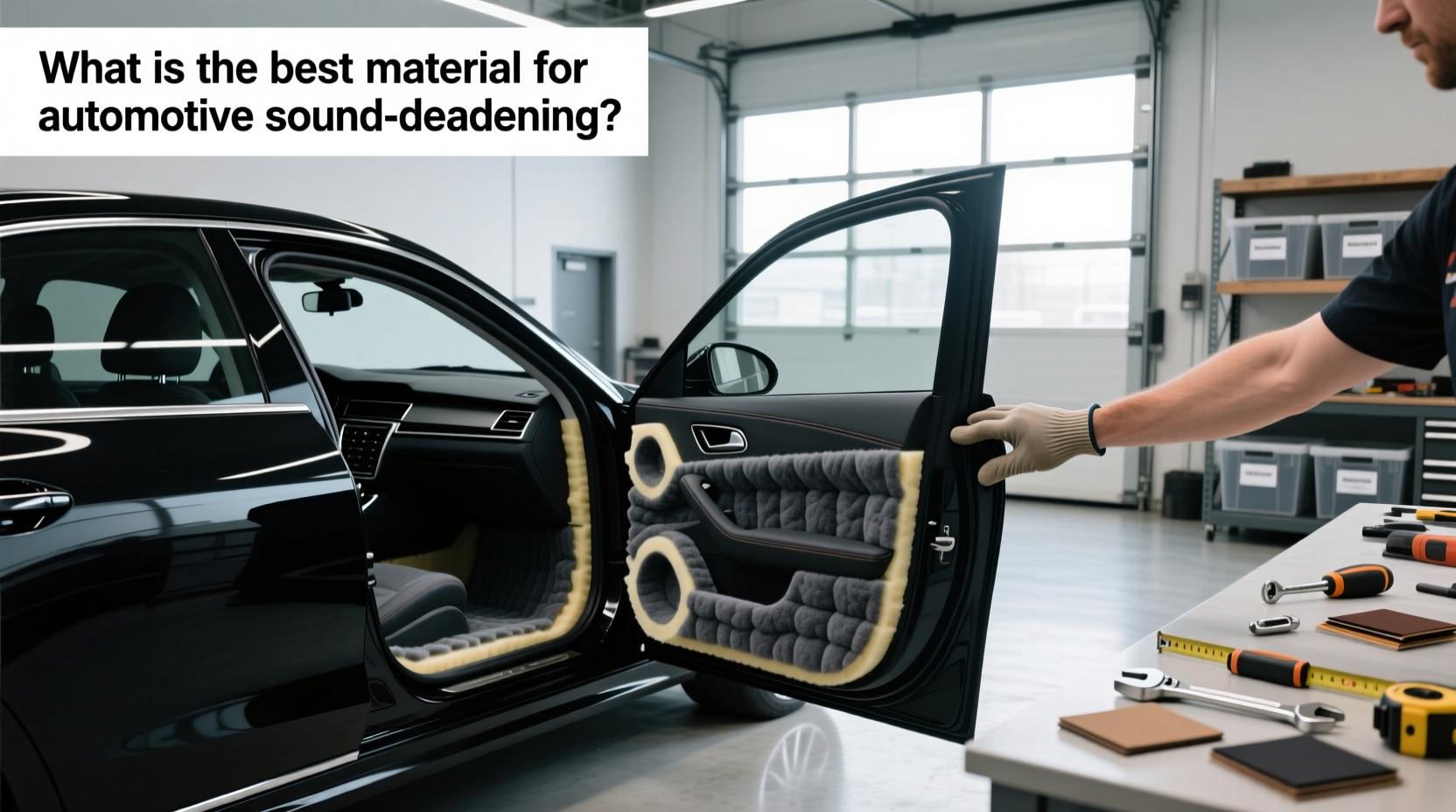
If you're asking how to choose sound deadening felt for car or wondering what is the best material for automotive sound-deadening, the answer depends on your goals. For blocking road noise, Mass Loaded Vinyl (MLV) is most effective due to its high density. To stop panel vibrations and rattles, Constrained Layer Dampers (CLD) made of butyl rubber are superior. Closed-cell foam (CCF) helps prevent interior trim from buzzing and absorbs echo. A layered approach—using CLD first, then MLV with an air gap—is ideal for maximum noise reduction in doors, floor, and firewall 12. Avoid full coverage with heavy materials unless necessary—25–60% CLD suffices for vibration control.
About Sound Deadening Felt for Car: What Is the Best Material for Automotive Sound-Deadening?
The term "sound deadening felt" is often used broadly, but it typically refers to adhesive-backed damping mats or foams applied inside vehicle panels. True felt is rarely used alone; instead, modern solutions include viscoelastic butyl rubber sheets, mass-loaded vinyl, and closed-cell foam composites. These materials reduce unwanted noise through three mechanisms: damping (converting vibration into heat), blocking (adding mass to stop sound waves), and absorption (trapping airborne sound).
When evaluating what is the best material for automotive sound-deadening, consider that no single product does everything. Butyl-based CLD targets structural vibrations from speakers or road inputs. MLV blocks low-frequency drone like tire hum. CCF isolates plastic parts and reduces cabin echo. Each has distinct physical properties and installation requirements. Understanding their roles helps you build a targeted system rather than relying on generic "felt" kits sold online.
Why Sound Deadening Felt for Car Is Gaining Popularity
🚗 Drivers increasingly seek quieter cabins for comfort, better audio clarity, and reduced fatigue on long drives. Modern vehicles still transmit significant road, wind, and engine noise, especially at highway speeds. Aftermarket sound deadening offers a cost-effective upgrade without replacing insulation or modifying factory seals.
🔧 Enthusiasts use these materials to improve in-car audio quality by stiffening door panels and reducing resonance behind speakers. Electric vehicle owners also apply damping layers to counteract new sources of high-frequency whine from motors and inverters. The DIY accessibility of peel-and-stick products makes this trend scalable—from partial treatment to full-cabin builds.
Types and Variants
🛒 Constrained Layer Damper (CLD)
- Pros: Excellent vibration damping, heat-resistant, durable, improves speaker performance.
- Cons: Heavy, higher cost, requires clean metal surface for adhesion.
- Best for: Doors, roof, trunk, firewall—any bare metal panel prone to resonance.
🛒 Mass Loaded Vinyl (MLV)
- Pros: Superior airborne noise blocking, especially low frequencies; flexible and easy to cut.
- Cons: Must not contact metal directly; needs decoupling layer; adds substantial weight.
- Best for: Floor, trunk, firewall—areas needing maximum sound isolation.
🛒 Closed-Cell Foam (CCF)
- Pros: Lightweight, prevents rattle between plastics and metal, provides thermal insulation.
- Cons: Limited damping capability; not effective as primary barrier.
- Best for: Behind door cards, around trim, speaker baffles.
🛒 Spray-On & Liquid Undercoatings
- Pros: Reaches complex shapes and undercarriage areas; doubles as rust protection.
- Cons: Messy application, longer cure time, less predictable thickness.
- Best for: Wheel wells, chassis underside, frame rails.
Key Features and Specifications to Evaluate
When deciding what to look for in sound deadening felt for car, assess these technical factors:
- Density/Mass: Measured in kg/m² or lbs/ft². Higher mass (e.g., MLV at 1–2 kg/m²) blocks more sound.
- Thickness: Ranges from 1.5mm to 4mm. Thicker isn't always better—balance space constraints and effectiveness.
- Adhesive Type: Butyl-based adhesives last longer and resist heat cycling better than acrylics.
- Temperature Resistance: Should withstand -20°C to +80°C without cracking or oozing.
- Flexibility: Must conform to curved panels without bubbling or lifting.
- VOC Content: Low-VOC or odorless formulas preferred, especially for enclosed spaces.
Pros and Cons
✅ Advantages
- Reduces driver fatigue by lowering cabin noise levels.
- Improves speech intelligibility and music fidelity.
- Minimizes rattles and buzzes from aging interiors.
- Can enhance perceived build quality of older vehicles.
❌ Limitations
- Adds weight (5–20 kg depending on coverage), potentially affecting fuel efficiency slightly.
- Labor-intensive installation requiring panel removal.
- Improper layering can trap moisture or cause odors.
- Diminishing returns beyond certain coverage thresholds.
How to Choose Sound Deadening Felt for Car: A Step-by-Step Guide
- Define Your Goal: Are you targeting road noise? Speaker clarity? Or eliminating rattles? This determines material priority.
- Inspect Key Areas: Open doors, remove floor mats, check firewall access. Identify bare metal vs. existing insulation.
- Select Primary Material: Use CLD for vibration control, MLV for noise blocking, CCF for isolation.
- Plan Layering Strategy: Apply CLD first (25–60% coverage), add CCF as decoupler, then MLV with full coverage if needed.
- Measure Coverage Area: Calculate square footage for doors, floor, etc., to avoid underbuying.
- Check Compatibility: Ensure materials don’t interfere with wiring, sensors, or drainage paths.
🚩 Red Flags to Avoid
- Products labeled "eco-friendly" but made with asphalt—these can melt and smell over time.
- Extremely cheap kits with no spec sheet or test data.
- Materials claiming “instant results” without proper installation steps.
- Sprays with strong solvent odors indicating high VOC content.
Price & Market Insights
Pricing varies significantly based on material type and brand. As of 2025:
- Butyl CLD: $1.50–$3.00 per sq ft — mid to high-end performance.
- MLV: $2.00–$4.00 per sq ft — premium for serious noise blocking.
- CCF: $0.80–$1.50 per sq ft — budget-friendly for trim work.
- Spray-on: $30–$60 per gallon — cost-effective for large exterior areas.
A full-door kit might cost $60–$120, while comprehensive treatments (doors + floor + trunk) range from $200–$500. Prices may vary by region and retailer. For best value, prioritize treating the floor and doors first—these yield the highest perceptible improvement.
Top-Seller & Competitive Analysis
Popular brands offer complete kits combining CLD, CCF, and sealants. While specific models change frequently, here’s how to compare common configurations:
| Feature | Basic Kit (Foam + Thin Pad) | Midspec Kit (Butyl CLD + CCF) | Premium Kit (CLD + MLV + CCF) |
|---|---|---|---|
| Noise Reduction | Moderate (high-freq only) | High (vibration + mid-bass) | Very High (full spectrum) |
| Weight Added | Low (~3–5 kg) | Medium (~8–12 kg) | High (~15–20 kg) |
| Installation Time | 2–4 hours | 6–10 hours | 12–20+ hours |
| Price Range | $50–$100 | $150–$300 | $350–$600 |
| Best Use Case | Rattle prevention, light echo control | Better audio, moderate road noise | Quiet luxury cabin, EV upgrades |
Customer Feedback Synthesis
Based on aggregated buyer reviews and forum discussions:
👍 Common Praises
- “Noticeable drop in road noise after treating the floor.”
- “Speakers sound clearer and tighter—like they’re in a sealed box.”
- “Fixed mysterious dashboard rattle that dealers couldn’t identify.”
👎 Frequent Complaints
- “Cheap kit melted in summer and smelled awful.”
- “Too much material included—I had half left over.”
- “Difficult to shape around curves; bubbled near edges.”
Sourcing & Supplier Tips
You can buy sound deadening materials from automotive specialty retailers, online marketplaces, or direct manufacturers. For bulk purchases (e.g., shops or installers), inquire about wholesale pricing from industrial suppliers.
- 📌 Verify return policies—some adhesives are hard to remove once applied.
- 🔍 Request material safety data sheets (MSDS) if concerned about fumes.
- 🌐 Prefer sellers who provide detailed specs (thickness, weight, temperature rating).
- 📦 Consider shipping costs—dense materials like MLV are heavy and expensive to ship.
Maintenance, Safety & Legal Considerations
Once installed, sound deadening requires no maintenance. However:
- Ensure proper ventilation during installation, especially with spray products.
- Avoid covering critical safety components like airbag sensors or brake lines.
- Do not block drain holes in doors or floor pans—this can lead to water retention and corrosion.
- No major regulations restrict interior damping, but modifications should not compromise OEM safety systems.
- If reselling, disclose modifications—though most buyers view sound treatment positively 3.
Conclusion
Choosing the right sound deadening felt for car hinges on understanding what the best material for automotive sound-deadening is for your scenario. If you want to eliminate panel buzz and improve audio response, start with butyl-based CLD on doors and firewall. For deep road noise reduction, combine CLD with MLV on the floor using a decoupling layer. Use CCF to silence trim and echoes. There's no universal "best" product—only the best solution for your needs, budget, and effort level. Always verify manufacturer specs and prioritize proven materials over marketing claims.
Frequently Asked Questions
Yes, most peel-and-stick products are designed for DIY use. You’ll need basic tools like a utility knife, roller, and gloves. Allow several hours for each major area (e.g., one door takes 1–2 hours). Watch instructional videos specific to your vehicle model for best results.
Not directly. Any impact on fuel efficiency is negligible, though added weight from extensive treatment could slightly increase consumption. The main benefits are comfort and audio quality, not efficiency.
Generally no, as long as the installation doesn’t damage electrical systems or safety components. However, if an issue arises and a dealer suspects interference from aftermarket materials, they may require removal before servicing. Check your warranty terms.
Quality butyl rubber and MLV can last 10+ years when properly installed. Avoid low-cost asphalt-based pads, which may degrade within 2–3 years, especially in hot climates.
Only if the surface is clean and stable. Ideally, remove old material for best adhesion. Applying over loose or oily surfaces will reduce effectiveness and risk delamination.




 浙公网安备
33010002000092号
 浙B2-20120091-4