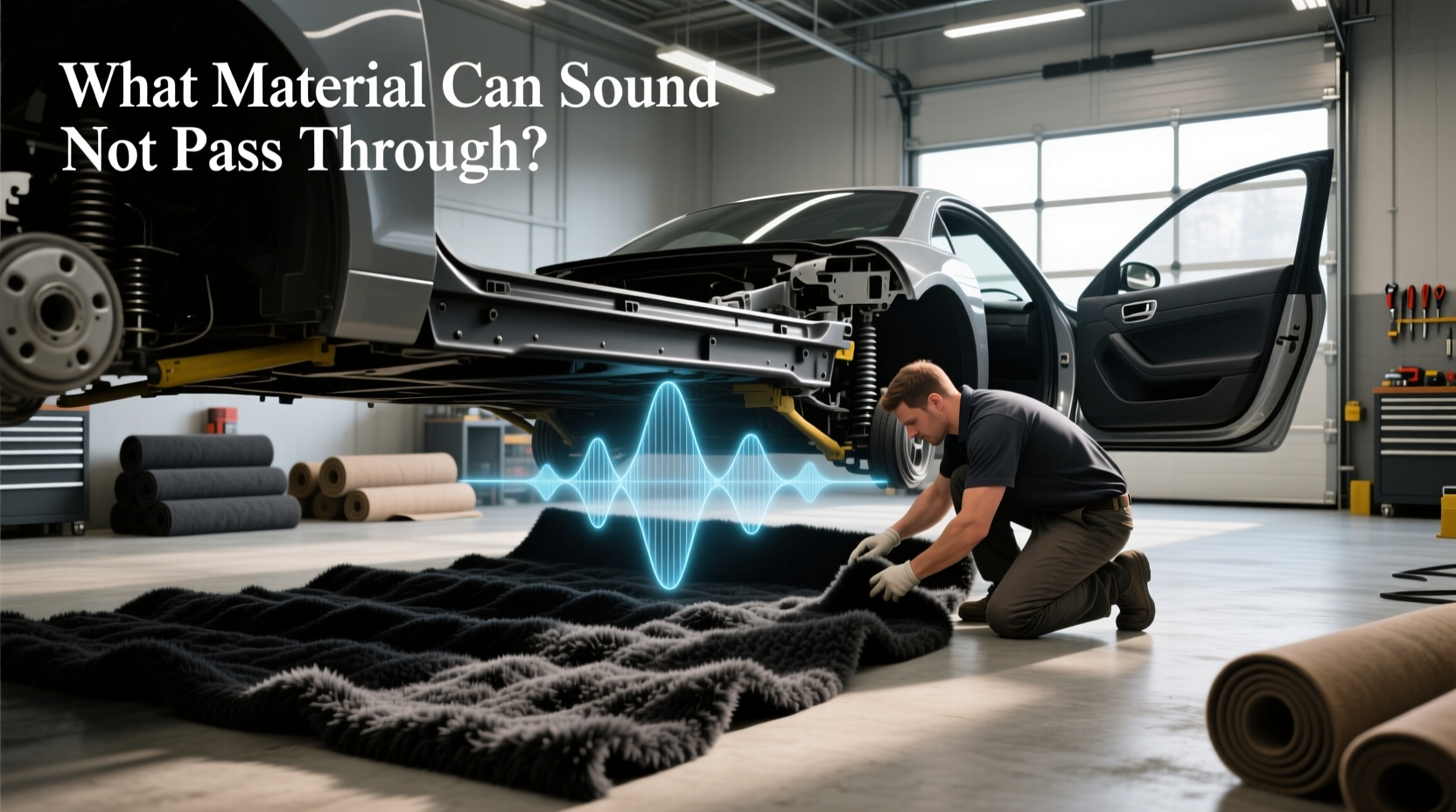
If you're asking how to choose sound deadening felt for car or wondering what material can sound not pass through, start here: no material blocks all sound completely, but high-density, multi-layered solutions combining mass, damping, and absorption work best 1. For cars, sound deadening felt is often used as a secondary layer to absorb mid-to-high frequency noise from vibrations in panels. However, it should be paired with damping mats (like butyl-based products) or mass loaded vinyl (MLV) for full-spectrum noise reduction. When evaluating options, focus on thickness (1–5 mm), density, heat resistance, ease of installation, and chemical stability. Avoid ultra-thin foams marketed as "full soundproofing"—they lack mass and won’t stop low-frequency road rumble.
About Sound Deadening Felt for Car, What Material Can Sound Not Pass Through?
Felt used in automotive sound deadening is a non-woven fabric made by compressing fibers—typically wool, polyester, or recycled materials—into a dense mat. Unlike rigid barriers, it doesn't block sound directly but absorbs airborne noise and dampens panel vibrations by converting acoustic energy into minimal heat 2. It’s commonly installed behind door panels, under dashboards, and along headliners where space is limited and flexibility matters.
When people ask what material can sound not pass through, they’re usually seeking absolute silence. In reality, sound transmission depends on frequency, intensity, and pathway. High-mass materials like concrete or MLV significantly reduce airborne noise, while damping compounds handle structure-borne vibrations. Felt alone isn’t sufficient for blocking engine roar or tire noise, but it complements other materials by reducing echo and resonance inside cabin cavities.
Why Sound Deadening Felt for Car, What Material Can Sound Not Pass Through? Is Gaining Popularity
🚗 More drivers are investing in cabin comfort, especially with the rise of electric vehicles (EVs) where motor silence makes road and wind noise more noticeable. Consumers want quieter rides for better audio clarity, reduced fatigue on long drives, and improved voice call quality. This has fueled interest in affordable DIY solutions like sound deadening felt.
Additionally, online tutorials and forums have demystified the process, making it easier for non-professionals to apply materials correctly. The broader question of what material can sound not pass through reflects growing awareness about acoustics—not just blocking sound, but managing how it behaves inside enclosed spaces.
Types and Variants
Several variants of sound-absorbing materials are used in vehicles. While “felt” refers broadly to fibrous mats, product names often blur distinctions. Here’s a breakdown:
- 🛒 Polyester Felt: Made from synthetic fibers, this is cost-effective and moisture-resistant. Good for absorbing high-frequency sounds like road hiss. Pros: Lightweight, recyclable, easy to cut. Cons: Limited damping effect, may degrade under prolonged UV exposure.
- 🛒 Wool Felt: Natural fiber with excellent thermal and acoustic properties. Biodegradable and stable across temperatures. Pros: Durable, fire-resistant, good NRC (Noise Reduction Coefficient). Cons: Higher cost, potential allergen for some users.
- 🛒 Recycled Fiber Felt: Often made from post-industrial textiles. Eco-friendly option with moderate performance. Pros: Sustainable, low off-gassing. Cons: Inconsistent density between batches.
- 🛒 Hybrid Composite Panels: Combine felt with aluminum foil or foam backing. Designed for multi-function use (thermal + acoustic). Pros: Reflects heat, adds slight mass. Cons: Stiffer, harder to fit in curved areas.
Key Features and Specifications to Evaluate
When comparing products for your sound deadening felt for car project, assess these technical and practical factors:
- 🔍 Thickness (1–5 mm): Thicker felt absorbs lower frequencies but may interfere with panel reinstallation.
- 📊 Noise Reduction Coefficient (NRC): Ranges from 0 to 1. Look for ≥0.6 for meaningful absorption.
- 🌡️ Heat Resistance: Should withstand at least 80°C (176°F), especially near engines or sun-exposed interiors.
- 💧 Moisture & Chemical Stability: Resists mold and degradation from cleaning agents or humidity.
- 🧰 Adhesive Backing: Peel-and-stick saves time but verify bond strength over temperature cycles.
- ✂️ Cutability & Flexibility: Must conform to irregular shapes without cracking.
Also consider VOC emissions—opt for low-emission materials if installing in enclosed cabins.
Pros and Cons
✅ Best for: Reducing interior echo, improving speaker clarity, lowering mid/high-frequency noise (e.g., wind, HVAC hum).
❌ Not suitable for: Blocking low-frequency engine or road noise alone. Don’t expect dramatic silence without adding mass or damping layers.
- Advantages: Non-toxic, lightweight, reusable, easy to install, eco-friendly (especially natural fibers).
- Limits: Minimal impact on structural vibration; requires combination with butyl mats or MLV for comprehensive results.
How to Choose Sound Deadening Felt for Car, What Material Can Sound Not Pass Through?
Follow this step-by-step checklist when selecting materials:
- 📍 Identify Noise Type: Use a decibel meter app to determine dominant frequencies. High-pitched = felt helps. Low rumble = add damping compound or MLV.
- 📋 Map Application Areas: Doors, floor, trunk, roof. Felt works well behind trim; avoid using only in high-vibration zones like wheel wells.
- 🔎 Check Compatibility: Ensure material doesn’t interfere with wiring, airbags, or sensors during reassembly.
- 📏 Measure Surface Area: Calculate square footage needed. Most kits sell by area (e.g., 2m², 5m²).
- 🔧 Plan Layering Strategy: Apply damping mat first (e.g., butyl), then insulation (foam/fiberglass), then felt as final absorber.
- ❗ Avoid These Pitfalls:
- Using thin felt as sole solution for highway noise.
- Ignoring seam sealing—gaps leak sound.
- Choosing flammable or off-gassing materials for enclosed cabins.
- Overlooking weight increase—important for fuel efficiency in older models.
Price & Market Insights
Sound deadening felt prices vary based on material type, thickness, and brand:
- Polyester felt rolls: $15–$30 per m²
- Wool-blend panels: $25–$50 per m²
- Hybrid composites (felt + foil): $30–$60 per m²
Prices may differ by region and retailer. Kits marketed as “full car soundproofing” often include multiple material types. Be cautious of ultra-cheap sets—they may use low-density foam instead of real felt. For best value, buy component materials separately based on need rather than one-size-fits-all packages.
Top-Seller & Competitive Analysis
While many brands market generic “car sound deadening felt,” actual composition varies. Below is a comparison of common product types available online:
| Material Type | Typical Thickness | NRC Range | Best Use Case |
|---|---|---|---|
| Polyester Fiber Felt | 3–5 mm | 0.6–0.8 | Interior trim, door panels |
| Wool-Poly Blend | 4–6 mm | 0.7–0.9 | Luxury interiors, studios on wheels |
| Recycled Textile Mat | 2–4 mm | 0.5–0.7 | Budget builds, temporary fixes |
| Felt-Aluminum Composite | 5–8 mm | 0.6–0.75 | Roof lining, heat-prone zones |
Note: Performance claims should be verified via independent reviews or lab data when available. Always check manufacturer specs before purchase.
Customer Feedback Synthesis
Based on aggregated user reviews across major retail platforms:
- 👍 Frequent Praise:
- “Noticeably clearer music after installing felt behind speakers.”
- “Easy to cut and stick—no special tools needed.”
- “Reduced that annoying buzzing sound in the door at high speed.”
- 👎 Common Complaints:
- “Didn’t reduce road noise much—I wish I knew it only helps with echoes.”
- “Adhesive failed after a few months in hot climates.”
- “Smelled strongly out of the package; took days to air out.”
The most consistent insight: customers who combined felt with damping mats reported higher satisfaction than those relying solely on felt.
Sourcing & Supplier Tips
Buy from reputable suppliers offering clear material specifications. Online marketplaces (e.g., Amazon, specialized auto parts sites) list many options, but descriptions can be misleading. Look for sellers who provide:
- Detailed technical sheets (thickness, density, NRC)
- Information on fire rating (e.g., ASTM E84 compliance)
- Clear return policies
For bulk purchases (e.g., fleet vehicles or workshops), contact industrial acoustic material distributors. Request samples before large orders to test adhesion, smell, and fit. Verify authenticity—some listings substitute cheaper foam for felt.
Maintenance, Safety & Legal Considerations
Felt requires minimal maintenance—keep dry and free from oil or solvents. If exposed to moisture, allow full drying to prevent mildew.
Safety-wise, ensure the material doesn’t obstruct safety components like seatbelt anchors or airbag deployment zones. Choose low-VOC, non-flammable options where possible. While no universal regulation governs aftermarket sound deadening, some regions restrict modifications affecting vehicle weight or emissions. Always check local regulations and consult professionals if modifying structural elements.
Conclusion
Choosing the right sound deadening felt for car involves understanding its role as an absorber, not a barrier. If you need to reduce cabin echo and improve audio quality, polyester or wool felt (3–5 mm thick) is effective and easy to install. But if your goal is answering what material can sound not pass through for comprehensive noise control, combine felt with damping mats (butyl) and mass-loaded layers (MLV). Prioritize proper installation and sealing over chasing premium brands. For most drivers, a layered approach delivers better results than any single material.
Frequently Asked Questions
Can sound deadening felt alone make my car quiet?
No. Felt absorbs mid-to-high frequency sounds but does little against low-frequency road or engine noise. Combine it with damping and mass materials for best results.
Is thicker felt always better?
Not necessarily. Beyond 5–6 mm, added thickness offers diminishing returns and may cause fitment issues with interior panels.
Does felt help with heat insulation?
Yes, especially wool or composite felt. It provides modest thermal resistance, helping stabilize cabin temperature.
How do I know if the product is real felt vs. foam?
Real felt feels fibrous and doesn’t compress easily. Foam is spongy and often shiny. Check product description for “non-woven fiber” or request sample.
Can I install sound deadening felt myself?
Yes, most felt products are DIY-friendly with peel-and-stick backing. Just remove interior panels carefully and avoid damaging wires or clips.




 浙公网安备
33010002000092号
 浙B2-20120091-4