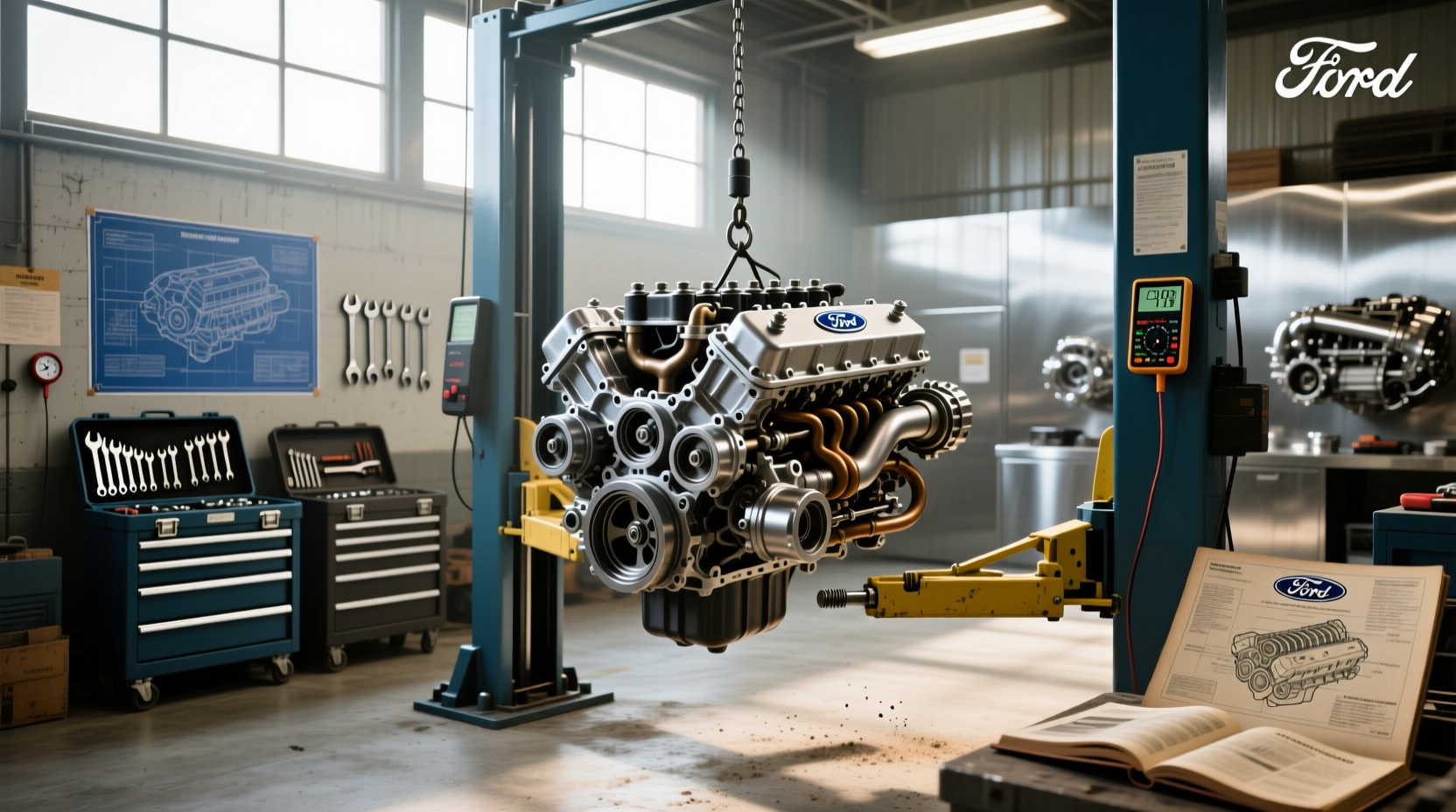
When you're trying to understand what to look for in Ford engine specifications, start by matching your driving needs to the right powertrain. For heavy towing and off-road work, prioritize high torque diesel or turbocharged V6 engines like the 3.5L EcoBoost or 6.7L Power Stroke®. If fuel efficiency matters most, consider smaller EcoBoost engines (e.g., 2.3L I4) or hybrid options such as the F-150’s PowerBoost system 1. Performance enthusiasts should focus on naturally aspirated V8s like the 5.0L Coyote or supercharged variants offering over 700 horsepower. Avoid assuming bigger engines always mean better performance—modern downsized turbo engines often outperform larger naturally aspirated ones while using less fuel. Always verify specs through official manufacturer channels, as output can vary by model year and trim.
About What Is the Insights World of Ford Engine Specifications
The term "insights world of Ford engine specifications" refers to understanding the full landscape of Ford's engine offerings—from technical performance data to real-world usability across different vehicle types. It includes decoding horsepower, torque, fuel delivery systems, and advanced technologies like turbocharging and hybrid integration. This knowledge helps buyers compare models within Ford’s lineup, such as choosing between a gas-powered V8 in the Mustang and a diesel V8 in the Super Duty truck.
Typical use cases include selecting a daily commuter with good fuel economy, outfitting a work truck for maximum payload capacity, or building a performance machine for track use. Understanding these specs enables informed decisions based on measurable criteria rather than marketing claims.
Why Ford Engine Specifications Are Gaining Popularity
As vehicles become more technologically advanced, consumers are shifting from brand loyalty to data-driven choices. Buyers now research engine specs before purchasing, comparing outputs across brands and trims. Ford’s public availability of detailed engine data—such as the 720 hp 5.2L supercharged V8 in the F-150 Raptor R—fuels interest among performance and commercial users alike 2.
Additionally, rising fuel costs and environmental awareness have increased demand for efficient yet powerful engines like the EcoBoost series. The expansion into hybrid powertrains also reflects broader market trends toward electrification without sacrificing capability.
Types and Variants of Ford Engines
- ⚙️Naturally Aspirated Gasoline Engines: Traditional engines without forced induction. Example: 5.0L Coyote V8.
- Pros: Proven reliability, linear power delivery, easier maintenance.
- Cons: Lower fuel efficiency, heavier, less low-end torque compared to turbo engines.
- ⚡Turbocharged EcoBoost Engines: Use forced induction and direct injection. Examples: 2.3L I4, 2.7L V6, 3.5L V6.
- Pros: High power-to-size ratio, better fuel economy, strong low-end torque.
- Cons: More complex cooling needs, potential for carbon buildup, higher repair costs if turbo fails.
- 🚚Diesel Engines (Power Stroke®): Built for durability and towing. Example: 6.7L V8 Turbo Diesel.
- Pros: Exceptional torque (up to 1,050 lb-ft), long engine life under load, better fuel economy in heavy-duty applications.
- Cons: Higher initial cost, limited availability in lighter trucks, stricter emissions systems requiring DEF fluid.
- 🔋Hybrid & Plug-in Systems: Combine internal combustion with electric motors. Example: 3.5L PowerBoost Hybrid.
- Pros: Improved city fuel economy, silent operation at low speeds, usable onboard generator function.
- Cons: Heavier weight, reduced cargo space due to battery placement, higher purchase price.
Key Features and Specifications to Evaluate
To effectively compare Ford engine options, assess the following metrics:
- 📊Horsepower (HP): Indicates top-end speed and acceleration. Important for performance driving.
- 📈Torque (lb-ft): Measures pulling force. Critical for towing and hauling.
- ⛽Fuel Type & Efficiency: Compare EPA estimates and real-world MPG reports. Turbo engines often offer better efficiency despite higher output.
- 🔧Engine Technology: Look for features like direct injection, variable valve timing, and twin-scroll turbos that improve responsiveness.
- 🌍Emissions Compliance: Ensure the engine meets local regulations, especially for diesel models with SCR systems.
- ⏱️Expected Lifespan: Diesel and large-displacement V8s typically last longer under heavy loads.
Pros and Cons of Choosing Based on Ford Engine Specs
Not ideal for: Budget-focused buyers who don’t need high-performance capabilities, those in regions with limited service support for turbocharged or diesel engines, or drivers unfamiliar with hybrid system maintenance.
How to Choose Ford Engine Specifications: Step-by-Step Guide
- 📌Define Your Primary Use Case: Will you tow? Off-road? Commute? Each scenario favors different engines.
- 🔍Compare Horsepower vs. Torque Needs: Towing requires high torque; highway cruising benefits from smooth horsepower delivery.
- 📋Review Official Manufacturer Data: Visit ford.com/specs to access verified engine specs per model and year.
- 🧰Assess Long-Term Maintenance Costs: Turbocharged and diesel engines may require specialized servicing.
- 🚫Avoid These Common Mistakes:
- Overlooking regional fuel quality impacts on turbo engines.
- Ignoring payload reductions caused by heavier hybrid systems.
- Assuming all 'high-output' trims deliver equal real-world performance.
Price & Market Insights
Engine choice significantly affects vehicle pricing. A base 2.3L EcoBoost engine in a Bronco starts around $35,000, while upgrading to a 3.5L V6 EcoBoost adds $4,000–$6,000. The Power Stroke diesel option in Super Duty trucks increases MSRP by $8,000+ but offers long-term savings for frequent haulers. Hybrid systems like PowerBoost add approximately $7,500 to the F-150’s base price but qualify for federal tax incentives where applicable.
Value tip: Mid-tier engines (e.g., 2.7L EcoBoost V6) often provide the best balance of performance and cost-effectiveness for general use.
Top-Seller & Competitive Analysis
The 3.5L EcoBoost V6 remains one of Ford’s most popular engines due to its blend of power and versatility. Below is how it compares to key rivals:
| Feature | 2025 Ford F-150 3.5L EcoBoost | 2025 Ram 1500 3.0L Hurricane | 2025 Chevrolet Silverado 3.0L Duramax |
|---|---|---|---|
| Max Horsepower | 450 HP | 540 HP | 305 HP |
| Max Torque | 510 lb-ft | 521 lb-ft | 495 lb-ft |
| Fuel Type | Gasoline (Turbo) | Gasoline (Turbo) | Diesel |
| Hybrid Option | Yes (PowerBoost) | No | No |
| Towing Capacity (max) | 14,000 lbs | 12,560 lbs | 9,800 lbs |
Data sourced from comparative reviews 1. Ford stands out with available hybrid technology and strong V8 alternatives.
Customer Feedback Synthesis
Based on aggregated owner reports and forum discussions:
- ✅Common Praises: Smooth power delivery of EcoBoost engines, exceptional towing confidence with Power Stroke diesels, seamless integration of hybrid systems in daily driving.
- ❗Frequent Complaints: Premature turbo failures in early EcoBoost models (largely resolved in post-2020 versions), complexity of diesel emissions systems leading to DPF issues, higher fuel consumption when towing with non-diesel engines.
Sourcing & Supplier Tips
When buying a new or used Ford with specific engine specs:
- 📍 Purchase from authorized dealers to ensure warranty coverage and accurate configuration.
- 🔎 For used vehicles, obtain a CARFAX report and inspect service history, especially for turbo and diesel models.
- 📋 Verify engine code (e.g., GTDI, DI) matches advertised specs—some trims share names but differ mechanically.
- 🤝 Consider certified pre-owned programs for extended warranties on high-tech engines.
Maintenance, Safety & Legal Considerations
All modern Ford engines require scheduled oil changes and software updates. Turbocharged engines benefit from cool-down periods after hard use. Diesel models need regular DEF refills and DPF regeneration cycles. Modifying engine software or removing emissions equipment may violate local laws and void warranties—always confirm compliance before modifications.
Conclusion
Choosing the right Ford engine depends on your priorities. If you need maximum towing and durability, go for the 6.7L Power Stroke diesel. If you want balanced performance and efficiency, the 3.5L EcoBoost V6 is a proven choice. For urban commuting and lower emissions, consider the PowerBoost hybrid. And for pure performance, the 5.0L Coyote or supercharged 5.2L V8 delivers excitement. Always cross-check specifications with official sources and consider total cost of ownership—not just upfront price.
FAQs
What does EcoBoost mean in Ford engine specifications?
EcoBoost refers to Ford’s line of turbocharged, direct-injection gasoline engines designed to deliver high performance with improved fuel efficiency compared to larger naturally aspirated engines.
Which Ford engine is best for towing?
The 3.5L PowerBoost Hybrid and 6.7L Power Stroke V8 Turbo Diesel are top choices for towing, offering up to 14,000 lbs and best-in-class diesel torque respectively.
Are Ford’s newer engines more reliable than older ones?
Generally yes—design improvements since 2020 have enhanced cooling and reduced common issues like carbon buildup in EcoBoost engines, though long-term data is still emerging.
Does the F-150 hybrid engine save fuel in real-world use?
Yes, particularly in city driving and stop-and-go traffic, where regenerative braking and electric-only operation improve overall efficiency.
Will Ford discontinue V8 engines?
Ford continues to offer V8s in performance and heavy-duty models as of 2025, though future availability may depend on market demand and emissions regulations.




 浙公网安备
33010002000092号
 浙B2-20120091-4