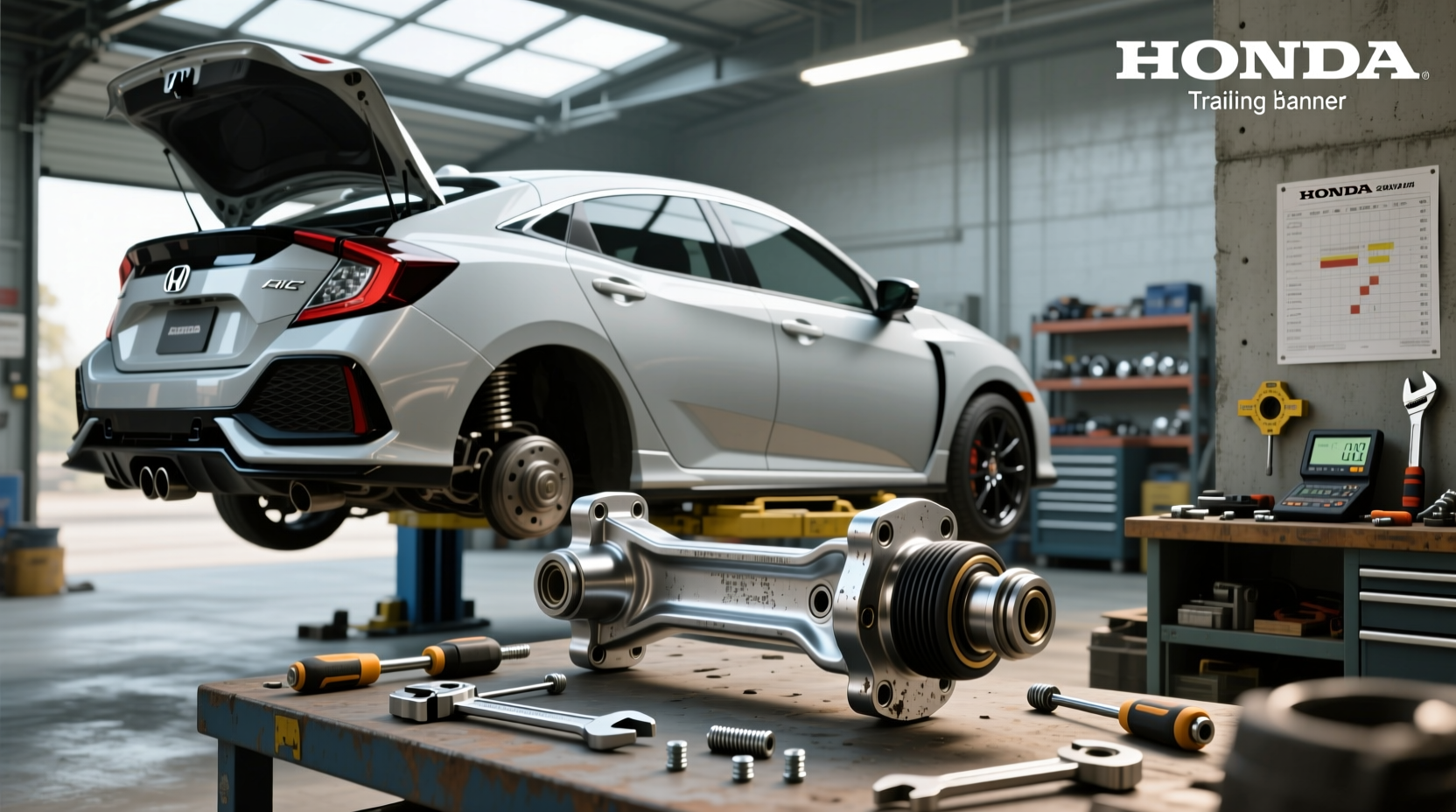
When choosing a Honda Civic rear trailing arm, start by confirming your model year and suspension type—trailing arm vs. semi-trailing arm designs vary significantly between 2006–2011, 2012, and 2016–2023 models 1. Always match OEM part numbers like 52370-SNA-A06 or 52365-T22-A00 to ensure correct fitment. Prioritize structural integrity and mounting point condition, especially if upgrading handling or replacing worn components. Avoid universal or unbranded arms unless verified for Civic compatibility, as improper geometry can affect alignment and ride quality.
Short Introduction
Selecting the correct rear trailing arm for your Honda Civic requires more than just finding a part that fits—it demands understanding its role in suspension performance, compatibility across model years, and long-term reliability under real-world conditions. Whether you’re replacing a damaged component or upgrading for better control, knowing how to choose a Honda Civic rear trailing arm involves evaluating design type, material strength, OEM specifications, and installation requirements. This guide breaks down what to look for in a Honda Civic rear trailing arm, including common failure signs, differences between linked and independent suspension setups, and critical selection criteria based on your driving needs and vehicle configuration.
About Honda Civic Rear Trailing Arm: What Does a Rear Trailing Arm Do?
A rear trailing arm is a structural suspension component that connects the vehicle’s chassis to the rear axle or hub assembly. In Honda Civics, it plays a central role in maintaining wheel alignment, supporting vehicle weight, and ensuring stable handling over uneven surfaces 2. Its primary functions include:
- ⚙️Serving as a rigid linkage between frame and wheel
- ⚖️Supporting vertical loads through shock absorber mounts
- 🚗Controlling lateral axle movement for stability
- 🛡️Transmitting road forces while isolating cabin vibrations
In models with live axles or semi-independent suspensions, the trailing arm helps maintain consistent toe and camber angles during suspension travel. For Civics equipped with semi-trailing arm systems (common in 2006–2011 and later generations), each rear wheel operates on a pivoting triangular arm, allowing independent motion while preserving compact packaging—a design favored for maximizing interior space in front-wheel-drive layouts 3.
Why Honda Civic Rear Trailing Arm Is Gaining Popularity
Increased interest in Honda Civic rear trailing arms stems from aging vehicle fleets, rising demand for performance upgrades, and greater DIY repair activity. As many Civics from 2006–2015 approach high mileage, wear in bushings and mounting points becomes common, prompting replacements. Additionally, enthusiasts modifying suspension systems for improved cornering often seek stiffer or reinforced trailing arms to reduce deflection. The growing availability of aftermarket and OEM-replacement options has also made sourcing these parts easier, contributing to higher search volume around terms like how to choose Honda Civic rear trailing arm and what to look for in Honda Civic rear trailing arm.
Types and Variants
Honda Civic rear trailing arms come in two main configurations, depending on model year and trim level:
🔸 Trailing-Arm Suspension
Found primarily in earlier models (e.g., 2006–2011 base trims), this design uses a solid or hollow arm connected to a live rear axle. It’s simpler mechanically but offers less independent wheel movement.
- Pros: Durable, easy to service, cost-effective replacement
- Cons: Limited ride refinement, potential for axle hop under acceleration
🔹 Semi-Trailing Arm Suspension
Used in most post-2012 Civics—including Si and Type R variants—this setup features a pivot at two points, allowing each wheel to move independently. It improves ride comfort and handling precision.
- Pros: Better isolation of road impacts, enhanced grip during cornering
- Cons: More complex geometry, sensitive to misalignment if damaged
Key Features and Specifications to Evaluate
To make an informed decision when buying a Honda Civic rear trailing arm, assess the following parameters:
- OEM Part Number Match: Confirm exact fit using VIN or manufacturer charts (e.g., 52370-TR0-A03 for 2012 DX/LX models)
- Material Construction: Look for stamped steel or forged variants; some performance units use aluminum alloys
- Bushing Condition (if included): Rubber bushings offer quiet operation; polyurethane versions increase responsiveness but may transmit more noise
- Mounting Geometry: Ensure hole placement and arm length match original specs to avoid alignment issues
- Finish and Corrosion Resistance: Powder-coated or galvanized arms resist rust longer in wet climates
Deviations in any of these areas can lead to premature wear, uneven tire wear, or compromised handling.
Pros and Cons
✅ Suitable For
- Replacing corroded or bent factory arms
- Restoring factory ride quality after accidents
- Upgrading bushings within OEM geometry
- Daily drivers needing reliable, OEM-spec performance
❌ Not Ideal For
- Extreme track use without additional suspension reinforcement
- Vehicles requiring major geometry changes (e.g., lowering beyond 1.5 inches)
- Applications where adjustable arms are needed for fine-tuning alignment
How to Choose Honda Civic Rear Trailing Arm: A Step-by-Step Guide
Follow this checklist to ensure you select the right part:
- 🔍Determine your Civic’s model year, body style (sedan/coupe), and trim (LX, EX, Si, etc.)
- 📋Cross-reference OEM part numbers using online catalogs or dealer databases
- 📍Identify whether your car uses trailing-arm or semi-trailing arm suspension
- 🔧Inspect existing arm for cracks, bends, or worn bushings before replacement
- 🏭Decide between OEM, aftermarket, or performance-grade arms based on budget and usage
- ⚠️Avoid used arms with visible stress marks or elongated bolt holes
- 🚚Verify return policy and warranty terms before purchase
❗ Red flags: No clear part numbering, vague fitment claims (e.g., "fits most Civics"), lack of corrosion protection, or mismatched pivot locations.
Price & Market Insights
Pricing varies widely based on origin and quality tier:
- OEM Arms (Genuine Honda): $180–$350 per side; highest compatibility assurance
- Aftermarket New (Dorman, Mevotech): $90–$160; mixed reviews on longevity
- Used OEM (Salvage Yards): $50–$100; inspect carefully for hidden damage
- Performance Upgrades (Stiffened Bushings/Braces): $200+
Prices may differ by region and retailer. While OEM parts typically offer the best long-term value due to precise tolerances, some reputable aftermarket brands provide acceptable alternatives for budget-conscious owners.
Top-Seller & Competitive Analysis
Below is a comparison of commonly purchased rear trailing arms for the Honda Civic:
| Part Number | Type | Fits Model Years | Avg. Price | Notes |
|---|---|---|---|---|
| 52370-SNA-A06 | OEM Right Side | 2006–2011 | $285 | Genuine Honda; direct replacement |
| 52365-T22-A00 | OEM Left Side | 2023 Si/Type R | $320 | High-strength alloy; track-rated |
| 52371-TR7-A03 | OEM Left Side | 2012 SI | $260 | Compatible only with sport suspension |
| Mevotech MA1194 | Aftermarket | 2006–2011 | $115 | Includes new bushings; verify alignment post-install |
Customer Feedback Synthesis
Analysis of buyer reviews reveals recurring themes:
- Positive: Easy bolt-on installation, exact OEM fitment, immediate improvement in ride smoothness after replacing damaged arms
- Negative: Some aftermarket units show paint chipping within months, minor misalignment reported with non-Honda brands, difficulty removing seized bolts on older models
- Common Complaint: Lack of detailed fitment guidance from third-party sellers leading to incorrect purchases
Buyers consistently emphasize the importance of matching part numbers exactly and checking suspension type prior to ordering.
Sourcing & Supplier Tips
When purchasing a Honda Civic rear trailing arm:
- Use OEM part lookup tools via authorized dealers or sites like HondaPartsNow.com 1
- For bulk orders (e.g., repair shops), consider distributors offering core returns or multi-unit discounts
- If buying used, request photos of both sides and check for weld cracks near pivot points
- Verify return policies—some vendors do not accept installed or modified parts
- Confirm shipping costs and delivery timelines, especially for time-sensitive repairs
Maintenance, Safety & Legal Considerations
Proper installation is crucial for safety. Always:
- Torque mounting bolts to factory specifications
- Perform a full rear alignment after replacement
- Inspect related components (bushings, shocks, control arms) during installation
- Test drive cautiously before extended highway use
While no specific regulations govern trailing arm replacement in most regions, improperly installed or defective parts could affect vehicle safety inspections or liability in case of accidents. Always follow manufacturer-recommended procedures and use qualified technicians if unsure.
Conclusion
If you need a reliable, direct-fit replacement for daily driving, choose a genuine Honda rear trailing arm matched to your model year and trim. If budget is limited, select a well-reviewed aftermarket unit with clear fitment data. Enthusiasts seeking improved response may explore performance variants—but only after confirming compatibility with other suspension modifications. Ultimately, success in how to choose a Honda Civic rear trailing arm hinges on accurate identification, attention to structural details, and adherence to proper installation practices.
FAQs
❓ What does a rear trailing arm do?
It connects the rear wheel assembly to the chassis, controlling wheel motion, supporting vehicle weight, and maintaining alignment during suspension travel.
❓ When should I replace my Honda Civic rear trailing arm?
Replace it if there’s visible damage, excessive play in the bushings, uneven tire wear, or instability during cornering—especially after impacts or collisions.
❓ Can I install a rear trailing arm myself?
Yes, with proper tools and mechanical experience. However, alignment must be checked afterward, and safety stands are essential during work.
❓ Are left and right trailing arms interchangeable?
No, they are typically side-specific due to asymmetrical design and bracket orientation. Always confirm part handedness before purchase.
❓ Do all Honda Civics have the same trailing arm design?
No—designs vary by generation. Pre-2012 models often use simpler trailing arms, while newer ones use semi-trailing arms with independent movement.




 浙公网安备
33010002000092号
 浙B2-20120091-4