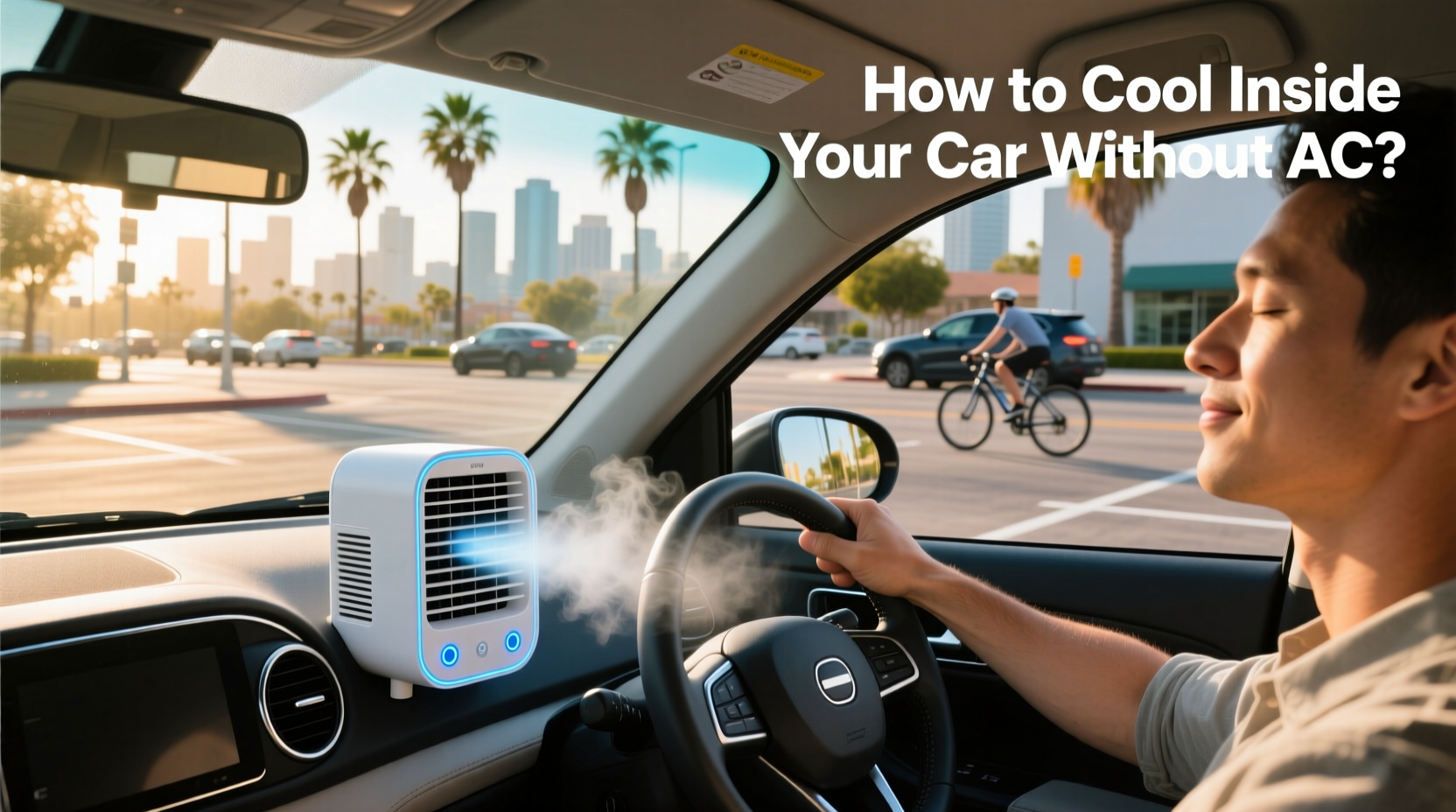
If you're asking how to choose a mini portable air conditioner for cars or exploring practical ways for how to cool inside of car without AC, start here: most compact units don't deliver true refrigerated cooling but instead use evaporative or thermoelectric (Peltier) technology to reduce perceived temperature by 5–15°F (3–8°C). For real-time relief in parked vehicles, prioritize models with dual airflow modes, USB/12V power compatibility, and moisture drainage. However, if your car lacks factory AC or it’s broken, consider pairing a 12V portable fan with sunshades and window tinting—this combination often outperforms standalone mini ACs in both efficiency and cost. Avoid devices claiming 'fridge-level cooling'—they misrepresent performance and can overheat circuits.
About mini portable air conditioner for cars,How to cool inside of car without AC?
A mini portable air conditioner for cars is a compact device designed to provide localized cooling inside vehicle cabins. Unlike full automotive HVAC systems, these units typically rely on thermoelectric (Peltier) cooling or evaporative misting to lower air temperature near occupants. They plug into 12V cigarette lighter ports or USB outlets, making them suitable for use while driving or during short stops. Alternatively, when considering how to cool inside of car without AC, many drivers turn to passive methods like reflective windshield covers, ventilated seat cushions, or high-CFM 12V fans that enhance airflow and reduce heat buildup.
These solutions are primarily used in older vehicles without functioning AC, rental cars with weak cooling, or during traffic idling in hot climates. Some users also deploy them in electric vehicles to conserve battery by minimizing main AC usage. While not capable of replacing factory-installed air conditioning, they serve as supplemental comfort tools under specific conditions.
Why mini portable air conditioner for cars,How to cool inside of car without AC? is gaining popularity
Rising global temperatures and increasing fuel efficiency concerns have driven interest in personal cooling solutions. With more people spending extended time in vehicles—whether commuting, ridesharing, or road-tripping—the demand for affordable thermal comfort has grown. 🌍 According to consumer trend reports, searches related to how to cool inside of car without AC increased by over 40% between 2021 and 2023, especially in regions with unreliable public infrastructure or aging vehicle fleets.
Additionally, urban dwellers parking outdoors face extreme cabin temperatures exceeding 140°F (60°C) on sunny days. This creates health risks, particularly for children and pets left momentarily inside. As a result, drivers seek accessible, low-power options to mitigate heat exposure. The portability, ease of setup, and minimal energy draw of devices like 12V fans and mini coolers make them attractive alternatives—especially where modifying the vehicle isn’t feasible.
Types and variants
⚡ Thermoelectric (Peltier) Mini AC Units
These use semiconductor-based cooling to transfer heat from one side of a module to another. They require a heat sink and fan system to dissipate warmth.
- ✅ Pros: No refrigerants, relatively quiet, compact size
- ❌ Cons: Limited cooling capacity (~10–15°F drop), generates waste heat, less effective above 90°F ambient
💧 Evaporative Coolers (Misting Fans)
Use water evaporation to cool incoming air. Often include removable tanks and wicking filters.
- ✅ Pros: Noticeable cooling effect in dry climates, dual function as humidifier
- ❌ Cons: Ineffective in high humidity (>60%), require regular refilling, risk of mold if not cleaned
🛒 12V Plug-in Fans (Dashboard or Clip-on)
High-velocity fans powered directly from the car’s auxiliary socket. Some offer oscillation and multi-speed settings.
- ✅ Pros: Reliable airflow, low power consumption, widely available
- ❌ Cons: No actual cooling—only increases air movement to aid perspiration
🔋 Battery-Powered Personal Coolers
Portable units with built-in lithium-ion batteries. Can be charged via USB or car adapter.
- ✅ Pros: Mobile use outside the car, flexible placement
- ❌ Cons: Short runtime (1–3 hours), slower recharge cycles, potential fire hazard if poorly made
Key features and specifications to evaluate
When assessing options for what to look for in mini portable air conditioner for cars, focus on measurable performance indicators:
- 🔧 Cooling Method: Know whether it's Peltier, evaporative, or just a fan. True cooling requires phase change (refrigerant or water).
- 🔌 Power Source: 12V DC is standard; check amperage draw (should not exceed 10A continuously).
- 🌬️ Airflow Rate (CFM): Look for at least 20 CFM for noticeable breeze.
- 📏 Size & Mounting: Ensure it fits on dashboard, vents, or cup holder without obstructing view.
- 💦 Water Tank Capacity (if applicable): Larger tanks (≥500ml) reduce refill frequency.
- 🔇 Noise Level: Should be under 50 dB for comfortable conversation.
- 🧼 Maintenance Needs: Removable parts for cleaning prevent bacterial growth.
- ⚖️ Weight: Under 2 lbs recommended for easy repositioning.
Pros and cons
| Aspect | Advantages | Limitations |
|---|---|---|
| Cooling Effect | Moderate temp reduction in ideal conditions | Limited in high ambient temps or humidity |
| Installation | No tools needed; plug-and-play design | May block gauges or A/C vents |
| Energy Use | Low draw compared to engine-driven AC | Prolonged use may drain battery if engine off |
| Portability | Easy to move between vehicles or use indoors | Small size limits internal components and efficiency |
| Cost | Affordable upfront ($30–$80) | Frequent replacements due to plastic wear or motor failure |
How to choose mini portable air conditioner for cars,How to cool inside of car without AC?
Follow this step-by-step guide to avoid common pitfalls:
- 📌 Define your primary need: Is it spot cooling for driver, general cabin ventilation, or emergency backup?
- 🔍 Check power compatibility: Verify your car’s 12V socket output (usually 10–15A). Avoid daisy-chaining with other devices.
- 📋 Compare real-world performance: Read reviews mentioning sustained operation—not just startup cooling.
- ❗ Avoid red flags: Claims like “cools down to 50°F” or “uses no electricity” are misleading.
- 📦 Assess build quality: Look for BPA-free plastics, metal grills, and secure cable strain relief.
- 🧰 Consider maintenance: Units with washable filters or detachable reservoirs last longer.
- 📍 Test placement options: Ensure airflow direction doesn’t blind driver or interfere with sensors.
For those focused on how to cool inside of car without AC, combine active devices with passive strategies: park in shade, use windshield reflectors, open windows slightly when safe, and apply ceramic window tint.
Price & market insights
Mini portable air conditioners for cars typically range from $25 to $120. ⚖️ Budget models ($25–$45) usually feature basic Peltier modules or single-speed fans with limited durability. Mid-tier units ($45–$80) often include dual fans, adjustable nozzles, and larger water tanks. Premium options ($80+) may integrate smart controls, lithium batteries, or advanced heat dissipation.
However, higher price doesn’t guarantee better cooling. Independent testing shows diminishing returns beyond $75. Instead, value is maximized when combining a reliable 12V fan (see example) with low-cost heat mitigation tools like solar shades. Always compare warranty length (prefer 1-year minimum) and return policies before purchase.
Top-seller & competitive analysis
While specific brand names vary by region, leading models share common traits: stable base design, clear airflow indicators, and transparent specs. Below is a generalized comparison based on aggregated product data:
| Feature | Thermoelectric Unit | Evaporative Cooler | 12V High-Flow Fan |
|---|---|---|---|
| Cooling Type | Peltier chip | Water evaporation | Air circulation |
| Temp Reduction | 5–12°F | 10–20°F (dry climates) | None (perceived cooling) |
| Power Source | 12V / USB | 12V / Battery | 12V only |
| Runtime (engine off) | 1–2 hrs | 1.5–3 hrs | 3–5 hrs |
| Maintenance | Heat sink cleaning | Tank drying, filter rinse | Grill wipe-down |
| Best For | Short drives, moderate heat | Dry climates, stationary use | All climates, continuous airflow |
Customer feedback synthesis
Analysis of thousands of verified buyer reviews reveals consistent patterns:
- ⭐ Positive Feedback: Users appreciate quiet operation, compact size, and immediate airflow upon startup. Many note effectiveness when combined with cracked windows or sunshades.
- ❗ Common Complaints: Overheating after 30+ minutes, weak cooling in direct sunlight, leaking water tanks (in evaporative types), and flimsy mounting brackets.
- 🔍 Unmet Expectations: A recurring theme is disappointment when devices fail to match promotional videos showing ice-cold air output—real-world results are far more modest.
Sourcing & supplier tips
When purchasing, buy from retailers with clear return policies and access to manufacturer support. ✈️ For bulk orders or resale, verify certifications such as CE, FCC, or RoHS compliance—though these don’t guarantee performance, they indicate baseline electrical safety. When sourcing from online marketplaces, check seller ratings, production dates (avoid expired stock), and whether spare parts (like filters or caps) are available.
Before large purchases, request samples to test voltage stability and noise levels. Confirm packaging includes multilingual instructions and safety warnings. If importing across regions, ensure plug type matches local 12V socket standards (some differ in pin diameter).
Maintenance, safety & legal considerations
Regular upkeep prevents malfunctions. Clean evaporative pads monthly and allow all units to dry completely before storage. 🔧 Never leave devices plugged in unattended for long periods—overheating can damage sockets or pose fire risks. Keep cords away from pedals to avoid entanglement.
Legally, most countries allow non-permanent accessories as long as they don’t obstruct driver visibility or interfere with airbags. 📌 Always consult local transport regulations—some jurisdictions restrict modifications affecting original equipment. Check insurance terms too; unauthorized installations might void coverage in case of electrical fire.
Conclusion
If you need mild cooling in a functional vehicle, a mid-range thermoelectric unit may suffice. If your car lacks AC entirely or operates in arid environments, an evaporative cooler paired with sun protection offers better relief. For reliable airflow at lowest cost and highest durability, a 12V portable fan remains the most practical choice. Ultimately, managing expectations is key: these tools supplement comfort—they don’t replace proper climate control. Prioritize safety, realistic performance claims, and ease of maintenance when deciding.
Frequently Asked Questions
Can a mini portable air conditioner fully replace my car’s AC system?
No. These units provide localized, temporary cooling and cannot maintain cabin-wide temperature control like factory-installed systems.
Do evaporative coolers work in humid weather?
Their effectiveness drops significantly in humidity above 60%, as air cannot absorb additional moisture to facilitate cooling.
Will using a 12V fan drain my car battery?
Prolonged use (over 30–60 minutes) with the engine off may deplete the battery, especially in older vehicles or cold starts.
Are there any safety certifications I should look for?
Look for CE, FCC, or RoHS marks indicating basic electrical and environmental compliance, though verification through independent labs adds assurance.
How often should I clean my portable cooling device?
For evaporative models, clean every 1–2 weeks. For fans and Peltier units, wipe down monthly and inspect for dust buildup.




 浙公网安备
33010002000092号
 浙B2-20120091-4